Most active people in the UK pick one or the other. They either reach for an electrolyte supplement after a hard session, or they take a daily multivitamin and consider the job done. The problem is that neither habit, on its own, covers everything a hard-working body actually needs. Electrolytes and multivitamins UK conversations almost always treat the two categories as separate decisions, but the physiology says otherwise. Sweat strips minerals. Training burns through B vitamins. Poor absorption undermines even the best diet. A combined supplement routine built around both fills the gaps that neither product alone can close.
Key Insight |
Explanation |
|---|---|
Electrolytes and multivitamins address different gaps |
Electrolytes replace minerals lost through sweat and regulate fluid balance. Multivitamins cover micronutrient shortfalls from diet and increased training demand. Neither replaces the other. |
Magnesium sits at the crossover point |
Magnesium appears in both electrolyte formulas and multivitamins because it drives ATP production, muscle contraction, and nerve function. Active adults deplete it faster through sweat and urine. |
Timing matters as much as ingredients |
Electrolytes work best taken 30 to 60 minutes before training and within 30 minutes after. A multivitamin is most effective taken with a meal for fat-soluble vitamin absorption. |
Demographic-specific formulas outperform generic products |
Active women need higher iron, calcium, and vitamin D. Active men benefit from higher zinc and sodium. A single generic product cannot serve both groups optimally. |
No-added-sugar formulas are the right default for daily use |
Sugared electrolyte drinks are engineered for endurance fuelling, not daily hydration. For routine use, a no-added-sugar electrolyte supplement avoids unnecessary calorie and glucose loading. |
Excessive antioxidant dosing can blunt training adaptations |
A multivitamin providing 100% to 150% NRV of vitamins C and E supports recovery. Megadoses above 500% NRV can interfere with the body's natural adaptive response to training stress. |
Nutrient assimilability is more important than nutrient quantity |
Magnesium bisglycinate absorbs significantly better than magnesium oxide. Methylcobalamin outperforms cyanocobalamin for B12. Form matters more than headline milligram counts. |
Electrolytes are minerals that carry an electric charge once dissolved in fluid. That charge is what allows your heart to beat rhythmically, your muscles to contract on demand, and your cells to move water in and out at the right rate. The key players are sodium, potassium, magnesium, and calcium, and all four are lost through sweat every time you train.
Sodium loss through sweat is highly individual. Research consistently shows variation ranging from around 300 mg per litre to over 1,800 mg per litre depending on the person. This is why the idea that plain water is enough for any workout is simply wrong for a significant portion of active adults. You cannot rehydrate properly without also replacing what you lost.
Potassium and magnesium are lost from contracting muscles during exercise. Low extracellular potassium concentrations impair muscle function and, in more severe cases, affect cardiac and kidney function. Magnesium supports more than 300 enzymatic reactions in the body, including ATP energy production and protein synthesis. Athletes and highly active individuals deplete it faster through both sweat and urine, which is why it features prominently in any quality electrolyte formula.
Pro tip: During sessions exceeding 60 minutes, aim for 500 to 750 ml of electrolyte fluid per hour. Sodium replacement should be the priority, because sweat rates in warm conditions can strip 1,000 to 2,000 mg of sodium per hour.
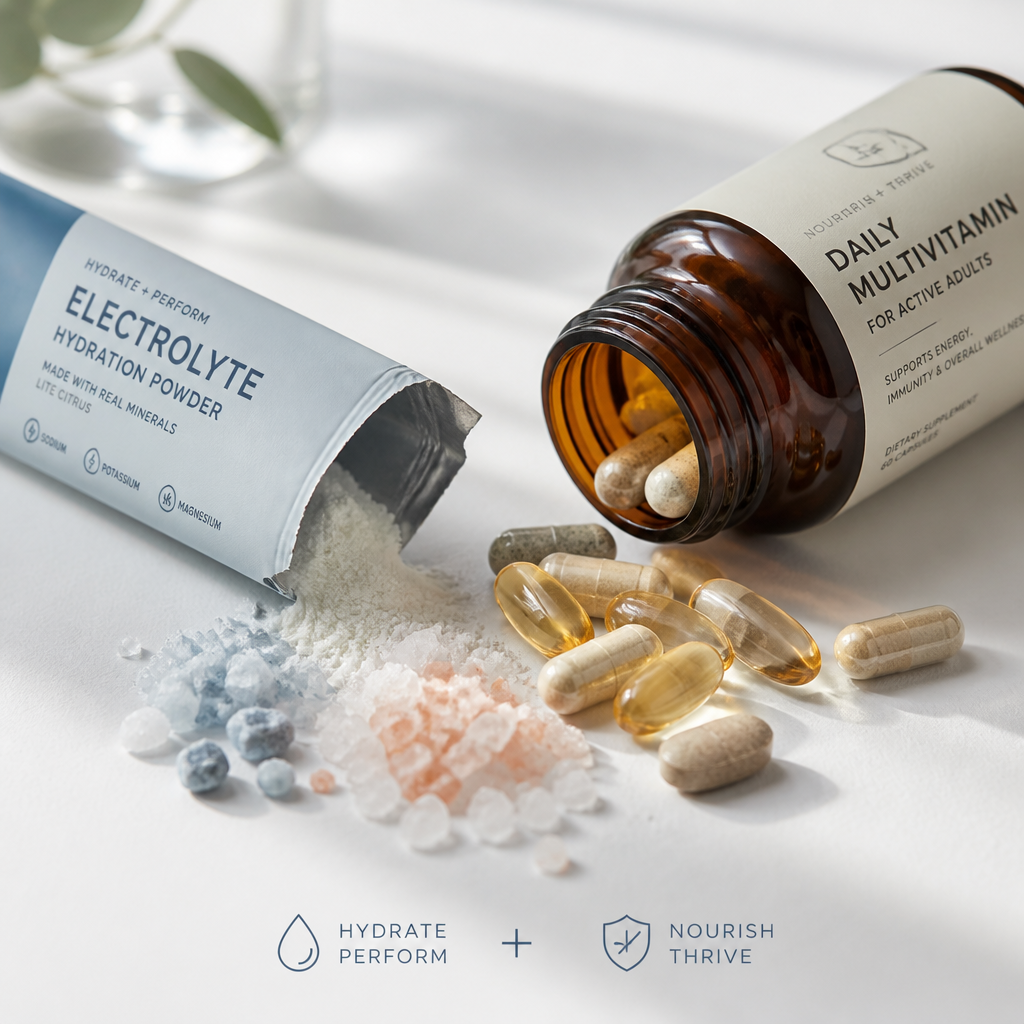
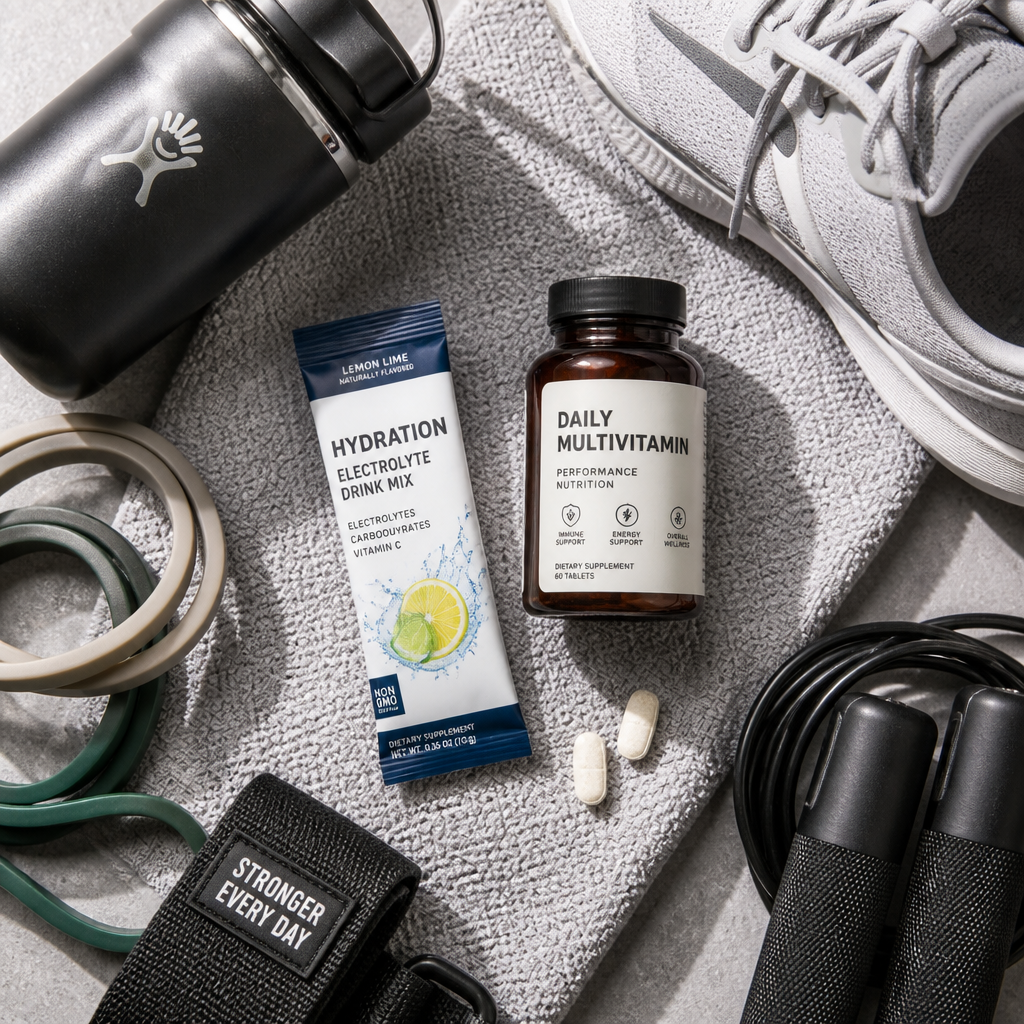
An electrolyte formula replaces what sweat takes away. A multivitamin complex covers a different category of problem: the micronutrient shortfalls that accumulate from training load, dietary gaps, and the specific demands of an active physiology.
The B vitamin group, particularly B1, B2, B3, B6, and B12, sits directly in the pathway that converts food into usable energy. Higher training volumes increase the metabolic demand on these pathways. A standard diet that feels adequate on a rest day can leave an active adult short on these vitamins by mid-week. A targeted multivitamin closes that gap consistently.
Vitamin D deficiency is a genuine and widespread issue in the UK, particularly from October to March when sun exposure is insufficient for the body to synthesise adequate amounts. The NHS recommends that all adults consider a 10 micrograms vitamin D supplement during that period. For active adults doing weight-bearing exercise, vitamin D is not just a bone health nutrient. It also supports muscle function, immune regulation, and calcium absorption, making it a core component of any multivitamin worth taking.
Active men have specific micronutrient requirements that a generic multivitamin consistently underserves. Zinc supports testosterone metabolism, protein synthesis, and immune function, all of which are more heavily taxed in men doing regular resistance or endurance training. Selenium supports antioxidant enzyme activity. A well-formulated men's multivitamin like Plusssz Multivitamin MEN prioritises both, whereas a standard supermarket one-a-day tablet was not designed with a training physiology in mind.
Premenopausal women require significantly higher iron intake than men, and that requirement increases with training load because endurance exercise can cause small but cumulative iron losses. Folate (ideally in its methylated form, methylfolate) supports red blood cell production and energy metabolism. Active women who skip a targeted multivitamin and rely only on an electrolyte supplement are leaving a meaningful coverage gap in place.
The argument for a combined supplement routine is not about redundancy. It is about complementary coverage. Electrolytes handle acute mineral replacement and hydration. Multivitamins address the chronic baseline of micronutrient adequacy that supports every system in the body over time. Removing either one creates a gap the other cannot fill.
In practice, athletes who combine post-session electrolyte replenishment with their vitamins and minerals for exercise routine report faster return to training readiness, reduced muscle soreness, and better sleep quality, all of which are measurable downstream effects of proper micronutrient support.
Magnesium is the clearest illustration of why the two categories overlap in a useful way. It appears in both electrolyte formulas (as a mineral lost through sweat) and in multivitamins (as a cofactor for hundreds of enzymatic processes). An active adult who takes only an electrolyte supplement gets some magnesium replacement. An active adult who takes only a multivitamin gets some baseline coverage. An active adult who takes both, with formulas calibrated to work together rather than compete, gets more comprehensive coverage across the full spectrum of physical demand.
The same logic applies to vitamin C. It reduces exercise-induced oxidative stress and supports immune function, both of which are relevant after hard training. A multivitamin at 100% to 150% NRV of vitamin C is supportive. It does not interfere with training adaptations the way megadose standalone vitamin C supplements can. Combining a sensibly dosed multivitamin with an electrolyte formula avoids both the deficiency risk and the over-supplementation risk.
Pro tip: If you train more than four times per week, prioritise a multivitamin that specifically lists its target demographic on the label. A product designed for active adults will be dosed differently from a standard multivitamin, even when the ingredient lists look similar, because the serving size and ratios are calibrated to training physiology rather than a sedentary reference adult.
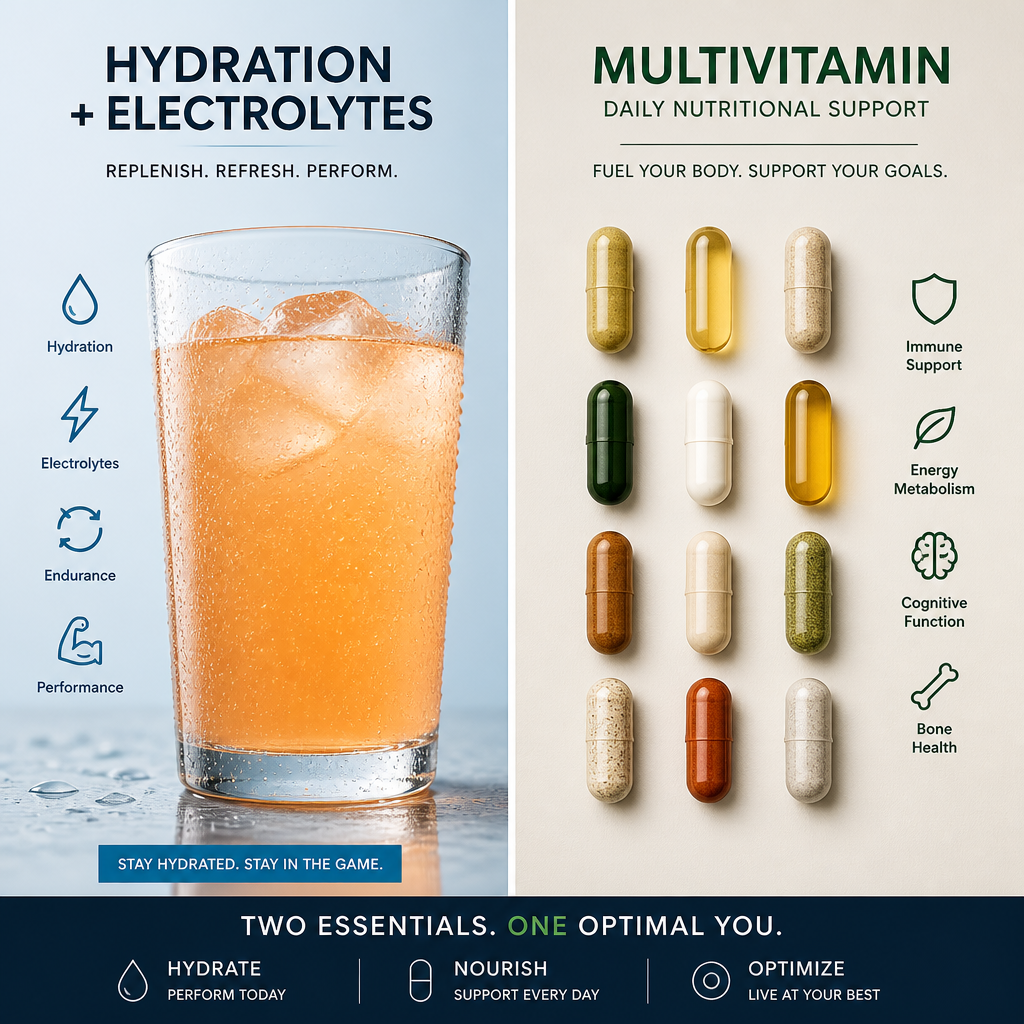
Getting the routine right is mostly a timing and sequencing question. The ingredients matter, but even the best formulas underperform if taken at the wrong point in the day relative to training and meals.
Take your multivitamin with breakfast or your first substantial meal of the day. Fat-soluble vitamins, specifically A, D, E, and K, require dietary fat for absorption. Taking a multivitamin with food rather than on an empty stomach is not a minor detail. It is the difference between absorbing the fat-soluble vitamins and excreting them.
Take your electrolyte supplement 30 to 60 minutes before training. For sessions lasting longer than 60 minutes, continue electrolyte intake during the session. A no-added-sugar formula like the Plusssz Electrolytes range is appropriate here because you are targeting hydration and mineral replacement, not carbohydrate fuelling.
The first 30 minutes after training is the optimal window for electrolyte replenishment. Pair your electrolyte drink with a protein source during this window to support both rehydration and muscle repair simultaneously. Avoid taking high-dose magnesium immediately before a workout because large amounts can cause digestive discomfort during exercise. Evening magnesium supplementation, by contrast, supports recovery and sleep quality.
A common mistake is stacking high-dose calcium supplements from a multivitamin with separate calcium-heavy electrolyte products. High-dose calcium taken alongside other minerals can impair the absorption of iron, magnesium, and zinc. Check the combined mineral load across your full supplement stack before adding anything new. If your multivitamin already provides meaningful calcium, your electrolyte formula does not need to be calcium-heavy to round out your routine.
Supplement Approach |
What It Covers |
Where It Falls Short |
|---|---|---|
Electrolyte supplement only |
Acute mineral replacement (sodium, potassium, magnesium, calcium) during and after training. Hydration support. No-added-sugar options appropriate for daily use. |
Does not address B vitamins, vitamin D, vitamin C, zinc, iron, folate, or selenium. Chronic micronutrient gaps remain open. |
Generic multivitamin only (standard supermarket product) |
Baseline micronutrient coverage for a statistical average adult. Includes fat-soluble vitamins and a broad mineral profile. |
Not calibrated for training demand. Electrolyte levels are rarely sufficient for active sweat loss. No demographic specificity. Often uses poorly absorbed mineral forms (oxide rather than bisglycinate). |
Targeted multivitamin plus no-added-sugar electrolyte supplement (the Plusssz Electrolytes Multivitamin approach) |
Full spectrum coverage. Acute mineral replacement for training, plus comprehensive baseline micronutrient support calibrated to the user's specific demographic (women, men, seniors, sports-active). |
Requires two products and attention to timing. Minimal downside when formulas are designed to complement rather than duplicate each other. |
The case for combining electrolytes and a targeted multivitamin is strong across most active demographics, but it is especially compelling for specific groups whose physiological requirements are genuinely different from the statistical average adult.
Higher training frequency means higher mineral loss through sweat, higher B-vitamin turnover through energy metabolism, and higher oxidative stress requiring antioxidant support. A single product cannot serve all three requirements at meaningful doses. Two well-chosen products can.
Active women benefit from higher magnesium, calcium, vitamin D, and iron levels in their supplement stack. A women's formula should also include iodine and ideally methylfolate rather than basic folic acid. These are not cosmetic differences between products. They reflect genuinely different physiological requirements that a generic unisex supplement does not address.
A 2023 report from the British Nutrition Foundation found that a significant proportion of UK men fall short of recommended intakes for magnesium, zinc, and vitamin D. These three nutrients directly affect energy, testosterone support, and muscle recovery, all of which become more critical with age and training load. Active men typically also have higher average sweat rates than women, making the electrolyte component of a combined routine more rather than less important.
Older active adults face specific challenges. Vitamin D and B12 are commonly deficient in UK adults over 50 due to limited sun exposure and reduced intrinsic factor production in the gut. Medication effects in this age group can further reduce electrolyte retention independently of dietary intake. A senior-specific electrolyte formula combined with a multivitamin that addresses D3 and B12 fills this gap reliably, without requiring a complete dietary overhaul. These are different physiological needs addressed at different times, and combining them produces better overall coverage than trying to get everything from a single product.
Yes, for most people there is no conflict between taking an electrolyte supplement and a multivitamin. The most practical approach is to take your multivitamin with a meal (for fat-soluble vitamin absorption) and your electrolyte supplement around training. If you are on prescription medication or have a condition affecting kidney or mineral regulation, speak to your GP first, as electrolyte supplementation carries specific considerations for those groups.
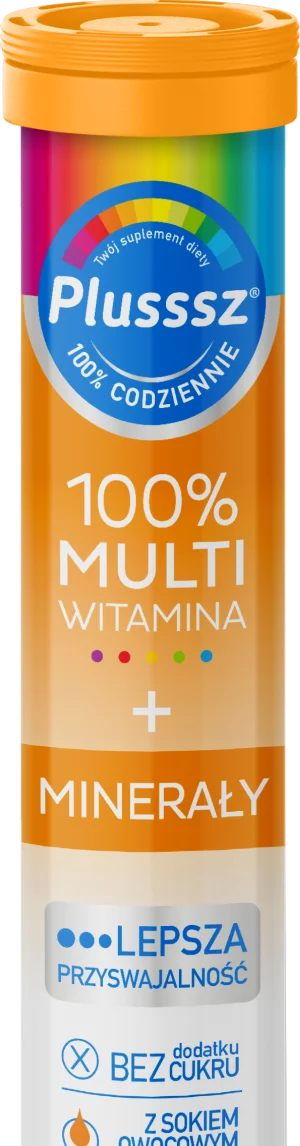
Plusssz Electrolytes Multivitamin is an effervescent supplement combining electrolytes, a vitamin complex, and key minerals designed to restore fluid and electrolyte balance, particularly after exercise or on hot days. It is formulated for active individuals who want hydration and micronutrient support without added sugar, rather than a carbohydrate-loaded sports drink designed for endurance fuelling.
A healthy diet covers a significant portion of your micronutrient needs, but it cannot reliably replace the electrolytes lost through sweat during training, particularly sodium and magnesium. Equally, even a well-balanced diet may fall short of vitamin D from October to March in the UK, and training demand increases requirements for B vitamins and zinc beyond what most people eat. Supplementation fills gaps that a good diet narrows but rarely closes entirely for active adults.
The clearest indicator is your demographic and training profile. Active women benefit most from formulas with higher iron, calcium, and vitamin D. Active men should look for higher zinc, selenium, and B6. Active adults over 50 should prioritise formulas that specifically address D3 and B12 alongside the electrolyte component. Plusssz offers targeted formulations for women, men, seniors, and sports-active individuals, rather than a single generic product, precisely because these are genuinely different physiological requirements.
Yes. A no-added-sugar electrolyte formula is the correct default for daily use. Standard sugared sports drinks are engineered to deliver carbohydrates as fuel during extended high-output exercise. That design is poorly suited to routine hydration, morning rehydration, or desk-based days with moderate activity. A no-added-sugar electrolyte supplement gives you the mineral replacement without unnecessary glucose loading, making it appropriate for consistent daily use rather than occasional event fuelling.
Magnesium bisglycinate is the best-absorbed form for most people and the one to look for on an ingredient label. Magnesium oxide is common in cheaper products because it is inexpensive to manufacture, but it has significantly lower bioavailability. When a supplement specifies bisglycinate as the magnesium source, that is a meaningful formulation decision that reflects both higher manufacturing cost and a genuine commitment to absorption rather than headline milligram counts.
Have you tried combining an electrolyte supplement with a targeted multivitamin in your daily routine? We would love to hear what difference it made to your training and recovery.