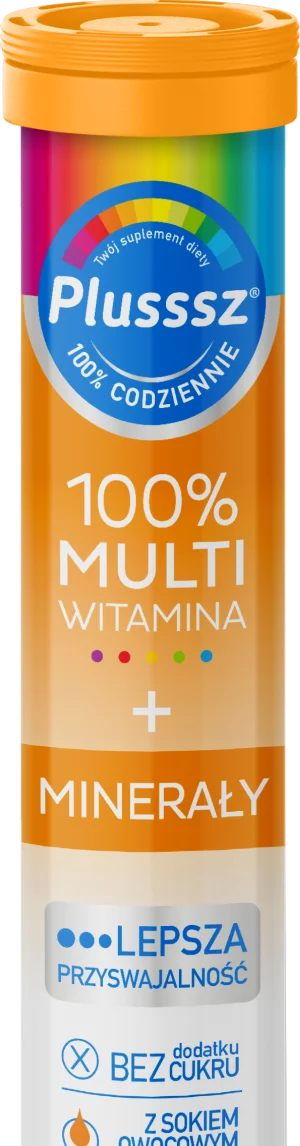
Most men training regularly in the UK are unknowingly operating at a nutrient deficit. A 2023 report from the British Nutrition Foundation found that a significant proportion of UK men fall short of recommended intakes for magnesium, zinc, and vitamin D, three nutrients that directly affect energy, testosterone support, and muscle recovery. If you are searching for the best men's multivitamin UK options and want something actually built around performance rather than a generic one-a-day tablet, this guide is for you. It covers what active men genuinely need, what to ignore, and how Plusssz Multivitamin MEN fits into a real training and nutrition routine.
Key Insight |
Explanation |
|---|---|
Sweat depletes more than water |
Active men lose magnesium, zinc, and B vitamins through sweat, meaning RDA levels designed for sedentary adults are often insufficient for those training regularly. |
Vitamin D deficiency is near-universal in the UK |
The NHS advises that everyone in the UK consider a vitamin D supplement from October to March. For men training indoors, this extends year-round. |
Zinc directly supports testosterone production |
Clinical data confirms that zinc deficiency reduces serum testosterone. Men with high training volumes are particularly at risk of suboptimal zinc status. |
Assimilability matters more than raw dosage |
A multivitamin listing 100% RDA is meaningless if the forms used have poor bioavailability. Chelated minerals and methylated B vitamins absorb significantly better. |
No added sugar formulas are preferable for performance |
Supplements with added sugars add empty calories and can interfere with blood glucose management, particularly relevant for men tracking body composition. |
Stacking with electrolytes amplifies recovery |
Combining a quality multivitamin with an electrolyte hydration product covers both micronutrient gaps and fluid balance, which are two separate but linked performance factors. |
Generic multivitamins are not built for men's physiology |
Men have different requirements than women for iron, calcium, and certain B vitamins. A formula tailored to men avoids unnecessary ingredients and includes higher doses of what matters. |
The standard supermarket multivitamin was not designed with a 30-year-old running 40 kilometres a week in mind. It was designed for the statistical average adult, which means sedentary, not particularly large, and not losing electrolytes and micronutrients through hard exercise sessions three to six times per week.
In practice, men who train regularly have measurably higher turnover of several key micronutrients. Magnesium is used in over 300 enzymatic processes, including those involved in ATP production, meaning your training literally burns through it faster. The data consistently shows that athletes have lower serum magnesium than non-athletes even when dietary intake appears adequate, because exercise accelerates both utilisation and urinary excretion.
A common mistake is assuming that eating a balanced diet covers all bases. It often does not, especially if training volume is high, caloric intake is controlled for body composition, or the diet leans heavily on processed convenience food. The gap between what active men consume and what they actually need is where a well-formulated men's multivitamin UK product earns its place in the daily routine.


Not all nutrients carry equal weight for men focused on performance, body composition, and long-term health. The following are the non-negotiables based on published research and real-world training demands.
Vitamin D3 supports testosterone synthesis, bone density, and immune function. K2 ensures that calcium is directed to bones rather than arterial walls. These two nutrients work as a pair, and any quality formula for men should include both. The NHS confirmed in 2021 that vitamin D deficiency affects around 1 in 5 adults in the UK, with indoor training and limited sun exposure making it worse.
Zinc supports testosterone levels, immune response, and protein synthesis. Magnesium underpins muscle relaxation, sleep quality, and energy metabolism. Both are commonly low in active men because of sweat loss and high metabolic demand during exercise. A 2009 study in the Journal of the International Society of Sports Nutrition found that ZMA supplementation (zinc, magnesium, and B6) improved hormonal status and sleep quality in competitive athletes.
B vitamins drive energy metabolism at the cellular level. B12 is particularly important for men following plant-forward diets, as dietary sources are almost exclusively animal-based. B6 supports neurotransmitter production and reduces exercise-induced inflammation. Methylated forms of B12 (methylcobalamin) and folate (methylfolate) are far better absorbed than the synthetic versions typically used in budget supplements.
Selenium supports thyroid function and acts as an antioxidant, protecting muscle cells from oxidative damage during intense training. Chromium supports insulin sensitivity, which is directly relevant for men managing body composition and carbohydrate intake around training sessions.
Pro tip: When checking a multivitamin label, look for magnesium glycinate or bisglycinate rather than magnesium oxide. Oxide has roughly 4% absorption. Glycinate forms absorb at rates closer to 80%, which makes a genuine difference to how your body actually responds.
Plusssz Multivitamin MEN is built around two principles that most competitor products compromise on: improved nutrient assimilability and a formula tailored to men's specific physiology rather than a unisex average.
The formula contains no added sugar, which matters for men tracking body composition or managing blood glucose responses around training. Many effervescent and gummy supplements on the UK market include several grams of sugar per serving, which adds up if you are taking them daily for months at a time.
Where Plusssz differentiates from brands like Science in Sport, High Five, and ORS Hydration is in the multivitamin dimension. Those brands do electrolytes well. They are primarily hydration products. Plusssz offers both hydration products and a dedicated multivitamin complex designed for men, meaning you can address two separate but complementary gaps with products from the same brand, formulated to work together.
"Nutritional gaps in athletes are often not dramatic deficiencies but chronic insufficiencies, where levels are technically above clinical thresholds but still suboptimal for performance, recovery, and hormonal function." Dr. Adam Collins, University of Surrey Nutrition Research
The Plusssz approach reflects this. Rather than maxing out a single nutrient to make label copy look impressive, the formulation targets the cluster of nutrients most likely to be chronically insufficient in active UK men. The result is a product you take because it supports how you actually feel and perform, not because the bottle makes bold claims.

The market offers three broadly different approaches to men's multivitamin supplementation. Each has a use case, but they are not equally suited to active men with specific performance goals.
Approach |
Best For |
Key Limitation for Active Men |
|---|---|---|
Generic one-a-day tablet (supermarket brand) |
Sedentary adults covering basic RDA gaps |
Doses too low for training demands, uses cheap mineral forms with poor absorption, no consideration of men's specific needs |
Sports nutrition brand multivitamin (e.g., added to energy or hydration product) |
Convenient all-in-one for endurance athletes |
Vitamins are secondary to the product's hydration or energy function, doses not optimised for men's hormonal or micronutrient profile |
Dedicated men's performance multivitamin (Plusssz Multivitamin MEN) |
Active men wanting targeted micronutrient support for performance, recovery, and hormonal health |
Requires pairing with a separate electrolyte product for full hydration coverage, though Plusssz electrolyte range is designed to complement it |
The data consistently shows that bioavailability is what separates effective supplementation from expensive habit formation. A product that sits at 100% RDA but uses oxide and carbonate mineral forms may deliver a fraction of what a product at 80% RDA using chelated forms actually gets into circulation.
Timing is a genuine variable when it comes to fat-soluble vitamins. Vitamins A, D, E, and K require dietary fat for absorption. Taking your multivitamin with a fat-free meal or drink reduces how much you actually absorb. In practice, taking Plusssz Multivitamin MEN with breakfast or your main meal, both of which typically contain some fat, is more effective than taking it with a plain glass of water mid-morning.
For men combining vitamins for men active lifestyle support with an electrolyte hydration routine, the stacking approach is straightforward. Use Plusssz electrolyte products around training for hydration and acute mineral replenishment. Use Plusssz Multivitamin MEN daily with food for baseline micronutrient coverage. These are different physiological needs addressed at different times, and combining them produces better overall coverage than trying to get everything from a single product.
High-dose calcium supplements taken at the same time as a zinc-containing multivitamin can compete for absorption pathways. If you are taking a standalone calcium supplement, separate it from your multivitamin by at least two hours. Similarly, large doses of vitamin C (above 1000mg) taken alongside iron can cause gastrointestinal discomfort in some men, though this is only relevant if your multivitamin contains iron, which most men's formulas do not at high levels.
Pro tip: If you train in the evening, avoid taking magnesium-containing supplements immediately pre-workout, as magnesium has a mild relaxation effect. Take your Plusssz Multivitamin MEN with your evening meal instead to support overnight recovery and sleep quality.
A common mistake is treating a multivitamin as a licence to eat poorly. Supplements are designed to fill gaps in an otherwise reasonable diet, not to compensate for weeks of poor food choices. The research is unambiguous on this point: whole food nutrient sources have synergistic effects that isolated supplements cannot replicate. What a quality multivitamin does is cover the chronic insufficiencies that persist even in men eating reasonably well.
Another mistake is cycling supplements on and off based on budget. For fat-soluble vitamins, consistency matters because tissue levels take weeks to accumulate and weeks to deplete. Stopping and starting every few weeks negates much of the benefit. If cost is a concern, a smaller consistent daily dose delivers more value than larger irregular doses.
Men also frequently over-invest in single-nutrient megadose products (standalone zinc, standalone B12, standalone vitamin D) without first establishing whether they are actually deficient in those specific nutrients. A well-formulated Plusssz Multivitamin MEN covering the full micronutrient spectrum is a more rational starting point than five separate bottles, especially if you have not had a recent blood panel confirming specific deficiencies.
Yes, meaningfully so. Men's formulas are typically lower in iron (adult men rarely need supplemental iron), contain higher doses of zinc and selenium relevant to testosterone support, and omit the higher folate doses included in women's products for reproductive health. For active men, the key differentiator is higher magnesium and B vitamin dosing to match increased metabolic demand from training.
Yes. The formulation is designed for daily use as part of a consistent routine. Water-soluble vitamins like B and C are excreted if consumed in excess, so daily intake maintains consistent tissue levels without accumulation risk. Fat-soluble vitamins (A, D, E, K) at the doses used in standard multivitamins are safe for long-term daily use for the vast majority of healthy adults.
For most active UK men, yes. The challenge is that even a balanced diet rarely compensates for sweat-related micronutrient losses from regular training, the near-universal vitamin D shortfall due to UK climate, and the soil depletion of magnesium and zinc in modern food production. A quality multivitamin addresses these persistent gaps without replacing whole food nutrition.
Science in Sport and High Five are primarily sports nutrition and hydration brands. Their vitamin content, where it exists, is typically secondary to their energy or hydration product functions. Plusssz Multivitamin MEN is a dedicated men's micronutrient formula, designed to complement rather than duplicate Plusssz's electrolyte hydration products. The two categories serve different purposes and both have a place in an active man's routine.
With your largest meal of the day, ideally one containing some dietary fat to support absorption of fat-soluble vitamins. For most men this is breakfast or dinner. Avoid taking your multivitamin immediately before training as digestive resources are redirected during exercise, and avoid taking it on an empty stomach if you are sensitive to B vitamins, which can occasionally cause mild nausea when taken without food.
Yes, and they serve different functions. A multivitamin provides baseline daily micronutrient coverage across vitamins and trace minerals. An electrolyte product replaces sodium, potassium, magnesium, and chloride lost acutely through sweat during exercise. Using Plusssz electrolyte hydration products around training and Plusssz Multivitamin MEN daily with food covers both needs without overlap or redundancy.
If you are currently taking a men's multivitamin or have tried Plusssz Multivitamin MEN, share what difference you have noticed in your training and recovery. Your experience helps others make better decisions.