Over 60% of UK adults take a dietary supplement regularly, yet most admit they have no idea whether what they bought actually matches their needs. That gap between purchase and purpose is costly, both financially and physically. This buying guide for multivitamins in the UK cuts through the marketing noise and gives you a specific, practical checklist so you stop guessing and start buying with confidence. Whether you are looking at electrolyte products for training days or a daily multivitamin to cover nutritional gaps, every point in this guide applies directly to what you are about to spend money on.
Key Insight |
Explanation |
|---|---|
Check the form of each nutrient, not just the dose |
Magnesium oxide is cheap and poorly absorbed. Magnesium citrate or bisglycinate delivers far more usable magnesium per milligram. |
No added sugar matters more in electrolytes than multivitamins |
Many electrolyte powders and tablets are loaded with glucose or maltodextrin. For non-endurance use, that adds unnecessary calories with no benefit. |
UK NRV percentages are a floor, not a target |
Nutrient Reference Values set the minimum to prevent deficiency. Active individuals often need 150 to 300% NRV for certain B vitamins and vitamin D. |
Electrolyte products without sodium are almost useless post-exercise |
Sodium is the primary electrolyte lost through sweat. Any product skipping it is designed for marketing aesthetics, not actual rehydration. |
Demographic-specific formulas are not just marketing |
Iron needs differ significantly between pre-menopausal women and men. Zinc and selenium ratios matter differently for male hormonal health. One-size formulas compromise on both. |
Third-party testing or quality certification is non-negotiable |
The UK supplement market is not pre-approved by the MHRA. Independent batch testing is the only way to verify label accuracy and contaminant absence. |
Tablet count relative to daily dose is a hidden cost driver |
A 60-count bottle taken twice daily lasts 30 days. A 90-count bottle taken three times daily also lasts 30 days. Calculate cost-per-day, not cost-per-bottle. |
The single biggest mistake is treating a supplement purchase the same way you would buy a bottle of water. People grab the product with the most familiar name, the most colourful packaging, or the lowest price on Amazon, and assume the contents are roughly equivalent across brands. In practice, the difference between a well-formulated multivitamin and a cheaply produced one can be the difference between meaningful nutritional support and expensive urine.
A second common error is conflating electrolyte supplements with sports drinks. Electrolyte tablets and powders designed for active individuals are not the same as a high-sugar isotonic drink from a petrol station. The former is a targeted formulation. The latter is mostly glucose with a trace of sodium and potassium added for labelling purposes.
The third mistake, and perhaps the most damaging for repeat buyers, is ignoring demographic fit. A generic multivitamin designed for a 35-year-old male recreational runner is actively the wrong product for a 55-year-old woman doing high-intensity classes five days a week. Nutrient needs diverge significantly based on age, sex, and activity level.
Pro tip: Before you read a single label, write down your three primary health or performance goals. Every purchasing decision in this guide should filter back through those three goals. If a product cannot clearly support at least two of them, it is not the right product for you.

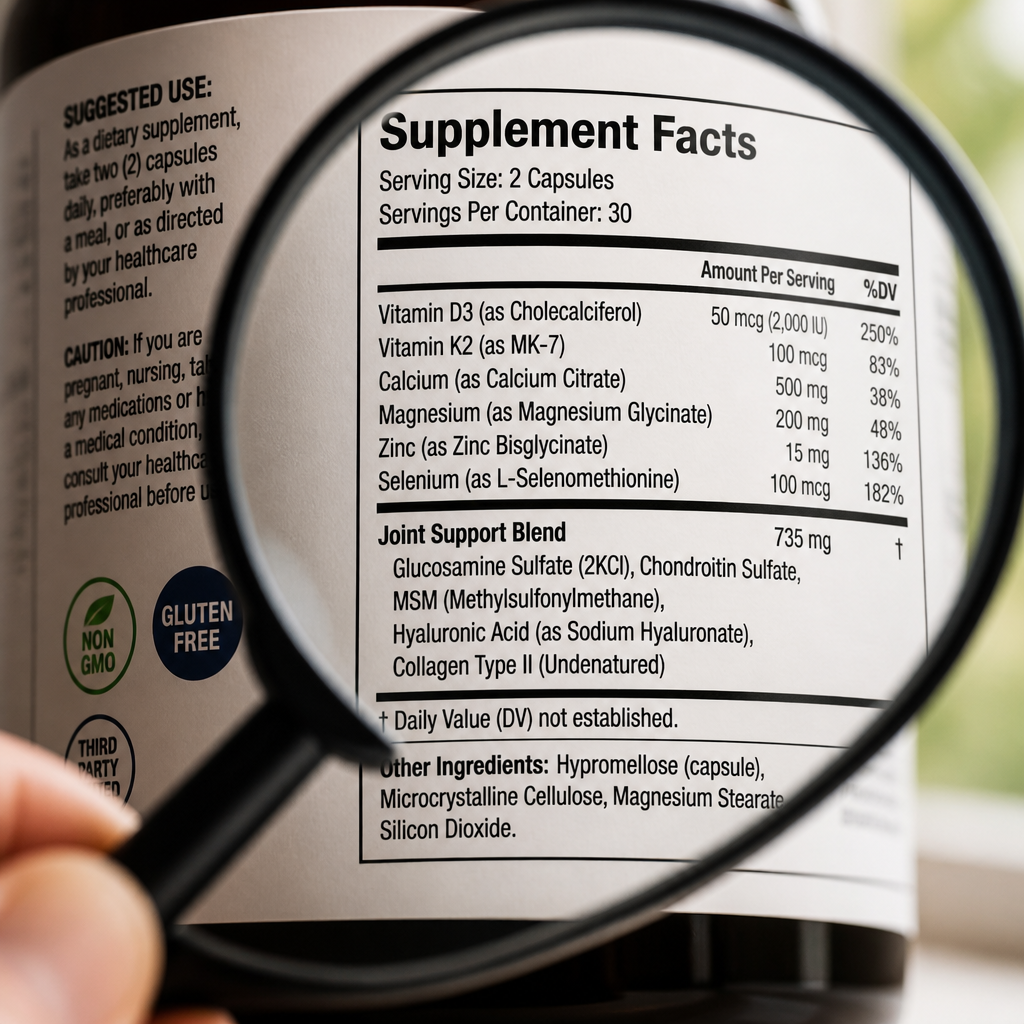
UK supplement labels follow Food Supplement Regulations 2003 and must display the nutrient content per recommended daily serving, alongside the percentage of the Nutrient Reference Value (NRV). What they do not have to tell you upfront is the bioavailability form of each nutrient. That is buried in the ingredient list, and most buyers never check it.
For vitamins, look for methylcobalamin over cyanocobalamin (B12), methylfolate over folic acid (B9), and retinol or mixed carotenoids over synthetic vitamin A. For minerals, citrate, bisglycinate, and picolinate forms of zinc, magnesium, and iron are consistently better absorbed than oxide or carbonate equivalents. The data consistently shows that chelated minerals produce measurably higher plasma concentration increases compared to inorganic salts at the same dose.
Always divide the total tablet or capsule count by the daily serving size before comparing prices. A product listing 180 tablets at three per day is a 60-day supply. A product with 120 tablets at two per day is also 60 days. The bottle count is irrelevant. Cost per day is the only figure that matters for value comparison.
Check for magnesium stearate (a flow agent that can reduce absorption at high doses), silicon dioxide, and artificial colours. None of these are harmful in small amounts, but their presence in large quantities often signals a product formulated for cost efficiency rather than performance. Cleaner formulas from specialist brands use fewer excipients because their manufacturing process does not require them.
Active individuals deplete certain micronutrients faster than sedentary populations. A 2022 review published by researchers associated with the British Journal of Nutrition found that regular moderate-to-high intensity exercise increases the urinary excretion of B vitamins, zinc, and magnesium by 20 to 40% compared to rest days. A standard one-a-day multivitamin formulated for general adults simply does not account for that increased demand.
Vitamin D3 should be present at a minimum of 1000 IU (25mcg) in any multivitamin targeting active UK adults. The UK government recommends 400 IU as a minimum for general adults, but that recommendation is based on preventing severe deficiency, not optimising muscle function and immune response. For anyone training indoors or in northern England and Scotland, 2000 IU is a more realistic functional dose.
Magnesium is involved in over 300 enzymatic reactions, including ATP production and muscle contraction recovery. Any multivitamin providing less than 100mg of elemental magnesium per day in a high-bioavailability form is under-delivering for active users. Zinc at 10 to 15mg per day supports testosterone maintenance and immune function during periods of heavy training. B-vitamin complex, particularly B6, B12, and folate, support energy metabolism and red blood cell production.
Vitamins C and E, selenium, and alpha-lipoic acid reduce exercise-induced oxidative stress. However, the research is clear that excessive antioxidant supplementation can blunt training adaptations. A multivitamin that provides 100% to 150% NRV of these nutrients is supportive. One providing 500% NRV of vitamin C daily is working against your adaptation goals.
Pro tip: If you train more than four times per week, prioritise a multivitamin that specifically lists its target demographic on the label. A product designed for active adults will be dosed differently from a standard multivitamin even when using identical ingredient lists, because the serving size and ratios will be calibrated differently.
The electrolyte supplement market in the UK has exploded over the past five years. A Statista market report from 2023 valued the UK sports nutrition market at over £470 million, with hydration products among the fastest-growing subcategories. That growth has attracted both well-formulated products and low-quality imitations. Knowing what to look for is the difference between buying something functional and buying flavoured water in a foil packet.
A functional electrolyte supplement must contain sodium, potassium, and magnesium at minimum. Sodium is the primary driver of rehydration because it retains water in the bloodstream and stimulates thirst. Any product omitting sodium in favour of a cleaner label is prioritising aesthetics over physiology. Potassium supports cellular fluid balance and helps prevent muscle cramping. Magnesium supports neuromuscular function and is lost in significant quantities through sweat during prolonged exercise.
Chloride is often overlooked but plays a direct role in maintaining blood pH during intense exercise. Calcium in small doses supports the electrochemical gradient needed for muscle contraction. Products containing all five electrolytes in physiologically relevant doses are relatively rare. Many popular brands provide sodium and potassium and stop there.
For training sessions under 90 minutes, there is no performance benefit to consuming carbohydrates through an electrolyte product. The research supporting carbohydrate-electrolyte drinks is specific to endurance events and prolonged high-intensity efforts. For gym sessions, CrossFit classes, five-a-side football, and similar activities, a no-added-sugar electrolyte formula is the correct choice. It delivers the electrolytes without the caloric load that undermines body composition goals.
"Hydration status before exercise begins is the single most controllable performance variable for recreational athletes. Even mild dehydration of 1 to 2% body weight impairs cognitive function, endurance, and strength output." - American College of Sports Medicine, Position Stand on Exercise and Fluid Replacement
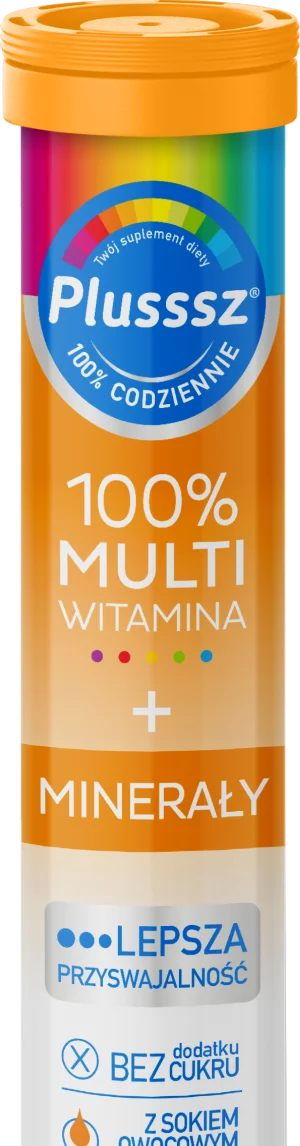
Plusssz UK operates in a crowded market that includes Science in Sport, High Five, and ORS Hydration. What separates a specialist brand from those competitors is whether the formulation decisions were made by nutritional scientists for a specific active demographic, or by a marketing team looking to compete on price per unit.

Plusssz builds its product range around no added sugar, improved nutrient assimilability, and demographic-specific blends. That is not a marketing claim unique to them, but the specific implementation matters. Improved assimilability means selecting the bioavailable mineral and vitamin forms discussed above, not just listing a higher dose of a cheaper form. When a Plusssz multivitamin lists the magnesium source as bisglycinate rather than oxide, that is a meaningful formulation decision that costs more to manufacture and delivers better results.
Plusssz offers separate formulations for women, men, seniors, and sports-focused individuals. This is the correct approach. A women's formula typically includes higher iron, folic acid or methylfolate, and iodine. A men's formula prioritises zinc, selenium, and B6 for hormonal and testosterone support. A senior formula increases vitamin D3, B12, and calcium relative to a standard adult product. These are not cosmetic differences; they reflect genuinely different physiological requirements.
The Plusssz electrolyte products are formulated without added sugar, which immediately differentiates them from High Five's isotonic range (which contains glucose) and standard ORS products (which use sucrose as a carrier). For active individuals whose training goals include body composition management alongside hydration, this is not a small distinction. Science in Sport's electrolyte offerings are more closely positioned in the no-sugar space, but their multivitamin range lacks the demographic specificity that Plusssz provides.
Format |
Best Use Case |
Key Limitations |
|---|---|---|
Electrolyte Powder (no added sugar) |
Training sessions under 90 minutes, daily hydration support, body composition-focused athletes |
Requires measuring and mixing; less convenient for on-the-go use without pre-preparation |
Electrolyte Tablet (dissolvable) |
Travel, outdoor sports, situations where carrying powder is impractical |
Often contains fewer electrolyte types; sodium content varies widely between products |
Demographic-Specific Multivitamin (capsule or tablet) |
Daily nutritional baseline for active adults with specific age or sex-based requirements |
Should be combined with, not substituted for, targeted electrolyte products on training days |
The supplement industry spent decades selling a single multivitamin formula to every adult regardless of age, sex, or activity level. That approach persists in supermarket own-label products and large FMCG brands. The evidence against it is overwhelming. Nutrient requirements diverge substantially across demographics, and buying a correctly targeted product is the most impactful single decision you can make in this category.
Iron deficiency is the most common nutrient deficiency in pre-menopausal women in the UK, according to NHS data. A multivitamin without adequate iron (at least 14mg daily in a bioavailable form like ferrous bisglycinate) is insufficient for this group. Additionally, iodine, which supports thyroid function and metabolic rate, is chronically under-consumed in women who avoid dairy and seafood. B12 in methylcobalamin form is critical for anyone following a plant-based diet.
Zinc at 10 to 15mg daily supports testosterone production and immune function. Selenium at 55 to 100mcg supports antioxidant enzyme activity and male reproductive health. Vitamin D3 at 2000 IU supports both testosterone levels and muscle recovery. A men's multivitamin that does not include all three of these in meaningful doses is not addressing the primary nutritional gaps in this demographic.
Gastric acid production declines with age, which directly reduces the absorption of B12, iron, zinc, and calcium from food and from poorly formulated supplements. Seniors benefit most from sublingual B12 formats or highly bioavailable forms like methylcobalamin. Vitamin D requirements increase with age due to reduced skin synthesis. Any senior-targeted multivitamin providing less than 25mcg (1000 IU) of D3 per day is under-dosed for the demographic it claims to serve.
Some products should be disqualified before you read the full label. Knowing what to reject on sight saves time and protects against wasted money. A common mistake is assuming that price signals quality in the supplement market. It does not. Several expensive products use inferior nutrient forms, and some well-priced specialist brands use premium forms because their margins come from volume, not per-unit premium.
The following are absolute disqualifiers for any serious buyer. First, no batch testing information or quality certification visible on the label or the brand website. The UK supplement market is self-regulated. Without independent testing, you have no way to verify that the product contains what the label claims. Second, a proprietary blend that hides individual ingredient doses behind a total blend weight. This is used to conceal under-dosing. Third, artificial sweeteners in an electrolyte product that explicitly claims to be sugar-free. Aspartame and acesulfame-K are not inherently dangerous in small amounts, but their presence in a hydration product raises questions about whether the formulation prioritises health outcomes or palatability.
Fourth, any product making disease-specific claims on the label. UK law prohibits supplements from claiming to treat, cure, or prevent disease. A product that does so is either operating illegally or is misleading you about its regulatory status. Fifth, an address of origin outside the UK or EU with no named UK responsible person listed. This is a legal requirement under UK food supplement law, and its absence signals a product that may not have been manufactured to GMP standards.
Pro tip: Search the brand name followed by "batch test" or "certificate of analysis" before purchasing. Legitimate brands publish these documents or provide them on request. If a brand's customer service cannot produce one, move on.
Yes, for most active adults these two products address different needs. A multivitamin covers your baseline micronutrient requirements across vitamins and minerals daily. An electrolyte supplement addresses acute fluid and mineral replacement during and after training sessions. They are complementary, not interchangeable. Using one in place of the other leaves a significant gap in your nutritional support.
For nutrients you were already deficient in, you may notice improvements in energy, sleep quality, or recovery within two to four weeks. For nutrients you were borderline deficient in, the timeline is longer and the changes more subtle. B12 and vitamin D deficiencies typically show measurable blood level improvement within six to eight weeks of consistent supplementation at appropriate doses. Do not judge a quality multivitamin by a two-week window.
For most healthy adults, yes. Daily electrolyte supplementation with a no-added-sugar product is safe and can support consistent hydration levels, particularly during hot weather or in individuals who sweat heavily at baseline. The risk of electrolyte overconsumption from a standard supplement dose is negligible for people with normal kidney function. If you have hypertension or kidney disease, consult your GP before starting any electrolyte product due to the sodium content.
UK and US supplements differ in three practical ways. First, the UK uses NRV percentages rather than US Daily Values, so the percentage figures are not directly comparable between labels. Second, UK products are typically lower in vitamin A (retinol) due to EFSA upper limits being lower than US tolerable upper intake levels. Third, many US brands include iron at high doses in general formulas, which is not standard in UK adult multivitamins outside women's-specific products. Always verify that a product's dosing is calibrated to European regulatory standards if you want it to be legally appropriate for UK use.
Electrolyte supplements are not exclusively for high-intensity athletes. Office workers in air-conditioned environments, people who drink high volumes of plain water, and individuals recovering from illness can all benefit from electrolyte supplementation. Plain water in large quantities actually dilutes blood sodium levels. A no-added-sugar electrolyte product used once daily supports hydration quality without adding calories or sugar, making it suitable for daily use regardless of exercise intensity.
Calculate cost per day, not cost per pack. Divide the retail price by the number of daily servings the pack provides. Then compare those figures across products. Also account for the bioavailability of the nutrients. A product at 80p per day using bisglycinate magnesium is better value than one at 60p per day using magnesium oxide, because the effective dose delivered to your cells is meaningfully higher with the more expensive form.
Have you recently switched from a generic multivitamin to a demographic-specific or activity-focused formula? Share what changed for you and whether the difference matched your expectations.