September is the month when routines snap back into shape. Gym memberships get used again, running routes get dusted off, and training blocks restart after a summer that was probably more inconsistent than intended. But there is a problem most active adults in the UK walk straight into: your body does not simply pick up where it left off. Daylight drops, indoor training ramps up, sweat losses accumulate across sessions, and micronutrient gaps that were manageable in summer quietly become performance bottlenecks. Building a solid supplement stack UK for this transition is not about piling up products. It is about covering the specific physiological gaps that autumn training opens up, and doing it intelligently.
Most supplement advice treats all months the same. That is a mistake. September sits at a genuine physiological inflection point for anyone training regularly in the UK. Sunlight hours are dropping sharply, which means the skin-synthesis pathway for vitamin D starts closing off. At the same time, training volumes often increase as structured autumn programmes begin, which raises electrolyte losses through sweat and puts greater demands on the micronutrient systems underpinning recovery.
The result is a mismatch: training stress rises at exactly the moment that one of the UK's most common nutritional shortfalls, vitamin D, starts to deepen. Research on UK university athletes published in a peer-reviewed study found that serum 25-hydroxyvitamin D levels fell significantly between autumn and spring, from an average of around 52.8 nmol/L in autumn to 31.0 nmol/L by spring. That drop happens while athletes are training harder, not resting.
September is also when most people make the transition from outdoor to indoor training, reducing incidental sunlight exposure even further. If you are running outdoors less and spending more time in a gym, a sports hall, or a pool, your vitamin D synthesis window shrinks to near zero on most days. This is not a minor issue. It is a foundational one that affects muscle function, immunity, and recovery quality across the entire winter training block.


Building an effective active lifestyle supplements plan requires understanding which gaps are genuinely caused or worsened by the September transition, rather than trying to supplement everything at once. There are three that matter most for active adults in the UK.
Vitamin D deficiency between October and March is near-universal among UK adults who do not supplement. For those training indoors or in northern England and Scotland, the case for starting supplementation in September rather than waiting for October is strong. A research protocol developed for world-class British swimmers recommended 4,000 IU of vitamin D3 daily for athletes with levels below 30 nmol/L from September to March, and from October to March for those with levels between 30 and 79 nmol/L. A study published in Nutrients found that following a structured protocol eliminated vitamin D deficiency in 93% of British swimmers after two years of consistent supplementation.
For most active adults without access to regular blood testing, the practical position is straightforward: start a daily vitamin D3 supplement in September and continue it through March. A quality multivitamin designed for active individuals should carry meaningful vitamin D3, not a token 400 IU dose that made sense for a sedentary office worker in the 1970s.
Dietary surveys consistently show UK adults consuming below the Reference Nutrient Intake for magnesium. This gap is compounded for active individuals because magnesium is lost through sweat, meaning training sessions increase the shortfall beyond what diet can reasonably cover. Magnesium underpins muscle contraction, nerve function, sleep quality, and energy metabolism. A low magnesium status does not produce one obvious symptom. It produces a cluster of vague ones: poor sleep, muscle tightness, fatigue that does not resolve with rest, and reduced training adaptation.
The form of magnesium matters enormously. Magnesium oxide, the cheapest and most common form in low-quality supplements, has poor absorption. Magnesium citrate or bisglycinate delivers substantially more usable magnesium per milligram, which is why checking the label for mineral form, not just the dose, is essential when evaluating any supplement stack UK product.
As training volume rises in September, so does the demand for B vitamins involved in energy metabolism. B12 is particularly relevant for those following plant-based diets, which have grown popular among endurance athletes. Meanwhile, increased sweat losses from higher-intensity sessions deplete sodium, potassium, and magnesium faster than food alone can replenish between training days.
UK Nutrient Reference Values are a floor, not a performance target. Active individuals often require 150 to 300% NRV for certain B vitamins and vitamin D because the NRVs were set to prevent deficiency in sedentary adults, not to support high-frequency training and recovery in active ones.
A balanced diet replaces resting micronutrient needs reasonably well, but exercise dramatically increases sweat losses of sodium, potassium, and magnesium that food alone cannot replenish fast enough between sessions.
The September supplement stack for an active UK adult does not need to be complicated. In practice, two product categories do most of the work: a well-formulated electrolyte product for training days and a demographic-appropriate multivitamin for daily micronutrient coverage. The combination of electrolytes and multivitamins UK is not about redundancy. Electrolytes address acute hydration and mineral losses during and after training. Multivitamins address the chronic background deficiencies that accumulate over weeks and months.
Athletes who hydrate well but carry chronic vitamin D, magnesium, or B12 deficiencies still report fatigue, poor recovery, and reduced training adaptation. Conversely, someone taking a comprehensive multivitamin for active people but neglecting electrolyte replacement during training will still cramp, fade, and underperform in sessions lasting over an hour. The stack approach, pairing a high-quality electrolyte formula with a well-formulated multivitamin complex, is the sensible baseline for anyone training more than three times per week.
Sodium is the primary electrolyte lost through sweat and the most important one to replace. Any electrolyte product that omits sodium is not designed for actual rehydration. It is designed for marketing aesthetics. After sodium, potassium and magnesium matter for muscle contraction, nerve signalling, and avoiding the cramping and fatigue that derail training blocks.
For most gym sessions, CrossFit classes, five-a-side football, and similar activities lasting under 90 minutes, there is no performance benefit to electrolytes that contain added sugar. The research supporting carbohydrate-electrolyte drinks is specific to endurance events and prolonged high-intensity efforts. For everyday active use, a no-added-sugar electrolyte formula is the correct choice. Plusssz Electrolytes are formulated without added sugar, which directly differentiates them from competitors like High Five's isotonic range (which contains glucose) and standard ORS products (which use sucrose as a carrier).
Pro tip: On rest days, you still lose electrolytes through normal daily activity. A half-serving of your electrolyte product on non-training days maintains baseline sodium and magnesium status without over-supplementing.
The form of each nutrient matters more than the headline percentage of NRV. Chelated minerals and methylated B vitamins absorb significantly better than their cheaper counterparts. A multivitamin listing 100% NRV in magnesium oxide is nutritionally less useful than one listing 60% NRV in magnesium bisglycinate.
Demographic-specific formulas are not just marketing. Iron needs differ significantly between pre-menopausal women and men. Zinc and selenium ratios matter differently for male hormonal health. A one-size-fits-all formula makes compromises on both. The Plusssz Multivitamin range addresses this with formulations tailored to women, men, and seniors, all built around improved nutrient assimilability rather than raw dose size.
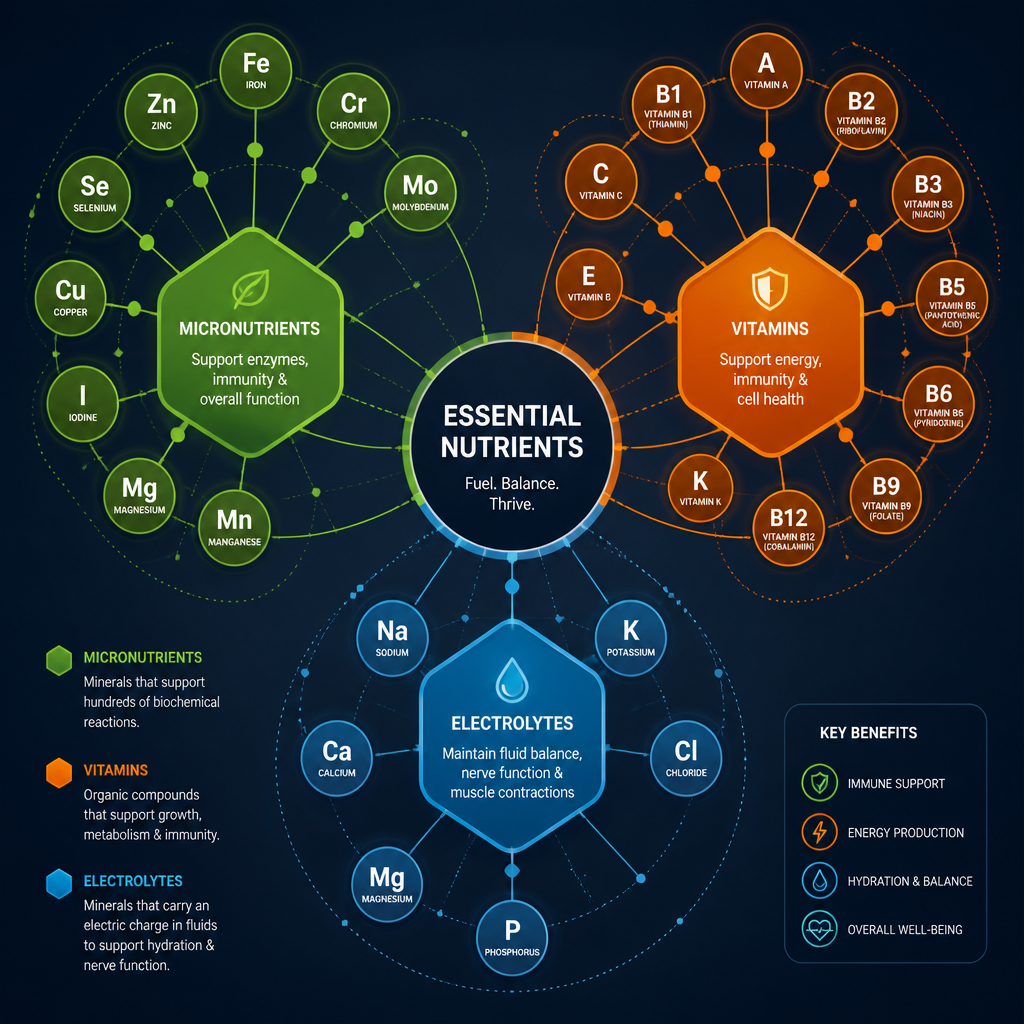
The September stack is not one-size-fits-all. Different demographics face different physiological pressures as autumn training ramps up. Here is how to think about the stack depending on who you are.
For this group, the priority is supporting training adaptation and managing the increased recovery demands of a structured autumn programme. The core stack is a daily multivitamin covering vitamin D3, B vitamins, zinc, and magnesium, combined with an electrolyte product used on every training day. Zinc directly supports testosterone production, and men with high training volumes are at particular risk of suboptimal zinc status. A men's or women's targeted multivitamin ensures the right ratios for each demographic rather than averaging them out.
Pro tip: Take your multivitamin in the evening on rest days. Recovery and adaptation processes are most active during sleep, and nutrient availability during that window matters more than most people realise.
Older adults experience reduced thirst sensitivity, meaning the biological signal to drink arrives later and less strongly than in younger individuals. This makes proactive electrolyte replacement even more important as training frequency rises in September. Kidney function also changes with age, affecting how efficiently electrolytes are retained and excreted. Even mild dehydration of one to two percent of body weight is linked to reduced concentration, increased confusion, and slower reaction times.
For this demographic, the Plusssz Electrolytes SENIOR formulation is built specifically around these physiological realities, with no added sugar and a mineral blend that goes beyond basic sodium and potassium. Standard sports drinks loaded with glucose are not appropriate for daily senior hydration, and specialist no-added-sugar electrolyte supplements with a comprehensive mineral profile are the practical solution.
There are broadly three ways active UK adults approach supplementation in September. Understanding the trade-offs of each makes it easier to see why the stack approach outperforms the alternatives.
Approach |
What It Covers |
Where It Falls Short |
|---|---|---|
Diet Only (no supplements) |
General macronutrient and some micronutrient needs at rest |
Cannot adequately replenish sweat electrolyte losses; vitamin D synthesis shuts down in UK from October; magnesium intake chronically below RNI for most UK adults |
Single Product (electrolyte OR multivitamin) |
Either acute hydration or chronic micronutrient coverage, but not both |
Addresses one side of the equation while leaving the other open; fatigue and poor recovery persist even with good hydration if background deficiencies remain |
Electrolyte + Targeted Multivitamin Stack (e.g. Plusssz Electrolytes Multivitamin combination) |
Acute electrolyte replacement on training days, plus daily micronutrient coverage including vitamin D3, B vitamins, chelated minerals, and demographic-appropriate formulation |
Requires a small daily commitment; slightly higher cost than single products, though far less than the cumulative cost of poor recovery and stalled adaptation |
The stack approach wins for active adults training more than three times per week. For those training less frequently, a quality multivitamin alone covers the chronic gaps adequately, but electrolyte support during any session over an hour remains worthwhile regardless of training frequency.
Building the right supplement stack UK plan is only half the work. A common mistake is purchasing good products and then using them inconsistently or in the wrong sequence. Electrolytes taken only after training miss the pre-training hydration window that determines how well you perform in the session itself. Research consistently shows that most UK adults arrive at training sessions already in a mild fluid deficit, which means electrolyte preparation should start before exercise, not after.
A second common mistake is choosing supplements based on price per serving without checking mineral forms. Magnesium oxide is cheap and widely used in budget multivitamins. It delivers poor usable magnesium. Paying slightly more for bisglycinate or citrate forms means each serving actually does the job the label implies. Third-party testing and quality certification are non-negotiable for any supplement added to your stack. The UK supplement market varies significantly in quality, and certification provides a meaningful signal about what is actually in the product.
A third mistake is treating UK Nutrient Reference Values as targets. They are minimums to prevent deficiency in sedentary adults. For someone training four or five times per week, hitting 100% NRV of vitamin D from a multivitamin is not sufficient during the October to March period. Look for products where the vitamin D3 dose reflects the needs of active individuals, not the baseline for avoiding rickets.
Pro tip: If you are stacking electrolytes and a multivitamin, separate them by a few hours when possible. Some minerals can compete for absorption pathways when taken simultaneously in very high doses, though at typical supplement levels this matters less than consistency of use overall.
September is the sensible starting point for active adults in the UK, particularly those who train indoors. Sunlight hours and UV intensity drop sharply from September onward, closing the skin-synthesis pathway for vitamin D. Waiting until October means the first weeks of your autumn training block are running on a depleted and falling vitamin D status. Research on world-class British swimmers recommended starting supplementation from September for those with lower baseline vitamin D levels.
No. Electrolyte products and multivitamins solve different problems. An electrolyte product replaces sodium, potassium, and magnesium lost through sweat during and after training. A multivitamin covers chronic background deficiencies, including vitamin D3, B vitamins, zinc, and other micronutrients that accumulate as gaps over weeks and months regardless of training status. Using only one of these leaves meaningful nutritional holes in your stack.
For most training sessions lasting under 90 minutes, yes. The research supporting carbohydrate-electrolyte drinks applies specifically to endurance events and prolonged high-intensity efforts. For gym sessions, group fitness classes, and typical training sessions, a no-added-sugar electrolyte formula replaces the minerals that matter without adding unnecessary calories. For sessions over 90 minutes at high intensity, some carbohydrate alongside electrolytes becomes genuinely useful for sustaining output.
Not necessarily a different product, but you should check that your current multivitamin has meaningful vitamin D3 dosing, since this is the nutrient whose gap widens most sharply from September onward. A multivitamin formulated for active individuals and tested for quality, with methylated B vitamins and chelated minerals, remains appropriate year-round. The key September adjustment is ensuring vitamin D3 is part of the formula rather than an afterthought, and supplementing at levels appropriate for the UK autumn and winter months.
Science in Sport and High Five are primarily sports nutrition brands targeting performance during training, with many of their electrolyte products containing glucose or other carbohydrates designed for endurance events. Plusssz is built around a different philosophy: electrolyte and multivitamin formulations for active individuals who want no added sugar, improved nutrient assimilability, and demographic-specific formulations covering daily micronutrient needs alongside hydration. For anyone whose training goals include body composition management, health maintenance, and consistent daily supplementation rather than race-day fuelling, the Plusssz stack is built for a different and broader purpose.
The practical minimum is a daily multivitamin that includes meaningful vitamin D3, methylated B vitamins, and chelated magnesium, plus a no-added-sugar electrolyte product used on every training day. This covers the chronic micronutrient gaps that worsen through autumn and the acute electrolyte losses from training. Everything else, creatine, protein, additional adaptogens, is secondary to getting these two foundations right first.
Have you tried running a combined electrolyte and multivitamin stack through a UK autumn training block? Share what worked and what you would do differently.