Most active people in the UK treat hydration as a single problem with a single solution: drink more water. That approach works fine on the sofa. On a squash court, mid-way through a 60-mile ride, or at mile 18 of a marathon, it is not enough. Sport-specific hydration UK athletes need goes far beyond sipping from a bottle when thirsty. Squash, cycling, and running each impose radically different demands on your fluid and electrolyte balance, and matching your strategy to your sport is the single most practical performance lever most recreational athletes are not pulling. This guide breaks it down sport by sport so you can stop guessing.
Key Insight |
Explanation |
|---|---|
Squash players sweat more than they think |
Research on elite squash players found a mean sweat rate of around 1.1 litres per hour, and many players still under-drink during sessions. |
Cycling allows scheduled drinking; running does not always |
On a bike you have hands free and bottles within reach. Runners must plan around race-course aid stations or carry their own fluid, making pre-hydration more critical. |
Sodium is the priority electrolyte in all three sports |
Sodium is lost in the highest quantity through sweat and governs fluid retention. Without it, drinking extra water can actually dilute your plasma sodium further. |
Running generates more core heat per kilometre than cycling |
Because running is mechanically less efficient, your body produces more heat for the same distance covered, pushing sweat rates higher at equivalent effort levels. |
Squash drink windows are measured in seconds, not minutes |
Changeovers and between-game intervals are short and irregular. Pre-match hydration and concentrated electrolyte intake during those gaps is the only realistic strategy. |
Electrolytes without sugar matter for training sessions |
High-sugar drinks are designed for race-day carbohydrate fuelling, not everyday training. A no-added-sugar electrolyte formula is appropriate for most training sessions across all three sports. |
Post-exercise rehydration is 1.5 litres per kilogram of body weight lost |
Replacing fluid lost by body weight (weigh before and after exercise) at that ratio, ideally with sodium, is the most reliable recovery hydration target across all sports. |
The mistake most people make is treating hydration as a volume problem. Drink X litres, job done. But hydration performance depends on three interacting variables: fluid volume, electrolyte composition, and timing. All three shift significantly depending on the sport you are doing, the duration, the intensity, and even the environment you are in.
A recreational cyclist going out for a two-hour spin faces completely different physiological demands from a squash player grinding through five games in a sweltering club court, even if both sessions last roughly the same amount of time. The running, cycling, and squash communities in the UK each have distinct patterns of sweat loss, fuelling opportunity, and gut tolerance, and those differences should dictate what you drink, when you drink it, and how much sodium you include.
Developing an optimal hydration strategy is not a one-size-fits-all approach. Sweat rates are highly individualised and are the main determinant of how much you need to replace.
Understanding these differences will also prevent you from wasting money on products that do not match your actual needs. A concentrated carbohydrate sports drink designed for a three-hour endurance event is not the right choice for a 45-minute club squash match. Similarly, pure water is not enough for a four-hour sportive in warm conditions. Matching the product to the sport is the starting point of any credible hydration plan.
Squash looks like an indoor sport, which leads many players to underestimate how much they lose. Court temperatures can climb, rallies are explosive, and the sport is played at very high intensity relative to most recreational activities. Research published in a peer-reviewed journal studying elite players found a mean sweat rate of approximately 1.1 litres per hour, with significant variation between male and female players. Despite this, many players finished sessions in a measurable fluid deficit.
The bigger issue is sodium. That same research reported a mean sweat sodium concentration of around 46 millimoles per litre. That is meaningful mineral loss in a sport where most players drink nothing but water at changeovers, if they drink at all. Replacing fluid without sodium does not restore plasma volume properly, and you can feel cognitively off before your legs even notice the dehydration.
The rules of squash allow players to drink at the end of each game. In competitive play, those windows are brief. That means the real hydration work happens before the match and immediately after it. Arriving at the court already well hydrated, with adequate sodium on board, gives you a meaningful head start before the first rally. A no-added-sugar electrolyte drink consumed 30 to 45 minutes before play, rather than plain water alone, is a practical and simple upgrade.
Between games, sipping a small volume of a sodium-containing drink rather than gulping plain water reduces the risk of a sudden dilution effect on plasma sodium. Keep the drink within arm's reach at your kit bag. Do not wait until you feel thirsty, because thirst during squash tends to arrive after you are already behind.
Pro tip: Weigh yourself before and after a squash session at least once per month. Each kilogram of body weight lost represents roughly one litre of fluid. If you are consistently losing more than 1.5% of body weight, your current hydration routine is not keeping pace with your sweat rate and needs adjusting.
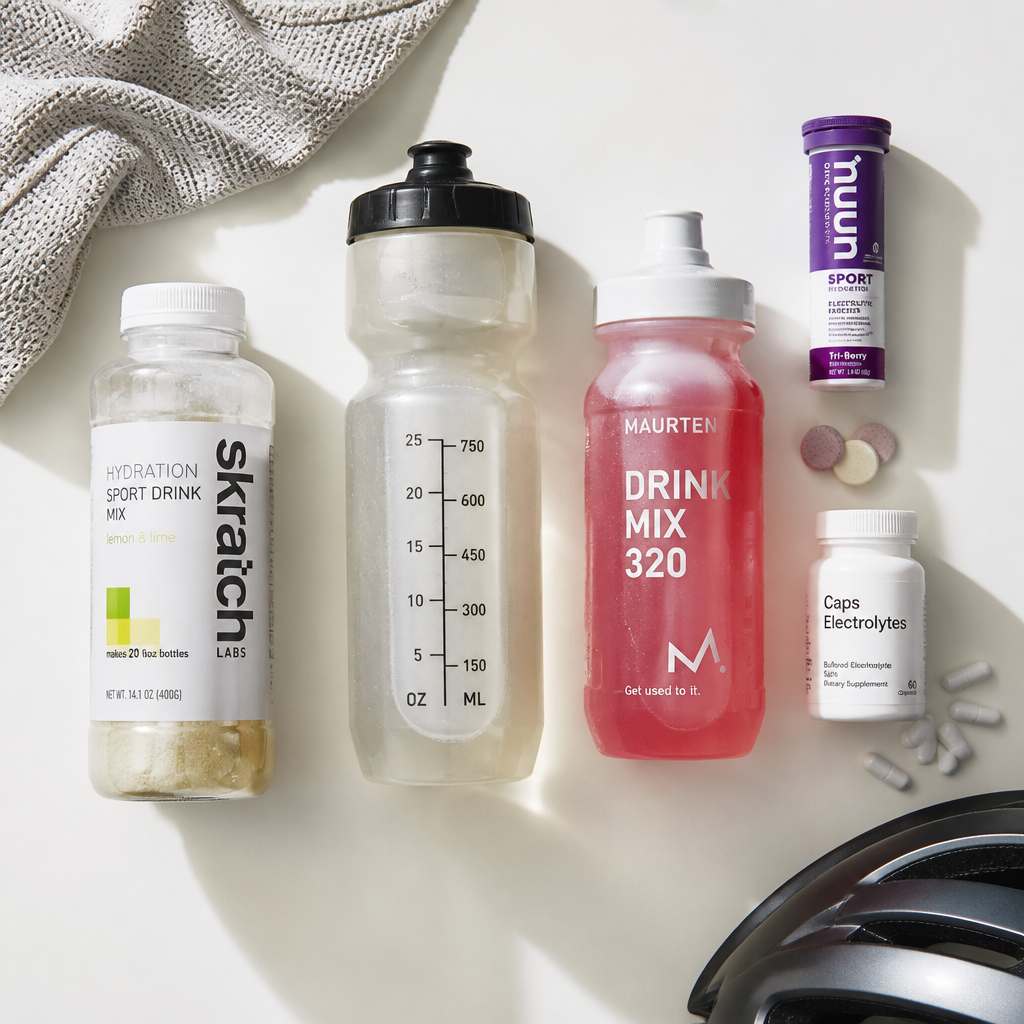

Cycling is the most forgiving of the three sports for hydration logistics. You have bottles mounted on the frame, you can eat and drink without breaking stride, and on club rides or sportives you can plan fluid and feed stops in advance. That logistical ease, however, also creates complacency. Many cyclists drink reactively rather than proactively, and start falling behind on fluid and sodium during the second half of longer rides.
A practical baseline for moderate riding in mild UK weather is around 500 millilitres of fluid per hour. In warmer conditions or at higher intensity, that figure climbs to between one and two bottles per hour. The critical rule for rides over 60 minutes is to include electrolytes. Plain water consumed at volume during endurance efforts dilutes blood sodium, which can cause a condition called hyponatraemia, which makes fatigue, headache, and nausea much worse than dehydration alone.
General guidelines from sports medicine bodies suggest around 300 to 600 milligrams of sodium per hour for endurance cycling. Individual sweat rates vary considerably, and heavier or hotter riders will need to sit at the higher end of that range. The key insight for electrolytes for cycling is that consistent sodium intake throughout the ride, rather than trying to catch up at the end, is what maintains plasma volume and prevents the performance dip that feels like "hitting the wall" but is actually dehydration-driven.
Consuming around 500 millilitres of a sodium-containing electrolyte drink every 45 to 60 minutes during a long ride maintains plasma volume more effectively than ad hoc drinking driven by thirst. Set a timer on your cycling computer if you need the reminder. After the first hour, thirst alone is not a reliable guide to how much you need.
Pro tip: On rides longer than 90 minutes in the UK summer, carry one bottle of plain water and one bottle with an electrolyte mix. The mix handles sodium and mineral replacement. The plain water gives you flexibility to dilute or rinse. Alternating between them prevents flavour fatigue, which is a genuine reason many cyclists stop drinking mid-ride.
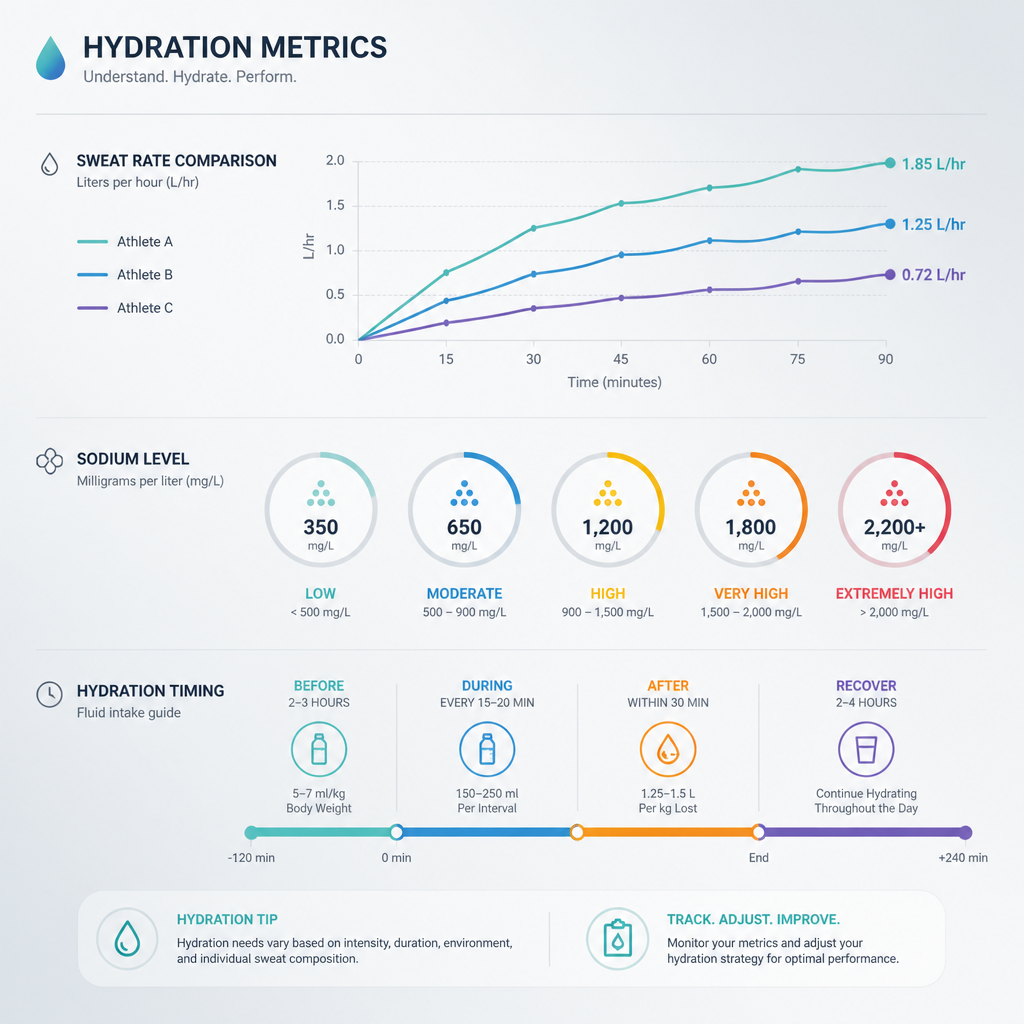
Running is mechanically less efficient than cycling. For the same speed and duration, your body produces more heat, and sweat rates reflect this. Competitive pace running over 10 kilometres can push sweat rates to between 1.5 and 2 litres per hour, which is higher than most people expect. The problem is that drinking while running is physically awkward, and the repetitive vertical movement of running increases gastrointestinal sensitivity, meaning you cannot simply drink as much as you want without risking stomach distress.
This combination of high sweat rate and limited drinking capacity is what makes hydration for runners UK athletes need particularly demanding. You cannot wait until you are thirsty and then try to catch up. By the time you feel dry-mouthed during a hard run, your performance is already declining.
For runs under 60 minutes in cool UK conditions, drinking during the run is often unnecessary if you arrive well hydrated. The practical rule is to drink 400 to 600 millilitres of fluid in the two hours before running, ideally including some sodium to help retain that fluid rather than simply excreting it. A no-added-sugar electrolyte drink in that pre-run window is a smarter choice than plain water, because the sodium primes your body to hold fluid rather than just clearing it through your kidneys.
For runs over 60 minutes, or any run above 20 degrees Celsius, target 400 to 800 millilitres of fluid per hour, adjusted down for your size and pace, and include electrolytes. Post-run, drink 1.5 litres of electrolyte-containing fluid for every kilogram of body weight lost. Sodium is the priority mineral for recovery hydration because it drives the reabsorption of fluid into the bloodstream rather than straight through to the kidneys.
On race day, aid stations provide your drinking opportunities. For a 10K, that may mean two or three stations. For a half marathon or marathon, plan to drink at every station and carry your own electrolytes in tablet or sachet form if the race-day drinks do not match your training formula. Switching hydration products on race day without testing them in training is a well-documented way to cause gut distress at the worst possible moment. Your gut adapts to specific products. Train with what you race with.
Factor |
Squash |
Cycling |
Running |
|---|---|---|---|
Typical sweat rate |
Around 1.1 L/hour (elite data); varies widely |
0.5 to 1.5 L/hour depending on intensity and heat |
1.0 to 2.0 L/hour at competitive pace |
Drinking opportunity during activity |
Only at end of each game, brief windows |
Continuous, hands-free from bottle cages |
Limited, requires planning or aid stations |
Sodium priority |
High, especially in longer matches and hot courts |
High for rides over 60 minutes |
High for runs over 60 minutes or in heat |
Gut tolerance risk |
Low to moderate (game structure limits over-drinking) |
Low (body is stable, not bouncing) |
High (vertical impact increases GI sensitivity) |
Best hydration window |
Pre-match and post-match; small sips between games |
Consistent intake every 45 to 60 minutes during ride |
Pre-run window is critical; during run is secondary |
Sugar in hydration drinks |
Not needed for most training and club matches |
Carbs useful for rides over 90 minutes; not training sessions |
Carbs useful for marathon pace; not for training runs |
The market is full of sports drinks, and most of them are not designed for training sessions. They are designed for race day or for broad consumer appeal, which means they typically carry a significant sugar load that is unnecessary during most of your weekly sessions. The result is that you get the electrolytes you need bundled with carbohydrate energy you do not need, which adds empty calories and can cause blood sugar spikes that accelerate the crash you are trying to prevent.
A no-added-sugar electrolyte formulation, with a complete mineral profile including sodium, potassium, magnesium, and calcium, is the appropriate choice for squash training, cycling club rides, and regular running sessions. Products from Plusssz are built on exactly this model: designed for active adults who want clean mineral replacement without the sugar load of mainstream sports drinks. For genuinely long endurance events where glycogen depletion becomes a factor, a separate carbohydrate strategy on top of electrolytes makes more sense than a single high-sugar drink trying to do everything.
The other thing to look for is transparency in the mineral profile. Vague labelling that lists a "mineral blend" without specifying doses is a red flag. You cannot calibrate your sodium intake to your sport-specific target if you do not know how many milligrams are in each serving. Understanding what is actually in your electrolyte supplement is the first step to using it effectively across any of these three sports.
It is also worth matching your product to your training phase. Heavy training weeks, or training in warm summer conditions, will push your electrolyte requirements higher than light recovery weeks. Building a habit of adjusting electrolyte intake seasonally, and based on training load, is one of the more underrated adjustments active people can make. Planning your hydration nutrition across a training week makes this kind of adjustment easier to execute consistently.
Pro tip: If you train across more than one sport, which most active people in the UK do, keep a single high-quality electrolyte product that works for all of them. The sport changes; the minerals your body needs do not. A no-added-sugar electrolyte drink that provides complete mineral coverage is far more versatile than separate sport-specific products with marketing-driven ingredient lists.
For a session under 45 minutes in a cool environment, water is adequate. Once your session runs longer or the court is warm, you are losing meaningful amounts of sodium through sweat, and plain water alone will not restore your electrolyte balance. A small serving of a sodium-containing electrolyte drink before the session makes a practical difference for anything over 45 minutes.
The most reliable check is bodyweight. Weigh yourself before and after a ride without eating or drinking between. A body weight drop of more than 1.5% indicates under-drinking. As a practical in-ride check, your urine should be pale yellow when you next visit the bathroom after finishing. Dark yellow or amber means you were dehydrated during the ride. Thirst alone is not a reliable indicator during sustained cycling effort.
Yes, and this is more common than people realise, particularly in slower marathon runners who have more time at aid stations. Drinking large volumes of plain water during prolonged exercise without sodium can dilute plasma sodium levels, a condition called exercise-associated hyponatraemia. Symptoms include nausea, headache, and in severe cases confusion. Drinking to thirst rather than to a rigid schedule, and ensuring any significant fluid intake includes sodium, prevents this.
The core difference is opportunity and intensity profile. Squash involves intermittent explosive efforts with brief drinking windows, meaning pre-loading with electrolytes is disproportionately important. Running involves sustained effort with a high heat output and limited drinking access, making pre-run hydration equally critical. Both sports demand sodium, but the timing and delivery of that sodium differs considerably. Squash players should front-load; runners should start pre-loaded and then manage carefully at aid stations.
For most training sessions and events under 60 to 90 minutes, no-added-sugar electrolyte drinks are entirely effective and preferable. Sugar in sports drinks serves a specific purpose: providing rapidly available carbohydrate energy during glycogen-depleting endurance events. For a club squash session, a 45-minute bike ride, or a 10K training run, the sugar is not doing useful work and comes with unnecessary calories. Save the carbohydrate-containing products for events where glycogen depletion is a genuine performance limiting factor.
Absolutely, and most UK athletes underestimate how much this matters. Warm summer sessions can double your sweat rate compared to cold winter conditions, which means your sodium and fluid requirements shift substantially. In winter, you may find plain water sufficient for shorter sessions where you would definitely need electrolytes in July. The practical adjustment is to track how you feel and perform, weigh yourself periodically after sessions, and increase electrolyte intake during warmer months or in heated indoor environments like squash courts.
If you train across more than one of these sports, we would love to hear what hydration adjustments have made the biggest difference to your performance and recovery.