Most men who train three to six times a week are unknowingly running on empty. Not in terms of calories, protein, or even sleep, but in the micronutrients that sit behind every process in your body: ATP production, testosterone synthesis, muscle contraction, and immune defence. The standard supermarket multivitamin was never designed for you. It was built for the statistical average sedentary adult. If you are genuinely active, you need a multivitamin for men UK that reflects your actual physiology and your actual training load. This guide covers exactly which vitamins and minerals matter, why they matter for men specifically, and what a well-formulated supplement should look like.
Training regularly changes your micronutrient requirements in ways that a generic formula simply does not account for. When you exercise hard, you sweat out electrolytes and water-soluble vitamins. You use up magnesium at an accelerated rate because it is involved in over 300 enzymatic processes, including the ones that produce ATP, the fuel your muscles run on. Your zinc levels drop after intense exercise because it is involved in protein synthesis and hormonal regulation.
The best vitamins for active men are not just higher doses of what everyone else takes. They reflect a genuinely different set of priorities. Men's formulas should deprioritise iron (most adult men do not need supplemental iron) and instead load up on zinc, selenium, B6, and magnesium, the nutrients with the most direct bearing on male physiology, performance, and recovery.
A common mistake is buying a unisex or women's multivitamin because it was on offer or had a recognisable brand name. The formulations are meaningfully different for a reason. A men's formula built for training is not a marketing distinction. It is a practical one.
Key Insight |
Explanation |
|---|---|
Magnesium is the most commonly under-dosed nutrient in active men |
Athletes have higher magnesium requirements than sedentary adults due to its role in ATP production and muscle contraction. Most diets and basic multivitamins fall short of what training demands. |
Vitamin D deficiency is widespread among athletes in the UK |
Low sunlight exposure, especially in northern climates, makes vitamin D deficiency common even among highly active men. It directly affects muscle function, bone density, and immune resilience. |
Zinc supports testosterone production and post-training recovery |
Zinc levels drop after intense exercise. For men, adequate zinc is linked to healthy testosterone levels and protein synthesis. It is the mineral most directly tied to male hormonal health. |
B vitamins are the engine of energy metabolism |
B12, B6, B2, and B3 are all involved in converting food into usable energy. Active men burn through these faster, and deficiency shows up as persistent fatigue and poor recovery. |
No-added-sugar formulas matter more than most men realise |
Daily supplementation adds up. Effervescent and gummy formats with added sugar contribute meaningfully to total sugar intake over months of consistent use, undercutting body composition goals. |
Electrolytes and multivitamins address different but connected gaps |
Electrolytes manage acute hydration during and after training. A multivitamin fills the broader micronutrient baseline. You need both, and they work better when formulated to complement each other. |
Form of delivery affects how much of a nutrient you actually absorb |
Magnesium bisglycinate absorbs far better than magnesium oxide. The form listed on the label is not a minor detail. It determines whether the dose on the front of the pack actually reaches your cells. |
Not every vitamin on the label of a multivitamin is equally important for men who train. Some are largely irrelevant at any dose above the basic RDA. Others are the difference between training hard and training smart.
Vitamin D3 is the single most important vitamin to get right for active men in the UK. The evidence is clear: athletes are prone to vitamin D deficiency, and deficiency at this level is directly linked to impaired muscle function, increased injury risk from stress fractures, and reduced immune competence. In the UK specifically, months of limited sunlight make dietary and supplemental intake essentially mandatory for anyone training year-round.
Vitamin D also plays a role in calcium absorption, which matters for bone density under training loads. If your multivitamin does not include a meaningful dose of D3 (not D2, which is less bioavailable), that is a serious formulation weakness.
B12, B6, B2 (riboflavin), and B3 (niacin) are all directly involved in converting the food you eat into energy your muscles can use. Men who train hard and eat well still run into B vitamin shortfalls because higher caloric and metabolic throughput demands more of them. Vitamin B12 specifically supports healthy nerve function and is linked to reduced fatigue and improved muscular endurance during training.
Vegans and plant-focused eaters are at particular risk of B12 deficiency, but even omnivores who train hard can fall short. A well-dosed B-complex is a hallmark of a serious multivitamin for men.
Hard training temporarily suppresses immune function. Vitamin C is one of the most reliable tools for managing that window of vulnerability. It also contributes to collagen synthesis, which matters for joint and connective tissue integrity in men who lift or run regularly. The dose needs to be meaningful, not a token amount there to tick a box on the label.


Minerals are where most sports-focused multivitamin formulas either earn their place or expose themselves as glorified supermarket own-labels. The differences are in what is included, what is excluded, and in what form each mineral is delivered.
The evidence is direct and consistent: most athletes fail to meet the recommended magnesium intake through diet alone, and they have higher requirements than sedentary individuals. Magnesium is fundamental to muscle function, ATP production for muscle contraction, electrolyte balance, and bone density under load. The recommended intake for healthy adults is broadly 300 to 400 mg per day, and active men likely need to be at the upper end or above that range.
Critically, the form of magnesium matters enormously. Magnesium bisglycinate is substantially more bioavailable than magnesium oxide. A label showing 400 mg of magnesium oxide delivers a fraction of the usable magnesium that 200 mg of bisglycinate would. Always check the source, not just the headline number.
The gap between what a label says and what your body actually absorbs is largest with minerals. Bioavailability is everything, and most budget formulas use the cheapest, least absorbable forms precisely because they cost less to manufacture.
Zinc sits at the intersection of hormonal health and physical recovery for men. It supports healthy testosterone production, contributes to protein synthesis after training, and helps delay the onset of fatigue during competition and hard sessions. Zinc levels drop measurably after intense exercise, which is why active men need meaningfully higher zinc intake than their sedentary counterparts.
Men's multivitamin formulas should carry noticeably higher zinc doses than women's products. If the formula you are using does not distinguish here, it is not actually built for male physiology.
Selenium works alongside zinc in supporting testosterone and reproductive health in men. It also plays an antioxidant role, helping neutralise the oxidative stress that hard training generates. It tends to be present in small doses, but the form and dose need to be correct. Like most minerals, its absence from a formula is a sign the product was designed for broad market appeal rather than male-specific performance.
Pro tip: If your current multivitamin lists iron as a key ingredient and markets itself to both men and women, it was almost certainly designed for women or for a unisex average. Adult men rarely need supplemental iron and taking excess iron can interfere with the absorption of zinc and magnesium, two nutrients you actually do need more of.
A multivitamin addresses your micronutrient baseline. Electrolytes address what you lose acutely during and after training. These are two separate but connected requirements, and treating them as interchangeable is one of the most common errors active men make.
Sweat contains sodium, potassium, magnesium, and calcium. In a long run, a hard gym session, or any training done in heat, you lose meaningful quantities of all of these. If they are not replaced, muscle cramping, reduced performance, impaired recovery, and poor sleep are the predictable results. None of those symptoms show up on a blood panel as a deficiency, but they are felt in every session that follows.
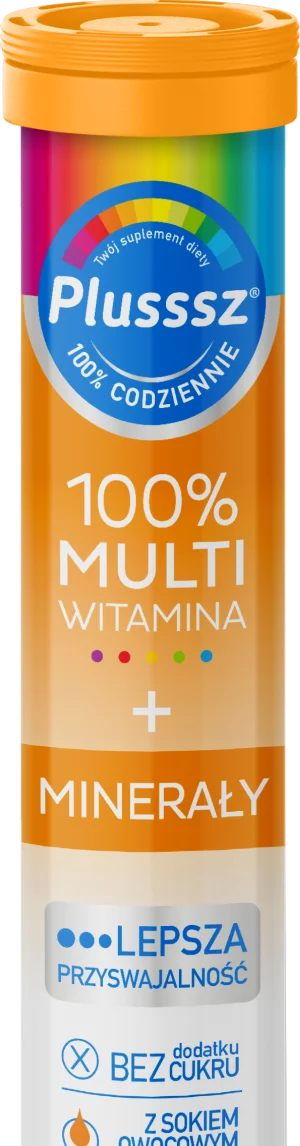
The advantage of choosing a brand like Plusssz is that their electrolyte hydration products and the Multivitamin MEN formula are designed to complement each other. The multivitamin handles your chronic micronutrient baseline. The electrolyte products handle acute replenishment around training. You are not doubling up on nutrients haphazardly. Both products are formulated with no added sugar, which matters if body composition is part of your training goal.
Pro tip: Take your multivitamin consistently in the morning with food. Use your electrolyte supplement around training, particularly in sessions exceeding 45 to 60 minutes or in warmer conditions. These are different tools for different jobs, and combining them deliberately gives you much better coverage than relying on either one alone.

There are four questions worth asking before you commit to any product. They filter out the majority of underperforming multivitamins on the UK market quickly and efficiently.
A genuine men's formula carries higher zinc and selenium, meaningful B6 for hormonal support, and lower or absent iron. It should reflect the physiological reality that adult men do not have the same micronutrient profile as adult women. If the formulation is identical to a women's product with different packaging, that tells you everything you need to know about the thought that went into it.
Check the full ingredient list, not just the headline nutrients. If you see magnesium oxide, calcium carbonate, or zinc sulphate, the bioavailability is going to be poor regardless of the dose on the front of the pack. Better forms cost more, which is why budget products avoid them. For active men, the difference is not marginal. It is the difference between a supplement that works and one that passes through largely unused.
This matters more than it sounds for men training for body composition. Effervescent tablets and gummy formats often include multiple grams of sugar per serving. Taking one daily for twelve months adds up to a meaningful quantity. A formula with no added sugar, like Plusssz Multivitamin MEN, removes that variable entirely.
Many products include trace amounts of fifteen or twenty nutrients so that the label looks comprehensive. In practice, two-thirds of those nutrients are present at doses too low to have any effect. A leaner formula with correct doses of the key nutrients is more valuable than a wide-spectrum product where nothing is dosed meaningfully. Focus on vitamin D3, magnesium, zinc, B12, B6, and vitamin C as the core pillars and verify that each is at a level consistent with the evidence.
Format affects adherence, bioavailability, and ingredient compatibility. This is not a superficial choice. The delivery mechanism genuinely influences how well a product works in practice.
Format |
Strengths for Active Men |
Weaknesses to Watch |
|---|---|---|
Effervescent Tablets (e.g., Plusssz Multivitamin MEN) |
High absorption due to pre-dissolved delivery, convenient daily routine, no-added-sugar options available, easy to stack with electrolyte products from the same brand |
Requires water preparation, some products contain added sugar (check label carefully) |
Standard Capsules / Tablets |
Long shelf life, easy to travel with, wide product range across UK market |
Absorption depends heavily on whether taken with food, mineral forms often low-grade (oxide and carbonate), harder to verify bioavailability |
Gummies |
High palatability, good for men who struggle with tablets, simple to take daily |
Frequently contain significant added sugar, fat-soluble vitamins (A, D, E, K) often under-dosed, not suitable for training-focused body composition goals |
In practice, effervescent formats tend to win for active men because the pre-dissolved state means absorption begins immediately in the stomach rather than depending on tablet disintegration. For men pairing a multivitamin with an electrolyte product, choosing an effervescent for both creates a consistent, straightforward daily and training routine.
Most supplementation errors are not about taking the wrong thing. They are about taking the right thing in the wrong way, or picking a product that looks right but is formulated incorrectly.
It is common to see men stacking standalone zinc, standalone vitamin D, and standalone B12 products because they heard that each one helps with performance. Without a blood panel confirming deficiency in specific nutrients, this approach wastes money and can create imbalances. Zinc in excess, for example, can interfere with copper absorption. A well-formulated multivitamin for men covers the spectrum rationally and provides a sensible starting point before you start adding individual nutrients on top.
Electrolytes are not just about stopping cramps. Sodium and potassium govern fluid balance at the cellular level. Magnesium and calcium are involved in muscle contraction and relaxation. If you are supplementing your multivitamin but not addressing electrolyte loss around training, you are leaving a significant gap in your recovery and performance support.
Micronutrient sufficiency is a long-game variable. The benefits of consistent magnesium and vitamin D intake build over weeks and months. Men who take their multivitamin for two weeks, forget for a month, restart for a week, and so on are never giving the formula enough time to register. The routine matters as much as the formula.
Pro tip: Pair your multivitamin with an existing daily anchor, whether that is your morning coffee, pre-workout preparation, or breakfast. Habit stacking is the most reliable way to make consistent supplementation stick without needing willpower every day.
The best multivitamin for men who train is one specifically formulated for male physiology and active lifestyles, not a unisex or general-purpose formula. Key requirements are meaningful doses of vitamin D3, magnesium (in a bioavailable form like bisglycinate), zinc, selenium, and a full B-complex including B12 and B6. The formula should contain no added sugar, particularly if body composition is part of your training goal. Plusssz Multivitamin MEN is built around exactly these principles, with improved nutrient assimilability and no added sugar as core design decisions.
Yes, meaningfully so. Active men have higher turnover of several key micronutrients, particularly magnesium (used heavily in ATP production), zinc (depleted by exercise and involved in recovery), and B vitamins (central to energy metabolism). The evidence is clear that athletes have higher magnesium requirements than sedentary individuals and are more prone to vitamin D deficiency. A formula designed for a sedentary average adult will under-serve the physiological demands of regular training.
Yes, because they serve different functions. A multivitamin addresses your chronic micronutrient baseline, the steady-state sufficiency your body needs day to day. Electrolytes address acute mineral loss through sweat during and after training. You lose sodium, potassium, magnesium, and calcium in meaningful quantities during hard sessions, and those losses need prompt replacement. A multivitamin alone will not cover that acute demand. Pairing a men's multivitamin with a dedicated no-added-sugar electrolyte product, as Plusssz offers across both product lines, is the most complete approach.
Adult men do not lose iron through menstruation, which means their iron stores are not regularly depleted in the same way women's are. Most men eating a balanced diet with red meat, legumes, or fortified foods do not need supplemental iron. Excess iron can compete with the absorption of zinc and magnesium, two nutrients that active men genuinely do need more of. A well-designed men's multivitamin should omit or severely limit iron unless a blood test has confirmed deficiency.
For nutrients like B vitamins, some men notice reduced fatigue within two to three weeks of consistent use if they were genuinely deficient. For magnesium and vitamin D, meaningful improvement in muscle function, sleep quality, and recovery tends to build over four to eight weeks. Micronutrient sufficiency is not a rapid intervention. It is a baseline that compounds over time. Consistency matters far more than the specific day you start.
The best vitamins for male athletes share the same core priorities as any active man's multivitamin but lean harder on the performance-critical nutrients: higher magnesium, optimised zinc, strong B-complex, and vitamin D3. Some sports-specific products also include vitamin C at higher doses to support immune function during intense training periods. What separates a genuinely athletic formula from a standard men's product is the dose levels and the mineral forms, not a list of exotic proprietary ingredients.
Have you found a multivitamin that actually made a noticeable difference to your recovery or energy during training? Share what worked for you in the comments below.