Most people who describe themselves as "active" in the UK are actually running on a deficit they can't fully see. You get up early, commute or log on, spend hours at a desk under artificial light, manage deadlines and meetings, then expect your body to perform at the gym or on a run in the evening. Supplements for busy lifestyle UK consumers actually need are not the same as what a professional athlete needs, but the conversation rarely makes that distinction. This article does. It looks at exactly how the pressures of a modern UK working life drain your body, and how building a daily hydration routine and smart supplementation around products like Plusssz can close the gap between what you demand of yourself and what your body can actually deliver.
Key Insight |
Explanation |
|---|---|
Work stress actively depletes nutrients |
Chronic stress elevates cortisol, which accelerates the use of magnesium, B vitamins, and vitamin C. You cannot simply eat well and expect these reserves to stay topped up under sustained pressure. |
UK indoor workers face a real vitamin D gap |
From October through March, UK sunlight is not strong enough for the body to synthesise vitamin D. Office workers spending most daylight hours indoors face an elevated risk of deficiency that directly impacts energy and mood. |
Dehydration begins before your workout |
If you have spent eight hours at a desk drinking coffee and not enough water, you arrive at your evening session already dehydrated. Performance and recovery are both compromised before you have lifted a single weight. |
Sugar-free electrolytes matter for body composition goals |
Many mainstream sports drinks use glucose or sucrose as a carrier. For active people who care about what they put in their body, a no-added-sugar formula like Plusssz delivers electrolyte replenishment without undermining a balanced diet. |
Muscle cramps are not just a dehydration problem |
Low sodium and magnesium alter nerve excitability in fatigued muscles. Drinking more plain water when electrolytes are already depleted does not fix cramps and can dilute sodium levels further. |
A multivitamin and electrolytes address two different gaps |
Electrolytes replace what you lose through sweat and stress. A multivitamin fills the micronutrient shortfalls that a busy diet inevitably creates. Both are needed, and ideally from formulations designed to complement each other. |
Fat-soluble vitamins need fat to be absorbed |
Taking a multivitamin with a fat-free meal or plain water significantly reduces absorption of vitamins A, D, E, and K. Take your multivitamin with breakfast or your main meal for meaningful results. |
The numbers behind UK workplace stress are stark. According to the Health and Safety Executive's 2024/25 statistics, an estimated 964,000 workers are suffering from work-related stress, depression, or anxiety, and work-related illness now accounts for 40.1 million lost working days annually. That is not just an HR statistic. It represents a huge volume of people whose bodies are running on elevated cortisol for months at a time, and cortisol is metabolically expensive.
Sustained stress depletes magnesium faster than almost anything else. It increases the demand for B vitamins involved in energy metabolism. It suppresses immune function, which means a busy, stressed person who is also training needs more nutritional support than someone with the same fitness routine and a lower-pressure job. The common response is to reach for more coffee. That is a short-term fix that adds to the dehydration load without addressing the underlying deficit.
For most UK office workers, the compounding problem is light exposure, or the lack of it. From October through to March, UK sunlight is not strong enough for the body to produce adequate vitamin D. Research published in peer-reviewed journals consistently shows that indoor workers are more susceptible to vitamin D deficiency than their outdoor counterparts, with some studies finding deficiency rates as high as 78% in this group. Vitamin D underpins immune function, muscle health, and mood regulation. If your energy at work and at the gym has been consistently flat through the autumn and winter months, this is one of the first places to look.
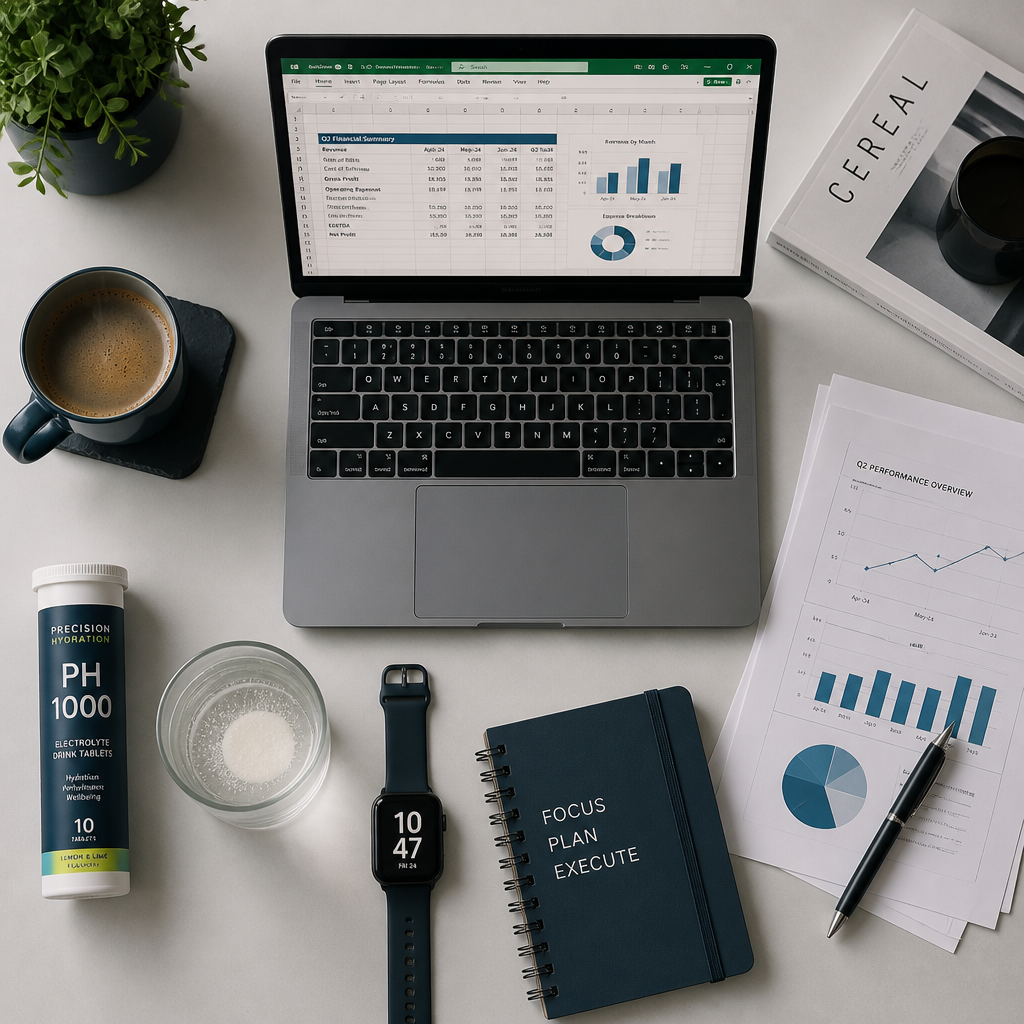

The practical consequence of all this is that a busy UK adult who trains regularly is not the same nutritional profile as a sedentary person, and they are not the same as a professional athlete either. Generic supplement advice tends to serve neither group well. What the work-gym-recovery person actually needs is a stack that supports the stress response, plugs the micronutrient gaps created by a hectic diet, and delivers reliable hydration on both training and non-training days.
Pro tip: If your energy consistently drops between 2pm and 4pm at work, do not automatically blame your lunch. Check your fluid intake across the morning. Mild dehydration at that level is enough to impair concentration and mood, and most office workers reach that point well before they notice any thirst.
Mainstream sports drinks were largely developed with athletes in mind, specifically people engaged in prolonged, high-intensity activity who need rapid carbohydrate replenishment alongside electrolytes. If you are running a marathon or competing in a cycling event, glucose or sucrose as a carrier makes sense. If you are doing a 45-minute gym session after work and then going home to eat dinner, it does not.
Brands like High Five built their reputation on isotonic formulas that include glucose, which works well for endurance athletes topping up glycogen mid-race. Science in Sport occupies a similar performance-nutrition space. ORS Hydration uses a specific glucose-to-sodium ratio modelled on oral rehydration therapy. All of these are legitimate products for specific use cases, but they are not designed for the person whose primary goal is daily hydration support and recovery from moderate training, without adding unnecessary sugars to their diet.
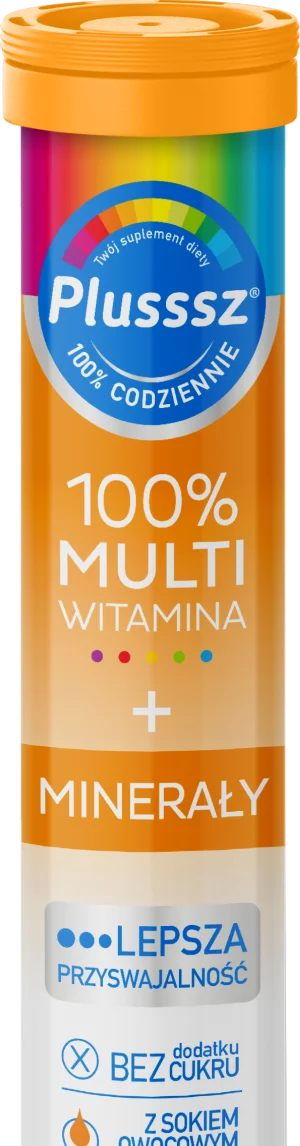
This is exactly the gap Plusssz occupies. The Plusssz electrolyte range is formulated without added sugar, which immediately separates it from the mainstream isotonic category. For active people managing their body composition alongside their hydration, that distinction matters more than most brands will admit. You are not sacrificing electrolyte quality. You are removing a component that a desk worker turning up for a gym session simply does not need.
The other gap that standard sports nutrition brands leave unfilled is the multivitamin side of the equation. Electrolyte products replace what you lose through sweat. They do not address the micronutrient shortfalls caused by a rushed diet, stress, and inadequate sunlight. A brand that offers both hydration products and a properly formulated multivitamin complex, designed to complement each other, gives a busy person fewer moving parts to manage.
The phrase "daily hydration routine" sounds straightforward until you map out what a realistic UK working day looks like. Early start, commute, back-to-back calls or client work, a lunch break that gets shortened more often than not, an afternoon of desk work, then a training session or run in the early evening. By the time most people arrive at their gym, they have likely consumed two or three coffees and not nearly enough water.
A common mistake is treating pre-workout hydration as something you do in the thirty minutes before you train. By that point, if you have been under-hydrating all day, there is no meaningful way to catch up in half an hour. Arriving at a training session already dehydrated means your body starts on the back foot. The principle is straightforward: hydration is a day-long process, and it needs to begin at breakfast.
Adding an electrolyte supplement in the morning rather than exclusively around training helps maintain a baseline throughout the working day. For someone who sweats noticeably during exercise, during intense activity the body can lose anywhere from 0.5 to 2 litres of fluid per hour depending on session intensity, body size, and environmental conditions. A morning electrolyte dose does not replace intra-session hydration but it means you are starting from a better baseline.
Rest days are when your body does the actual repair work from training. Hydration on those days is just as important as on training days, arguably more so, because muscle repair and nutrient transport both depend on adequate fluid balance. The mistake is treating electrolyte supplementation as something you only need when you are sweating. If you work in a heated office in winter or an air-conditioned building in summer, both of which have low ambient humidity, you lose water through respiration at a rate most people do not account for.
Pro tip: Keep your Plusssz electrolyte supplement at your desk rather than in your gym bag. If it is only associated with training, you will skip it on rest days. If it is part of your desk routine, it becomes a consistent daily habit with a reliable effect on how you feel and function.
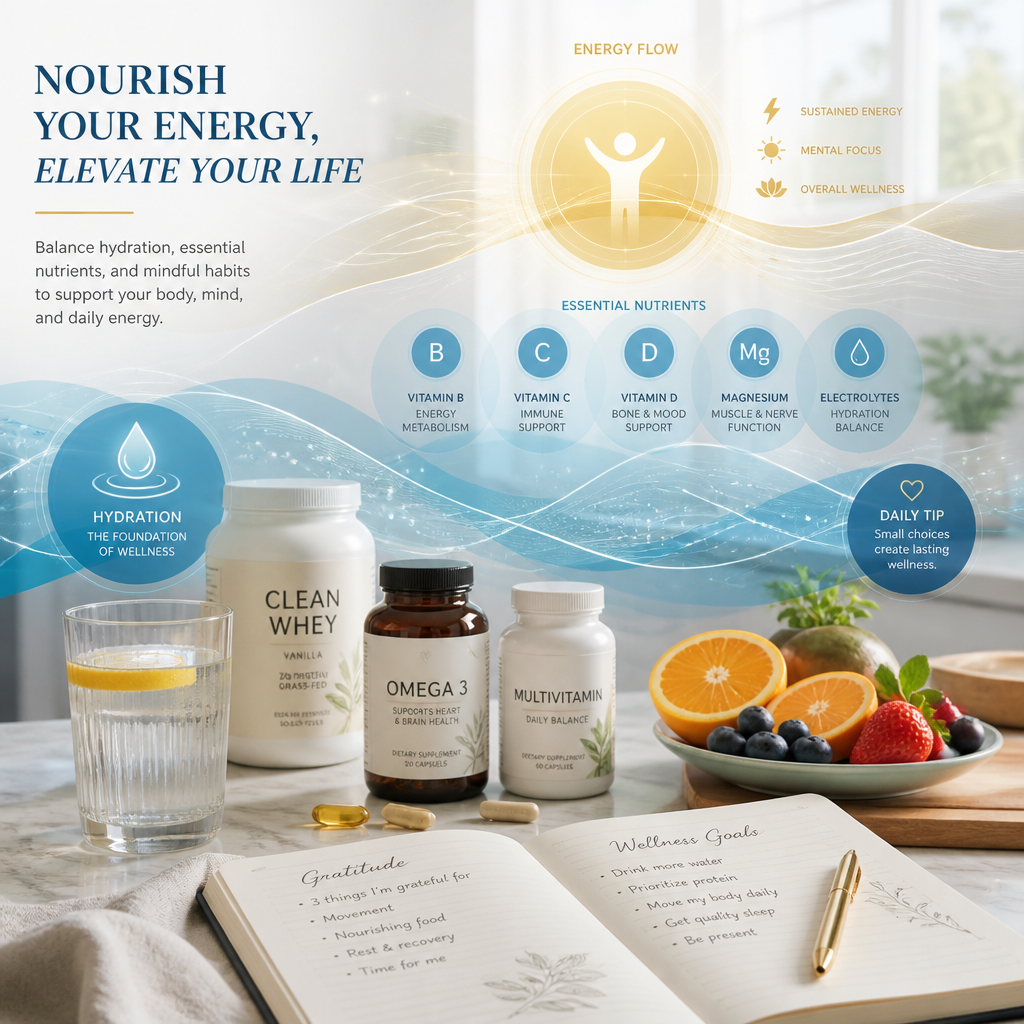
The market for energy vitamins for work and gym performance is cluttered with products making claims that range from well-evidenced to borderline meaningless. Cutting through it requires understanding what kind of energy you are actually trying to support, and at what point of the day.
B vitamins, particularly B6, B12, and folate, play a direct role in converting food into usable cellular energy. They do not give you a stimulant effect. They support the underlying metabolic process that your body runs all day, every day. When B vitamins are depleted, the deficit shows up as fatigue, brain fog, and reduced exercise capacity, not as a sudden crash you can point to. This makes them easy to dismiss as unnecessary until you actually correct a deficiency and notice the difference.
For people eating a varied diet this may not be a critical gap. For people who regularly skip breakfast, eat convenience meals, or follow a dietary pattern that restricts certain food groups, B vitamin shortfalls are common and the effects are felt at both the desk and in the gym. A well-formulated multivitamin covers this without requiring a separate supplement.
Magnesium is the mineral most consistently depleted by both physical training and psychological stress. Athletes and highly active individuals lose magnesium through sweat and urine, which is why it features in quality multivitamin and electrolyte formulations. But the population most likely to be deficient is not athletes. It is office workers under chronic stress who are also training recreationally, which describes a significant portion of Plusssz's core audience.
Low magnesium impairs sleep quality, muscle recovery, and the body's ability to regulate the stress response. Restoring magnesium through a combination of diet and supplementation addresses the work-gym gap more directly than any single-ingredient "energy" supplement on the market.
High-caffeine energy supplements designed for pre-workout use have a specific purpose in specific contexts. They are not a solution for someone who already drinks multiple coffees and then wonders why their sleep is poor and their recovery is slow. The dose of caffeine accumulated across a working day, plus a pre-workout product, creates a deficit in sleep quality that cancels out the performance benefits. Choosing supplements that support the body's own energy systems rather than just stimulating the central nervous system produces better results across a full week.
The most consistent gains in energy and recovery come not from adding more stimulants, but from filling the specific nutrient gaps that a demanding lifestyle creates. Magnesium, vitamin D, B vitamins, and proper electrolyte balance are the foundation. Everything else is secondary.
There is a practical dimension to supplementation that most brands do not discuss honestly: compliance. The best supplement in the world does not work if you forget to take it, find the format inconvenient, or simply cannot integrate it into a chaotic schedule. This is where format matters as much as formulation.
Plusssz products are available in effervescent tablet format, which dissolves quickly in a glass of water. For a busy person whose morning already involves too many moving parts, that is a meaningful advantage over powders that require careful measuring and a shaker. The effervescent format also makes it natural to associate supplementation with a moment that already exists in your day, pouring a glass of water, rather than adding a new ritual that competes with everything else you have to do.
Plusssz offers differentiated formulations for men, women, and seniors, rather than a single one-size approach. This is not a marketing distinction. The nutritional needs of an active 30-year-old woman are not identical to those of an active 55-year-old man. Iron requirements differ. The specific vitamin and mineral ratios that support hormonal health, bone density, and muscle function vary by demographic. A brand that acknowledges this produces formulations with real practical relevance rather than a compromise that serves no one particularly well.
For the sports enthusiast combining a demanding job with regular training, the combination of a Plusssz electrolyte product and the appropriate Plusssz multivitamin covers the two most significant gaps: hydration and mineral replenishment around training, and the broader micronutrient baseline that a busy diet consistently fails to provide.
A realistic integration for a UK professional training three to four times per week looks like this: an electrolyte tablet dissolved in water during the morning desk routine on all seven days, a multivitamin taken with breakfast or the main meal when it contains some fat, and an additional electrolyte dose immediately post-training on gym days. The pre-training window does not need a separate product. What matters is that the day-long hydration baseline is already established when the session begins.
On high-intensity days, a second electrolyte serving around the training session itself makes sense, particularly in warmer months or for anyone who sweats heavily. The no-added-sugar formulation means this does not create a conflict with body composition goals, which is a practical advantage that a glucose-based isotonic product cannot offer.
Not every approach to supplementation suits a busy UK adult who is not a professional athlete but is committed to consistent training and wants to feel functional at work. The table below compares three practical approaches relevant to this group.
Approach |
Best For |
Limitations for Busy UK Adults |
|---|---|---|
Sports nutrition brand stack (e.g. Science in Sport, High Five) |
Endurance athletes and competitive sports participants with high carbohydrate demands and dedicated training schedules |
Products optimised for performance, not daily desk-life support. Isotonic formats include added sugars not needed for moderate training. Multivitamin range lacks demographic-specific formulations. No clear bridge between work-day nutrition and training nutrition. |
Generic pharmacy multivitamin with plain water hydration |
Sedentary individuals maintaining basic micronutrient coverage with no specific training demands |
No electrolyte replenishment. Generic formulations ignore the elevated needs of active individuals. Plain water does not replace sodium and magnesium lost through sweat and stress. Vitamin absorption often not optimised (e.g. no guidance on fat-soluble vitamins). |
Plusssz electrolyte and multivitamin combination |
Active UK adults combining regular training with demanding work schedules, who want no-added-sugar hydration and targeted micronutrient support in a convenient daily format |
Not designed for elite endurance fuelling during competition. Does not replace medical intervention for clinical deficiencies. Requires consistent daily use to deliver benefits, which demands habit formation. |
The table above is deliberately honest about what Plusssz is not. It is not a performance fuel for race day. It is a daily support system for people whose challenge is maintaining energy, hydration, and nutritional adequacy across a life that moves fast and does not always leave room for perfect dietary choices.
Yes, and on many days you should. Electrolyte loss is not limited to sweat from exercise. Working in a climate-controlled office, drinking coffee throughout the day, and being under sustained stress all contribute to electrolyte depletion. A consistent daily hydration routine that includes an electrolyte supplement on rest days produces better results than using it only around training sessions.
For most active UK adults managing a busy schedule, yes. A multivitamin is not a replacement for a good diet, but a busy working day reliably creates gaps that diet alone does not fill. The vitamin D gap created by UK winter light conditions is a clear example. So is the increased demand for B vitamins and magnesium in people under work stress who are also training regularly. A well-formulated multivitamin addresses these specific gaps without requiring a kitchen full of individual supplements.
High Five and ORS Hydration are both legitimate products built around specific hydration models, with High Five targeting carbohydrate-fuelled endurance performance and ORS modelled on oral rehydration therapy. Plusssz differentiates on two points: its electrolyte formula contains no added sugar, which makes it suitable for everyday use and body composition goals alongside training, and it offers a complementary multivitamin range with demographic-specific formulations that the competition does not provide. You get a coherent system rather than separate products from brands with different primary audiences.
Take it with your most reliable meal of the day. For most people that is breakfast or dinner. The practical rule is that fat-soluble vitamins (A, D, E, and K) require some dietary fat for absorption, so taking a multivitamin with a fat-free snack or plain water reduces what you actually absorb. Tying it to a meal that contains some fat is more effective and easier to remember than setting a phone reminder for a specific time with no meal attached.
Electrolyte supplements are not a replacement for adequate fluid intake. They improve what your body does with the water you drink by supporting fluid balance at the cellular level. The right fluid volume depends on body weight, activity level, and environmental conditions, but for a moderately active UK adult, consistent intake throughout the day is more important than hitting a fixed daily number. If you exercise at moderate to high intensity, sweating losses during a session can reach 0.5 to 2 litres per hour, depending on intensity and conditions. Starting that session already hydrated is the single most effective thing you can do for performance and recovery.
In practical terms, yes. Vitamin D supplementation is particularly relevant from October through March when UK sunlight is not strong enough for the body to produce it. If your multivitamin includes a meaningful dose of vitamin D, this is covered without needing a separate product. The electrolyte picture changes in summer when higher ambient temperatures and outdoor activity increase sweat losses. The core daily routine remains the same, but the intensity of use around training sessions is worth increasing in warmer months.
If you are managing the work-gym balance in the UK and have found specific supplements or routines that actually make a difference, share your experience in the comments below - the specifics of what works for real schedules are more useful than any general advice.