Most active people in the UK take their supplements the same way they pack a gym bag the night before: with good intentions and very little system. A multivitamin gets swallowed with morning coffee, an electrolyte tablet dissolves whenever it crosses their mind, and the whole thing gets abandoned by Thursday when the routine wobbles. That is not a supplement routine. That is supplemental chaos. A structured supplement routine UK built around your actual weekly training schedule makes the difference between products that do something and products that sit on the shelf going stale. This guide gives you a day-by-day, session-by-session framework built specifically for active individuals who train regularly and want results from what they take.
Timing is not marketing noise. It is physiology. The window in which you take certain supplements determines how much of the active ingredient actually reaches the tissue that needs it. An effervescent electrolyte tablet dissolved in water is absorbed significantly faster than electrolyte-rich foods, which means it can actually hit your bloodstream in the pre- or post-workout window where it makes a difference. Eat a banana 10 minutes before a session and the potassium is still sitting in your stomach when your muscles are already crying for it.
The same logic applies to vitamins. Fat-soluble vitamins such as vitamin D and vitamin K are better absorbed when taken with a meal containing dietary fat. Taking them on an empty stomach wastes a meaningful portion of the dose. Water-soluble vitamins like the B complex and vitamin C can be taken more flexibly, but splitting the dose morning and afternoon gives your body a steadier supply rather than a sharp spike followed by urinary loss.
The goal of a supplement routine is not to consume the right products. It is to deliver the right nutrients to the right tissues at the right moment. Timing is the mechanism that closes that gap.
Pro tip: If you drink coffee first thing in the morning, wait 30 to 60 minutes before taking iron-containing multivitamins. Tannins in coffee can interfere with non-haem iron absorption, which is particularly relevant for women who train hard and need to protect their iron status.
When you train four or more times per week at moderate to high intensity, your micronutrient demands rise beyond what most people consume through diet alone. The British Dietetic Association notes that those engaged in regular training should pay particular attention to their needs for calcium, iron, and vitamin D. These are not obscure micronutrients. They are the foundations that keep bone density, oxygen transport, and immune function intact under the stress of regular exercise.
Vitamin D is the one most UK-based active people are deficient in, particularly between October and March when sunlight is insufficient for skin synthesis at this latitude. Supplementing with vitamin D3 daily is straightforward and low-risk. Take it with your largest meal of the day, ideally one containing healthy fats, for maximum absorption.
Magnesium is lost through sweat and plays a direct role in muscle contraction and nerve signalling. Many multivitamin complexes designed for active individuals include magnesium specifically because of this sweat-loss mechanism. If your evening sessions leave you with cramping or restless legs overnight, inadequate magnesium is a common culprit.
B vitamins support energy metabolism. When you are training hard and eating more to fuel that training, your B vitamin requirement scales upward. A multivitamin formulation that includes the full B complex covers this without requiring you to manage multiple individual supplements.
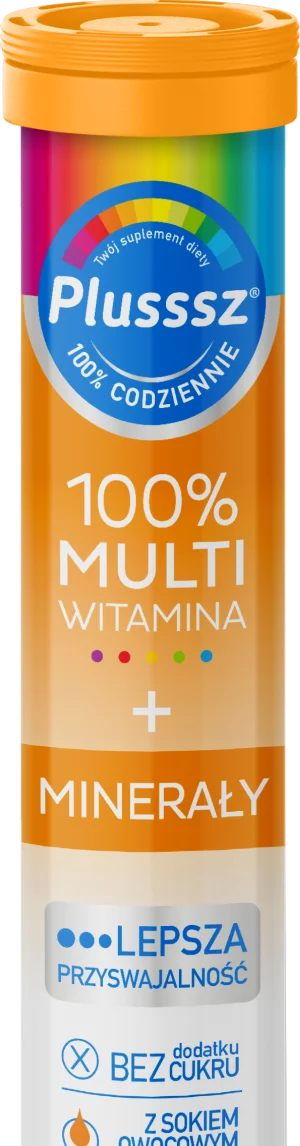
For active individuals, the format of the multivitamin matters as much as the formula. Effervescent tablets dissolved in water offer faster absorption than standard capsules or compressed tablets, which have to break down in the gut first. If you are already drinking a glass of water as part of your morning routine, adding an effervescent multivitamin to that glass is the easiest adherence win you can build into a daily vitamins for active lifestyle protocol.
Plusssz's multivitamin complexes are formulated specifically with improved nutrient assimilability in mind, offering targeted blends for women, men, and seniors. The absence of added sugar matters too. Many effervescent products use sucrose or glucose syrups as bulking agents, which adds nothing nutritionally and contradicts the whole point of supplementing a clean, performance-oriented diet.
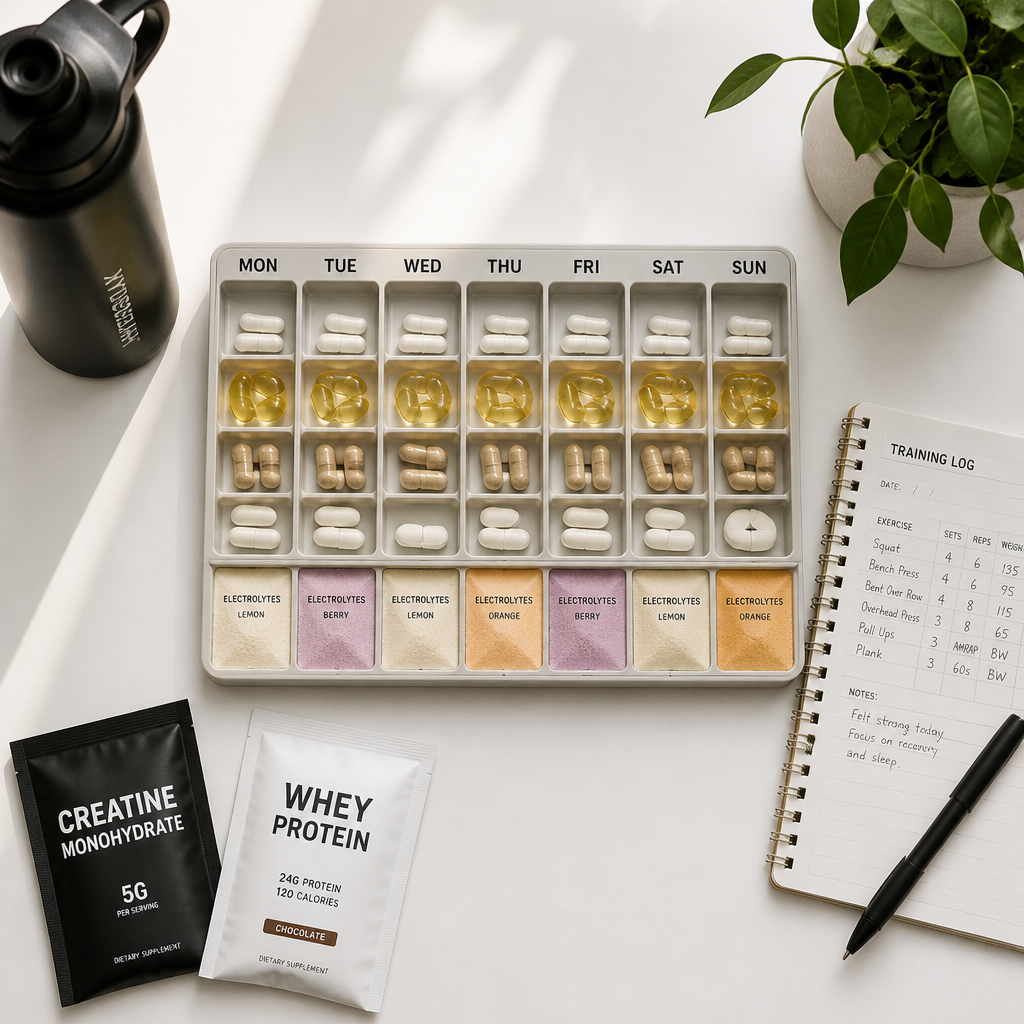

An electrolyte schedule is not one-size-fits-all, but the core principle is consistent: electrolyte needs are highest around physical exertion, in hot environments, and first thing in the morning after an overnight fast when hydration levels are naturally lower. The mineral composition of sweat includes sodium in the largest quantity, followed by chloride, with potassium, magnesium, and calcium lost in smaller amounts. A good electrolyte product addresses all of these, not just sodium.
On any day, training or not, waking up after seven to eight hours without fluids means you are already in a mild deficit. Drinking water with an electrolyte tablet first thing rehydrates faster than plain water alone because the sodium and potassium content helps direct that fluid into the cells rather than straight through the kidneys. This is especially useful if you train in the morning and need to be fully hydrated within an hour of waking.
Taking electrolytes 30 to 60 minutes before intense or prolonged exercise gives the body time to absorb and distribute key minerals before demand spikes. This pre-loading approach is most beneficial for sessions lasting longer than 60 minutes, particularly endurance work such as running, cycling, or swimming. For a 30-minute high-intensity interval session, pre-workout electrolytes are less critical, but they do no harm and keep the habit consistent.
Consuming electrolytes within 30 minutes after training, alongside protein and carbohydrates, supports faster recovery. This combination helps restore fluid balance, replace minerals lost in sweat, and support muscle repair simultaneously. If you train in the evening, this post-workout electrolyte window is also your last meaningful hydration opportunity before sleep, making it doubly important not to skip.
Pro tip: On heavy sweat days, such as a long run in warm weather or a two-hour team training session, use two servings of your electrolyte product rather than one. One pre-session and one post-session. The total mineral dose is still within safe daily limits for healthy adults, and it directly reflects what your body actually lost.
One of the most overlooked aspects of a structured supplement routine is the difference between what you take on training days versus rest days. Active people tend to think about supplements only in the context of performance, but recovery and adaptation happen on the days you are not training. Shortchanging rest-day nutrition is a common reason people plateau.
On training days, your electrolyte intake is the variable that shifts most. You need it before and after the session. Your multivitamin stays the same. If your training day includes a long or particularly intense session, consider taking your magnesium in the evening alongside a small recovery snack. Magnesium supports muscle relaxation and can contribute to better sleep quality after hard training days.
On rest days, you are not sweating heavily, so a single morning electrolyte dose is usually sufficient unless you are in a warm environment or doing active recovery work like a long walk. The daily vitamins for active lifestyle component, your multivitamin complex, does not change. Vitamins and minerals do not take days off. Bone remodelling, immune maintenance, and hormonal regulation continue on rest days just as much as on training days.
A practical mistake many people make is skipping supplements entirely on rest days because they feel they have not "earned" them. Supplement adherence on rest days is just as important as on training days. The body is rebuilding during those 24 to 48 hours, and it needs the raw materials to do so.
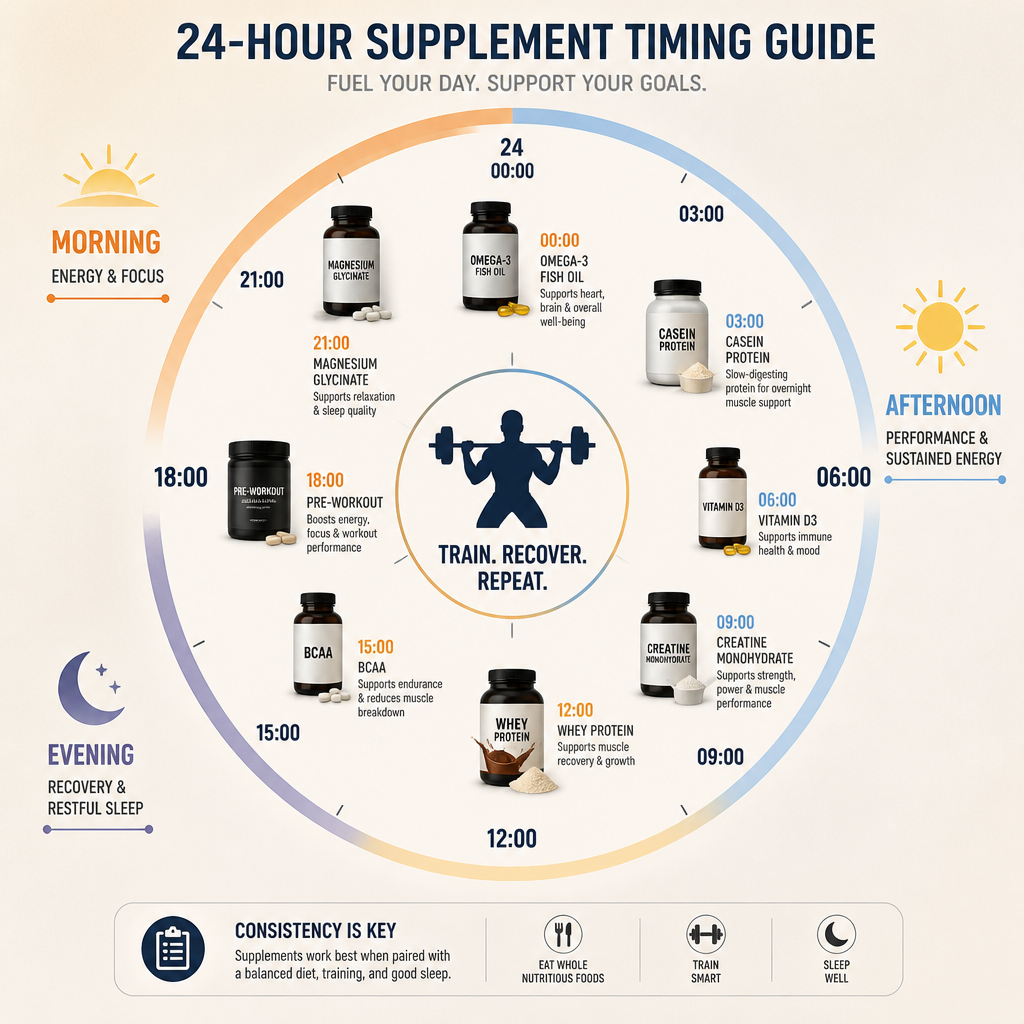
The following is a practical template for someone training five days per week, two rest days, with a mix of strength, cardio, and team sport sessions. Adjust training days to match your actual schedule. The principle holds regardless of how the days are distributed.
Monday (Training: Strength). Morning: multivitamin with breakfast. Pre-session (30 minutes before): one electrolyte tablet in 500ml water. Post-session: protein and carbs within 30 minutes, with an optional second electrolyte serving if the session was long or particularly hard.
Tuesday (Training: HIIT or cardio). Morning: multivitamin with breakfast. Pre-session: one electrolyte tablet 30 to 60 minutes before. Post-session: electrolyte replenishment within the 30-minute window. These sessions tend to produce heavier sweat, so post-session hydration is non-negotiable.
Wednesday (Rest or active recovery). Morning: multivitamin with breakfast. Morning or midday: single electrolyte serving for baseline hydration. No session-specific timing required.
Thursday (Training: Team sport or endurance). This is typically the highest-demand day. Morning: multivitamin. Pre-session: electrolyte tablet. During a session longer than 90 minutes, consider a mid-session hydration strategy if permitted. Post-session: full electrolyte and nutrition recovery within 30 minutes.
Friday (Training: Strength or conditioning). Same as Monday. Electrolytes before and after. Multivitamin in the morning with food.
Saturday (Long session or outdoor activity). This is the day most people take the longest, most demanding sessions: a long run, a hike, a weekend league match. Pre-session electrolytes, and if the activity lasts beyond 90 minutes, carry a second serving for mid or post-session.
Sunday (Full rest). Morning: multivitamin and a single electrolyte serving for baseline hydration. Do not skip the multivitamin. This is recovery consolidation day.
There are broadly three approaches active people in the UK adopt when it comes to structuring their electrolyte schedule and daily supplement intake. Each has trade-offs. Here is an honest comparison.
Approach |
What It Looks Like |
Key Weakness |
|---|---|---|
Ad hoc / as needed |
Take supplements when you remember them. Electrolytes only when you feel thirsty or crampy. Multivitamin "most mornings." |
Inconsistent blood and tissue levels. Benefits of daily supplementation are only realised over time and require consistent dosing. Ad hoc use delivers neither. |
Fixed daily schedule (no training adjustment) |
Same supplement stack every day at the same times, regardless of whether it is a training day or rest day. Simple to follow. |
Does not account for elevated electrolyte losses on heavy training days. One-size dosing may underserve high-demand days and slightly overserve rest days. |
Training-responsive schedule (recommended) |
Core multivitamin daily, always at the same time. Electrolytes scaled to session intensity and duration. Pre- and post-workout timing on training days, single morning dose on rest days. |
Requires slightly more planning and awareness of your week. Pays back in performance and recovery outcomes. |
The training-responsive schedule is the clear winner for anyone who trains more than three times per week. It is not complicated. Once you have done it for two weeks, the timing becomes automatic.
Knowing what to take is only half the problem. The other half is avoiding the habits that quietly undermine an otherwise good supplement routine.
Dumping your entire supplement stack into one morning glass is convenient but not always optimal. Calcium and iron compete for the same absorption pathways. If your multivitamin contains both in significant amounts, taking it in one hit means you are getting less of both than the label suggests. A well-designed multivitamin product for active individuals separates or balances these competing minerals within the formulation itself. This is one reason why the quality of formulation matters as much as the quantity of nutrients on the label.
The most common electrolyte mistake is waiting until you are already dehydrated, cramping, or exhausted before reaching for a supplement. At that point, you are managing a deficit rather than preventing one. The entire value of an electrolyte schedule is proactive, not reactive. Build the pre-session dose into your routine as automatically as tying your shoes before training.
Many mainstream electrolyte drinks on the UK market use added sugars as flavour carriers, which adds unnecessary calories and works against a performance nutrition philosophy. Effervescent electrolyte tablets with no added sugar deliver the minerals without the glycaemic spike. For training sessions early in the morning or at lunch, this is particularly relevant since many people in those windows are managing their carbohydrate intake carefully.
Covered above but worth reinforcing here: skipping supplements on rest days because you are not training is a logical error. Adaptation, immune function, and hormonal balance operate on a 24-hour cycle, not a training-day cycle. Your multivitamin is a daily product because your body's need for those nutrients is daily.
Pro tip: Keep your weekly supplement plan visible, not buried in a drawer. A simple note on the fridge or a recurring phone reminder at the same time every morning removes the cognitive overhead of remembering. Adherence is the biggest predictor of results with any supplement routine, more than brand selection or dosage refinement.
For most active adults training four to five times per week, one to two servings per training day is appropriate. One serving pre-session and one post-session on high-intensity or long-duration days. On rest days, a single morning serving maintains baseline hydration without over-supplementing. If you are doing prolonged endurance work in warm weather, a third serving during the activity may be warranted. Healthy adults without kidney disease or hypertension can manage daily electrolyte supplementation at standard doses safely, but if you have any conditions affecting blood pressure or kidney function, check with your GP first.
Morning is better for most people, primarily because of adherence. Vitamins taken with breakfast are harder to forget and are accompanied by food, which improves the absorption of fat-soluble vitamins like D and K. The exception is magnesium, which some people prefer to take in the evening because of its association with muscle relaxation and sleep quality. If your multivitamin contains magnesium as a significant component, taking it with your evening meal rather than breakfast is a reasonable choice.
You still need baseline electrolytes on rest days, just less of them. The body loses small amounts of sodium, potassium, and magnesium through normal daily processes even without exercise. A single morning electrolyte serving on rest days keeps those levels stable and supports the recovery and adaptation processes that happen in the 24 to 48 hours after hard training. If it is a hot day or you are doing active recovery like walking or yoga, maintain your morning dose.
Generally yes, especially if you are dissolving your electrolyte tablet in water with your morning multivitamin. The key consideration is not to stack products that contain high doses of competing minerals, such as iron and calcium, in one hit. Plusssz formulations are designed with nutrient assimilability in mind, which reduces this concern compared with generic products. If you are stacking multiple third-party supplements, check the mineral content of each before combining them in one dose.
Wake up and immediately drink 500ml of water with an electrolyte tablet. This addresses the overnight hydration deficit before you exercise. Keep it simple: no need for an elaborate pre-session protocol if you are training within 30 to 60 minutes of waking. Post-session, have your recovery meal with your multivitamin, and if the session was long or sweaty, consider a second electrolyte serving in that post-workout window. Morning trainers often skip the post-workout electrolyte step because they are rushing to get ready for work. That is the step most worth protecting.
For electrolytes, the effect on hydration and reducing cramping can be noticed within the first week, particularly if you were previously under-supplementing around training. For multivitamins, the timeline is longer. Vitamin D status, for example, builds over several weeks. The mood, energy, and immune benefits of correcting a deficiency are real but gradual. A common mistake is abandoning a routine after two weeks because there is no dramatic effect. Expect four to eight weeks of consistent use before drawing conclusions about any micronutrient supplement.
If you have been experimenting with your own supplement schedule around training, share what has worked for you in the comments below. Real-world experience from active people is some of the most useful data in this space.