If you have ever landed in a new time zone after a training camp or tournament and felt flat for three days, the problem was probably not your fitness. Travel sport nutrition in the UK is usually planned around the departure gate and forgotten by the time the bags reach the carousel. Long flights dry you out, cabin air carries very little moisture, and the routine that normally keeps your electrolytes in check gets scrambled. This guide covers how to keep fluid, sodium and key micronutrients on track when your training calendar crosses time zones.
Key Insight |
Explanation |
|---|---|
Start hydrating the day before you fly |
Fluid deficits build up before you reach the airport. Use normal drinks through the day and avoid trying to catch up at the gate. |
Match electrolytes to sweat, not to the clock |
Sodium and chloride are the main minerals lost in sweat. Increase electrolyte intake on long, hot or heavy sessions and keep it modest on light days. |
Use 400 to 800 ml per hour as a starting range |
This is a widely cited starting point during exercise, adjusted for sweat rate and conditions, and it helps guard against both dehydration and low blood sodium. |
Weigh yourself before and after sessions |
Weight lost during training shows how much fluid you need to replace. Use it as a practical guide for the first week away. |
Anchor meals to local time from day one |
Eating at destination meal times helps your appetite and carbohydrate timing adjust faster than any single supplement will. |
Check supplement rules before you pack |
Customs rules for food supplements vary by country. Keep original labels and check the destination's guidance before you travel. |
The real problem with crossing time zones is that your body clock and your fluid routine fall out of step. Most athletes drink around meals, sessions and the moments they remember, and all of those anchors shift the moment you land. A two-hour difference sounds trivial, but a session that starts at 7am local time can feel like it belongs to a completely different day.

Dehydration also builds quietly. Gabrielle Judd, a dietitian at Johns Hopkins Bayview Medical Center, notes that it affects more than endurance, with flexibility, breathing efficiency, mood and concentration all taking a hit. That is why travelling athletes often feel sluggish long before they realise they are short of fluid.
"Hydration during a game, tournament or workout, not just before and after, can fall below the radar of an athlete and their trainer, but performance depends on it." Gabrielle Judd, dietitian
In practice, the hydration gap shows up in the second or third session in a new place, when heavier sweating meets a body that has not caught up yet. Plan for it before you leave rather than reacting once you already feel off.
Cabin air is very dry, and most athletes arrive at the gate already a little behind on fluid. The fix is not buying a bottle of water in the terminal. It is starting the day before departure with normal drinks, then sipping steadily through the flight so you are not trying to catch up later.
Set a target you can actually track, such as finishing a standard bottle every hour or two, and tick it off against the flight clock. Do not rely on thirst alone, because by the time you feel it the deficit is already building. Keep alcohol and large amounts of coffee to a minimum, since both push you towards the bathroom without replacing what you have lost.
On a long-haul flight, adding an electrolyte drink to one or two of your bottles makes fluid easier to keep drinking, especially if plain water starts to taste flat. Keep the sodium modest if you are not training on board, and save the stronger mix for the sessions you have planned.
Pro tip: Pack an empty bottle for airside use and fill it after security. You will drink more across a long connection than you would from a single large bottle bought at the gate.
The first two days are where most of the damage shows up. A common mistake is training hard on the first morning in a hot or humid place, straight after a long day in a plane seat. Weigh yourself before and after the first two or three sessions, then use the difference to guide how much you replace.
Check your urine colour as a simple daily guide, but treat it as a rough signal rather than a precise measure, since some supplements change its colour. Eat your main meals at local times from the first day, even when you are not hungry, because that helps the body clock settle faster than any single product will.
Sweat is mostly water, but it also carries sodium and chloride, and those two minerals matter most for sports hydration. Electrolytes also include potassium, magnesium, calcium and phosphate, which all support muscle, nerve and heart function. Judd notes that people can lose up to 2 quarts of fluid, roughly 1.9 litres, per hour of activity, with endurance work draining up to 3 quarts, about 2.8 litres, per hour.
Sodium is the mineral to watch on long sessions and hot days. Hydration guidance from Massachusetts General Brigham notes that a little sodium in your fluid can help you absorb it better during exercise. Plain water on a long, hot session can also dilute blood sodium, which is why Better Health Victoria warns about hyponatraemia alongside dehydration.
That means electrolytes are not just for elite athletes on race day. If you are running a heavy training block abroad, the sweat rate you see in the first week tells you more than any generic rule. Keep a note of which sessions left you salty, heavy-legged or cramping, and adjust from there.
Carry enough electrolyte product for the sessions you have actually planned, not for a worst-case day you imagine. Taking more sodium than you need when you are not sweating does not help, and it can leave you thirsty in a way that drives more drinking. Read the per-serving label so you know how much sodium each bottle contains.
Test any new electrolyte format at home before you travel, ideally during a normal training week. That way you know how your stomach reacts before a competition. You can find our electrolyte hydration range at Plusssz UK, but the same test applies to any product you choose. By the time you fly, your plan should feel boring.
Hydration gets most of the attention on trips, but micronutrients are where quiet deficits build up. Travel changes what you eat, when you eat, and how much daylight you see, and those three things affect several vitamins and minerals at once. A 2023 research review on micronutrients and exercise-related health is a useful starting point for understanding why these nutrients matter for training.
If you are travelling for sport from the UK in the darker months, your vitamin D status is often lower than you expect before you leave. The review notes that the most practical way to maintain vitamin D is spending several minutes in direct outdoor sunlight most days, which is hard to arrange during an indoor winter training camp. A daily supplement is usually the simplest route, so check the label for the amount per dose rather than guessing.
Hotel buffets and airport food often cut out the foods that carry these minerals, such as leafy greens, pulses, dairy and wholegrains. Athletes who eat the same three meals all week lose variety first, and variety is what covers micronutrient needs. Build each plate around one protein, one colourful vegetable and one wholegrain, and use a multivitamin with clear mineral amounts to fill gaps you cannot control.
Be careful not to double up. Stacking several products that each contain iron or calcium can push intake above what you need without any benefit. Keep a list of everything you take, and compare it with what you actually eat on a poor day.
Fuelling is where time zone shifts do the most damage, because appetite and digestion follow the old clock for several days. The aim is to get carbohydrate and protein in sensible amounts at sensible times, not to match a hotel breakfast menu to a spreadsheet. Good enough and consistent beats perfect and sporadic.
Sports nutrition guidance from AOSSM describes carbohydrate needs as a range tied to activity, with 2.5 to 5.0 grams per pound of body weight per day as the working figure. The lower end suits rest days, while the higher end fits two-a-days and multi-day tournaments. Muscles store a limited amount of carbohydrate, so a travel day of light meals can quietly drain your reserves.
Eat a carbohydrate-rich meal before training, and plan a snack for any long journey rather than assuming the next meal will arrive on time. Oats, fruit, rice, potatoes and yoghurt are easy to find in most destinations and travel well in a bag. Avoid relying on sugary drinks alone, since they give a short spike followed by a dip.
Protein is easier to manage than carbohydrate, because most airport and hotel food contains some. AOSSM guidance suggests spreading protein across meals, with roughly 15 to 30 grams at each meal depending on calorie needs. In practice, eggs or yoghurt at breakfast and fish or chicken at lunch will cover most of that without a single supplement.
Most athletes end up using one of three approaches on the road. Each has a place, and the right choice depends on how long you are travelling, how hard you train, and how much you can carry in your hand luggage.
Approach |
Best for |
Main drawback |
|---|---|---|
Electrolyte drink mixed into water |
Long flights and sessions over an hour in heat |
Easy to overdo sodium if you drink large volumes without sweating |
Electrolyte tablets or sachets |
Carry-on luggage and short trips with limited space |
Depends on access to clean water, and they are easy to forget at the gate |
Plain water plus food-based sodium |
Light training days and athletes who dislike sweet drinks |
Sodium intake is hard to measure, so it is less predictable on heavy sweat days |
For most travelling athletes, the drink mix works best on long sessions and the tablets work best as a backup in hand luggage. Food-based sodium is useful on rest days, but it is a poor plan for a heavy training block in a hot place. Choose the approach that matches your heaviest sessions, not your easiest days.
The best hydration plan is the one you will actually drink on a crowded flight, not the one that looks best on paper.
Pro tip: Label each bottle with the mix strength and sodium amount before you fly. It removes guesswork when you are tired and the hotel kettle is the only thing available.
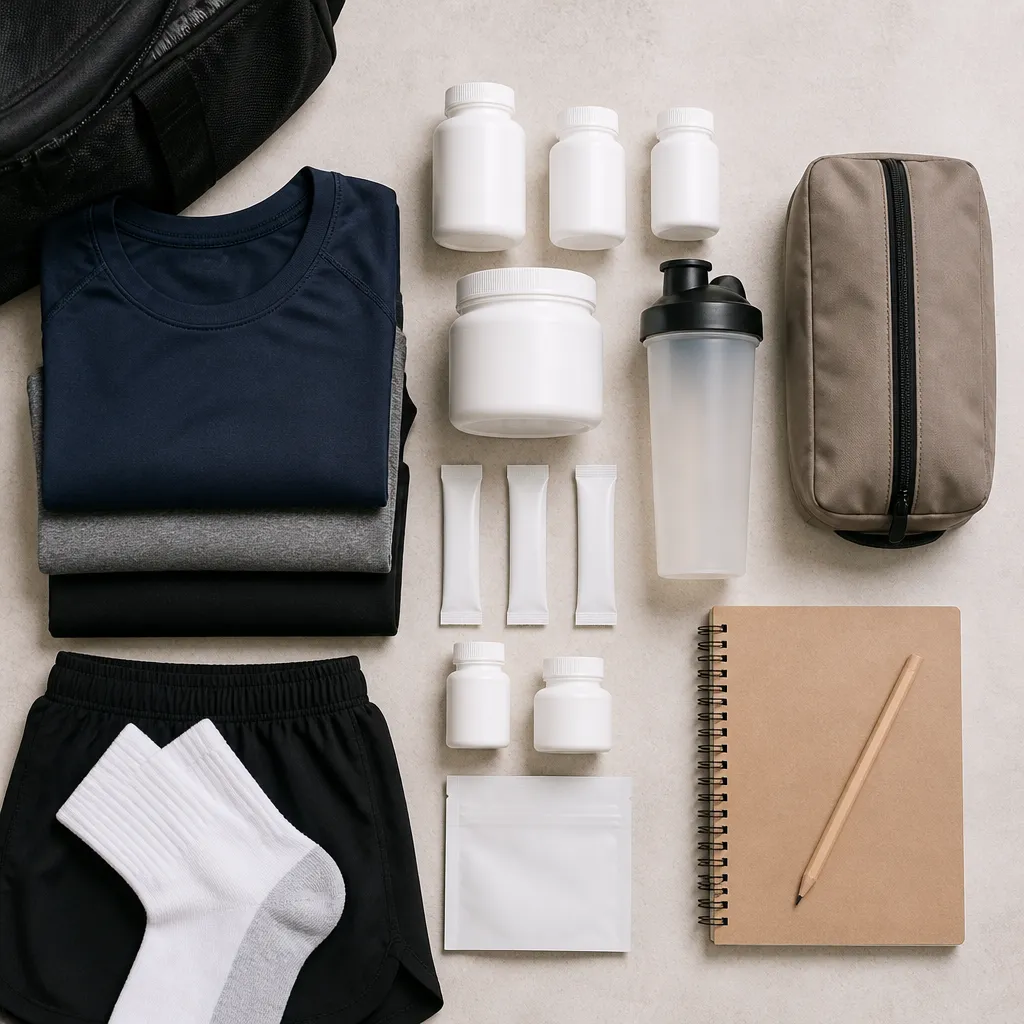
Supplements are one of the few things travelling athletes pack out of habit rather than from a checklist. Keep your core products in hand luggage with labels intact, and carry enough to cover the trip plus a few spare days in case of delays. Running out in week two of a training camp is far harder to fix than forgetting a spare charger.
Rules on bringing food supplements into another country vary, and some destinations restrict products that are perfectly legal at home. Check the official customs guidance for the country you are visiting before you pack, and keep original packaging and ingredient lists with each product. If your sport has anti-doping rules, check every ingredient against them before you travel, because a product label alone does not confirm that it is safe for competition.
Local pharmacies and supermarkets stock electrolyte products, but sodium, potassium and sugar content varies widely between brands. Read the per-serving panel before you buy, and be wary of products sold as sports drinks that carry a lot of sugar. Match the sodium and sugar levels to what you would take at home rather than picking the most colourful packet on the shelf.
Pro tip: Photograph the label of every product you bring, including the batch number. It helps if you need to explain what you took to a team doctor or a customs officer.
Aim for a steady intake across the whole flight rather than large amounts in one go, such as finishing a standard bottle every hour or two. Adjust based on how thirsty you feel, your urine colour and how hard you plan to train on arrival.
Probably not every day. Light sessions in mild conditions rarely call for extra sodium, so save electrolyte drinks for long, hot or heavy sweat sessions where your losses are higher.
Often you can, if you plan your meals around a protein, a vegetable and a wholegrain. Vitamin D is the usual gap in winter, because food alone rarely covers it, so a daily supplement is the practical route for most UK athletes.
Start on the first day, even if you are not hungry. Eating at destination meal times helps your appetite and carbohydrate timing adjust faster than trying to hold on to your home schedule.
For most active people, a modest amount during exercise is not a concern. If you have a blood pressure condition, kidney issues or take medication that affects fluid balance, speak to your GP or pharmacist before you increase sodium intake.
Yes, especially for the first week. Weighing yourself before and after sessions gives you a practical estimate of fluid lost, which helps you decide how much to replace on the next session.
What has been the hardest part of keeping your fluids and micronutrients on track on your last trip, and what fixed it for you?