Most athletes who end up with overtraining syndrome in the UK did not get there because they trained too little. They got there because they trained hard on a body that was short of fuel, iron, vitamin D or fluid. Overtraining syndrome, often shortened to OTS, is a state where performance drops, sleep and mood suffer, and recovery takes weeks rather than days. Ask a sports doctor about it and you will hear the same warning: rest alone rarely fixes OTS if the diet underneath is thin. This guide explains how nutritional deficiencies make overtraining syndrome worse, which gaps matter most under UK training conditions, and what to fix first.
Key Insight |
Explanation |
|---|---|
Rest alone rarely fixes OTS |
If energy or micronutrient intake is short, performance stalls even when training load drops. |
Check energy intake before anything else |
Under-fuelling produces a pattern that overlaps closely with relative energy deficiency in sport. |
Iron status matters most for women athletes |
Women use iron supplements more often than men, so get blood markers checked by a GP rather than guessing. |
Vitamin D needs attention from autumn onwards |
Daylight shortens sharply across the UK from late October, and levels can drift down without obvious warning signs. |
Sweat losses are often underestimated |
Replacing only plain water after long or hot sessions can leave you flat even when calories look adequate. |
Supplements fill gaps, they do not replace meals |
Use products to correct a confirmed or clearly identified shortfall, not as a substitute for eating enough. |
See a GP when symptoms persist |
Ongoing fatigue, poor sleep and falling performance need a medical check to rule out other causes. |
Overtraining syndrome is not simply being tired after a hard training block. The medical definition describes it as an accumulation of training and or non-training stress that produces a short-term drop in performance capacity, with or without physical and psychological signs of maladaptation. Restoring performance can take several weeks to several months, which is why OTS so often ends a season early.

In practice, the people who come to me with this problem describe the same pattern. Their heart rate is higher at the same pace, sessions that used to feel routine become a grind, sleep turns light and broken, and irritability creeps in. Many also mention a stubborn cold or a niggle that refuses to settle.
The key difference is time. Normal fatigue clears within a few easy days and a decent night's sleep. OTS persists for weeks even when the load has come down. A common mistake is to respond to that persistence by training harder to 'push through', which deepens the hole.
Performance that does not come back after rest is a nutrition and recovery question first, and a motivation question second.
A review of overtraining syndrome states that suitable nutritional habits are a very important group of factors contributing to how OTS emerges and develops. It also notes that inadequate intake hinders the body's ability to recover, and that OTS is often associated with shortfalls in carbohydrate, protein, micronutrients and total calories. That combination is what most practitioners see, rather than a single missing vitamin.
Training load is the part of the equation you can see on a watch or in a training log. Intake is the part people estimate badly. Someone who logs ten hard hours a week while eating like a person who trains three is running a deficit that no rest day will close.
Most people who under-eat are not careless. They are busy, they train early or late, and they assume a protein shake covers the rest. In practice, the gap usually sits at breakfast and around the session itself. Athletes often skip the pre-session meal, eat little afterwards, and then wonder why their legs feel dead by Thursday.
Protein matters for repairing training damage, but more is not automatically better. Spread it across meals so that each one contains a meaningful portion, rather than eating most of it at dinner. A common mistake is adding a large shake on top of an already adequate diet while the carbohydrate and micronutrient base stays weak.
Pro tip: Before buying any supplement, write out a normal training week of food. If breakfast before your hardest session is missing, fix that first, because it often does more than any product on the shelf.
Energy availability is the energy left over for the body's own functions after the energy spent in exercise is subtracted from intake. When it runs low for long enough, the body starts protecting itself, and the effects reach hormones, sleep, immunity and mood. A study comparing overtraining syndrome with relative energy deficiency in sport found significant symptom similarities, with both starting from a hypothalamic-pituitary origin that low carbohydrate and low energy availability can influence.
That overlap is why a training slump is so easy to misread. A coach or athlete may conclude they need more recovery days, when what the body actually lacks is fuel. Adding rest to an under-fuelled athlete often produces a short improvement, followed by the same plateau once training resumes.
Both conditions show up as flat performance, poor sleep, low appetite or a loss of interest in training. The difference is that under-fuelling usually follows a pattern across the week. Hard sessions get done on very little carbohydrate, and the gap is largest on the busiest days. Ask yourself honestly how many hours passed between your last meal and your hardest session this week.
The first check I recommend is simple. On your three hardest training days, eat a carbohydrate-containing meal within a few hours before training, and another one afterwards. Oats, rice, potatoes, fruit and wholegrain bread are everyday options most people can manage without special preparation. If you are unsure, keep a food log for one week, because most people underestimate what they actually eat.
Pro tip: Log your intake on the day after a poor session, not on a random easy day. The gaps that matter show up where performance collapsed, so that is where the log is most useful.
Iron is the nutrient most often missed in overtraining conversations, especially for women. The NIH Office of Dietary Supplements notes that a larger proportion of women athletes use iron supplements than men, which shows how common concern about iron status already is in sport. Iron supports oxygen transport, so when stores run low, the same session costs more and recovery slows.
Low iron does not always look like anaemia. Many active women describe heavy legs, breathlessness on easy efforts, unusual fatigue and sessions that suddenly feel like a race. These symptoms overlap with OTS, so they are easy to blame on training load alone.
Taking iron without knowing your status is a common mistake. Too much iron causes its own problems, and it can mask the real cause of fatigue. A GP can check blood markers, including ferritin, and tell you whether supplementation makes sense. Let that result decide the dose and duration, not a guess from social media.
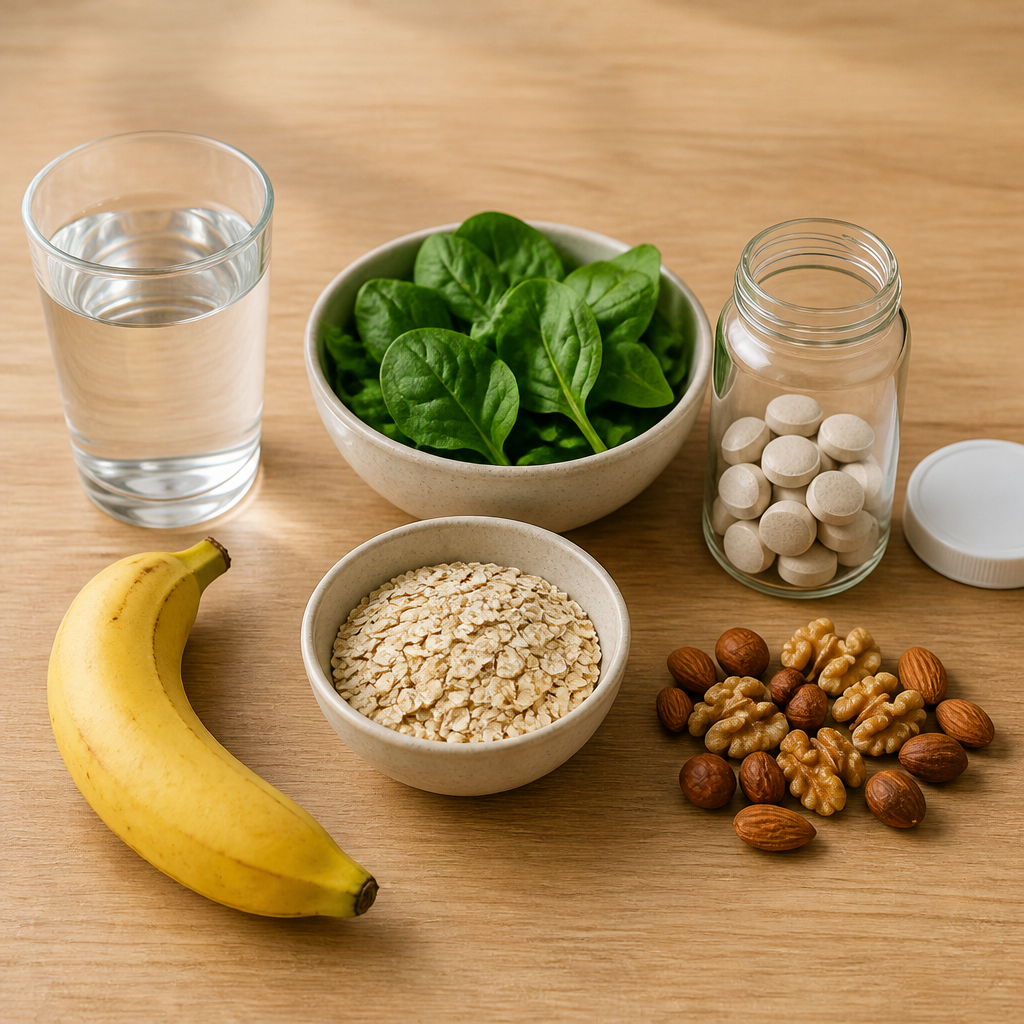
Red meat, fish, eggs, pulses and fortified cereals all contribute iron, and vitamin C eaten in the same meal helps absorption. Tea and coffee taken alongside iron-rich meals can reduce uptake, so separate them where you can. If testing shows a deficit, a supplement becomes a targeted tool rather than a gamble.
Pro tip: Ask for a full blood count and a ferritin result at the same appointment. One number on its own can mislead you, and the pair gives a much clearer picture.
Vitamin D is the gap UK athletes are most likely to overlook, because so much of it comes from sunlight on the skin. Daylight hours shorten sharply across the UK from late October, and for many people training now starts and ends in the dark. A review of recovery nutrition notes that vitamin D has been studied for its effect on muscle recovery, which makes it relevant to anyone carrying training load through the winter.
Low vitamin D is not a diagnosis of OTS, but its symptoms overlap with fatigue, aching muscles and slow recovery. In practice, I see athletes who trained through an entire autumn with no change to their programme, then wonder why their legs feel heavy in December. The calendar changed, not the training, and that was the missing variable.
Speak to your GP about testing if you have had persistent tiredness, frequent colds or slow recovery through the autumn. UK public health advice has long suggested that a daily supplement is worth considering during the darker months, and it is worth checking that advice against your own history with a clinician. Oily fish, eggs and fortified foods help, but they rarely cover the gap alone.
Hydration is often treated as a water problem, but the minerals lost in sweat matter just as much for performance and recovery. Sodium, potassium, magnesium and chloride all leave the body when you sweat, and replacing only the water can leave muscles and the nervous system working on a thinner margin. When a training block is long and hot, or sessions run back to back, that gap grows quickly.
A common mistake is drinking large volumes of plain water after a hard session to 'rehydrate' fully. Without sodium, the body holds on to less of the fluid, and you may still feel flat, headachy or unusually thirsty. Pairing fluids with electrolytes is a more practical way to restore balance.
Electrolyte products are most useful during long sessions, heavy sweating or training in heat, especially when you want a sugar-free option that does not add to your daily carbohydrate load. They do not replace meals. If you are under-eating, an electrolyte drink will not close the underlying deficit. Our electrolyte hydration range is built for that supporting role, not as a standalone cure.
Pro tip: Weigh yourself before and after a long session. A loss of about one kilogram roughly equals one litre of fluid, which tells you how much you need to replace over the next few hours.
Supplements can support recovery, but they work best when they fill a documented gap. A physiology society overview of nutritional supplements and muscle damage notes that vitamin D, tart cherry juice and beetroot juice have all been studied for their effect on muscle recovery. That is useful evidence, but it does not mean any of them will rescue an athlete who is seriously under-fuelled.

Start with the cause. If your diet is short of energy, a supplement will not compensate. If blood results show low iron or vitamin D, targeted correction makes sense. If your main problem is sweat loss, electrolytes are the right tool. Choosing products on marketing claims alone is where most people waste money.
Stacking several recovery products at once adds cost and confusion, and it makes it harder to see what is actually helping. Keep the list short, change one thing at a time, and review progress after two to three weeks. Good supplement decisions usually look boring on paper, and that is a feature rather than a flaw.
Most people dealing with OTS try one of three routes: cutting training load, correcting the diet, or adding supplements. Each has a place, but they suit different situations. The table below sets out where each one works best and where it falls short.
Approach |
Best suited for |
Main limitation |
|---|---|---|
Reduce training load only |
Short-term fatigue after a hard block with an adequate diet |
Does not fix under-fuelling, so symptoms often return once training resumes |
Diet correction with blood testing |
Persistent symptoms where energy, carbohydrate or iron may be short |
Takes several weeks and depends on consistent food logging |
Supplement-led gap filling |
Confirmed deficits or heavy sweat losses in hot or long sessions |
Cannot replace meals, and guessing doses can hide the real cause |
For most people, the best order is test first, correct the diet second, reduce load third, and supplement only where a gap is clear. The approach that fails most often is supplement-only, because it treats the symptom list rather than the intake problem underneath. Load reduction still matters, but it works far better once fuel and minerals are back in balance.
No. Supplements can correct confirmed gaps, but OTS usually needs reduced training load, enough energy intake and a medical assessment to rule out other causes.
The medical definition describes restoration of performance taking several weeks to several months. Plan for a gradual return, and judge progress by sleep, resting heart rate and session quality rather than a single good workout.
Low energy availability is the most common culprit. Iron and vitamin D are the next gaps to check, particularly for women and during the darker months of the year.
Yes. Persistent fatigue, poor sleep, low mood or falling performance warrant a medical check. Blood tests can also guide nutrition decisions and show whether iron or vitamin D needs correcting.
They help when sweat losses are high, especially in heat or during long sessions. They work best alongside proper meals, because they cannot replace the energy and nutrients that food provides.
What finally helped you get back on track after a training slump, and would you share it with us in the comments below?