Most people glance at the best before date on a supplement tub and stop there. That date assumes the product sat somewhere cool, dry and dark, yet many of us keep our vitamins on a bathroom shelf beside the shower. If you are asking how to store supplements in the UK, the honest answer is that storage often matters more than the date printed on the lid. Heat, humidity and light quietly reduce potency, and you will rarely notice from the look or taste of a capsule. This guide covers which forms last longest, where to keep them in a typical British home, and the small habits that stop a good multivitamin from losing its edge.
Key Insight |
Explanation |
|---|---|
Keep supplements below about 25°C |
Heat speeds up the breakdown of vitamin C and B-complex vitamins, so a warm cupboard shortens useful life. |
Skip the bathroom cabinet |
Steam from hot showers reaches the cabinet every day and pushes moisture into bottles each time you open them. |
Keep the original container |
Bottles are designed with tinted or opaque walls and sometimes desiccant packs. Decanting into pill organisers removes that protection. |
Seal the lid straight away |
Every opening lets in a little humidity, so close the tub or bottle before you walk away. |
Do not refrigerate unless the label says so |
A cold bottle taken out into a warm room collects condensation, and that moisture is what you are trying to avoid. |
Check for colour, smell and texture changes |
Clumping powder, discolouration or an off smell signal spoilage, sometimes well before the date passes. |
A best before date on a supplement is a manufacturer's statement about potency under the storage conditions it specifies. It is not a cliff edge where a capsule turns harmful overnight. The date only holds if the product has lived the life the label describes.
In practice, most of us move a bottle from a dry warehouse to a steamy bathroom and never think about it again. Once that happens, the conditions behind the date no longer apply to your bottle.
The expiration date marks the final day a manufacturer guarantees the complete safety and potency of a product. Many supplements stay safe to take after that point if they have been stored well, but they can lose strength gradually.
A scientist at Imperial College London, Dr Rayyan Zafar, told Stylist that most supplements remain safe after the best before date provided they have been stored properly. The variable that changes is potency, and that is the part you cannot see.
A degraded vitamin usually looks, smells and tastes almost identical to a fresh one. You cannot judge a multivitamin by eye, which is why storage habits matter more than gut feeling.
The stakes are highest with targeted nutrients. If you take B12 to correct a deficiency, an expired product may not raise your levels as effectively, and that can mean slower relief from symptoms.
Not every format ages at the same speed. The physical form of a supplement is one of the biggest factors in how long it keeps its strength once you have opened it.
Solid forms are the most stable. Dr Zafar made this point to Stylist when discussing supplements past their expiry, and it matches what most people see in practice.
Solid forms, such as tablets and capsules, are the most stable past their expiration date. Supplements that exist in solution or as a reconstituted suspension are less likely to be potent if used when outdated.
A dry capsule in a sealed blister or a well-closed tub is the most forgiving format you can buy. If you only have time to manage one storage habit, make it this one.
Anything in solution, or mixed with water into a suspension, is less stable. Liquid drops, syrups and powders you reconstitute lose potency more quickly once they pass their date.
Gummies sit in a grey area. They soften and stick together in warm, humid conditions, and a tub left open on a warm worktop can look fine while the dose inside is no longer what the label promises.
The same logic applies to oils. A registered nutritionist quoted by Stylist noted that freshly ground flaxseed can go rancid quite quickly once its oils are exposed to the environment.
For omega and other oil-based products, buy the size you will finish within a few months of opening. A large tub that sits for a year will age faster than the label implies.
Most British homes have two spots where supplements end up by default: the kitchen and the bathroom. Both are poor choices, and they are the spots I see cause the most avoidable loss of potency.
Kitchens expose bottles to oven heat and the steam from the dishwasher. Bathroom cabinets collect humidity from every hot shower, and many sit close to warm pipes or a boiler cupboard.
Even when a product is in an airtight container, opening it lets moisture in. For vitamin C, that moisture can change the chemical structure, so the damage happens every time the lid comes off.
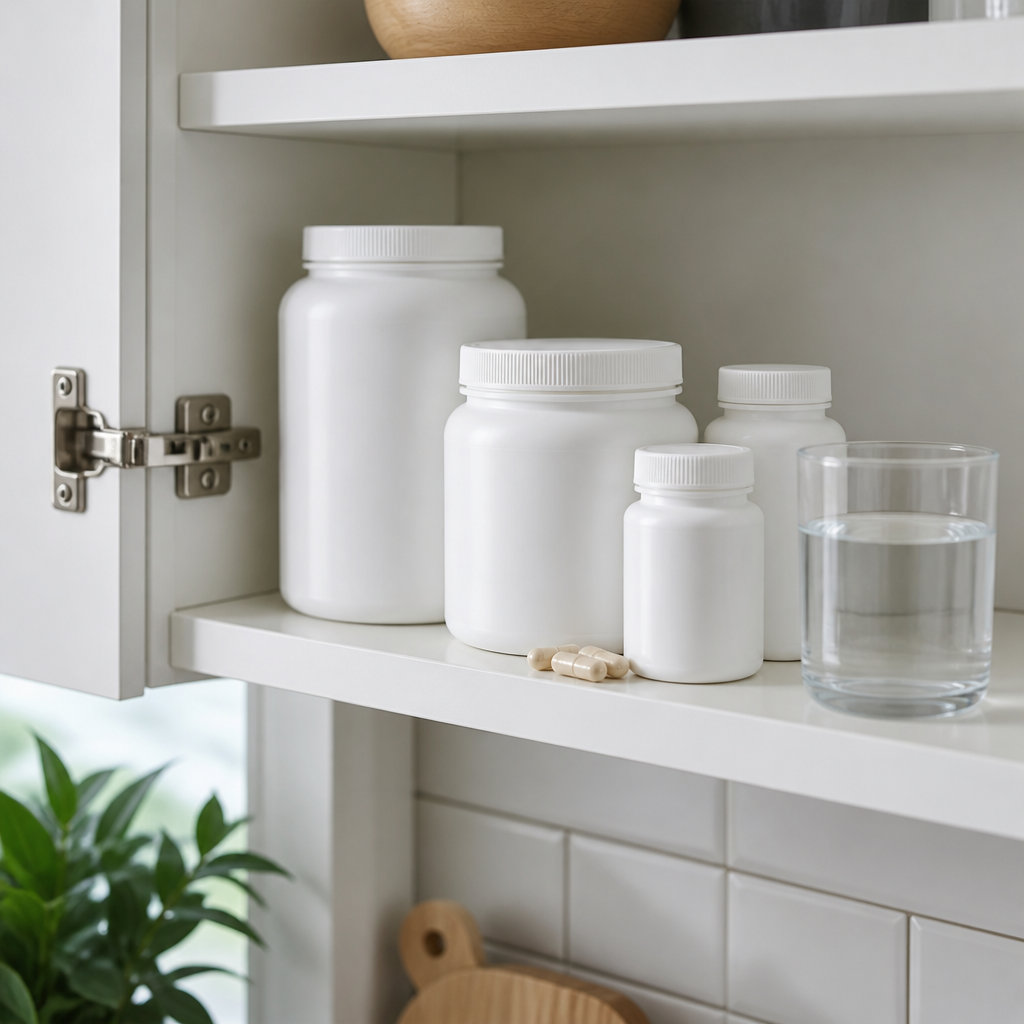
A bedroom drawer, a wardrobe shelf or a linen cupboard away from radiators usually performs better. The goal is a stable temperature, low humidity and no direct light.
Cupboards on external walls can be cold in winter and damp in autumn, so check the spot over a few weeks before you commit. A simple test is whether the area feels comfortable for storing clothes.
Pro tip: Write the date you first opened each tub on the lid with a marker. That gives you a clear sense of how long the product has been exposed to room air, which matters more than the date on the box once a product is open.
Three environmental factors do most of the damage: heat, moisture and light. Each works differently, and each has a common household trigger that is easy to miss.
High temperatures break down vitamin C and B-complex vitamins quickly. Warm rooms, sunny windowsills and cars in summer all push a bottle beyond safe conditions.
Plan for hot days. A gummy tub left on a car dashboard in July is one of the most common ways to ruin a month of supplements in a single afternoon.
Moisture is the slow problem. It causes tablets to crumble, capsules to soften and powders to clump. Electrolyte powders are especially prone to clumping if the tub sits open in a humid room.
Autumn and winter bring a different risk. Central heating dries the air in some rooms while steam from cooking and washing raises humidity in others, so a spot that felt fine in summer may not suit you now.
Light degrades some nutrients, which is why many supplements come in tinted or opaque containers. Keep the bottle in its box or in a cupboard rather than on an open shelf.
A bottle on a sunny windowsill is a poor choice even if the room is cool. The light alone can reduce potency over weeks.
Packaging is part of the formula's stability. Manufacturers choose containers based on how the product degrades, and that choice is not cosmetic.
Weekly pill organisers are convenient, but they expose tablets to air, light and humidity each time a compartment opens. Filling a whole week in advance is a common habit that shortens useful life.
If you must use an organiser, fill it on the day you plan to take the doses and keep the original bottle sealed and out of the bathroom. Avoid mixing different supplements in the same compartment.
Silica gel packets in bottles exist for a reason. Do not throw them away, and do not leave a lid off while you find a spoon or a glass of water.
Electrolyte powders in tubs work the same way. A wet scoop left in the tub adds moisture, so keep the scoop dry, use it only for the tub it came with, and close the lid straight away.
Pro tip: Never transfer a multivitamin or electrolyte powder into a smaller container for travel unless you can seal it fully and use it within days. Decanting removes the original seal and the protection built into the packaging.
Here is how three common places compare for everyday supplement storage. The verdicts assume a standard UK home with central heating and normal daily use.
Storage Spot |
Main Risk |
Verdict |
|---|---|---|
Bathroom medicine cabinet |
Steam from showers and warmth from pipes or the boiler |
Avoid for powders, gummies and liquids. Acceptable only for dry tablets kept well away from the shower. |
Kitchen worktop or cupboard above the oven |
Heat from the oven and hob, plus steam from the dishwasher |
Avoid. This is the most common place for heat exposure in a home. |
Bedroom drawer or linen cupboard |
Low risk if the spot is away from radiators and external walls |
Best all-round option for most supplements, provided the temperature stays steady. |
The bedroom drawer wins because its temperature is steady and the air is not steamy. The kitchen and bathroom both fluctuate sharply, and fluctuation is what breaks products down over time.
Refrigerators are the exception to avoid. Only refrigerate a product if the label explicitly says so, because condensation forms when a cold bottle returns to room temperature.
Pro tip: Ask whether the spot would suit your wool jumpers. If it is too warm or damp to keep clothes in, it is wrong for your vitamins too.
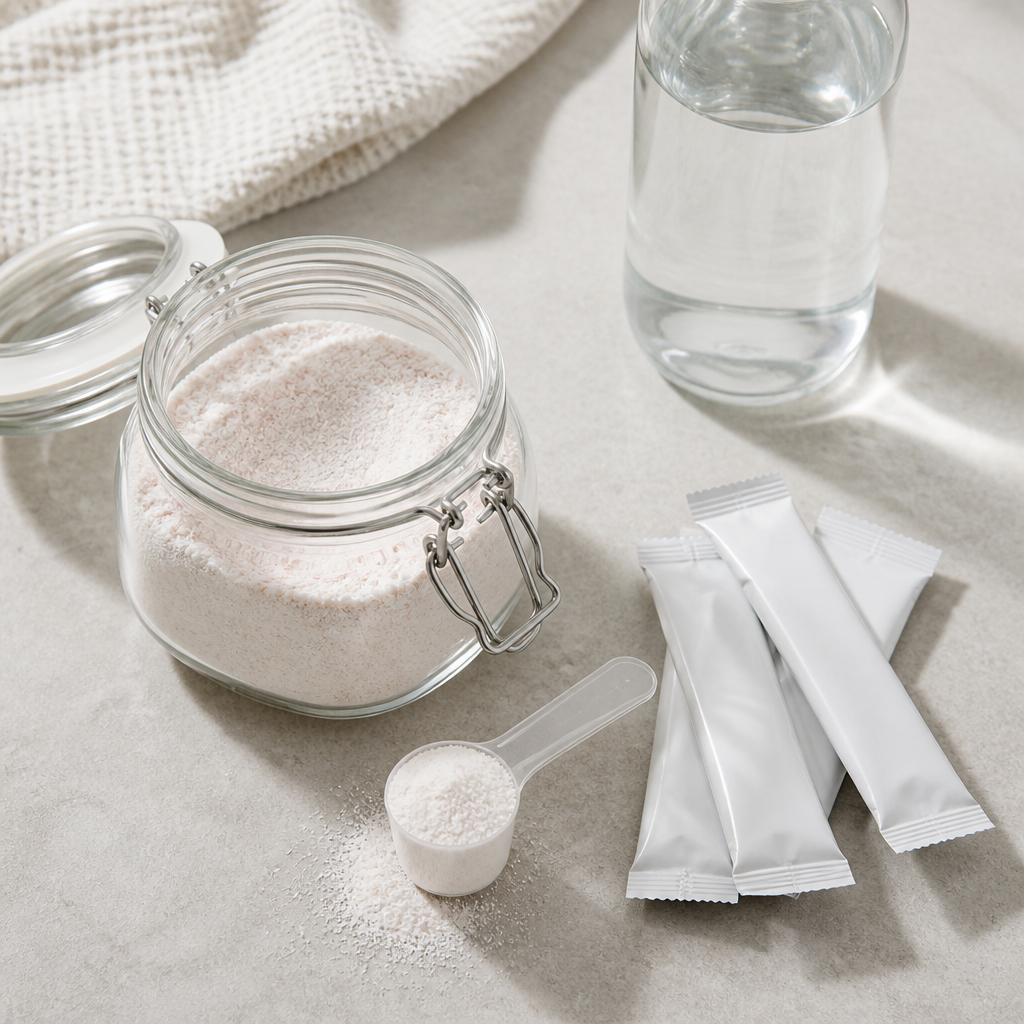
Electrolyte products are a different challenge from multivitamins. Powders absorb moisture from the air, and that shows up as clumps, caking and inconsistent mixes long before anything becomes unsafe.
Once a tub is opened, keep the seal tight and the scoop dry. Do not pour powder into a warm kitchen container or a gym bag, because the contents will pick up moisture quickly.
Sachets are simpler. Keep unopened sachets in a dry cupboard, and use a torn sachet in one go rather than storing half of it, since the open portion will absorb moisture from the air.
Gym bags are warm and damp after a session, and car boots in summer can reach uncomfortable temperatures. Store your electrolyte product in a dry compartment and avoid leaving it in the car on a hot day.
If you mix a drink in advance, drink it within the day. A mixed solution is less stable than the dry product, and it is also a good place for bacteria to grow if it sits warm.
Sometimes the product tells you before the date does. A scientist quoted by Stylist advises checking supplements from time to time for changes in colour, smell or feel, since these can signal that a product is already spoiling.
Look for clumping or caking in powders, discolouration or spotting on tablets, a sharp or musty smell, and capsules that feel tacky or soft. Any of these means the product is compromised, whatever the date says.
A bottle that smells strongly of nothing in particular, or a powder that no longer dissolves cleanly, is also worth binning. Trust your senses when they are telling you something has changed.
If you take a supplement to correct a diagnosed deficiency, do not rely on an expired product. Replace it, and speak to your pharmacist or GP if your symptoms are not improving as expected.
For a general multivitamin past its date that still looks and smells normal, the sensible call is to use it only if storage has been good, and to replace it on a regular schedule rather than waiting for something to go wrong.
Keep them in a cool, dry, dark place away from radiators, the kitchen and the bathroom. A bedroom drawer or linen cupboard is usually the best choice, and the product should stay in its original container with the lid sealed.
It is best to avoid it. Shower steam raises humidity in the cabinet every day, and each time you open a bottle, moisture can get in. If you have no alternative, keep tablets only, well away from the shower.
Many supplements remain safe after the date if they have been stored well, but they can gradually lose potency. Check for changes in colour, smell or texture, and replace any product you are relying on for a specific health need.
Only if the label says so. For most products, a fridge is unnecessary and can cause condensation when a cold bottle is taken out into a warm room, which brings moisture back into the product.
There is no single answer, because it depends on the product and your home humidity. As a rule, keep the lid tight, keep the scoop dry, and watch for clumping. Once powder clumps or caking appears, it is time to replace it.
Tell us how you store your own supplements at home, and whether a tub has ever clumped or changed colour on you without warning.