Most charity runners put months into training for the miles and almost no thought into the plate. You can build a solid base, raise a healthy sponsorship total, and still hit a wall at kilometre eight because breakfast was a rushed slice of toast and your only fluid was a bottle of water. Charity run nutrition in the UK is not complicated, but it rewards a plan. This guide covers what to eat in the final days, what to eat on the morning, when electrolytes earn their place, and how to recover so the effort you have put into your event does not end at the finish line.
Key Insight |
Explanation |
|---|---|
Raise carbohydrate for 24 to 48 hours, not for a whole week |
Fuel stores respond to recent intake. A huge plate the night before mostly causes bloating and a heavy stomach at the start. |
Eat your race breakfast 2 to 3 hours before the start |
That gives you time to digest. Choose familiar carbohydrates such as porridge, toast with jam, or a banana with a small amount of honey. |
Test every item on a long training run |
Anything new on event day is a gamble. If a product causes gut trouble in training, drop it before the event. |
Use electrolytes when sweat loss is heavy or the day is hot |
For a short, cool run, water and a normal meal are usually enough. Long, sweaty or hot events are where sodium-containing drinks earn their place. |
Avoid drinking large volumes of plain water alone on long days |
Drink to thirst, keep salt in your normal diet, and add sodium on long or hot days. Large volumes of plain water can dilute blood sodium. |
Eat carbohydrate and protein within an hour or two of finishing |
Recovery starts at the finish line. A proper meal later in the day matters just as much as the first snack. |
The biggest nutrition mistake in charity events happens weeks before the start line. People change how they eat in the final four days, then wonder why their legs feel flat. Your body builds its fuel reserves from what you eat consistently, so the last week is an adjustment, not a rescue.
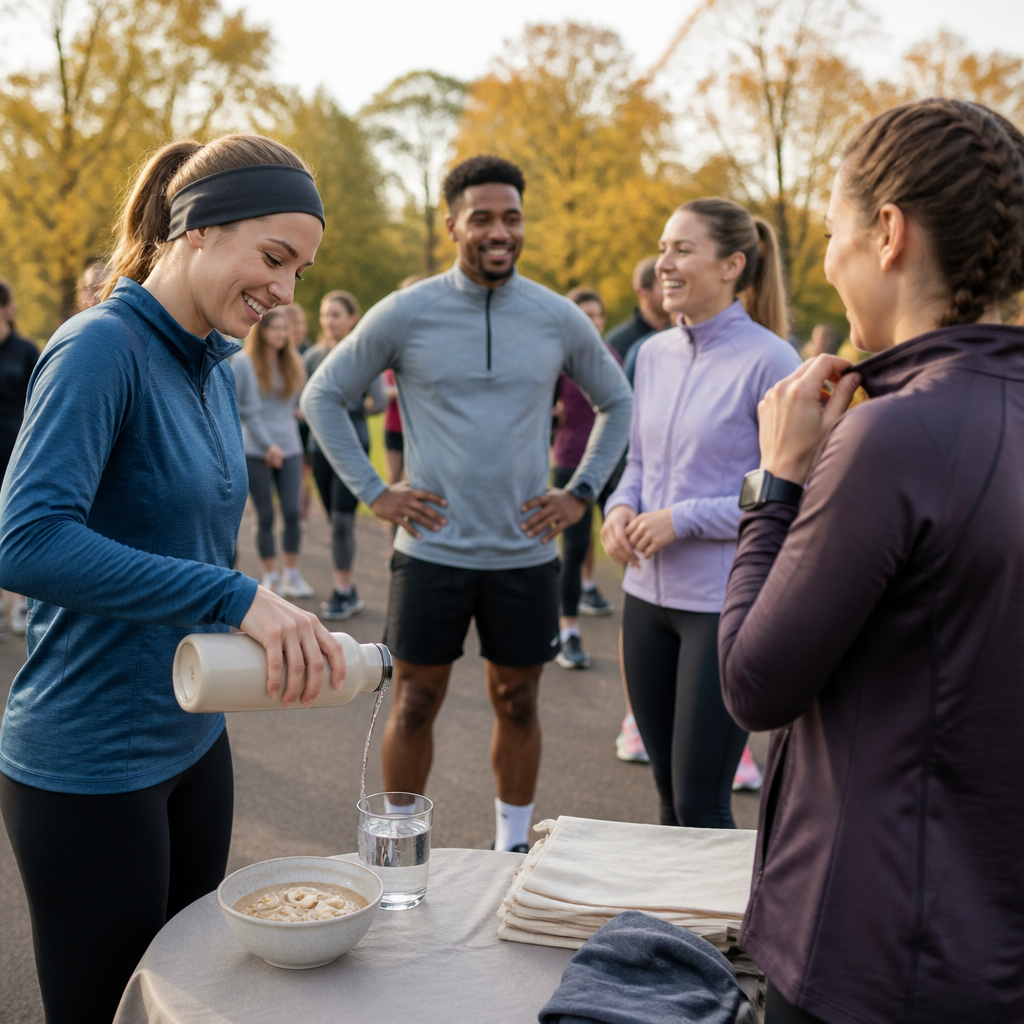
Use your long training runs as a rehearsal. Every session over 75 minutes is a chance to test what you eat before, what you carry, and how your stomach responds at pace. If you are running a 5K or 10K, the stakes are lower, but the habits are the same.
A simple working rule is to fill about half the plate with carbohydrate, a quarter with protein, and the rest with vegetables and fruit. The guidance Save the Children gives charity challenge participants starting out sets carbohydrate at around half the plate, including starchy foods such as bread, rice, pasta and cereals, plus fruit. That is a sensible baseline for most people training three or four times a week.
Drink steadily through the week and check your urine colour as a rough guide. Pale yellow usually means you are on track. Trying to load litres of water the morning of the event tends to lead to a bathroom stop before the first kilometre, not better performance.
Carb loading gets oversold and under-explained. For most charity distances, from a 5K to a half marathon, you do not need a dramatic plate-clearing week. You need to raise carbohydrate intake modestly for a day or two before the event and keep the rest of your diet steady.
For a half marathon, the Hospice in the Weald's Hospice Run fuelling advice suggests increasing carbohydrates for a couple of days beforehand, with meals built around foods such as rice, pasta and potatoes. In practice, that means keeping your usual vegetables but making the carbohydrate portion at dinner noticeably larger. Add a carbohydrate-based snack the evening before if you are still hungry.
Keep the fibre in check. Large bean chillies, bran cereals and a double portion of raw salad the night before will keep you awake for the wrong reasons at 6am on race morning.
Runners who spend a week eating everything in sight tend to arrive at the start feeling heavy and bloated. Your fuel stores only rise a limited amount in a short period, so a sudden spike in intake mostly adds weight to your stomach. A steady increase over several days works far better.
The best carbohydrate plan is the one you have already eaten on a training run, at roughly the same time of day as your event.
Breakfast is where most charity events go wrong. People get up early and nervous, and they either skip food altogether or try something new from a hotel buffet. Neither works well for a race or a sponsored walk that lasts several hours.
Porridge with a banana, two slices of toast with jam, or a bagel with honey all work because they are familiar, low in fat and moderate in fibre. Eat them 2 to 3 hours before the start if you can. If you have less time, go for a smaller portion and eat it 90 minutes out. Keep the amount to what you can comfortably manage.
Drink a glass or two of water with breakfast, then sip normally until the start. Chugging a litre in the car park just means a queue at the portable toilets before the gun goes.
Caffeine works for many people, but if you rarely drink coffee, do not debut it on event day. Gut comfort depends far more on consistency than on what sounds good in a training plan.
Pro tip: Pack your race breakfast in a sealed container and eat it on the journey, not at the venue. Queues and cold food are the most common causes of rushed, badly timed eating on event morning.
Electrolytes have moved from specialist sports shelves to mainstream supermarkets. BBC Food reported in July 2026 that Sainsbury's had seen a 333% rise in searches for "rehydration sachets" over the past year, and that Tesco had nearly quadrupled its electrolyte range over the same period. The trend is real, but demand has run well ahead of the evidence for most people.
The core point from experts is straightforward. Electrolyte drinks are not inherently more hydrating than water for the average person, and most healthy adults who eat a balanced diet get enough sodium, potassium and magnesium without extra products.
Electrolytes earn their place when you have lost a significant amount of fluid and minerals through heavy sweating, prolonged exercise or vomiting. In those situations, drinks containing sodium can help the body absorb and retain fluid better than plain water. A warm, hilly 15K in summer is a very different event from a 5K on a cool morning.
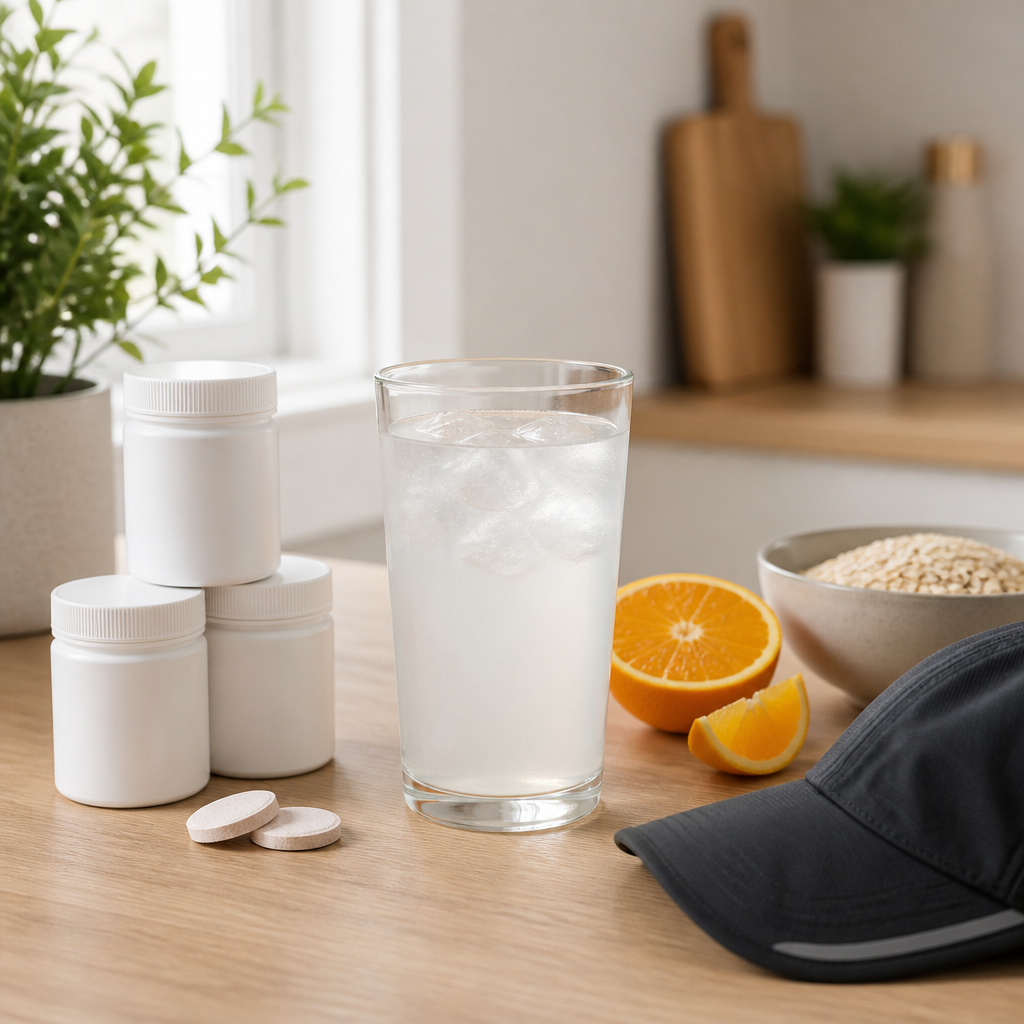
The opposite mistake is just as real. Endurance athletes who drink large volumes of plain water without any sodium can dilute their blood sodium, a condition called hyponatraemia. Charity walkers on long days in the sun are not immune, because they often sip water all day and eat very little salty food.
Our practical rule is to drink to thirst, keep some salt in your normal diet, and use an electrolyte product when the event is long, hot or very sweaty.
Pro tip: If your event is under an hour and the weather is mild, a glass of water and a normal breakfast are enough. Save electrolytes for the sessions where you can see salt on your kit afterwards.
Electrolytes come as sachets, tablets, powders and ready-to-drink bottles. The format matters less than three things: the sugar content, how easily you can mix it, and whether your stomach tolerates it at pace.
BBC Food's guidance notes that electrolyte drinks are often low in calories and usually contain little or no sugar, while sports drinks contain carbohydrate to fuel exercise. That difference matters. A low-sugar electrolyte is a hydration product, not a fuel product, and your choice should follow from what you need.
Check the sodium per serving as well. If you are a heavy sweater, a very low-sodium product may leave you under-replaced on a hot day.
Option |
Best suited to |
Main drawback |
|---|---|---|
Electrolyte sachet or tablet dissolved in water |
Hot days, long sessions and heavy sweaters who want little or no sugar |
Usually provides little carbohydrate, so it does not replace fuel on its own |
Sports drink with carbohydrate |
Efforts beyond about an hour of hard work, or runners who struggle to eat solid food on the move |
Can upset the stomach if it is too concentrated or sipped too quickly |
Water with a normal meal and a salty snack |
Short, cool events and walkers on modest courses |
Delivers less sodium, so it is not ideal for heavy sweat or long hot days |
In practice, many charity runners use two products. A low-sugar electrolyte covers hydration, and a simple carbohydrate source such as a banana or a few jelly sweets covers fuel.
Gels are the default for many runners, but they are not compulsory. Some people find them sticky or hard to swallow mid-stride. For events under about two hours, a banana cut into quarters or a small handful of dried fruit does the same job for many runners.
For longer events, take your first fuel roughly 45 to 60 minutes in, then repeat at regular intervals. Set a watch alarm or write your fuel points on your race card so you are not relying on memory when fatigue sets in.
Many UK events have water points along the route. Take a few mouthfuls at each one rather than gulping a full cup while running. Small, frequent sips are kinder to the stomach than one large drink.
Carry something you control. A soft flask or a small bottle gives you choice over volume and removes your dependence on the timing of the course stations.
Southampton Marathon's race-day nutrition guidance boils the message down to three words: practice, practice, practice. It is the most useful advice in this whole article, and it is the one most charity runners skip.
Write your plan on one page. Include breakfast, timing, fuel intervals, your fluid approach and the post-finish meal. Then run that plan on your last two long sessions, ideally at the same time of day as your event.

If you change your breakfast, your gel and your hydration product in the same week, you will not know which change caused the stomach cramp. Change one thing per session and keep everything else identical.
If a product causes problems in training, drop it. Swap in something simpler, such as a banana or a lower-sugar sachet, rather than pushing through on race day. Event day is not the place to discover you are intolerant of a product.
Charity events often end with a medal, a photo and a long queue for a cold drink. Recovery nutrition is about getting carbohydrate and protein in during the first hour or two, then sitting down to a proper meal later in the day.
A glass of milk, a yoghurt with fruit or a sandwich with a lean protein filling will close the gap. Keep drinking until you feel normal again and your urine is pale. Thirst is not always a reliable signal once you have been moving for several hours.
Plan a meal with vegetables, a protein source, and rice or potatoes. Many people skip dinner after an event because they are exhausted, then wake the next day feeling flat and sore. Do not skip it.
Pro tip: Keep a recovery snack in your bag before you reach the finish. Post-event queues can delay a proper meal by an hour or more, and a snack you can eat quickly bridges the gap.
Most nutrition problems on event day are predictable. They come from trying something new, eating too late, or ignoring the weather.
Many people skip breakfast because they are nervous or worried about toilet stops. Running on an empty stomach often leads to a slow start and a faded finish. If food makes you uneasy, a small portion of simple carbohydrate 90 minutes out is a better compromise than nothing.
Drinking heavily on the course feels responsible, but it can leave you with low sodium and a sloshing stomach. Balance your fluids with some salt in your food and a sodium-containing drink on long or hot days.
A cool, overcast morning needs very different fluid planning from a warm, humid afternoon. Check the forecast two days out and adjust your drinking plan and your electrolyte use accordingly.
For shorter events, your normal diet with a slight increase in carbohydrate at the evening meal the day before is usually enough. You do not need a dedicated carb-loading week for a 5K or a 10K.
Most walkers on a short, cool course do not need them. If the walk is long, sweaty or in hot weather, a sodium-containing drink or a salty snack can help you stay balanced.
Drinking to thirst is the safest approach. Drinking very large volumes of plain water without any sodium can dilute blood sodium over a long day, so pair your water with food and salt.
Choose familiar carbohydrates such as porridge, toast or a bagel, eaten 2 to 3 hours before the start. Keep the portion comfortable and avoid high-fibre or high-fat foods you have not tested in training.
Gels are useful for longer efforts, but they are not essential. For events under about two hours, many runners manage well with a banana or dried fruit, provided they practise their plan in training first.
What fuelling mistake did you make on your first charity event, and what would you change now?