Team sports hydration in the UK is harder than it looks. A football player finishing a damp midweek fixture under floodlights, a rugby forward packing down in a cold scrum, and a hockey player in heavy pads on a warm indoor pitch all lose fluid in different ways. Yet most amateur players still treat hydration as something they sort out on the bus home. This guide covers what football, rugby and hockey players actually need, when to drink it, and where most people go wrong.
Key Insight |
Explanation |
|---|---|
Start drinking before you feel thirsty |
Thirst lags behind fluid loss, so a planned intake from the morning of a match day does more than a large bottle at half time. |
Sugary soft drinks are the wrong default |
Fizzy drinks, energy drinks and sugar-loaded juice sit heavily in the stomach and add little useful hydration during play. |
Weigh yourself before and after sessions |
A simple body weight check shows how much fluid you lose and how much you need to replace over the next few hours. |
Plan around your kit and the weather |
Hockey pads and rugby kit trap heat, and cold UK weather still makes you sweat under layers even when you do not feel hot. |
Use electrolytes for heavy or repeated sessions |
Sodium and other electrolytes help you hold on to the fluid you drink during long, sweaty sessions and back-to-back fixtures. |
Eat and drink together after training |
A meal with carbohydrate and protein, eaten with fluid, speeds up recovery far more than either one on its own. |
Team sports are stop-start, and that is exactly what makes them tricky. A footballer covers ground in bursts, with sprints, changes of direction and frequent contact, while a rugby player repeats short, hard efforts with long pauses between them. Hockey players add rapid acceleration and sudden stops, often in equipment that holds heat against the body.
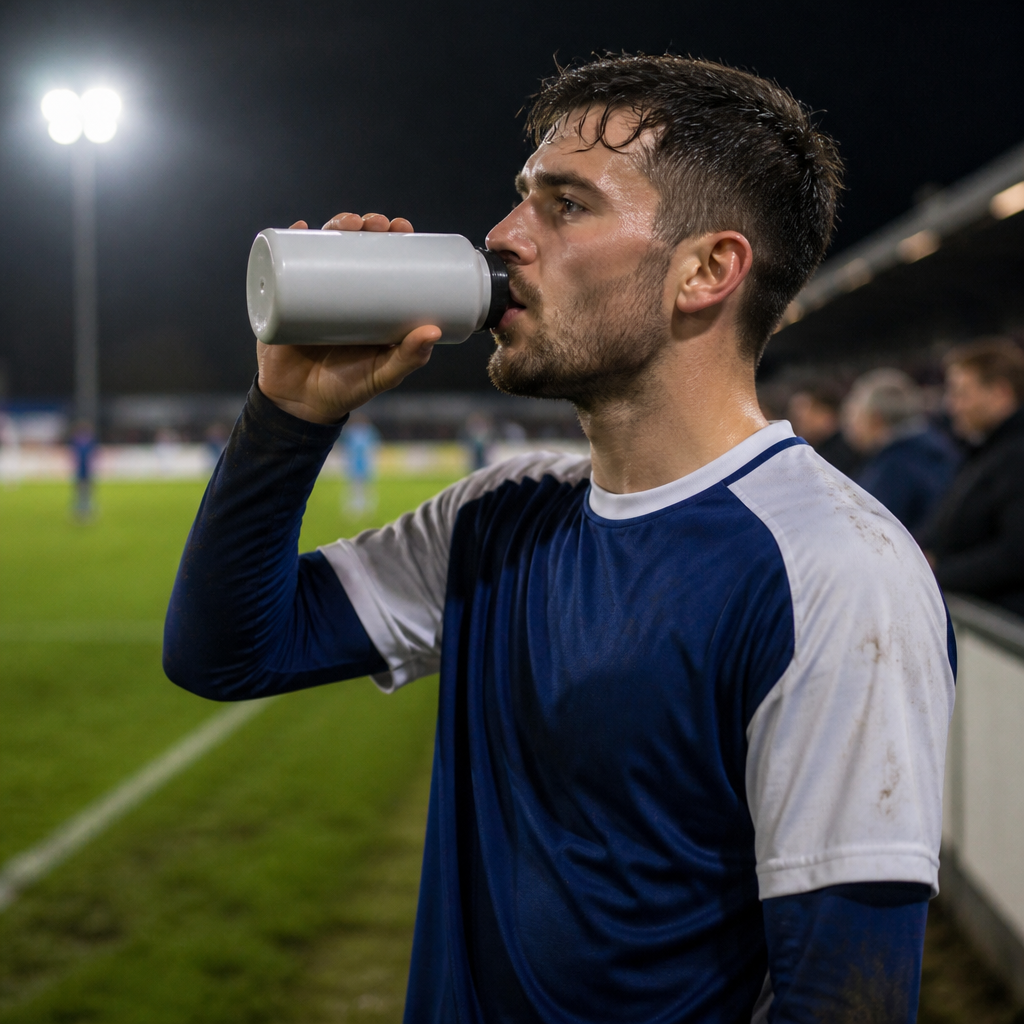
The common mistake is to treat hydration as an endurance problem. Team sports rarely give you a steady rhythm to pace yourself against, so fluid loss builds up in pulses rather than along a smooth line. By the time you feel properly thirsty, you have usually been behind for a while.
Thirst is a useful reminder, but it is a poor early warning system for team sports. Most amateur players reach the end of a training session already short on fluid, then try to catch up with a large volume of drink in one go. That leaves you feeling sloshy and heavy rather than properly hydrated.
The fix is dull but effective: drink small amounts at regular intervals across the whole day, not just during the game. In practice, that means a bottle at work, another with lunch, and water in the car on the way to training. Youth sports guidance we have reviewed points the same way, favouring steady, consistent intake over occasional large doses.
Thirst shows up after the fluid deficit has already started, so the hydration plan has to be in place before the whistle.
If you want to know how much you actually lose, weigh yourself before and after a session. Dry off first, use the same scales each time, and treat any drop in body weight as fluid to replace over the next few hours. Do this for a few sessions and you will quickly see which days are heavy and which are not.
Use the result as a personal baseline, not a rigid target. A player who drops noticeably on a hot indoor hockey night needs a different plan from someone training in a cool, damp park on a Tuesday evening.
Pro tip: Keep a note of your post-session weight for two weeks. Patterns appear quickly, and you will see which sessions and which kit need a bigger drinks plan.
Autumn and winter fixtures in the UK create a specific trap. Cold air dulls thirst, so players drink less while still sweating under thermal layers, gloves and waterproofs. By the time the match starts, many have started the game a bit behind without realising it.
A good pre-match routine works backwards from kick-off. Most of your intake should be done before you arrive at the ground, with only small top-ups in the final hour. Large volumes right before a game lead to frequent toilet trips and an uncomfortable warm-up.
Start drinking in the morning, not at the changing room. Have a glass of water when you wake, then keep a bottle with you through breakfast and travel. This is the easiest hour to get right and the one most players skip.
Pair fluid with a breakfast that has some carbohydrate in it, such as porridge, toast or a bagel. You want fuel in the tank as well as water, and a plain black coffee on an empty stomach is not a substitute for either.
In the two hours before a game, aim to finish a steady bottle of water and check your urine colour. Pale straw colour is a reasonable sign that you are on track. Dark urine means you should keep sipping before you warm up.
Do not chase a full bottle in the dressing room. Small sips in the final half hour are enough, and anything more often just sits in your stomach while you run.
Football nutrition in the UK is shaped by the calendar. Many players train midweek and play at the weekend, sometimes with a second fixture squeezed in before the next weekend. Hydration and food both need to be planned across the week, not just on match day.
The biggest gap we see is the day between a fixture and the next training session. Players often arrive at Tuesday training still carrying Saturday's fluid deficit. That makes early sessions feel flat, and it is almost always a drinks problem, not a fitness problem.
For midweek sessions, keep your plan simple: water through the day, a proper meal before you train, and a recovery snack afterwards. Use the session itself as a check. If you finish heavy and thirsty, your intake the day before was probably too low.
On fixture weekends, plan your meals around kick-off time rather than trying to eat big on the morning. A moderate, carbohydrate-based meal several hours before the match is more useful than a large plate an hour before the whistle.
Half time is where many players overdo it. A large bottle of sugary drink can make you feel bloated for the second half, while nothing at all leaves you running on empty. A few sips of water, plus a small piece of fruit or a carbohydrate gel if you tolerate them, is a sensible middle ground.
Pro tip: Practise your half-time routine in training matches. Your stomach needs to know what it can handle at speed, and a new drink on fixture day is a common cause of cramps and side stitches.
Rugby hydration is about two things at once: heavy, repeated contact and long stoppages that look like rest but are not. Scrums, rucks and mauls keep your heart rate up, and the sweat you lose is often hidden under thick kit and a cold wind. A lot of players finish a match far more depleted than they expected.
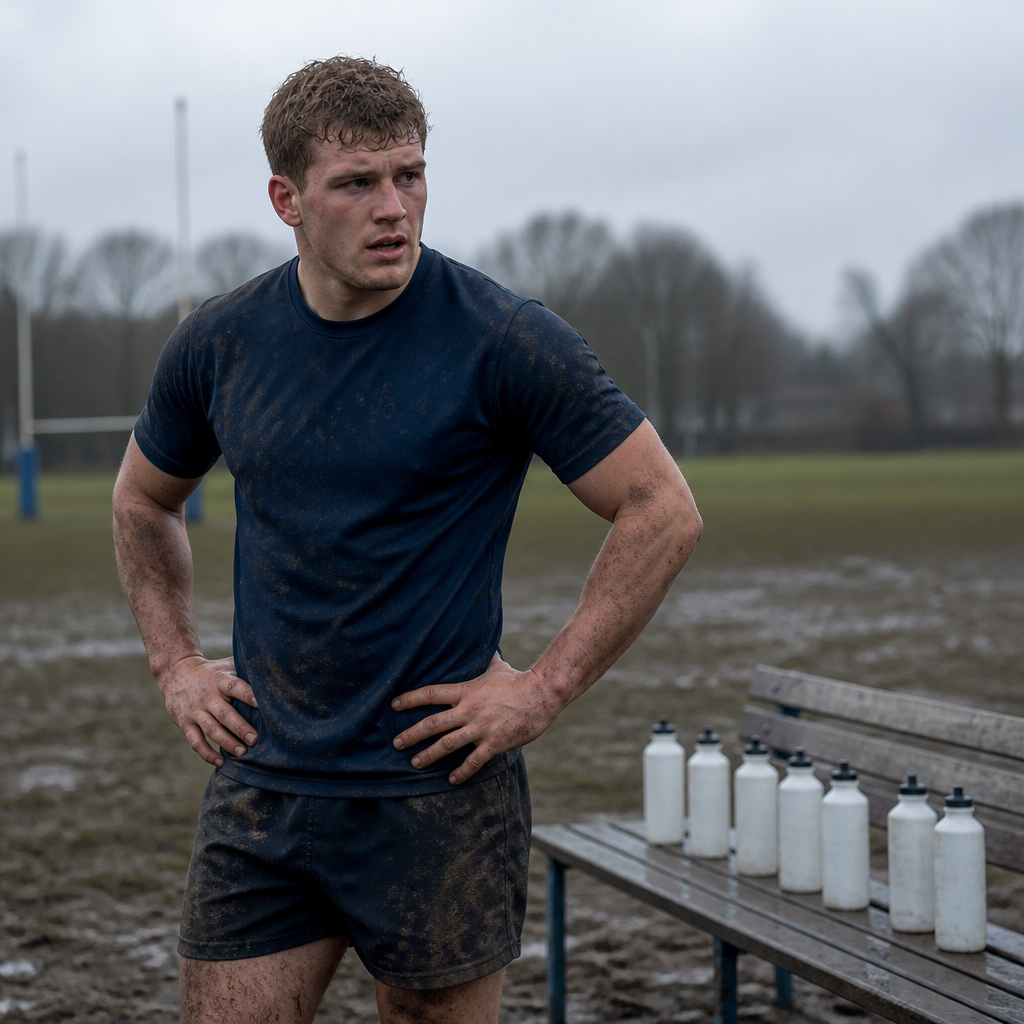
The aim is to keep your intake steady through the game, not to chase large volumes. Long stoppages for injuries, conversions and set pieces are the best time to sip, because your stomach is calm and you are not sprinting.
Contact sessions are hard on fluid balance because they combine short, intense efforts with repeated collisions. Many players drink very little during the session itself, which is the wrong way round. Keep a bottle at the side of the pitch and take a few sips between every drill.
After a heavy contact session, weigh yourself where you can. A large drop tells you the fluid plan for the next day needs more attention, and that matters most for forwards and anyone who plays two physical sessions in a row.
Use the natural breaks in a rugby match to drink. The pause after a try, a penalty kick or a substitution is a good time for a few mouthfuls of water, not a long gulp that makes you feel sick on the next carry.
Avoid relying on the bench to rehydrate you. Anything you drink in the last few minutes of the match will mostly sit in your stomach, so get your fluid in earlier in the half.
Hockey players face one of the most under-discussed heat problems in team sport. Whether you play field hockey on grass or ice hockey on the rink, the protective gear is heavy, the effort is repetitive, and the environment can be warmer than you think. Heat builds up under the kit, and the sweat is often not obvious until you are already behind.
Guidance on hockey hydration notes that heavy gear increases the risk of overheating and heat illness. Plan your drinks as if the kit is part of the workload, because it is.
Pads, gloves, helmets and jerseys keep heat in, so the sweat rate in full kit can be far higher than it feels. Players who sit in the warm-up tent in full kit often start the game already overheated. Take kit off between drills where safe and sip regularly while you are in it.
Ice hockey players should also remember that a cold rink can hide sweat. Cool air on the bench feels comfortable, but you may still be losing a lot of fluid through the jersey and the base layer.
Indoor hockey sessions can be hot, crowded and stuffy, which pushes fluid losses up. Keep your bottle within reach and make a habit of drinking at every whistle or stoppage. The players who recover quickest tend to be the ones who drank steadily rather than in one big burst at the end.
Pro tip: Put a bottle on the bench before you start, not at the changeover. Having it ready removes the friction that stops most players from drinking enough during a fast game.
Plain water is the right default for most people most of the time. The question is when it is not enough, and whether milk or an electrolyte product helps. The answer depends on how much you sweat, how long the session lasts and what you eat afterwards.
The comparison below sets out three common approaches for UK team players. None is universally best, but each has a clear job, and most players benefit from using more than one depending on the day.
Approach |
Best Used For |
Watch Out For |
|---|---|---|
Plain water |
Shorter, low-sweat sessions, everyday intake and early-day hydration |
Often not enough after long, sweaty sessions or back-to-back fixtures, where sodium loss is higher |
Water with an electrolyte product |
Heavy sweat days, hot indoor hockey, double training days and matchday top-ups |
Concentrated products taken without enough water can upset the stomach, so read the label and follow the directions |
Milk alongside water |
Recovery after training, especially when a meal is still a while away |
Milk is not a full plan for hydration during play, so treat it as part of the day's fluid rather than the only drink |
For a short technical session on a mild day, water does the job. Do not add electrolytes just because a product looks like sports kit. Overusing them on light days adds nothing and can leave you feeling bloated.
Water is also the right drink for the rest of the day. Most of your fluid should come from water and milk, with sugary drinks kept to occasional treats rather than daily habits.
When you do need electrolytes, look for a product with a clear sodium content and no added sugar if you want to keep your overall sugar intake down. A formula that dissolves cleanly and tastes good enough to drink in quantity will do more for you than a strongly flavoured one you avoid.
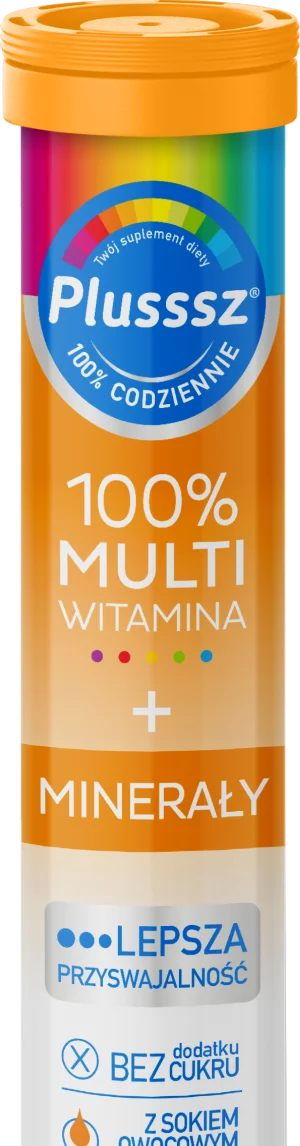
Our own electrolyte hydration range at Plusssz UK is built around this kind of day-to-day use, with no added sugar. Whatever you choose, test it in training before a fixture, not on the morning of a match.
Recovery is where most of the hydration work pays off, or fails to. What you drink and eat in the first few hours after a session sets up how you feel the next day. A lot of players skip this window and then wonder why their legs feel heavy on Wednesday.
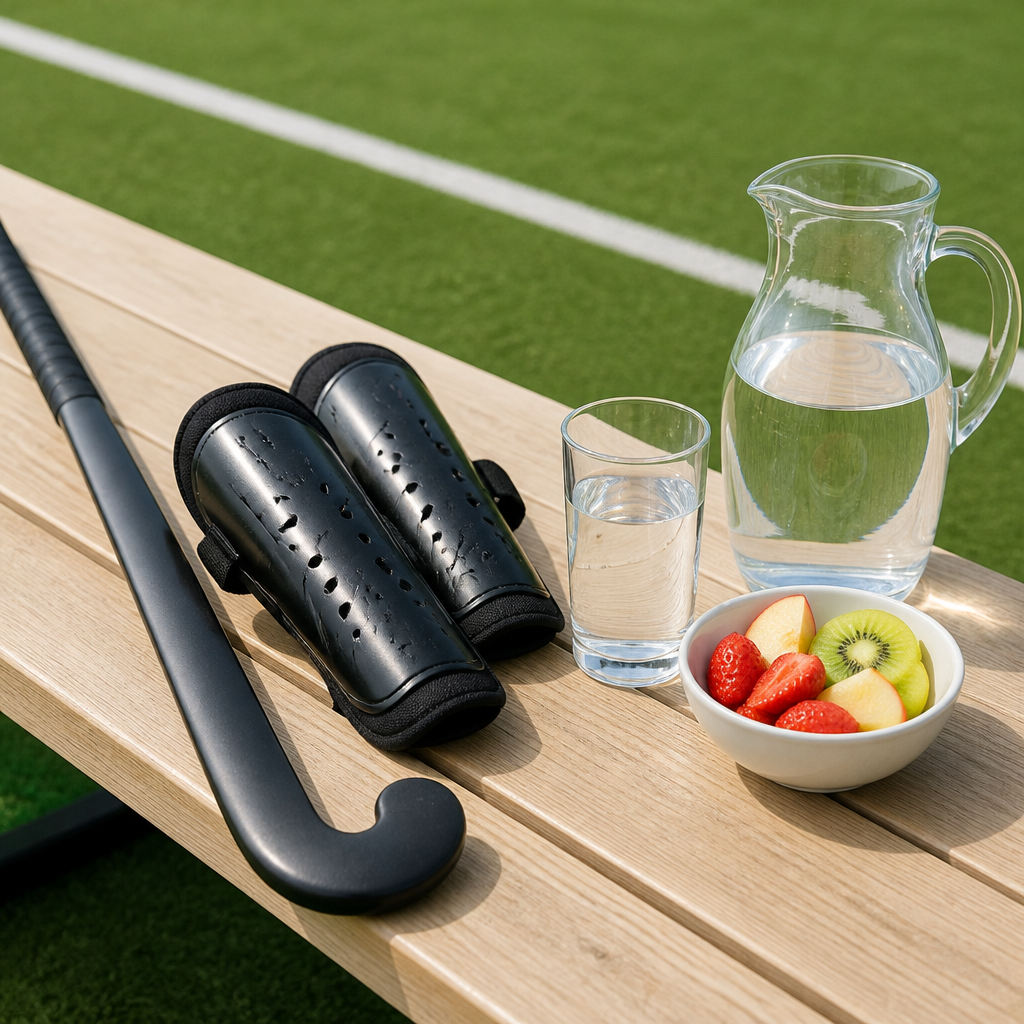
A simple framework works across football, rugby and hockey. Match your food and fluid to how hard the day was, rather than eating the same way every day of the week.
In the first hour after training, drink water until your urine is pale and eat a meal or snack with carbohydrate and protein. A milk-based drink, a sandwich with lean protein or a bowl of rice and chicken all work well. Leaving this until you get home often means you eat late and rehydrate slowly.
If you train again the same day, lean on the carbohydrate side of the plate and keep drinking steadily through the evening. That gives your body the fuel it needs without the heaviness of a large meal.
Two fixtures in a short space of time are where poor hydration really shows. Use an easy, moderate and hard day approach to plan your plate: the day after a match is a recovery day, the day before is a moderate day, and the match day itself is the hard day. That structure makes it easier to load up with carbohydrate and fluid before the games that matter.
Pro tip: On the day after a fixture, weigh yourself on waking. If you are still below your usual weight, prioritise water and a balanced breakfast before training.
Most hydration problems in team sport are not complicated. They come from a short list of habits that are easy to fix once you can see them. Here are the ones that come up most often with players we speak to.
The first is drinking nothing until the warm-up. Players arrive dehydrated, then try to correct it in the same forty minutes they need to get ready. The second is treating energy drinks as a pre-game plan, which adds caffeine and sugar when you need steady fluid.
Fizzy drinks, energy drinks and sugar-loaded juice are a poor choice as your main fluid during play. They can sit heavily, cause stomach upset and add sugar you do not need. Keep them for occasional use and choose water or a low-sugar electrolyte drink for training and matches.
Juice in a bottle is not a better option just because it is marketed as natural. The sugar content is the same, and the drink tends to be consumed in larger quantities.
Players are often careful on match day and sloppy on the days in between. Hydration in the week leading up to a fixture matters at least as much as the match-day bottle. Without it, you start the game behind, and no amount of drinking on the pitch will fully catch up.
There is no single figure that suits everyone. Start drinking in the morning, keep a steady intake through the day, and use your post-session weight changes over a few weeks to find your own pattern.
No. Shorter, low-sweat sessions are usually well covered by water. Electrolytes make more sense for long or heavy sessions, hot indoor hockey, and days when you train twice or play back-to-back fixtures.
Yes, especially when it is part of a meal or snack after training. It is not enough on its own during a match, so use water for the game and milk for the recovery window.
Yes. Heavy kit raises the heat load, so plan regular sips and take the kit off between drills where it is safe to do so. Waiting for thirst to tell you to drink usually means you are already behind.
A few sips of water or a diluted electrolyte drink are the sensible choice. Avoid large volumes of sugary drink, which can sit heavily and make the second half harder.
Generally no. Energy drinks add caffeine and sugar, and they do little for steady hydration. Water, with a normal pre-match meal, is a more reliable plan.
Tell us in the comments or by email how your hydration plan works on match days, and which part of your routine you find hardest to stick to.