Most UK vegans eat well on paper and still run short on a handful of micronutrients. The gap rarely shows up as a dramatic symptom. It builds quietly, through tiredness, poor recovery and blood results that drift the wrong way over months. If you train hard, cut back on animal foods, or are starting a plant-based diet for the first time, you need to know which vegan micronutrients UK guidance flags as high risk and what to do about each one. This guide covers the gaps that matter most, the doses the evidence supports, and where food alone falls short.
Key Insight |
Explanation |
|---|---|
Vitamin B12 is non-negotiable |
Plant foods do not supply it reliably, so every vegan needs a daily or weekly supplement or a consistently fortified source. |
Vitamin D is a UK winter issue |
Sunlight is unreliable for vitamin D status from autumn to spring, and one review recommends 4000 IU daily for vegetarian and vegan adults. |
Iodine depends on your food sources |
Adults who cannot access sea vegetables or iodine-fortified foods should consider 150 μg daily, and pregnant or breastfeeding women need extra attention. |
Selenium is a targeted supplement |
Reserve selenium supplements for people with clinical evidence of deficiency, not for routine insurance. |
Iron and calcium need planning |
Plant iron is absorbed less readily than meat iron, so pair iron-rich foods with vitamin C and check calcium labels on fortified products. |
Check doses, not claims |
Compare each nutrient amount on the label with published guidance, and watch for overlap across multivitamins, mineral blends and electrolyte products. |
Test before you guess |
Tiredness and low mood have many causes, so ask your GP for blood tests before adding high doses of anything. |
Meat-free eating has grown in popularity, and the health and environmental case for eating more plants is well documented. A systematic review published in Nutrients pooled 141 studies, mostly from Europe, South and East Asia, and North America, comparing adults on plant-based diets with meat-eaters. It found that intakes of fibre, folate, vitamin C, vitamin E and magnesium were higher on plant-based diets, while protein was lower but still within recommended levels.
The problem, then, is not that plant-based eaters are short on everything. A 2024 review in the journal Dietetics names vitamin B12, vitamin D, iodine, selenium, calcium and iron as the main nutrients of concern. The NHS guidance on vegan diets covers much the same core list, including calcium, vitamin D, vitamin B12 and iron.
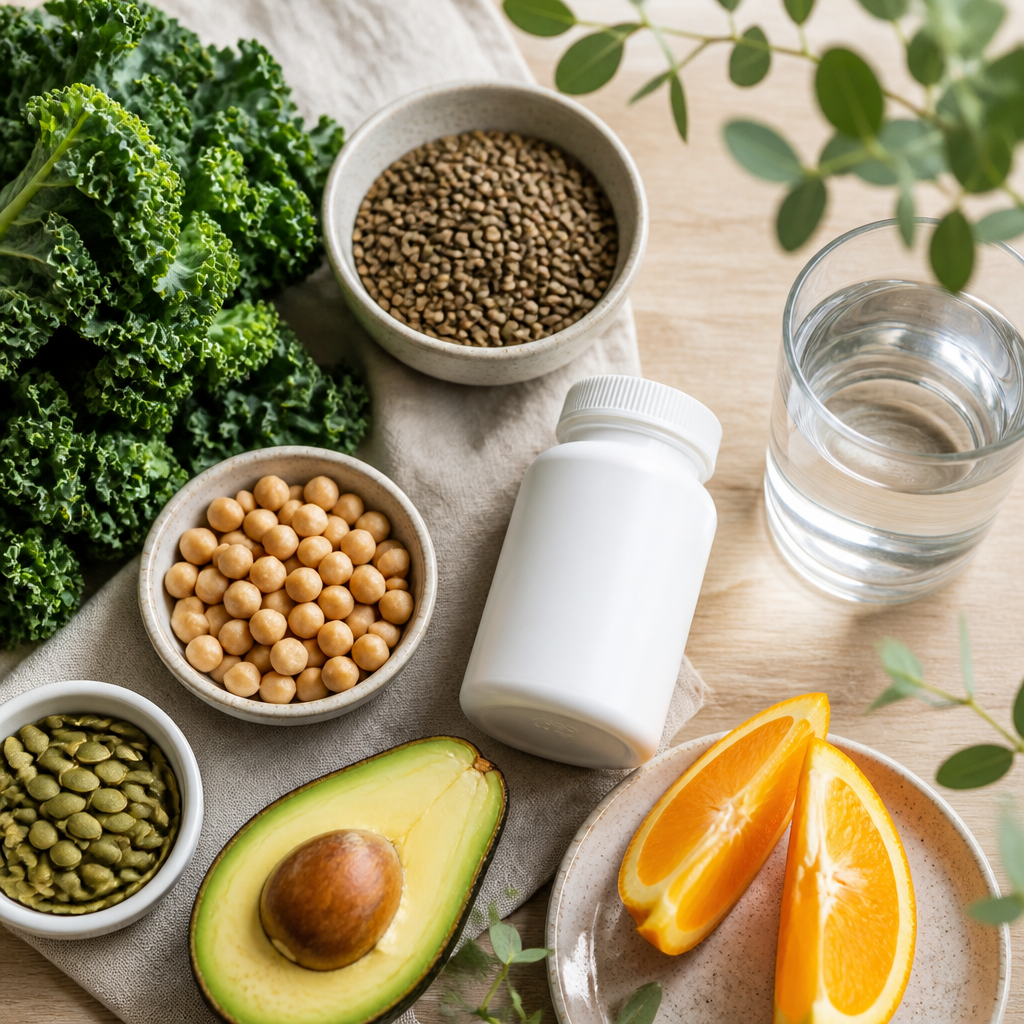
Why these six? Some are simply scarce in plants, with B12 the clearest case. Others are present in plant foods but absorbed less readily, and iron is the classic example. Knowing which category each nutrient falls into tells you whether to fix it with food, with a supplement, or with a blood test.
Pro tip: Keep a three-day food log before you buy anything. A short log shows which two or three nutrients you are actually short on, which is far more useful than buying a product that covers everything in small amounts.
If you remember one thing from this article, make it this: anyone eating a vegan diet needs a reliable source of vitamin B12. The 2024 review states that B12 supplementation is essential for everyone following vegetarian and vegan diets, and it does not hedge on that point. Unlike iron or calcium, you cannot plan your way to B12 with a better shopping list.
Treating vitamin B12 as an optional extra is one of the most avoidable mistakes a person can make on a plant-based diet.
The review gives two routes. Adults can take one oral dose of 50 to 100 μg of cyanocobalamin daily, or 2000 μg weekly, split into two oral cyanocobalamin doses. Daily dosing is easier to build into a routine, while weekly dosing suits people who prefer one fixed habit, such as a Sunday breakfast tablet.
Read labels with care. The review's guidance is built around cyanocobalamin, so there is no need to pay a premium for another form on the assumption that it works better. Choose a product whose dose matches the guidance and whose label states clearly how much B12 each serving contains.
Fortified plant milks, some breakfast cereals and yeast extracts can contribute B12, and they are a sensible addition. The catch is consistency. A splash of fortified milk on some mornings is not a planned intake, so count how many portions you actually eat in a typical week before you rely on them alone.
Pro tip: Set a recurring phone reminder for your B12 dose. It is the nutrient people most often forget, because there is no immediate feeling when you miss a day.
Vitamin D surprises people more than any other nutrient, because the answer is not really about diet. The review notes that sunlight exposure is unreliable for vitamin D status because of a range of lifestyle and environmental factors. For most people in the UK, that means you cannot count on your skin to make enough from autumn through to spring, whatever you eat.
Vegans are not the only group affected. The same review states that its vitamin D recommendation also applies to omnivores, which is a useful reminder that this is a winter question for the whole population. It is not a plant-based problem with a plant-based fix, and a blood test can confirm where you stand.
The review recommends that vegetarian and vegan adults take 4000 IU of oral vitamin D per day to prevent deficiency. That is a higher figure than many people expect, so treat it as a starting point for a conversation with your GP or a dietitian, not a number to copy from a forum. If you take other medicines or have a condition that affects calcium levels, get advice before you increase your dose.
Fortified plant milks and fortified spreads can contribute some vitamin D, and they are worth including. Food alone rarely closes the gap in winter, though, so think of diet as the top-up and the supplement as the foundation. Taking your dose with a meal that contains some fat is a simple habit, since vitamin D is fat soluble.
Pro tip: Choose a supplement you can take at the same time every day, ideally with breakfast or your main meal. A dose you take reliably this October beats a higher dose you forget by January.
Iodine and selenium are needed in small amounts, and that is exactly why they are easy to overlook. The 2024 review lists both as nutrients of concern for vegetarians and vegans, but it gives them very different supplement advice. Understanding that difference is the line between a sensible routine and an overloaded one.
For iodine, the review recommends 150 μg daily for adults who cannot access sea vegetables or iodine-fortified foods. Seaweed is tempting as a natural source, but its iodine content varies widely between products, so it is not a dependable plan on its own. Check whether your usual foods are iodine-fortified before assuming you are covered.

The review is clear that iodine supplementation is essential for pregnant and breastfeeding women following vegetarian or vegan diets. If you are planning a pregnancy, raise iodine with your GP or midwife before conception rather than waiting for a routine appointment. This is one area where an early conversation avoids a lot of later worry.
Selenium is the opposite case. The review advises reserving selenium supplements for people with clinical evidence of deficiency, because of concerns about effects on lipid profiles and type 2 diabetes risk. Taking a selenium tablet every day as insurance is not the approach the review supports, and it is easy to overshoot when you stack products.
Pro tip: Add up the iodine and selenium in every product you take. Multivitamins, mineral blends and sports supplements can all contain them, and the total is what matters, not the figure on any single label.
Iron, calcium and zinc differ from B12 in one important way: they are present in plant foods, so the job is mostly about planning and absorption. A 2021 systematic review of the vegan diet concluded that deficiencies in vitamin B12, zinc, calcium and selenium should not be disregarded. The gaps here tend to be about quantity, and about how well your body can use what you eat.
Iron from plants is absorbed less readily than iron from meat, so the amount on your plate overstates what you actually take in. Pair lentils, tofu and fortified cereals with a source of vitamin C, such as peppers, citrus or tomatoes, and avoid tea or coffee alongside an iron-rich meal. These habits are the first step. Iron supplements should follow a blood test rather than a guess, because too much iron causes its own problems.
Calcium is the nutrient vegans most often underestimate. Fortified plant milks and calcium-set tofu can cover a lot, but calcium content varies between brands, so read the label rather than assuming. Leafy greens help, yet spinach is poorly absorbed, so do not count it as a full calcium serving.
Zinc is harder to measure. Beans, nuts, seeds and whole grains all contain it, but they also contain phytates that reduce how much zinc you absorb. The usable intake is lower than a food table suggests, which is one reason zinc deserves attention in any vegan plan.
Pro tip: Soak and cook legumes thoroughly, and include some fermented or sprouted foods such as tempeh or sourdough. These steps reduce phytate content and make iron and zinc easier to use.
Most UK vegans end up combining three approaches: fortified foods, single-nutrient supplements and a multivitamin complex. Each has a job, and each fails in a predictable way when used alone. The table below compares them for the nutrients that matter most in this guide.
Approach |
Best for |
Main limitation |
|---|---|---|
Fortified foods such as plant milks, cereals and yeast extracts |
Adding calcium, B12 and some vitamin D as part of a regular routine |
Intake depends on consistent portions, and amounts vary by brand |
Single-nutrient supplements, such as a B12 or vitamin D tablet |
Targeting one confirmed gap at a specific dose |
Ignores other nutrients you may be short on, and can lead to stacking |
Vegan multivitamin complex |
Covering several nutrients of concern in one daily routine |
Per-nutrient amounts may not match guidance for a single nutrient, so check each label |
Fortified foods are the easiest way to add calcium and B12 without thinking about it, and they make everyday meals more nutritious. Their weakness is reliability. Two people who both drink fortified milk can get very different amounts of B12, depending on how much they drink and which brand they buy.
If a blood test confirms a specific low level, a single-nutrient supplement is the most direct route. It lets you set the dose to the guidance and recheck later. The risk is that people add a tablet for one nutrient and forget to account for everything else, which is how iodine and selenium totals creep up unnoticed.
A multivitamin complex is the most practical choice for many people who want one daily routine. Use the label to confirm that B12, vitamin D, iodine and selenium amounts match the guidance in this article, and add a targeted product only where the numbers fall short.
The supplement aisle is crowded with claims, so use a simple filter. Start with the nutrients this guide covers and ignore the front-of-pack language. Phrases such as 'advanced' or 'maximum strength' tell you very little, while the per-serving amount of each nutrient tells you almost everything.
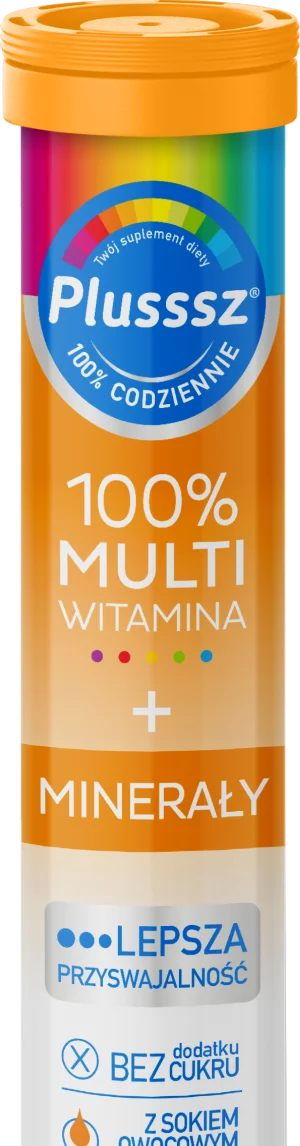
Check the form and the dose before you check the price. A cheap product that delivers a fraction of the guidance costs more than it appears, and a premium product with the wrong doses is not a better buy. The question to ask of any brand, including ours at Plusssz, is whether the amounts per serving line up with the figures in this guide.
Electrolyte hydration products are useful around training and in hot conditions, and they suit active people well. Sodium and potassium, however, are not the nutrients most vegans need to watch closely. An electrolyte drink will not cover B12, vitamin D or iodine, so keep your micronutrient plan separate from your hydration plan.

Write down which supplement you take, the dose, when you take it and when you will next have a blood test. Most people skip that last step, and it is the one that tells you whether the plan is working. Review the plan every few months, especially when your training load or diet changes.
Pro tip: Photograph your supplement labels and save the images to your phone. When you check your intake against the guidance later, you will not have to hunt for the exact product again.
Probably yes. The 2024 review states that B12 supplementation is essential for everyone following a vegan diet, and fortified foods only count if you eat them consistently and in known amounts. Use them as a bonus on top of a daily or weekly supplement.
The review recommends 4000 IU of oral vitamin D per day for vegetarian and vegan adults to prevent deficiency. Confirm the right dose with your GP or a dietitian, especially if you take other medicines or have a condition that affects calcium levels.
Not reliably. Iodine content in seaweed varies widely between products. The review recommends a supplement of 150 μg daily for adults who cannot access sea vegetables or iodine-fortified foods.
Generally no. The review advises reserving selenium supplements for people with clinical evidence of deficiency, because of concerns about lipid profiles and type 2 diabetes risk. If you are worried, ask your GP about testing rather than starting a daily tablet.
It covers many gaps, but not always at the right amounts. Check that the B12, vitamin D, iodine and selenium figures on the label match the guidance, and add a targeted product only where the numbers fall short.
Symptoms like tiredness are non-specific, so guessing is unreliable. Ask your GP about blood tests for B12, vitamin D and iron, and bring a list of everything you currently take so the results can be read in context.
Which of these gaps surprised you most, and how did you find it: a food log, a blood test or a symptom you could not explain?