If you have ever read a supplement label and wondered what vitamin B5 actually does, you are not alone. Pantothenic acid appears in most B-complex products, yet it rarely gets the attention that B12 or folate receive. For anyone searching for vitamin B5 UK guidance, the honest answer is that it matters for energy metabolism, but it is not a shortcut to energy. This guide explains how the vitamin works, where it comes from in a British diet, how much you need, and when a supplement makes sense for someone who trains hard and eats well.
Key Insight |
Explanation |
|---|---|
Vitamin B5 is needed for energy metabolism |
The body uses it to make coenzyme A, a molecule involved in breaking down fats and turning food into usable energy. |
It does not supply energy on its own |
The Mayo Clinic notes that vitamins alone will not provide energy. Calories come from carbohydrate, protein and fat. |
Deficiency is very unlikely in a varied diet |
A Cleveland Clinic dietitian notes that unless someone is living with malnutrition, a B5 deficiency is very unlikely. |
Everyday foods cover most needs |
Peas, beans, lean meat, poultry, fish, eggs, potatoes, porridge and wholegrains are all good sources. |
Ordinary cooking loses little of it |
You do not need to eat raw food to get pantothenic acid, because little is lost through normal cooking. |
Supplement quality varies |
StatPearls notes that US pantothenic acid supplements are not subject to initial FDA review, so check labels for dose and independent testing. |
Pantothenic acid, or vitamin B5, is one of the eight B vitamins, and its work happens largely out of sight. The body uses it to make coenzyme A, a molecule that sits at the centre of how cells break down fatty acids and convert food into energy. Cleveland Clinic describes its primary role as helping to make and break down fatty acids, which is why it comes up so often in conversations about fuelling training.
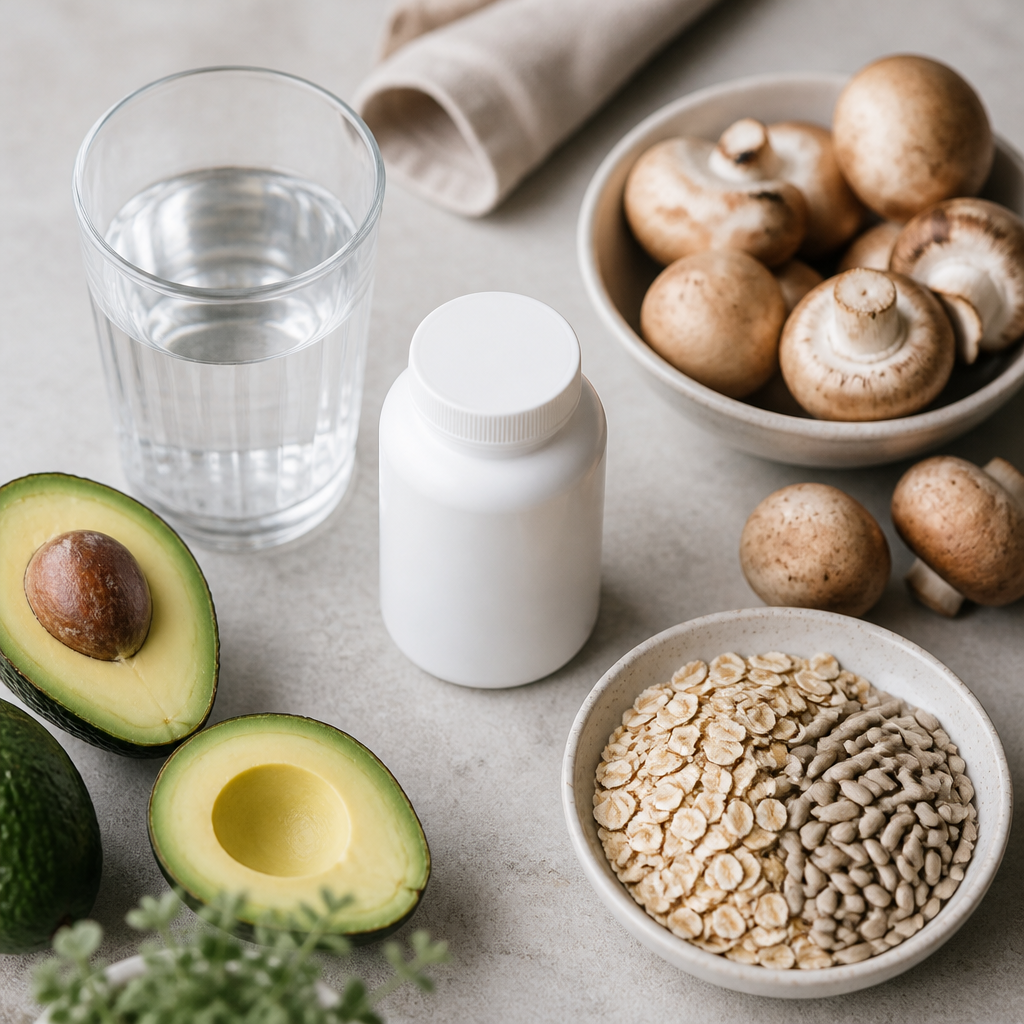
That mechanism matters for active people because endurance sessions, long walks and heavy strength work all draw on fat and carbohydrate. Pantothenic acid does not decide which fuel you burn. It supports the enzymes that process whatever you eat. A real deficiency would hurt your body's ability to convert food efficiently, but extra B5 added to a diet that already covers it will not make your sessions feel easier.
The NHS describes pantothenic acid as one of the B vitamins that helps the body release energy from food. Coenzyme A is the working part of that process. Without enough of it, the pathways that break down fats and carbohydrates cannot run smoothly, which is the basic reason the vitamin is grouped with the energy-related B vitamins.
A rare inherited condition, pantothenate kinase-associated neurodegeneration (PKAN), shows how central this pathway is. People with PKAN cannot convert vitamin B5 into coenzyme A effectively, and the condition is estimated to affect between 1 and 3 people per million worldwide. It is a reminder that the vitamin is essential, and also a reason not to treat it as a performance ingredient in its own right.
Vitamins alone will not provide energy, and the Mayo Clinic is blunt about this. Your body also needs protein, minerals, carbohydrate and fat from food. Pantothenic acid is a helper in the chain, not the fuel itself. If your training is underfuelled, a B-vitamin tablet will not fix it.
Key insight: vitamin B5 supports the pathways that release energy from food. It is not a source of energy. In most cases, the biggest gains for active people come from total intake, sleep and fluid balance, not from adding another vitamin.
In practice, I see people blame a flat session on a missing vitamin when the real problem is a breakfast eaten at 11am after a 6am run. Fix the fuel, then look at micronutrients. B vitamins belong in that second conversation.
The name gives a clue to how widespread the vitamin is. Cleveland Clinic explains that pantothenic acid comes from the Greek word "panto," meaning everywhere. It is found in a broad range of ordinary foods, which is why a dietitian quoted by Cleveland Clinic, Natalie Romito, says that unless someone is living with malnutrition, a deficiency is very unlikely.
The Mayo Clinic lists peas and beans (except green beans), lean meat, poultry, fish and whole-grain cereals as good sources. A UK-focused food guide from NHS Lanarkshire adds chicken, beef, potatoes, porridge, tomatoes, kidney, eggs, broccoli and wholegrains to that list. For most people in Britain, a plate built from those staples already provides a meaningful share of what the body needs.
Think about a normal week of meals rather than a single superfood. Porridge with milk, eggs on toast, a chicken and potato dinner, and a bowl of lentil or bean stew cover several sources in one day. None of these foods needs special sourcing, and none of them is expensive. That is the main reason B5 shortfalls are rare among people who cook at home.
Pro tip: Build each main meal around one protein, one wholegrain and one vegetable. That simple pattern covers most of the foods on the pantothenic acid list without any tracking or supplements.
Many people worry that boiling or roasting destroys vitamins, so they eat raw food or pay for "fresh" products. The Mayo Clinic notes that little pantothenic acid is lost from foods during ordinary cooking. Normal home cooking is therefore not a reason to change your diet. Extreme processing and long storage are a different matter, but a standard UK kitchen does not undermine a food-first approach.
Official intake figures for pantothenic acid are set differently from most vitamins. The Mayo Clinic explains that because a lack of this vitamin is so rare, there is no recommended dietary allowance for it in the US or recommended nutrient intake in Canada. Instead, the figures given are daily intakes thought to be enough for most people, and they are set by age group.

For reference, the Mayo Clinic gives 2 to 3 milligrams a day for children from birth to 3 years, 3 to 4 milligrams for ages 4 to 6, and 4 to 5 milligrams for ages 7 to 10. For adult figures, check the reference guidance linked at the end of this article rather than relying on a figure copied from a forum or a product page.
Children have lower needs than adults, and the age bands are useful when you are trying to understand a family multivitamin label. A product that gives a percentage of the daily amount is aimed at adults in most cases, so a child's portion may be wrong for the product. If you are buying for a teenager who trains, ask a GP or pharmacist before choosing a product.
The Mayo Clinic notes that Daily Values on labels show the percentage of the recommended daily amount that a serving provides. That makes labels easier to compare, but it does not tell you whether a dose is necessary for you. A product that gives 100 percent of the daily amount is not automatically better than one giving 50 percent, especially if you already eat a varied diet.
There are three realistic ways to get more pantothenic acid: eat more of the foods that contain it, take a single-nutrient product, or use a B-complex or multivitamin. Each has a different job. The table below sets out where each one makes sense and where it falls short.
Approach |
Best for |
Main drawback |
|---|---|---|
Food-first diet |
Most people who eat a varied, home-cooked diet |
Hard to hit for people with very restricted eating patterns, and it takes planning |
Single vitamin B5 product |
Specific cases a doctor or dietitian has identified |
Usually unnecessary, and it does not address other B vitamins that often sit alongside it |
B-complex or multivitamin complex |
Active people who want broader coverage across the B vitamins |
Dose and quality vary by brand, so the label must be checked carefully |
For most readers, the food-first route should come first. Where a supplement is used, a B-complex or a balanced multivitamin is generally more sensible than a single nutrient, because B vitamins tend to work together. Plusssz multivitamin complexes are formulated for active people who want wider coverage than a single nutrient, and you can see the range at plusssz.co.uk.
A single-ingredient B5 tablet is hard to justify for most people. The Mayo Clinic points out that because a shortage of one B vitamin usually goes along with a shortage of others, pantothenic acid is often included in B-complex products instead of being sold on its own. If your diet is poor enough to need extra B vitamins, you are unlikely to be short of only one of them.
When you choose a B-complex or multivitamin, look at the full list of nutrients rather than the headline claim. Check that the pantothenic acid amount is shown clearly, that the product has a sensible serving size, and that the brand explains its ingredients. Avoid products that rely on words like "energy boost" without telling you what the formula actually contains.
Pantothenic acid has a long list of promised benefits in marketing, from healthier skin to better hair and sharper thinking. The Mayo Clinic is clear that claims about nerve damage, breathing problems, skin conditions, grey hair, arthritis, allergies, birth defects and mental ability have not been proven. That leaves a narrower but still useful role for the vitamin in active people's diets.

The honest case for B5 in sport is indirect. It is part of the machinery that releases energy from food, so a deficiency would matter for anyone training. If your diet is adequate, there is no good evidence that extra pantothenic acid will improve performance. A useful test is whether you would notice a difference after four weeks of consistent eating, sleep and hydration, with and without the supplement.
Be wary of product copy that links B5 to grey hair, skin appearance or fat loss. These are the claims most often made, and they are exactly the ones the Mayo Clinic describes as unproven. A better benchmark is whether a product explains what it contains and how the vitamin is used in the body, rather than promising a visible result.
StatPearls notes that vitamin B5 supplements are not subject to initial review by the US Food and Drug Administration. That does not automatically make a product unsafe, but it does mean quality depends heavily on the manufacturer. Look for clear dosing, batch traceability and independent testing, and treat any product that hides its ingredient amounts with caution.
The most common mistake I see is treating B vitamins as a pre-workout. They are not stimulants and they do not give you a rush of energy before a session. People who take a B-complex with a strong caffeine drink often end up confused about what is working, and they cannot tell whether the vitamin, the caffeine or the sleep they lost is responsible.
A second mistake is ignoring the basics that actually drive performance. Carbohydrate intake, protein at each meal, fluid and sodium lost in sweat, and enough sleep account for far more of your training quality than any vitamin. A B-complex is a useful support for a sound plan, but it cannot rescue a plan that is missing those foundations.
Taking several B-vitamin products at once is a practical error. Many multivitamins, B-complexes and sports drinks already contain B vitamins, so it is easy to exceed the amounts you intended without realising it. Add up the pantothenic acid from each product, and keep to the label dose unless a doctor or dietitian has recommended otherwise.
The second error is assuming a supplement can cover gaps in diet and hydration. If you train in hot weather or sweat heavily, your need for fluid and electrolytes will matter far more than a vitamin. Keep the supplement in its proper place, as a small piece of a wider routine.
Pro tip: Write down what you eat and drink on three typical training days. If the notes show regular gaps in meals or fluid, fix those first, because no B vitamin will compensate for missed breakfasts or dehydration after sessions.
No. Vitamin B5 is pantothenic acid, which helps make coenzyme A and supports the breakdown of fats, carbohydrates and proteins. Vitamin B12 is a different molecule with a different job, and it is needed for healthy blood cells and nerves. Both are B vitamins, but they are not interchangeable.
For most people, yes. Peas, beans, lean meat, poultry, fish, eggs, potatoes, porridge and wholegrains all contain it. A dietitian quoted by Cleveland Clinic says a deficiency is very unlikely unless someone is living with malnutrition.
Not directly. Vitamin B5 supports the metabolic pathways that release energy from food, but it does not supply calories or act as a stimulant. If you feel low on energy, check your total food intake, sleep and fluid balance before blaming a vitamin shortfall.
Most people who eat a varied diet do not need an extra supplement. If you are pregnant, take medication, or have a health condition, speak to your GP or pharmacist before starting any supplement, and keep to the dose on the label.
The Mayo Clinic states that claims about grey hair and skin problems have not been proven. Pantothenic acid is an ingredient in some skin and hair products, but that does not mean taking it by mouth will change your appearance.
We would love to hear whether a B-complex or a food-first approach has made a real difference to your training, so please share your experience with us.