Ask a room full of UK gym-goers about recovery and you will hear about protein shakes, creatine, magnesium and sleep. Riboflavin, also known as vitamin B2, rarely comes up, even though it does some of the quietest and most important work in your muscles. That gap is worth fixing. This guide explains what riboflavin does, why it matters more for active people than the average label suggests, and how to cover your needs through food and, when it is genuinely necessary, a riboflavin B2 supplement UK buyers can judge properly.
Key Insight |
Explanation |
|---|---|
Riboflavin is a working vitamin, not a bonus |
It forms the coenzymes FMN and FAD, which move electrons through energy production every time you train. |
Water-soluble means daily intake matters |
Your body keeps only modest reserves, so a steady intake from food matters more than occasional large doses. |
Bright yellow urine is normal |
Surplus riboflavin leaves through urine. It is harmless, but it alarms many first-time users. |
Food covers most people |
Milk, yoghurt, cheese, eggs and fortified cereals supply much of the riboflavin in a typical UK diet. Audit your food before you buy anything. |
Recovery evidence is early |
A placebo-controlled ultramarathon trial is promising but narrow. Treat riboflavin as supportive, not as a recovery shortcut. |
Read the amount, not the marketing |
Check the milligrams per serving against the UK reference value on the pack, and avoid stacking several B2 products. |
Walk into almost any busy gym in the UK and the supplement conversation goes to protein, creatine and pre-workout. Riboflavin rarely features, even though it is one of the B vitamins doing the most quiet work in your muscles. Part of the reason is marketing. Vitamin B2 does not come with a dramatic promise, so nobody builds a stack around it.
The second reason is that clear deficiency is uncommon in the UK, so it is rarely discussed. A nutrient you seldom run short of does not generate headlines. That is a fair public health point, but it misses the training athlete. Being adequate at rest does not guarantee spare capacity when your weekly volume climbs.
Protein has a simple story: you lift, you damage muscle fibres, and you need amino acids to rebuild them. That story is easy to explain and easy to sell. Riboflavin belongs to a different story about the chemistry that releases energy from carbohydrate, fat and protein, which is far harder to print on a tub.
In practice, many lifters spend money on the most visible product and ignore the basics that keep their training running. Ask someone who is worried about recovery whether their daily diet includes dairy, eggs or fortified cereal, and you will often get a blank look.
Asking whether you are deficient is the wrong starting point for an active person. The better question is whether your intake leaves room for the extra metabolic work your training creates. A sedentary adult can get by on a modest intake, while someone training five or six days a week is asking more of the same enzymes every week.
Hard training does not create a riboflavin shortage overnight. It narrows the margin, and that matters most when sleep is short, calories are low or your diet has been unusually restricted for a cut.
Riboflavin is the precursor for two coenzymes, flavin mononucleotide (FMN) and flavin adenine dinucleotide (FAD). These molecules sit inside the cell's energy machinery, where they shuttle electrons during the reactions that turn fuel into usable energy. Without enough of them, several steps in that chain slow down.
Think of FAD and FMN as handlers on a relay team. They take the baton from one reaction and pass it on to the next. Many enzymes that depend on them sit in energy metabolism, and a few also rely on flavins for antioxidant recycling inside the cell.
Riboflavin is water-soluble. The body keeps only modest reserves and passes surplus through urine, which is why the vitamin needs to be eaten regularly rather than stockpiled. A single good week of eating does not carry you through a month of sloppy meals.
Every session raises demand on the pathways that release energy from carbohydrate and fat. Longer sessions, high-intensity intervals and heavy compound lifts all lean on the same mitochondrial machinery that FAD and FMN support. A vitamin that helps those pathways run smoothly becomes more relevant as the load increases.
I would not claim riboflavin makes you faster or stronger. What it does is keep a core process from becoming the bottleneck, which is a more modest role but a more honest one.
Most claims about riboflavin and recovery are extrapolations from its chemistry. A smaller body of research has tested the question directly, and one trial is worth knowing about because it looked at real endurance athletes rather than only at cells in a dish.
A 2017 placebo-controlled trial published in Sports Med Open, led by Martin D Hoffman and colleagues, studied participants in the 2016 161-km Western States Endurance Run. The team tested whether acute ingestion of riboflavin could reduce muscle pain and soreness during and after the race, and whether it improved functional recovery afterwards.
The design is what makes it useful. The trial was double-blind and placebo-controlled, so the result is not just a story from runners who felt good and credited a supplement for it.
The trial builds on the known protective role of riboflavin against oxidative damage, and on the observation that this role had not been explored as a way to control exercise-related soreness. That is a sensible hypothesis, because long events and heavy eccentric work generate a lot of oxidative load in muscle.
A hypothesis tested in one event is still not a settled answer. Read the full paper before you change your routine, and notice the population: ultra runners in one long race in one year.
Riboflavin has a plausible role in recovery and a clear role in energy metabolism, but the evidence for most gym-goers is still thin.
A 2000 paper by MM Manore on physical activity and thiamine, riboflavin and vitamin B6 makes the broader point that exercise stresses pathways that depend on these vitamins, so requirements may rise. That supports the logic. It does not tell you the exact dose a lifter needs, and anyone who gives you a precise figure without a study behind it is guessing.
Dietary reference values are the right place to start, but they are set for the general population rather than for people who train hard. That makes them a floor rather than a target for anyone doing serious weekly volume. I would rather you build a steady intake from food than chase a dose from a bottle.
The logic is straightforward. If training increases demand on riboflavin-dependent pathways, your daily need may rise with it. A review of vitamin supplementation in sports also treats vitamin needs in athletes as a question to be considered, not dismissed.
A common mistake is to ignore intake when calories drop. Someone cutting for summer may cut out milk and cheese, then wonder why their training feels flat. The food that carries most of the riboflavin is often the first thing to disappear from a restricted plan.

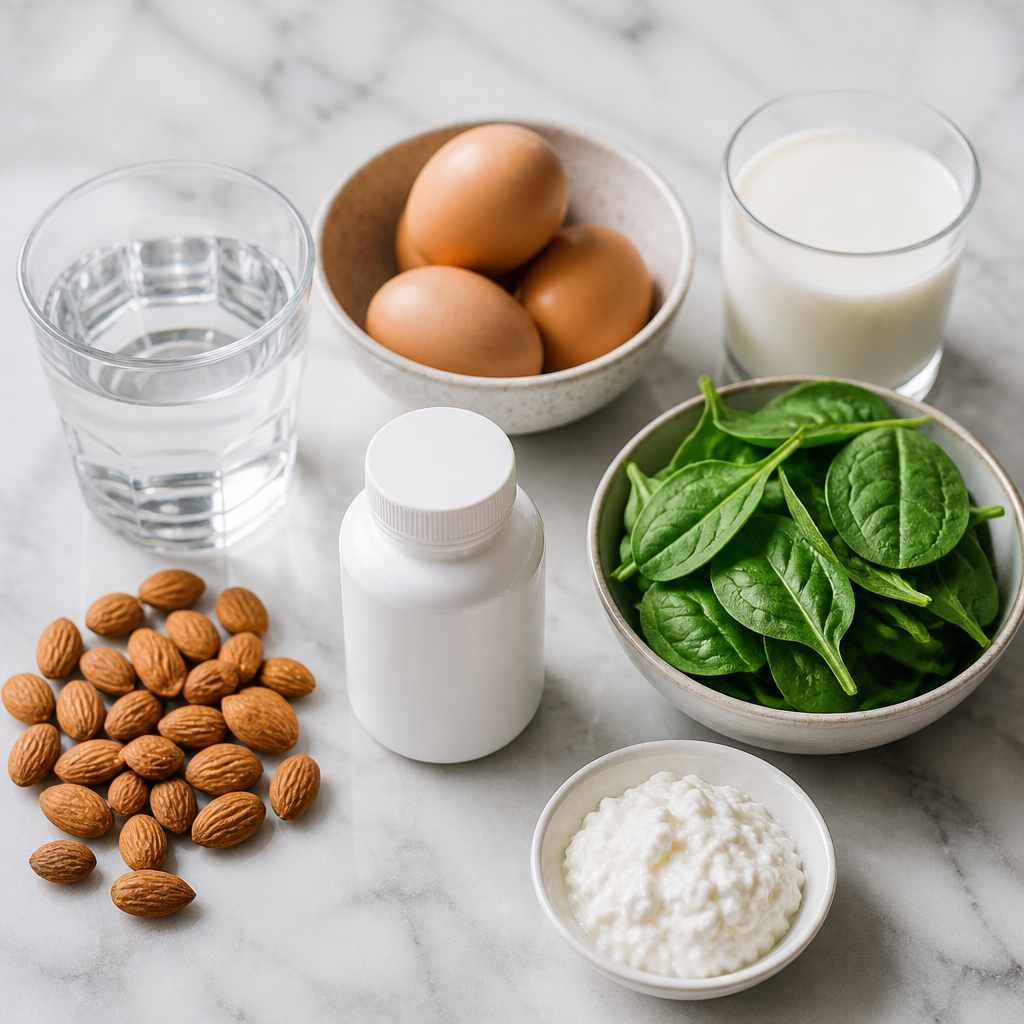
In a UK diet, the most practical sources are milk, yoghurt, cheese, eggs, fortified breakfast cereals, and some meat and fish. Green vegetables and whole grains add smaller amounts. If you eat two or three of these foods most days, you are usually in a reasonable position without counting anything.
Pro tip: Anchor one riboflavin-rich food to every training day, such as a glass of milk with your post-session breakfast or eggs with your first meal. Habits beat occasional large doses, and a food you already eat is far easier to keep up than a new product.
If food alone leaves a gap, a supplement can fill it. The difficulty is that riboflavin appears in many formats, from single-ingredient tablets to multivitamin complexes, and labels do not always make the differences obvious. Here is how I would read them.
Look for riboflavin listed in milligrams per serving, then compare that figure with the UK daily reference value printed on the pack. A label showing a very large multiple of that value is not automatically better. Surplus riboflavin is excreted, so you pay for vitamin that mostly leaves the body.
Check how many tablets or scoops you need to reach the stated amount. Some formats only deliver a meaningful dose at a serving size you would struggle to take every day.
A multivitamin complex is convenient, and for many people it covers gaps that food leaves across several B vitamins at once. A single-ingredient riboflavin product makes sense only with a specific reason, such as a restricted diet with little dairy, egg or fortified food where you have confirmed the gap. Our own multivitamin range is designed for active adults, but judge any product by its label, ours included.
Hydration matters on long sessions too. Electrolytes and vitamins solve different problems, so do not expect one product to do the job of the other.
Most gym-goers end up in one of three places: relying on food, taking a standalone riboflavin product, or using a multivitamin complex that includes it. Each has trade-offs, and the right choice depends on how much of your diet you control and how strictly you train.

Side by Side
Approach |
Best for |
Main drawback |
|---|---|---|
Food first |
Lifters with varied diets who eat dairy, eggs or fortified cereals most days |
Intake drops quietly when calories are cut or meals are skipped |
Standalone riboflavin product |
Restricted diets where a specific gap has been confirmed |
Treats one nutrient in isolation and can lead to stacking with other B2 products |
Multivitamin complex with B vitamins |
Active adults who want coverage across several B vitamins during heavy training |
The riboflavin dose may be modest, so check the label against your diet |
If you eat dairy, eggs or fortified cereals most days, food alone may be enough and a supplement adds little. If you train at high volume while cutting calories, a multivitamin complex is a sensible safety net. A standalone product suits a narrower case, where you have checked your intake and know exactly what is missing.
The worst option is to layer all three. Food, a standalone tablet and a multivitamin can push your intake well beyond what your body can use, and you will not notice a benefit.
The most frequent error is treating riboflavin as a performance product. It supports normal energy metabolism, and its job is to prevent gaps, not to add speed on top of an adequate diet.
Large doses have not been shown to make recovery faster in any clear way, and the surplus leaves through urine. You pay more and gain little. Stack two or three products that all contain B2 and you end up with intakes far above what your body can use, with no obvious payoff.
Pro tip: Photograph the label of any new B vitamin with the serving size and daily percentage visible, then keep the picture on your phone. When you review your intake a month later, you will know what you were actually taking rather than guessing.
Bright yellow urine after a riboflavin product is normal and harmless. It is the visible sign that surplus riboflavin is leaving the body. Warn new users in advance so they do not stop a product that is working as expected.
Riboflavin works alongside other B vitamins and minerals in energy metabolism. A supplement cannot compensate for a diet that is short on protein, carbohydrate and fluid. Fix the basics first, then decide whether a targeted nutrient is still needed.
Yes. Riboflavin is the chemical name for vitamin B2, and labels may use either term, so check both when you compare products.
Often, yes. Regular intake of milk, yoghurt, cheese, eggs and fortified cereals covers most people, but it depends on what you actually eat. If you avoid those foods or cut calories hard, a supplement is worth considering.
The evidence is early. A placebo-controlled trial in ultramarathon runners tested whether acute riboflavin reduces soreness, but one event is a narrow base. Treat riboflavin as supportive rather than as a recovery shortcut.
Riboflavin is water-soluble, so surplus leaves through urine and turns it bright yellow. It is harmless and usually a sign that your intake is above what your body needs at that moment.
For most active adults, a multivitamin complex is simpler, provided the riboflavin amount is sensible and you check the label. A standalone product suits a specific, confirmed gap, and it is rarely needed by someone eating a varied diet.
Write down your typical week for three or four days, noting dairy, eggs, fortified cereals and meat or fish. If most days contain at least two of these, you are probably covered. If several days contain none, a supplement or a diet change is worth discussing with a qualified professional.
Have you noticed any difference in your training or recovery after paying attention to riboflavin, and what did you try?