Most UK athletes obsess over protein, creatine, and electrolytes, yet quietly ignore the vitamin that makes all of that effort biochemically possible. Thiamine for athletes UK is an underexplored topic, and the silence around it costs performance. Vitamin B1 sits at the entry point of your body's energy-producing machinery: without adequate thiamine, the carbohydrates you eat before a session cannot be converted efficiently into usable fuel. The harder you train, the more carbohydrate you burn, and the more thiamine your body demands. That demand scales with effort, yet intake often does not.
Key Insight |
Explanation |
|---|---|
Thiamine need scales with calorie burn |
The World Health Organisation links thiamine requirements to caloric intake, so athletes burning significantly more energy than sedentary adults need proportionally more B1. |
The body stores very little thiamine |
Total body thiamine stores are no greater than approximately 30 mg, with a half-life of just 9 to 18 days, making consistent dietary intake non-negotiable. |
Pyruvate dehydrogenase cannot work without it |
Thiamine is a required cofactor for pyruvate dehydrogenase, the enzyme that converts pyruvate into acetyl-CoA for the Krebs cycle, meaning carb-to-energy conversion stalls without it. |
Exercise-induced fatigue may have a B1 component |
Research has investigated high-dose thiamine supplementation for preventing and accelerating recovery from exercise-induced fatigue, suggesting B1 status is relevant to post-workout recovery. |
Convenience foods lower thiamine intake without warning |
Heavily processed and refined foods strip thiamine. Athletes relying on snacks and fast options are the most at-risk group for inadequate intake. |
Standard RDAs were not built for active adults |
The general recommended daily intakes for thiamine (1.2 mg for men, 1.1 mg for women) were derived for sedentary populations, not athletes with high energy throughput. |
B vitamins work as a team |
Thiamine, riboflavin, and niacin all act as coenzymes in energy metabolism pathways. Optimising B1 in isolation while neglecting the wider B complex misses the point. |
Thiamine, or vitamin B1, is a water-soluble, sulfur-containing vitamin and the first water-soluble vitamin ever identified by scientists. Unlike fat-soluble vitamins, it is not stored in significant quantities in body tissue. The body's maximum reserves sit at around 30 mg, with the vitamin cycling out in roughly 9 to 18 days if dietary intake stops. That short turnover window is exactly why active people cannot afford to treat it as a background concern.
In its active form, thiamine pyrophosphate (TPP), the vitamin acts as a cofactor for a cluster of enzymes that are central to how your cells produce energy from food. Without it, the conversion of glucose into ATP, the currency your muscles spend during exercise, hits a bottleneck at several critical junctions.
For UK athletes eating high-carbohydrate training diets, a point many sports nutrition plans recommend, the demand for thiamine rises in direct proportion to carbohydrate throughput. A rugby player consuming 3,500 kcal per day is running a substantially different metabolic load than the 2,000 kcal scenario the standard RDA was designed around. Yet the supplement shelves and most nutrition conversations rarely bring B1 into the discussion.

The mechanistic case for thiamine is not speculative: it is structural. Three enzymes that are completely central to energy metabolism require thiamine as a cofactor. Understanding what those enzymes do explains precisely where and how a shortfall hurts your training.
When you eat carbohydrates and your muscles break down glycogen during exercise, glucose is converted through glycolysis into pyruvate. The next step, converting pyruvate into acetyl-CoA so it can enter the Krebs cycle and generate ATP, is carried out by the enzyme pyruvate dehydrogenase. Thiamine is a non-negotiable cofactor for this reaction. Without adequate TPP, pyruvate stacks up and gets shunted toward lactate instead, accelerating the acidosis that produces fatigue. In practical terms: you hit the wall harder and earlier.
Once inside the Krebs cycle, alpha-ketoglutarate dehydrogenase performs a second thiamine-dependent conversion. If this step slows, the entire aerobic energy cycle loses throughput. For endurance athletes whose performance depends on sustained oxidative metabolism, this is the last place to have a nutritional restriction.
The third major thiamine-dependent enzyme, transketolase, operates in the pentose phosphate pathway. This pathway produces NADPH and ribose-5-phosphate, molecules involved in managing oxidative stress and supporting cell repair. Athletes generating high training loads produce significant oxidative stress, making this pathway functionally relevant beyond pure energy production.
Taken together, these three enzyme systems make thiamine not just a bit-part player in energy metabolism but a structural requirement for high-output athletic function. A well-designed multivitamin for active adults should account for all three roles, not simply meet the minimum RDA that was calibrated for a sedentary baseline.
Pro tip: If your training load increases significantly during a competition build-up phase, your carbohydrate intake and your thiamine requirement will rise together. Build that relationship into your nutrition planning rather than treating the two as unrelated variables.
The standard recommended daily allowance for thiamine sits at 1.2 mg per day for adult men and 1.1 mg per day for adult women. Those figures appear on most UK supplement labels and are the basis for percentage daily value declarations. But those numbers were established for the general adult population, not for someone doing two-a-day training sessions or weekly long runs.
The World Health Organisation frames it differently, recommending 0.4 mg of thiamine per 1,000 calories consumed, a formulation that automatically scales with energy intake. An athlete burning 3,000 kcal per day would, under this model, require approximately 1.2 mg just to meet baseline needs, with some researchers arguing active individuals warrant a margin above that given the increased metabolic stress on thiamine-dependent pathways.
The requirement for thiamine increases the more exercise you take, and the more food you eat. Athletes burning significantly more energy than sedentary adults may not be adequately served by the RDA designed for the general population.
Research into exercise-induced fatigue has examined thiamine supplementation at substantially higher doses. One study looked at supplementation at 100 mg per day in athletes, finding potential benefits for preventing and accelerating recovery from fatigue. That does not mean every active adult needs megadoses, but it does illustrate the gap between a standard dietary recommendation and what researchers consider worth testing in performance contexts.
For UK active adults, a realistic approach is to track whether your total daily thiamine intake, from food plus supplements, scales with your caloric expenditure. The 1.2 mg RDA is a floor, not a target for hard training periods.
The frustrating thing about suboptimal thiamine status in athletes is that it rarely presents with a clear, dramatic symptom. There is no definitive blood test result that an ordinary GP requests. Instead, the signs accumulate quietly and get attributed to overtraining, poor sleep, or insufficient recovery.
Because thiamine underpins the primary pathway through which carbohydrates generate ATP, a shortfall produces fatigue that sits at the cellular level. Extra rest helps, but if the metabolic machinery is not working properly, the body cannot capitalise on that rest the way it should. Athletes stuck in unexplained fatigue cycles who have already addressed sleep and training volume are worth reviewing from a micronutrient angle.
A common but unattributed performance dip is the gradual erosion of capacity at medium-to-high intensity. Intervals that used to feel manageable become laboured. Pace at threshold drops. Because aerobic energy production at those intensities is heavily dependent on the Krebs cycle, and because thiamine-dependent enzymes sit at two key junctions in that cycle, this is mechanistically consistent with low B1 status.
Reduced appetite is a recognised early symptom of thiamine shortfall. For athletes who already struggle to eat enough calories during heavy training blocks, this becomes a self-reinforcing problem: lower intake reduces thiamine availability, which reduces appetite, which further lowers intake.
Pro tip: Before attributing a prolonged performance plateau to training errors, assess your micronutrient intake across the previous four to six weeks. Thiamine and the B vitamin group are among the first to show functional gaps when calorie intake drops during a weight-making or cutting phase.
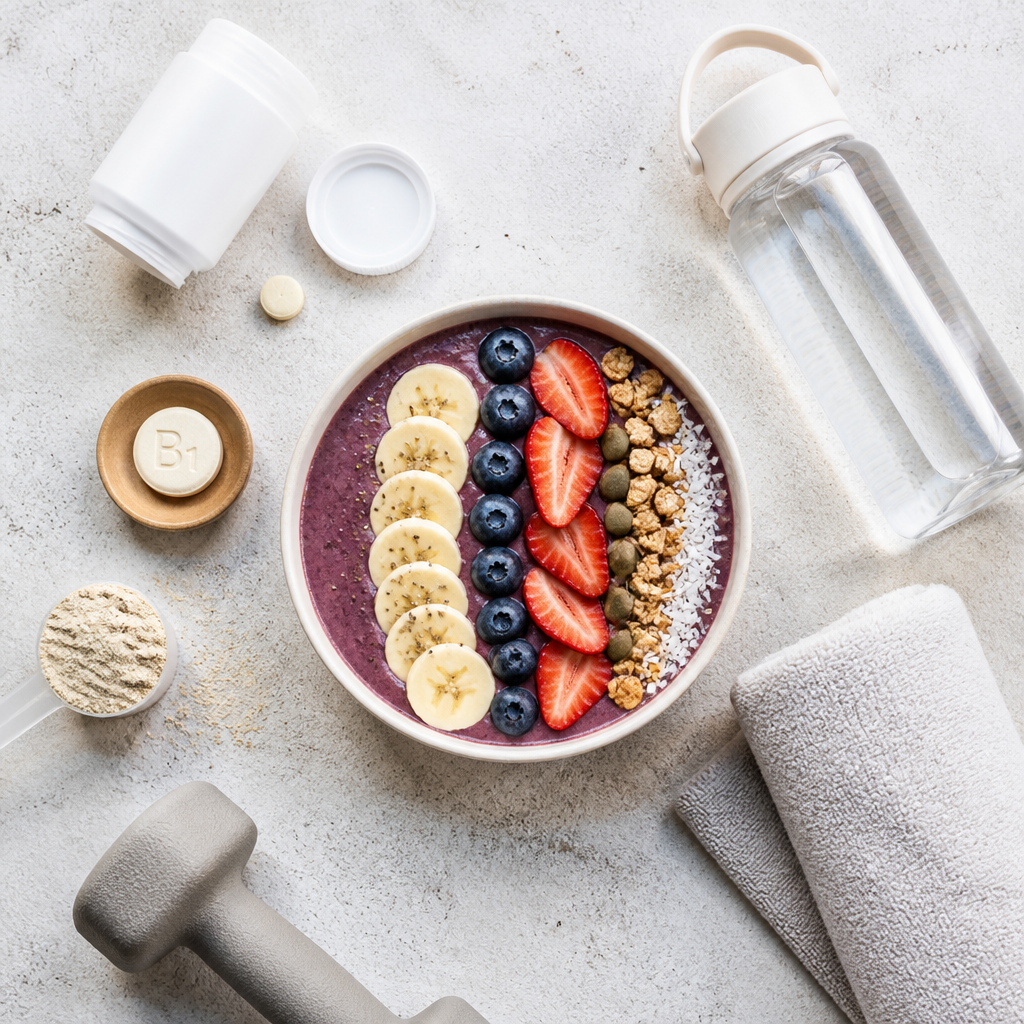
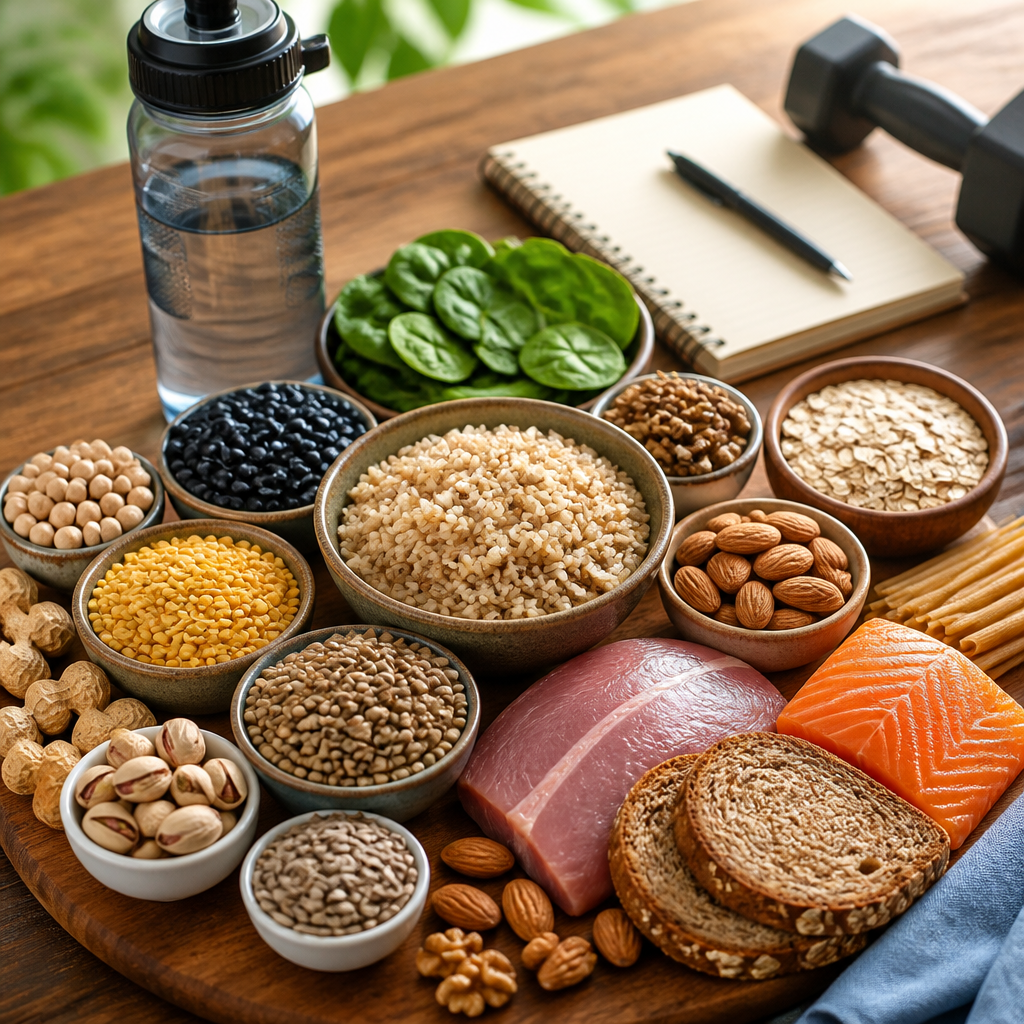
Thiamine is present in a reasonably broad range of foods, including meat (particularly pork), fish, wholegrains, legumes, nuts, and fortified breakfast cereals. A balanced diet with a variety of whole foods can, in principle, meet the standard RDA. The problem for many active UK adults is that food patterns under training stress rarely reflect the ideal variety assumed in population-level guidance.
Three patterns create thiamine gaps in active populations. First, high reliance on convenience and ultra-processed foods during busy training weeks reduces thiamine intake, since refining and processing destroys the vitamin. Second, athletes following low-carbohydrate or calorie-restricted phases deliberately cut the grain and legume sources that contribute meaningfully to B1 intake. Third, cooking at very high temperatures, particularly boiling, significantly reduces thiamine content in food, as it is water-soluble and heat-sensitive.
Many UK adults lean on fortified breakfast cereals as their primary thiamine source. This is not inherently a problem, but it creates fragility: one dietary shift, switching to a lower-carb breakfast or skipping breakfast during intermittent fasting protocols, removes a significant portion of B1 intake overnight. Athletes who train fasted in the mornings and have reduced their carbohydrate intake are often inadvertently cutting their thiamine intake at the same time.
Practical food-first strategies for thiamine include building weekly meals around whole grains such as oats and brown rice, incorporating regular servings of pork, sunflower seeds, black beans, and lentils, and being deliberate about cereal choice when carbohydrates are consumed. For those whose training volume makes consistent food variety difficult, a well-formulated multivitamin for UK active adults that includes the full B complex provides a reliable baseline alongside a balanced diet.
Supplementing thiamine does not require a standalone B1 product in most cases. The more practical and nutritionally coherent approach is ensuring the multivitamin or B-complex product you choose contains thiamine in a meaningful dose, alongside the other B vitamins that share enzymatic roles in energy metabolism. Thiamine, riboflavin, and niacin all function as coenzymes in overlapping energy pathways, meaning they perform best when provided together rather than in isolation.
For most athletes, a comprehensive multivitamin with a well-designed B-complex component is the most practical solution. Standalone thiamine supplements exist and may be useful for someone with a confirmed or suspected specific deficiency, but they miss the synergistic relationship with other B vitamins. A formula that combines B1 with B2, B3, B6, B12, and folate within a broader multivitamin context, alongside minerals relevant to energy metabolism, addresses the system rather than a single cog.
Thiamine's water-soluble nature means the body excretes excess through urine rather than accumulating it to toxic levels, which makes it a low-risk vitamin to supplement at moderate doses above the RDA. However, very high-dose supplementation without reason is unnecessary for most athletes: consistently meeting two to three times the RDA through a combination of food and a quality multivitamin is sensible without being excessive.
Because thiamine is water-soluble, it does not require dietary fat for absorption and can be taken at any time with water. Taking a B-containing multivitamin with or shortly before a meal is common practice and generally well tolerated. Alcohol consumption significantly impairs thiamine absorption and increases its urinary excretion, an important consideration for UK athletes who include regular social drinking in their lifestyle. Even moderate, regular alcohol intake can meaningfully deplete B1 status over time.
At Plusssz UK, the multivitamin formulations are designed with active adults in mind, factoring in the nutrient demands that come with regular exercise rather than defaulting to sedentary-population benchmarks. If you are not sure whether your current regimen covers your B vitamin baseline adequately, reviewing the specific B1 content of your multivitamin against your weekly training load is a reasonable starting point.
Approach |
Thiamine Coverage for Athletes |
Practical Limitations |
|---|---|---|
Diet only (whole foods) |
Can meet standard RDA in a varied diet; does not automatically scale to higher training loads or account for food preparation losses |
Requires consistent dietary variety that many athletes with busy schedules cannot reliably maintain; vulnerable to training-phase dietary changes |
Standalone B1 supplement |
Directly addresses thiamine in measurable doses; useful for confirmed deficiency |
Ignores the co-dependent relationship between B1, B2, and B3 in energy metabolism; single-nutrient approach misses broader micronutrient gaps |
Full multivitamin with B complex |
Provides thiamine alongside cofactor B vitamins and minerals; most aligned with the systemic demands of active adults; supports energy metabolism as a whole rather than one pathway |
Quality varies significantly between products; athletes should check actual thiamine content per serving rather than relying on RDA percentage alone |
The multivitamin approach wins for most active adults because it reflects how the body actually uses B vitamins: collectively, not independently. A formula designed for athletes, with dosages calibrated to active lifestyle demands rather than sedentary population minimums, is worth the marginal extra cost over a basic supermarket multivitamin.
The evidence does not support thiamine supplementation as a direct performance enhancer in people who are already replete. Where thiamine has a clear functional role is in maintaining the efficiency of carbohydrate-to-energy conversion through pyruvate dehydrogenase and the Krebs cycle. If your thiamine status is adequate, adding more will not make a significant difference. If it is suboptimal due to high training loads, high carbohydrate throughput, or poor dietary variety, correcting that gap will restore the metabolic efficiency your training depends on. Think of it as maintaining the engine rather than adding a turbocharger.
Yes, particularly during periods of very high training volume, calorie restriction, or low-carbohydrate eating. The body stores only around 30 mg of thiamine at maximum, and the half-life is under three weeks. Athletes eating fewer whole grains, legumes, and lean meats than usual, which is common during weight-management phases or when eating on the go, can deplete their B1 status faster than they realise. Regular alcohol consumption compounds the risk by impairing absorption and increasing urinary losses.
Research on thiamine and exercise has included both trained athletes and physically active volunteers, making the findings relevant across fitness levels. The underlying biochemistry, namely that pyruvate dehydrogenase requires thiamine to convert carbohydrate-derived pyruvate into acetyl-CoA, applies regardless of whether you are a competitive cyclist or a regular gym-goer. The practical relevance scales with training load: the more you exercise and the more carbohydrate you burn, the more relevant your thiamine status becomes.
Thiamine and electrolytes operate at different levels of the performance equation but are complementary. Electrolytes govern fluid balance, nerve conduction, and muscle contraction, while thiamine governs the efficiency of ATP production from carbohydrates. Heavy sweating does not substantially deplete thiamine the way it depletes sodium, potassium, and magnesium, but both categories of micronutrient are required for sustained athletic function. An athlete who has excellent hydration and electrolyte management but poor B vitamin status will still hit a ceiling on energy output. Addressing both is the complete approach.
The most commonly used laboratory marker is erythrocyte transketolase activity coefficient (ETKAC), which reflects functional thiamine status in red blood cells. A result above 1.20 is generally considered indicative of insufficient status. Plasma thiamine and whole blood thiamine can also be measured. In practice, most UK athletes do not get these tests routinely, which is why dietary tracking combined with a well-structured multivitamin providing the full B complex represents the more accessible and practical approach to maintaining adequate status.
The mechanistic need for thiamine is the same regardless of sex, but the baseline RDA differs slightly: 1.1 mg per day for women versus 1.2 mg for men. Female athletes who follow calorie-controlled or low-carbohydrate eating patterns, which is common in weight-category sports, endurance events where power-to-weight ratio matters, and aesthetic sports, face a higher practical risk of low B1 intake because both the food sources and the proportional requirement are affected simultaneously. A multivitamin formulated specifically for active women, with thiamine included at a meaningful dose within a full B complex, addresses this proactively.
Most energy gels and intra-workout carbohydrate products are not formulated as micronutrient sources and contain little to no thiamine. They are designed to deliver fast carbohydrates and sometimes electrolytes, not to address B vitamin status. Relying on sports nutrition products as a thiamine source during training is not a sound strategy. Your B vitamin foundation needs to come from whole food across the day and, where dietary gaps exist, from a multivitamin taken consistently as part of your daily routine rather than as a peri-workout product.
Have you noticed a difference in your energy levels or recovery when you pay closer attention to your B vitamin intake? Share your experience in the comments below.