Most athletes in the UK spend real money on protein powders, creatine, and electrolyte drinks, yet almost nobody talks about vitamin K. That is a mistake worth correcting. Vitamin K quietly governs two things that directly determine whether you stay on the field or end up sidelined: how your skeleton mineralises under load, and how efficiently your blood manages injury response and arterial health. For any active person following an intense training programme, a vitamin K shortfall is not a minor nutritional gap. It is a structural risk.
Key Insight |
Explanation |
|---|---|
Vitamin K activates osteocalcin for bone mineralisation |
Without adequate vitamin K, osteocalcin remains undercarboxylated and cannot bind calcium into the bone matrix, increasing fracture risk under training loads. |
Low vitamin K raises undercarboxylated osteocalcin (ucOC) |
High ucOC is a measurable marker of poor bone quality. Athletes with low dietary vitamin K1 consistently show elevated ucOC in clinical research. |
Vitamin K2 (MK-7) has superior bioavailability compared to K1 |
MK-7 has a longer half-life in circulation, meaning a smaller daily dose can maintain active tissue levels more reliably than phylloquinone from food alone. |
Vitamin K works with calcium and vitamin D, not independently |
Getting calcium and vitamin D right while ignoring vitamin K means calcium can end up in the wrong places, including arterial walls rather than bone. |
Green leafy vegetables alone are often insufficient for trained athletes |
Absorption of K1 from plant foods is low. Cooking, gut transit speed, and low dietary fat all reduce uptake, making supplementation worth considering. |
Vitamin K2 supplementation shows promising post-exercise recovery signals |
A 2026 ACSM study using 240 µg/day MK-7 for 12 weeks found lower creatine kinase levels in older adults at 72 hours post-exercise, suggesting reduced muscle damage markers. |
No established upper tolerable intake limit for natural vitamin K forms |
Major regulatory bodies have not set a tolerable upper limit for natural menaquinones, making supplementation at standard doses considered well tolerated in healthy adults. |
Vitamin K is a fat-soluble micronutrient that functions as a cofactor in the carboxylation of specific proteins. In plain terms, it activates proteins by attaching carboxyl groups that allow them to bind calcium. Two main natural forms exist: vitamin K1 (phylloquinone), found primarily in green leafy vegetables, and vitamin K2 (menaquinone), found in fermented foods and certain animal products, with MK-7 being the most bioavailable long-chain form available as a supplement.
For athletes, these are not abstract biochemistry footnotes. The proteins vitamin K activates include osteocalcin (which locks calcium into bone tissue) and matrix Gla protein (which prevents calcium from depositing in soft tissues like arteries). Both processes are directly relevant to training-induced bone stress and to the arterial health of anyone pushing hard volume week after week.
A common mistake among active people is treating vitamin K as a minor afterthought, something handled adequately by a bowl of spinach at dinner. The evidence suggests this is insufficient, particularly for those in high-impact or high-volume sports.

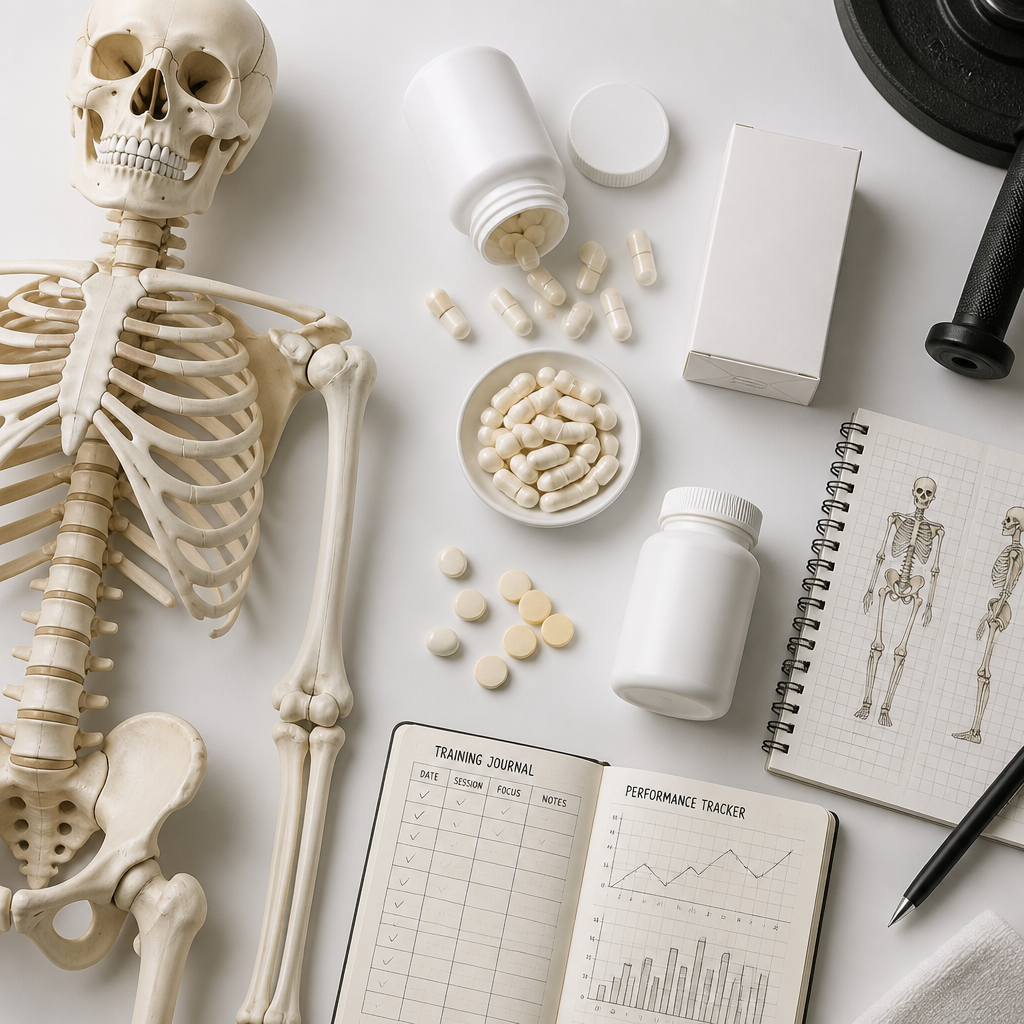
Bone stress injuries are among the most frustrating setbacks in sport. Runners, gymnasts, footballers, and cyclists all accumulate repetitive mechanical load that demands constant bone remodelling. That remodelling process depends heavily on vitamin K.
Research published in peer-reviewed journals has found that low dietary intake of vitamin K1 and vitamin K2 increases the risk of fracture, and that low serum vitamin K1 concentrations are consistently associated with elevated levels of undercarboxylated osteocalcin, a marker of inadequate bone protein activation. Vitamin K also regulates the transcription of osteoblastic markers, the formation of osteoclasts, and bone resorption. This is not a peripheral effect: it sits at the core of how bone tissue is built and maintained.
A systematic review examining randomised controlled trials found that adequate vitamin K intake is associated with a lower risk of fracture and higher bone mineral density in adults. Studies included in the review required at least six months of supplementation to detect BMD changes, which reflects the slow nature of bone remodelling cycles. For athletes thinking in training blocks of three to six months, this timeline is entirely workable.
Stress fractures are disproportionately common in endurance athletes and those training on hard surfaces. The UK's autumn and winter training season, when outdoor running volume tends to increase ahead of spring races, is a period when vitamin K status deserves particular attention. Shorter daylight hours reduce time outdoors eating fresh green produce, and low-fat diets common in weight-sensitive sports further impair fat-soluble vitamin absorption.
In practice, an athlete eating what feels like a nutritious diet can still have functionally low vitamin K status because the K1 in cooked greens has reduced bioavailability, and K2 from dietary sources (fermented foods, certain cheeses) is rarely consumed in therapeutic amounts by most people in Britain.
Pro tip: If you have had a stress fracture or are currently in a high bone-loading sport, prioritise vitamin K2 as MK-7 specifically. It has a longer half-life in circulation than K1, meaning once-daily dosing maintains more stable blood levels than relying on dietary phylloquinone alone.
Vitamin K's original claim to fame was blood coagulation. The letter K comes from the Danish word "koagulation," and that naming reflects its fundamental role: vitamin K activates the clotting factors that stop uncontrolled bleeding after injury. For athletes who train with high contact risk or simply deal with regular bruising, cuts, and overuse inflammation, this function matters more than most people appreciate.
Athletes with suboptimal vitamin K status may notice slower wound closure, heavier bruising from minor impacts, or longer recovery timelines after soft-tissue damage. These are not dramatic symptoms, and they are easy to attribute to other causes. That is precisely why vitamin K shortfalls persist undetected in active populations.
A 2026 double-blind randomised controlled trial published in Medicine and Science in Sports and Exercise examined the effects of vitamin K2 (MK-7 at 240 µg per day for 12 weeks) on recovery from muscle-damaging exercise in both young and older adults. The study found that vitamin K2 supplementation significantly increased circulating MK-7 levels, and at 72 hours post-exercise, creatine kinase levels were lower in older adults in the supplemented group. Creatine kinase is a standard marker of muscle damage, and reduced CK at 72 hours suggests a faster return toward baseline after a hard session.
The effect was more pronounced in older adults, which is relevant for masters athletes and active seniors, a demographic that is growing across UK sport. Younger athletes in the same study showed a trend in the same direction, though the effect did not reach statistical significance. This is worth noting rather than overstating: the evidence is promising but not definitive for younger age groups.
Vitamin K2 supports strong bones by activating osteocalcin to bind calcium in the bone matrix, and also contributes to normal blood clotting and healthy wound healing.
Pro tip: Pair vitamin K2 with a quality electrolyte supplement containing magnesium and calcium. Magnesium supports over 300 enzymatic processes including muscle contraction and recovery, while vitamin K ensures the calcium from your diet and supplements ends up in bone rather than soft tissue.
This is where vitamin K's role goes well beyond the obvious bone and blood story. Matrix Gla protein (MGP) is a vitamin K-dependent protein that prevents calcium from being deposited in arterial walls. Without adequate vitamin K2 to carboxylate MGP, the protein remains inactive and cannot perform this protective function. The result is vascular calcification, a process that stiffens arteries over time.
Clinical research has shown that undercarboxylated matrix Gla protein (ucMGP) is converted to its active carboxylated form by vitamin K2-7 acting as a cofactor, facilitating the deposition of calcium in bones and preventing vascular calcification. For endurance athletes who place chronic demand on the cardiovascular system, arterial stiffness is not a trivial concern. Flexible, well-functioning arteries are part of the infrastructure that allows high cardiac output during competition.
The interaction between calcium supplementation, vitamin D, and vitamin K2 is particularly important here. Calcium supplements taken without adequate vitamin K2 may increase circulating calcium that gets directed to soft tissues rather than bone. Athletes using calcium as part of a bone-support stack should ensure vitamin K2 is part of that same regimen.

The short answer is: both, but with different priorities. Vitamin K1 handles blood clotting reliably and is obtainable from a diet with regular green vegetable intake. Vitamin K2, particularly the MK-7 form, is the form that most effectively supports bone mineral density and cardiovascular protection, and it is the form most likely to be genuinely deficient in a typical UK diet.
K2 as MK-7 has demonstrably superior bioavailability compared to shorter-chain menaquinones like MK-4. Because of differences in molecular structure, MK-7 remains in circulation significantly longer, meaning a single daily dose maintains more consistent active tissue levels. Human clinical trials have used MK-7 doses ranging from approximately 58 to 999 µg per day, with the lower end of that range showing meaningful effects on bone and cardiovascular markers in well-controlled studies.
K2 is also fat-soluble, which means it must be consumed with a meal containing dietary fat to be absorbed properly. Taking it with a dry training snack or on an empty stomach effectively wastes the dose.
Approach |
Main Benefits |
Key Limitations for Athletes |
|---|---|---|
Diet-only (K1 from leafy greens) |
Supports baseline blood clotting; free, whole-food approach |
K1 bioavailability from cooked/raw greens is low; K2 intake minimal; inconsistent with travel or busy training schedules |
Standalone K2 MK-7 supplement |
Directly targets bone mineralisation and vascular protection; long half-life; once-daily dosing effective |
Requires fat co-ingestion for absorption; doesn't address broader micronutrient gaps common in athletes |
K2 within a comprehensive multivitamin complex |
Delivers K2 alongside D3, magnesium, calcium, and other synergistic micronutrients in calibrated ratios; convenient; reduces pill burden |
Dose of K2 may be lower than standalone supplements; choice of formulation quality matters significantly |
In practice, a comprehensive multivitamin formulated for active people, specifically one that includes K2 MK-7 alongside vitamin D3, calcium, and magnesium, covers the most ground for athletes managing a high training load and a variable diet. This is especially relevant for UK athletes in autumn and winter, when dietary variety tends to narrow and sun exposure drops.
Green leafy vegetables are the primary dietary source of vitamin K1. Kale, spinach, broccoli, and Brussels sprouts all provide substantial amounts. The challenge is that absorption from these sources is inconsistent. Cooking increases K1 bioavailability somewhat versus raw, but fat content of the meal matters more. A side salad dressed with olive oil delivers more usable K1 than the same salad eaten dry.
Vitamin K2 sources in a typical UK diet are limited. Natto (fermented soy) is the richest known food source of MK-7 by a significant margin, but it is not widely consumed in Britain. Hard and soft cheeses contain some K2, as do egg yolks and liver, but the quantities are modest compared to therapeutic supplementation doses used in clinical trials.
Fat-soluble vitamins as a category require dietary fat for intestinal absorption. Athletes on low-fat cutting phases, plant-based diets, or those eating high volumes of dry carbohydrate foods around training windows are particularly at risk of underabsorbing whatever vitamin K they consume. This is not a hypothetical concern. It is a structural feature of fat-soluble vitamin physiology that applies directly to real training patterns common in the UK active population.
Gut transit time also affects uptake. High-fibre diets, which many athletes follow correctly, can accelerate gut transit and reduce fat-soluble vitamin absorption time. This does not mean reducing fibre. It means ensuring fat is always present in any meal intended to deliver meaningful vitamin K.
Vitamin K does not operate in isolation in the body, and it should not be treated that way in supplementation either. Its relationship with calcium and vitamin D3 is direct and well-documented. Vitamin D regulates calcium absorption from the gut. Vitamin K2 then ensures that calcium is directed into bone rather than deposited in soft tissue. Remove one link from that chain and the whole system underperforms.
Electrolyte balance adds another dimension. During intense training, athletes lose sodium, potassium, magnesium, and calcium through sweat. Replenishing these through a well-formulated electrolyte supplement supports both immediate hydration and the mineral substrate needed for the bone remodelling processes that vitamin K governs. An electrolyte formula without added sugar, designed for sustained use across training weeks, fits naturally alongside a vitamin K-containing multivitamin as part of a coherent daily micronutrient strategy.
The specific combination of K2 MK-7, D3, magnesium, and a quality electrolyte base represents a practical, evidence-informed foundation for bone health and performance support in active adults. Rather than stacking multiple separate products, a multivitamin complex formulated specifically for active individuals, one that acknowledges the synergy between these nutrients, is both simpler and more effective for most people.
Pro tip: Take your vitamin K-containing multivitamin with your largest meal of the day, ideally one that contains some healthy fat such as olive oil, avocado, or oily fish. This maximises absorption of all fat-soluble vitamins in the formula simultaneously, including K2, D3, and any vitamin A or E present.
Dietary K1 from green vegetables can cover basic blood clotting needs, but getting adequate K2 for bone mineralisation and vascular protection from food alone is genuinely difficult on a typical UK diet. Unless you eat natto regularly and include K2-rich fermented foods daily, supplementation with MK-7 is the most reliable way to ensure functional K2 status across a full training year.
Yes, and this is important. Vitamin K interacts directly with anticoagulant medications such as warfarin. If you are taking any blood-thinning medication, you must speak to your GP or pharmacist before adding vitamin K supplementation. For healthy athletes not on anticoagulants, natural menaquinones have no established tolerable upper limit and are considered well-tolerated at standard supplement doses.
Bone remodelling is a slow process. Clinical trials examining bone mineral density outcomes have used supplementation periods of at least six months, and meaningful changes in BMD are typically measured over one to two years. However, changes in undercarboxylated osteocalcin (a functional marker of vitamin K activity in bone) can be detected within weeks of consistent supplementation. Think of vitamin K as a long-term structural investment rather than a quick fix.
Both, for different reasons. Younger athletes benefit during peak bone mass accumulation years, where vitamin K status influences how well that bone mass is built. Older and masters athletes face the challenge of maintaining bone density as natural remodelling rates change, and the post-exercise recovery signal from K2 supplementation appears stronger in this age group based on current trial data. Both demographics have clear reasons to pay attention.
Both are forms of vitamin K2, but they differ in molecular chain length, which affects how long they stay active in the body. MK-4 has a short half-life and is cleared quickly, requiring multiple daily doses at much higher amounts to maintain tissue levels. MK-7 has a significantly longer half-life and remains in circulation for days, meaning a single daily dose at much lower amounts is sufficient. For supplement formulations aimed at consistent daily use, MK-7 is the more practical and efficient form.
For most active people, a high-quality multivitamin complex that includes K2 MK-7 alongside D3, magnesium, and other performance-relevant nutrients is the most sensible approach. It removes the complexity of managing multiple separate products, reduces the chance of missing doses, and ensures the nutrients that work synergistically are always present together. Standalone K2 supplements are worth considering only if your chosen multivitamin does not include a meaningful MK-7 dose.
Have you ever thought about how vitamin K fits into your training nutrition, or is it something you have only recently come across? Share your experience in the comments below.