Most active people in the UK have their supplement routine dialled in: protein powder, maybe a creatine dose, an electrolyte drink on hard training days. What rarely makes the list is selenium, a trace mineral that sits quietly behind glutathione peroxidase activity, thyroid hormone conversion, and immune regulation. That omission matters more in the UK than almost anywhere else in Europe. British soil is notably low in selenium, meaning that unlike in North America, you cannot reliably get what you need from locally grown food alone. If you are already pushing your body through regular exercise, the gap between what you consume and what you actually need becomes harder to ignore. Picking the right selenium supplement UK formulation is a practical fix, not a luxury.
Key Insight |
Explanation |
|---|---|
UK soil is depleted in selenium |
Decades of declining soil selenium levels mean locally grown food delivers far less of this mineral than produce from North America or selenium-supplemented regions like Finland. |
Half of UK women fall below the lower reference nutrient intake |
National Diet and Nutrition Survey data suggests around 50% of women and 26% of men in the UK consume selenium below the lower reference nutrient intake, a significant shortfall for basic biological function. |
Selenium powers your main antioxidant enzyme |
Glutathione peroxidase (GPx) activity is directly dependent on selenium availability. Without adequate selenium, your antioxidant defence during intense exercise is compromised. |
Exercise raises your selenium demand |
High-intensity and high-volume training increases oxidative stress, which accelerates selenium turnover. Athletes and frequent exercisers are among those most at risk of marginal status. |
UK Reference Nutrient Intake is 75 mcg for men, 60 mcg for women |
These targets are set by the UK's Department of Health and are higher than the US RDA of 55 mcg, reflecting the recognition that UK dietary sources are less reliable. |
Selenium supports thyroid hormone conversion |
Selenoproteins are essential for converting the inactive thyroid hormone T4 into active T3. Low selenium can blunt energy metabolism and recovery, symptoms that are easy to misattribute to overtraining. |
The upper safe limit is well above typical supplement doses |
The tolerable upper intake level for adults is 400 mcg per day, meaning a standard 55-200 mcg supplement carries a substantial safety margin when taken as directed. |
The selenium content of any food is not fixed. It reflects the selenium content of the soil in which the crop was grown or the animal grazed. UK soils have been declining in selenium for decades. The shift in flour sourcing away from high-selenium North American wheat toward European wheat played a significant part, and changes in fertiliser practice compounded the problem. The result is that people eating a typical British diet simply cannot assume they are meeting even basic targets.
This is not a fringe concern. Data from the UK's National Diet and Nutrition Survey indicates that around 26% of men and approximately 50% of women in the UK have selenium intakes below the lower reference nutrient intake. That lower reference nutrient intake is not the optimal target, it is the floor below which deficiency becomes likely. For active individuals training three or more times per week, sitting near that floor is a genuine performance and health liability.
Finland offers a useful parallel: the country began adding selenium to agricultural fertilisers in 1985 after widespread deficiency was linked to cardiovascular disease risk. By the mid-2000s, population selenium status had recovered to adequate levels. The UK has not taken equivalent action at scale, which is precisely why understanding how to supplement intelligently is worth your attention.
Pro tip: If you have recently moved your diet toward more plant-based eating, your selenium intake has almost certainly dropped. UK-grown plant foods are among the least reliable sources of this mineral. Factor that into how you plan your supplement stack.

Selenium does not act in isolation. It works by being incorporated into a family of proteins called selenoproteins, of which more than 25 have been identified in the human body. The most discussed of these for physically active people are glutathione peroxidase enzymes and selenoprotein P, both of which serve as markers of selenium status and as functional antioxidants.
Selenoproteins called iodothyronine deiodinases are responsible for converting the relatively inactive thyroid hormone thyroxine (T4) into the metabolically active form triiodothyronine (T3). Suboptimal selenium status can impair this conversion, contributing to symptoms like persistent fatigue and sluggish recovery that are often blamed on training load rather than nutritional gaps.
Intense exercise triggers an acute immune response. Vigorous physical activity increases circulating leukocytes, raises serum cytokines, and elevates body temperature, placing a substantial demand on immune regulation. Selenoproteins are active participants in this response, and marginal selenium status can blunt the body's ability to manage inflammation effectively after hard training sessions.
Selenium plays a role in protecting DNA from oxidative damage and supporting cellular repair processes. For anyone training consistently, cellular repair is not a peripheral concern. It is the mechanism through which adaptation actually happens. A mineral that supports that process deserves more attention than it typically gets in the active adult community.
Selenium is essential for selenoprotein synthesis, and those proteins govern antioxidant defence, thyroid hormone metabolism, and immune competence. A shortfall in any of these areas has direct consequences for how an active body performs and recovers.
Exercise overproduces reactive oxygen species (ROS). At moderate levels, ROS act as signalling molecules that drive adaptation. At high levels, particularly during intense or prolonged training, they exceed the body's antioxidant capacity and begin causing damage to cell membranes and skeletal muscle tissue. This is the core of exercise-induced oxidative stress.
Selenium is a structural component of glutathione peroxidase (GPx), the enzyme most directly responsible for neutralising these reactive oxygen species. Selenoproteins collaborate in the skeletal muscle to eliminate excess oxygen radicals, reduce mitochondrial stress, and restore cellular balance after training. Low selenium means lower GPx activity, which means slower recovery and more accumulated oxidative damage over time.
Research in this area consistently shows that selenium supplementation helps prevent selenium deficiency among athletes engaged in high-intensity and high-volume training, and that optimal selenium plasma levels are important for minimising the chronic oxidative effects of regular exercise. This is not about taking selenium to gain a performance edge. It is about removing a deficiency that is quietly eroding your body's ability to recover.
The practical implication for anyone training hard several times per week is straightforward: if your diet is built around UK-grown carbohydrates, lean meats, and minimal seafood, your selenium status is probably not where it needs to be. And the effects of that shortfall are most visible not during your session, but in how you feel 24-48 hours afterward.

The UK Reference Nutrient Intake (RNI) is set at 75 micrograms per day for adult men and 60 micrograms per day for adult women. These figures are higher than the US RDA of 55 mcg, reflecting the UK's lower dietary availability. The European Food Safety Authority (EFSA) recommends 70 mcg per day for adults. The tolerable upper intake level for adults is 400 mcg per day, giving a meaningful margin between the recommended intake and any risk of excess.
A 10-week randomised controlled study conducted in healthy British adults aged 50-64 estimated that approximately 105 mcg of total daily selenium intake was required to maximise plasma glutathione peroxidase activity. This suggests that for UK adults who are not getting adequate selenium from diet, a supplement providing 55-100 mcg per day is a reasonable and well-supported target, not a high dose by any clinical standard.
For active adults specifically, the practical guidance is to prioritise consistency over precision. A daily supplement that brings your total intake to somewhere between 80-150 mcg is almost certainly beneficial and carries no meaningful safety risk. Going well above 200 mcg without clinical supervision is unnecessary for most people.
Pro tip: Do not try to get all your selenium from Brazil nuts alone. While 2-3 Brazil nuts can theoretically provide the daily RDA, the selenium content varies enormously between nuts and by region of origin. It is an unreliable strategy for anyone trying to hit consistent targets.
Understanding where selenium comes from in food is useful context for why supplementation makes sense for most UK-based active adults. The table below compares the main dietary and supplementation strategies.
Source / Approach |
Estimated Selenium per Serving |
Reliability for UK Adults |
|---|---|---|
Brazil nuts (2-3 nuts) |
Approx. 55-200 mcg (highly variable) |
Low. Selenium content varies enormously depending on soil region of origin. Not a consistent daily strategy. |
Seafood (tuna, shrimp, per 100g) |
Approx. 100-200 mcg |
Moderate. A reliable source if consumed regularly, but most UK adults do not eat seafood daily. |
Chicken or beef (per 100g) |
Approx. 20-50 mcg |
Moderate. Good contribution, but selenium content depends on animal feed, which varies. |
Whole grain bread or oats (per 100g) |
Approx. 15 mcg |
Low to moderate. UK-milled grains carry less selenium than North American equivalents. Refined grains offer very little. |
Selenium supplement or multivitamin with selenium |
Typically 55-200 mcg |
High. Consistent, measurable, and easy to integrate. The most reliable route to hitting UK RNI targets every day. |
The comparison makes the case clearly. Diet-only selenium sufficiency is achievable in theory but genuinely difficult in practice for most UK adults, particularly those eating predominantly British-grown plant foods and limited seafood. A well-formulated supplement or multivitamin minerals UK complex that includes selenium at a meaningful dose is the most dependable way to close the gap.
Not all selenium inclusions in multivitamins are equal. The dose and form both matter. Many basic multivitamins include selenium at only 25-30 mcg, well below the UK RNI and unlikely to correct a deficiency. When evaluating a multivitamin minerals UK product for active adults, look for a dose of at least 55 mcg, with 75-100 mcg being a more meaningful level for those with higher training loads.
Selenium appears in supplements as either inorganic forms (sodium selenite or sodium selenate) or organic forms (selenomethionine or selenium-enriched yeast). Organic forms, particularly selenomethionine, are generally considered to be more efficiently absorbed and retained by the body. This is consistent with what nutritional science has established about the superiority of food-form minerals in terms of bioavailability. When a supplement brand emphasises improved nutrient assimilability, the form of selenium used is one of the key indicators of whether that claim holds up.
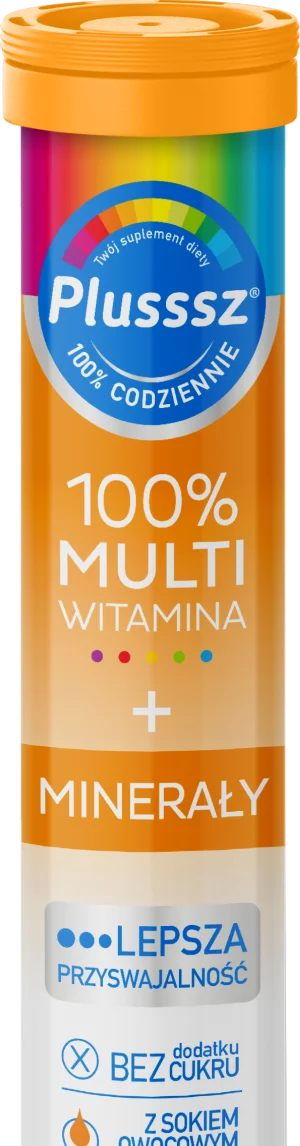
Selenium does not operate in isolation within a formula. It works alongside vitamin E (selenium helps regenerate alpha-tocopherol), zinc (which supports immune function alongside selenium), and iodine (both are essential for thyroid hormone production). A well-designed active adult multivitamin considers these interactions rather than treating minerals as independent line items. For example, the Plusssz approach to formulation for active individuals considers exactly these synergies, offering blends designed to support the physiological demands of a training lifestyle rather than simply ticking a label box.
For anyone already using an electrolyte product for hydration support, it is worth checking whether your daily multivitamin is filling the micronutrient gaps that electrolytes do not address. Selenium is not typically found in electrolyte formulas. It belongs in your daily multivitamin, which is where consistent intake makes the most meaningful difference to trace mineral status over time.
One reason people sometimes hesitate around selenium is its reputation as a mineral with a narrow therapeutic window. That reputation is worth examining honestly. Selenium toxicity, called selenosis, is a real concern at high chronic intakes. Symptoms include hair loss, nail brittleness, and gastrointestinal distress. However, these effects are consistently associated with intakes well above 400 mcg per day, the tolerable upper limit set for adults.
A standard supplement dose of 55-200 mcg per day sits far below that threshold. The concern about a narrow window applies most practically to people who might combine high-dose standalone selenium supplements with selenium-rich foods over sustained periods. For someone taking a multivitamin that includes 75-100 mcg of selenium alongside a typical UK diet, the risk of excess is negligible.
Where the risk calculus genuinely changes is with very high-dose supplements marketed for specific purposes. Doses above 200 mcg per day are best approached with some scrutiny and, for those with thyroid conditions or other relevant health factors, a conversation with a healthcare professional. For the broad population of active adults using a quality trace minerals active adults formula at sensible doses, selenium is a safe and well-supported inclusion.
Pro tip: If you take a multivitamin and eat seafood two or more times per week, you are probably already close to or above your daily selenium target. There is no benefit in stacking a separate high-dose selenium supplement on top. More selenium beyond saturation does not mean more glutathione peroxidase activity. The enzyme has a ceiling, and exceeding it adds no value.
UK soils are significantly depleted in selenium compared to North American or some other European soils. This means that locally grown crops, grains, and the animals raised on those crops contain less selenium than equivalent foods from selenium-richer regions. The result is that a typical UK diet provides less selenium than the UK Reference Nutrient Intake for most adults, making dietary supplementation a practical and widely relevant strategy rather than a niche concern.
Yes, in a meaningful way. Intense and high-volume exercise generates reactive oxygen species that increase oxidative stress in muscle tissue. Selenium is a structural component of glutathione peroxidase, the enzyme most responsible for neutralising these reactive species. Higher training loads accelerate selenium turnover, and research consistently shows that athletes and regular exercisers are among those most likely to have marginal selenium status. This does not mean you need dramatically higher doses, but it does mean a consistent daily intake at or above the UK RNI is particularly relevant for active people.
The key variable is the chemical form. Selenium from animal foods and organic supplement forms like selenomethionine is generally well absorbed and retained. Inorganic forms such as sodium selenite are absorbed adequately but retained less efficiently. For a supplement, choosing one that uses an organic selenium form such as selenomethionine or selenium-enriched yeast is a meaningful quality indicator. From whole foods, selenium-rich animal proteins are the most reliable dietary sources available in the UK diet.
In theory, 2-3 Brazil nuts can provide close to the daily RDA for selenium. In practice, the selenium content of Brazil nuts varies enormously depending on the soil region where they were grown. Some batches are extremely rich, others are far below expectations. Relying on Brazil nuts as your sole selenium strategy introduces inconsistency that is difficult to manage without testing your intake regularly. A supplement provides a consistent, known dose and is the more reliable approach for anyone trying to maintain adequate selenium status day after day.
For most adults taking a standard multivitamin with 55-100 mcg of selenium, the risk of excess is very low. The tolerable upper intake level for selenium is set at 400 mcg per day for adults, providing a substantial margin above typical supplement doses. Selenosis, the condition associated with selenium excess, is primarily reported in contexts involving very high chronic intakes, such as industrial exposure or unusually high-dose supplementation over extended periods. A quality multivitamin at a sensible dose is well within safe parameters for the vast majority of healthy adults.
Plasma selenium and glutathione peroxidase activity can begin responding to increased selenium intake within a few weeks, but building meaningful tissue stores and observing functional improvements, particularly in immune resilience and recovery quality, typically takes 8-12 weeks of consistent daily intake. This is consistent with how most micronutrient interventions work. Selenium supplementation is not a quick fix but a foundational piece of a longer-term nutritional strategy for active adults who are otherwise falling short through diet alone.
Have you recently checked whether your current multivitamin or supplement stack actually provides selenium at a meaningful dose? Share your experience or questions in the comments.