Most UK gym-goers dramatically underestimate how much they sweat during indoor training hydration UK sessions in autumn. When October arrives, the heating comes on, the windows stay shut, and session intensity climbs as athletes chase fitness benchmarks before the year ends. The result: more sweat, less airflow, and a dehydration risk that catches many people completely off guard. Getting your electrolyte balance right during this specific period is not optional for serious performance. It is the difference between a productive session and one where you are left flat, cramping, and wondering why your output has dropped.
Key Insight |
Explanation |
|---|---|
Heated gyms in autumn increase sweat rate significantly |
Indoor spaces with central heating and poor airflow raise ambient temperature and humidity, reducing the body's ability to offload heat efficiently and driving sweat rate higher than many expect in October. |
Sodium is the electrolyte lost in the greatest quantity through sweat |
Sodium is the primary electrolyte in extracellular fluid. Its loss during sweat directly compromises blood volume, fluid balance, and performance. Replacing water alone without sodium is not enough. |
Higher-intensity indoor sessions mean more electrolyte loss per minute |
Autumn indoor workouts tend to be shorter and more intense than summer outdoor efforts. This pushes sweat rate per unit of time up, meaning you can reach significant electrolyte depletion within 45 to 60 minutes. |
Muscle cramps are a leading sign of low sodium and potassium |
Muscles need balanced sodium and potassium to contract and relax. When these drop, cramping becomes common during squats, sprints, or any high-load movement. Cramps during exercise are rarely a flexibility issue. |
Hydration should begin 2 to 3 hours before training, not at the gym door |
Arriving well hydrated gives your body time to absorb and regulate fluid. Sipping large amounts immediately before a session is ineffective and can cause discomfort during high-intensity work. |
No-added-sugar electrolyte formats are better suited to frequent training weeks |
High-sugar sports drinks add unnecessary calories across multiple weekly sessions. Electrolyte formulations without added sugar deliver the minerals your body needs without the metabolic overhead. |
Magnesium and vitamin C support both electrolyte function and immune resilience in autumn |
Autumn brings increased exposure to seasonal illness. Magnesium supports muscle relaxation and energy metabolism, while vitamin C contributes to immune function, making a combined electrolyte and multivitamin approach particularly relevant in October. |
There is a widely held assumption that sweat and dehydration are summer problems. That assumption costs athletes performance all through autumn and winter. The moment UK gyms switch on their central heating in September and October, the indoor environment becomes significantly warmer and more humid than outside. The heat gradient that usually helps your body shed excess warmth through evaporation simply narrows, and thermoregulation becomes harder. Your body compensates by sweating more.
The second factor is session structure. As outdoor training winds down in autumn, many athletes shift to higher-intensity indoor work, prioritising quality intervals, strength circuits, and HIIT. These shorter, harder sessions generate more sweat per minute than a long steady outdoor run. When you combine increased ambient heat with elevated intensity, the electrolyte loss per session climbs sharply, even if the session itself lasts under an hour.
The third, and most overlooked, factor is psychological. Because it is not a hot July afternoon, people simply do not think about hydration the same way. They arrive at the gym without drinking anything meaningful, grab water during the session, and leave without any electrolyte replenishment. This pattern, repeated across four or five autumn training days per week, produces a cumulative deficit that shows up as persistent fatigue, poor recovery, and unexplained performance drops.
When training moves indoors, the combination of reduced airflow, higher ambient temperature, and increased session intensity makes sweat rate higher per unit of time than most athletes expect, particularly during autumn when the heating is first activated and the body is not yet acclimatised to the indoor environment.
Electrolyte imbalance does not announce itself with a dramatic symptom. It chips away at performance incrementally. The first signs are subtle: mental fogginess mid-session, a slightly elevated perceived exertion at weights or speeds you normally handle comfortably, and an early onset of fatigue that does not match the duration of your workout. Most athletes attribute this to poor sleep, stress, or a bad training day. Often it is electrolyte depletion.
As the imbalance worsens, symptoms become impossible to ignore. Muscle cramps are among the most common, particularly in the calves, hamstrings, and feet during or after high-rep lower body work. This happens because muscles need the correct ratio of sodium and potassium to contract and relax smoothly. Without it, the neuromuscular signalling becomes unreliable and cramping follows.
Power output is typically the first measurable metric to suffer. Athletes often describe feeling "flat" during high-intensity efforts, unable to access their normal levels of strength or speed despite adequate sleep and nutrition. This is a direct consequence of suboptimal electrolyte levels interfering with muscle function and energy metabolism.
Cognitive sharpness also deteriorates faster than most people realise. Coordination, reaction time, and the mental discipline required to maintain good form under load all depend on a properly hydrated and electrolyte-balanced nervous system. A gym session with impaired cognitive function is not just less productive. It is more likely to produce poor form and injury.
Recovery between sets slows when electrolyte levels are low. Heart rate takes longer to return to baseline, and the feeling of readiness for the next effort is delayed. Across a multi-set strength session, this compounds into a significantly shortened total volume of quality work. Between training days, inadequate electrolyte replacement slows the restoration of fluid balance and impairs muscle tissue repair.
Pro tip: If you notice your between-set recovery feels unusually slow during autumn gym sessions, check your hydration and electrolyte intake before assuming the issue is cardiovascular fitness or programming. That flat, heavy feeling is a classic low-electrolyte signal.
Understanding what you are actually losing when you sweat helps you make better decisions about replacement. The key electrolytes lost during exercise are sodium, potassium, magnesium, calcium, and chloride. They are not interchangeable, and a deficit in any one of them has specific performance consequences.
Sodium is the dominant electrolyte in extracellular fluid and the one lost in the greatest quantity through sweat. It is responsible for regulating fluid balance, supporting nerve transmission, and enabling muscle contraction. A reduction in sodium directly affects blood volume and the body's ability to maintain hydration at a cellular level. Some individuals are heavier sweaters and lose more sodium per session than others. If you finish sessions with white residue on your skin or kit, you are likely a high-sodium sweater and need to be particularly deliberate about replacement.
Potassium supports intracellular fluid balance, muscle contraction, and nerve function. It is lost in smaller quantities than sodium during sweat but becomes critical when sodium levels are also low, as the two electrolytes work in balance. Magnesium plays a role in enzyme function, energy metabolism, and muscle relaxation. It is involved in over 300 enzymatic processes in the body. A deficit contributes to fatigue, poor sleep quality, and muscle tightness, all of which compound the demands of a heavy autumn training block.
Chloride works in parallel with sodium to maintain fluid balance and acid-base equilibrium. Calcium supports bone health and is also required for muscle contraction signalling. While calcium is not lost in large quantities during typical gym sessions, athletes training heavily across multiple disciplines should be aware of it as part of a complete electrolyte picture.
Getting the timing right is as important as getting the formula right. A common mistake is treating hydration as something you do reactively, responding to thirst during the session rather than managing fluid and electrolyte status proactively throughout the day. By the time you feel thirsty during a workout, your performance is already beginning to decline.
Aim to consume around 500 to 750ml of fluid in the two to three hours before training. This gives your body time to absorb what it needs and excrete any excess before you start moving. If you are going straight to the gym from work or have not had time to properly pre-hydrate, adding sodium to your pre-session drink can help maximise absorption of whatever fluid you do manage to consume.
For sessions under 45 minutes, small, regular sips of water are generally adequate if you arrived well hydrated. For sessions exceeding 45 to 60 minutes, particularly high-intensity circuits, HIIT, or heavy lifting with little rest, electrolyte replacement during the session makes a measurable difference. The goal is to maintain fluid balance, not to flood the stomach. Drinking too much plain water during a hard session can actually dilute blood sodium, compounding the problem.
Post-session electrolyte replacement supports recovery by restoring fluid balance, facilitating muscle tissue repair, and reducing the time needed to return to full training readiness. Do not stop at rehydration. Prioritise electrolyte replenishment alongside your post-training nutrition. Evening autumn sessions in particular benefit from magnesium-containing electrolyte formulas, as magnesium also supports sleep quality and overnight recovery.
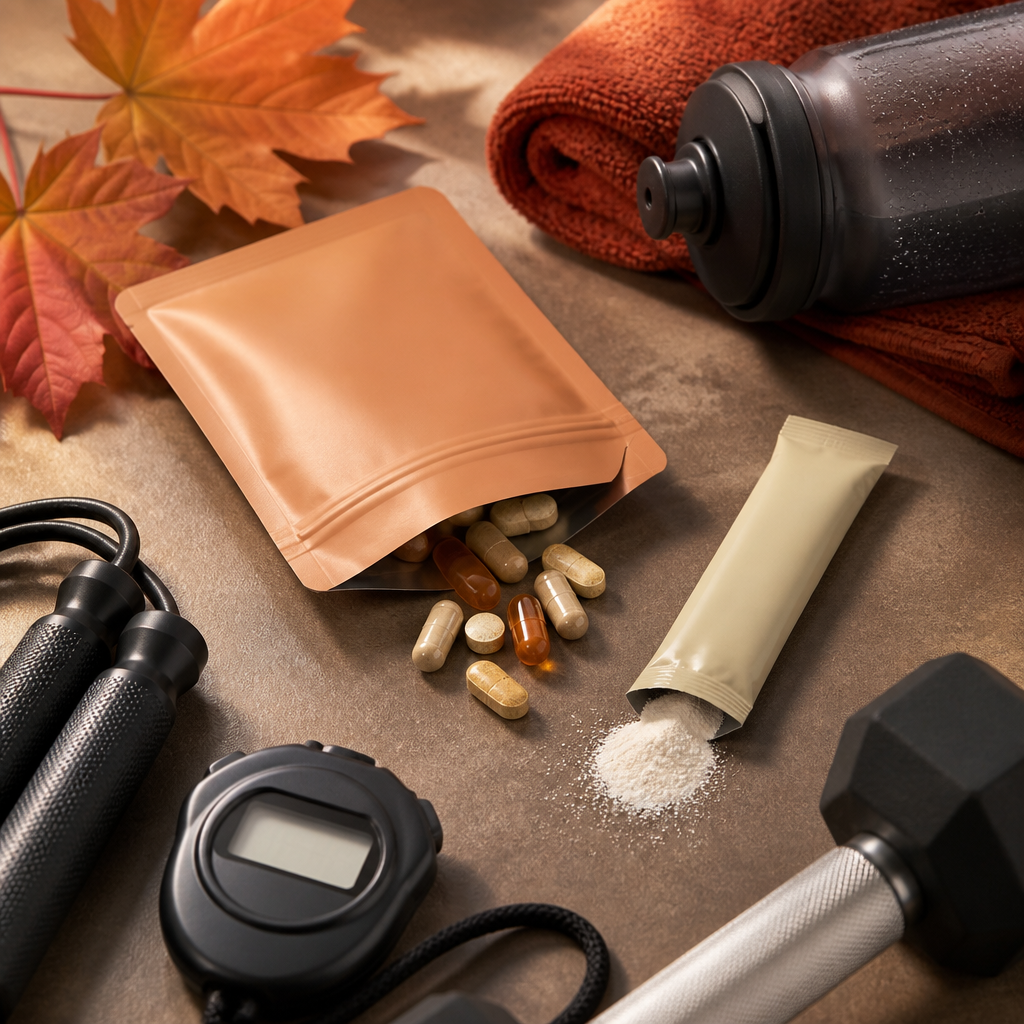
Pro tip: Keep a no-added-sugar electrolyte tablet or sachet at your desk and dissolve one in 500ml of water during the hour before a post-work autumn gym session. It takes 60 seconds and removes one of the biggest preventable performance limiters for evening training.
Not all hydration strategies are equally effective for sports hydration in October indoor sessions. The table below compares the three most common approaches against the demands of autumn gym training in the UK.
Hydration Approach |
Best For |
Limitations for Autumn Indoor Training |
|---|---|---|
Plain water only |
Sessions under 30 minutes at low intensity, when arriving well hydrated |
Does not replace sodium, potassium, or magnesium lost in sweat. Can dilute blood sodium if consumed in large quantities during intense sessions, worsening electrolyte imbalance. |
High-sugar sports drinks |
Endurance events lasting 90 minutes or more where carbohydrate fuel is genuinely needed |
Excess sugar intake across multiple weekly gym sessions adds unnecessary calories without proportional benefit. Sugar content slows gastric emptying, causing discomfort during high-intensity work. |
No-added-sugar electrolyte supplements (effervescent tablets or powders) |
Gym sessions of 45 minutes or more, multiple training days per week, athletes monitoring calorie intake |
Requires planning ahead and carrying a supplement. However, this approach delivers balanced sodium, potassium, and magnesium without the metabolic overhead of sugar, making it the strongest daily training tool. |
The verdict is clear for most people training in UK gyms across October and November. Plain water is not enough for serious sessions. High-sugar drinks are calibrated for longer endurance efforts, not a 55-minute strength circuit in a heated gym. A targeted no-added-sugar electrolyte formula, ideally combined with a relevant vitamin complex, is the most practical and effective approach for the electrolyte balance autumn training context.
Autumn does not only change your hydration needs. It changes your broader micronutrient picture. Reduced daylight affects vitamin D status. Lower temperatures and increased contact with other people in indoor spaces raise the risk of seasonal illness. For an active individual, getting ill in October means missed training sessions and disrupted progress. This is where a combined electrolyte and multivitamin approach pays a second dividend beyond raw performance.
Vitamin C, for example, contributes to normal immune function and is also involved in the synthesis of collagen, which supports joint and connective tissue health under training load. Niacin (vitamin B3) supports normal energy-yielding metabolism, directly relevant to the ATP demands of intense gym work. Vitamin E functions as an antioxidant, relevant during periods of heavy training when oxidative stress increases. When these vitamins are delivered alongside core electrolytes in a single, well-formulated supplement, the barrier to consistent use drops considerably.
Coenzyme Q10 is worth specific mention for active individuals training heavily through autumn. It plays a role in cellular energy production and has been studied in the context of exercise fatigue, making it a useful addition to an electrolyte complex for athletes pushing hard through the autumn training block.
The practical upshot: an electrolyte supplement that includes a multivitamin complex addresses both the immediate hydration demands of the gym session and the background nutritional demands of training through a season that challenges immune function and energy metabolism simultaneously. For active UK adults, that dual function is not a luxury. It is a sensible response to what autumn training actually requires.
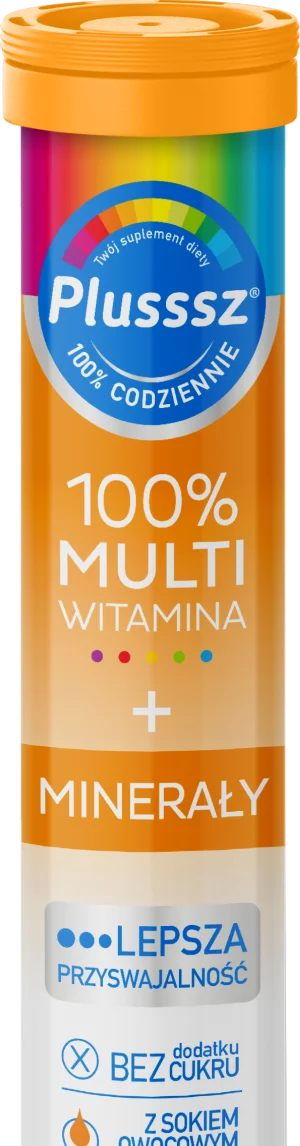
Explore the Plusssz electrolyte and multivitamin formulations designed specifically for active individuals managing exactly this kind of training demand.
For sessions lasting under 30 minutes at moderate intensity, water is adequate if you arrive well hydrated. For sessions of 45 minutes or more, particularly at higher intensities in a heated gym, electrolyte replacement is genuinely necessary. The reduced airflow and higher ambient temperature in UK gyms during autumn push sweat rate above what many people expect, and plain water does not replace the sodium, potassium, and magnesium lost in that sweat.
The most common signs are muscle cramps during or after training, an unusual feeling of heaviness or flatness during efforts you normally handle comfortably, slower recovery between sets, mental fogginess mid-session, and persistent fatigue that does not improve with rest. If these symptoms appear specifically during your gym sessions rather than across the rest of your day, electrolyte balance is a likely contributor.
Both types of training cause electrolyte loss through sweat, but the pattern differs. High-intensity cardio sessions generate more sweat volume over the session, meaning larger raw losses of sodium and fluid. Heavy strength training generates intense bursts of muscular demand where potassium and magnesium balance for neuromuscular function is particularly critical. In practice, a balanced electrolyte formula covering sodium, potassium, and magnesium is appropriate for both.
A counterintuitive but common experience. In summer, people are conditioned to think about hydration. In autumn, they are not, yet they are training in heated indoor spaces where sweat rates remain high. The result is that many athletes arrive chronically under-hydrated and under-replenished across multiple training days. Cumulative electrolyte deficit, particularly in sodium and potassium, is the most direct physiological explanation for increased cramping frequency during autumn gym sessions.
Ideally, all three phases are addressed. Pre-session hydration with electrolytes 2 to 3 hours before training establishes a solid baseline. During sessions over 45 minutes, small amounts of electrolyte solution help maintain balance without overloading the stomach. Post-session replacement is essential for recovery, particularly if the session was intense or involved significant sweating. For most people, a no-added-sugar effervescent electrolyte tablet dissolved in water is the most convenient format for all three phases.
They shift. Early autumn sessions in September and early October often take place in gyms that are just beginning to run their heating, meaning temperatures and humidity are variable. By late October, indoor environments are consistently warmer and sweat rates stabilise at a higher level. Athletes who are new to heavy indoor training may also find their sweat rate adjusts over the first few weeks. The consistent approach is to monitor your signs of dehydration and electrolyte depletion across the season rather than fixing a single strategy in week one and never revisiting it.
How do you manage your hydration during autumn indoor training? Share your approach or questions in the comments, we read every one.