Most UK athletes obsess over sodium, potassium, and magnesium. Chloride sits quietly in the background, listed on every sports drink label, yet almost never discussed in training plans or nutrition guides. That oversight has real consequences. Chloride is the body's primary negatively charged electrolyte, accounting for roughly 0.15% of total body mass, and it is lost in sweat at concentrations that rival sodium itself. If your hydration strategy ignores chloride, it is not a complete strategy. This guide covers what chloride actually does, why UK athletes specifically need to pay attention to it, and how to build it into a practical hydration plan that works year-round.
Chloride (Cl-) is a negatively charged ion that works in partnership with sodium and potassium to maintain the electrochemical environment every cell depends on. It is found primarily in the extracellular fluid and blood, making it central to how water moves between your cells and their surroundings.
Its functions go well beyond simple hydration. In the digestive system, chloride combines with hydrogen to form hydrochloric acid in the stomach, which activates enzymes, breaks down proteins, and defends against pathogens entering via food. In the blood, it plays a direct role in acid-base balance, helping to transport carbon dioxide and keep blood pH within the tight range that muscles and the nervous system require.
The kidneys regulate chloride carefully, reabsorbing or excreting it as needed to adjust blood pH. This is not a passive bystander mineral; chloride has a direct effect on hydrogen ion concentration. When chloride levels shift, the body's chemistry shifts with them. For athletes pushing their physiology hard in training blocks, that matters enormously.
When it comes to sports hydration, sodium and chloride are the most prominent electrolytes lost in sweat. Every serious hydration formula needs to account for both, not just one.
Beyond digestion and pH, chloride helps regulate osmotic pressure, which controls how water moves in and out of individual cells. When chloride levels drop, cells struggle to maintain their internal environment, nerve signal transmission becomes unreliable, and blood pressure regulation can falter. These are not edge-case concerns; they are performance-limiting issues that show up in training sessions before they ever reach a clinical threshold.
Key Insight |
Explanation |
|---|---|
Chloride is lost heavily in sweat |
Athletes can lose 710 to 2,840 mg of chloride per litre of sweat, making it one of the highest-loss electrolytes during exercise. |
It is not the same as sodium |
Chloride and sodium are separate minerals with separate roles. Replacing one without the other leaves your electrolyte balance incomplete. |
Chloride drives stomach acid production |
Without adequate chloride, hydrochloric acid production declines, impairing protein digestion and nutrient absorption from post-workout meals. |
Low chloride affects nerve signalling |
Chloride contributes to the electrochemical conditions nerves need to fire consistently, affecting coordination and reaction time during sport. |
pH balance depends on it |
Chloride directly influences blood pH. Large sweat losses during prolonged UK endurance events can push the body toward metabolic alkalosis. |
Most electrolyte products under-report it |
Many hydration products list sodium prominently but omit chloride amounts. Check the full mineral panel, not just the headline sodium figure. |
No added sugar formulas can still cover chloride |
Effective chloride delivery does not require sugar-laden sports drinks. Purpose-formulated electrolyte products deliver it cleanly alongside other key minerals. |
Understanding these fundamentals changes how you assess any hydration product on the UK market. The mineral panel tells the real story, not the branding on the front of the packaging.

Sodium tends to get all the attention when athletes talk about sweat losses, but the data tells a more balanced story. Chloride passively follows sodium out of the sweat glands at a similar concentration, and because chloride is a heavier molecule, sweat losses measured in milligrams per litre are actually slightly higher than those of sodium.
In each litre of sweat, athletes can lose between 710 and 2,840 mg of chloride. Compare that with sodium losses of 460 to 1,840 mg per litre, and it becomes clear that a hydration strategy built around sodium alone is leaving a major gap. During moderate to hard exercise, sweat rates can reach 1 to 2 litres per hour or higher in warm conditions. That means chloride losses across a 90-minute training session can easily exceed 2,000 mg before conditions become demanding.
UK athletes face a specific challenge here. The British climate is variable, and indoor training environments, from swimming pools to CrossFit boxes to covered cycling tracks, often run warm and humid. Sweat rates in these environments are frequently underestimated because athletes do not feel as hot as they would in direct summer sun. The result is consistent, quietly accumulating chloride loss across a training week.
Sodium and chloride are the two electrolytes with the highest concentrations in sweat by a significant margin. Potassium, magnesium, and calcium are lost at much lower concentrations. This means that when you replace sweat with plain water, or with a product that only addresses sodium, you are still creating a chloride deficit with each session. Over consecutive training days, that deficit compounds.
Pro tip: If you train indoors in heated gyms or pools during UK autumn and winter, do not assume your sweat rate drops to negligible levels. Measure it by weighing yourself before and after a session, and account for chloride replacement alongside sodium in any electrolyte product you use.
Electrolyte balance is not about maintaining a single mineral in isolation. Sodium, potassium, and chloride work as a system, regulating osmotic pressure, nerve signal transmission, and fluid distribution across cellular membranes. Chloride specifically acts as the primary extracellular anion, the negatively charged counterpart that makes the system function electrochemically.
Chloride and sodium are tightly coupled. Sodium carries a positive charge; chloride carries a negative charge. Together, they create the electrochemical gradient that drives fluid into and out of cells. When you replenish sodium after exercise without also replenishing chloride, the balance of charges across cell membranes is disrupted. This is not a theoretical concern; it is the mechanism behind some cases of exercise-induced nausea and muscle cramps that do not resolve with sodium supplementation alone.
The kidneys work to restore this balance, but that takes time and depends on having adequate chloride available in the diet or through supplementation. Relying entirely on kidney correction during a training block is not a sound strategy for performance.
Chloride helps prevent spontaneous or prolonged muscle contractions. This is a function most athletes associate with magnesium, but chloride plays an independent role in setting the electrochemical conditions at the muscle fibre level. Adequate chloride levels contribute to the normal repolarisation of muscle cells after contraction, which is the reset mechanism that lets muscles fire again cleanly. When chloride is low, this process can become sluggish, contributing to the feeling of heavy or unresponsive legs that many endurance athletes experience in the later stages of long sessions.
Pro tip: If you are experiencing muscle cramps that do not respond to magnesium supplementation, review your overall electrolyte intake and specifically look at whether your hydration product delivers meaningful chloride alongside sodium. A product that provides sodium without chloride is addressing only half of the primary electrolyte pair.

Low chloride, known clinically as hypochloraemia, rarely announces itself with a single dramatic symptom. It tends to show up as a collection of nagging issues that athletes attribute to overtraining, poor sleep, or inadequate calorie intake. Recognising the pattern is the first step.
The most common signs of declining chloride levels in active individuals include increased thirst and dry mouth that persist even after drinking water, a feeling of muscle weakness or flatness that is not explained by training load, and digestive discomfort such as bloating or reduced appetite after training. The digestive symptoms connect directly to chloride's role in stomach acid production. If hydrochloric acid output declines, protein digestion slows, and nutrients from post-workout meals are absorbed less efficiently.
Beyond the gut, shifts in chloride levels influence nerve signalling and mental acuity. Athletes experiencing suboptimal electrolyte balance often report difficulty concentrating during technically demanding sport, slower decision-making, and reduced coordination. These are not abstract performance metrics; they are the difference between a clean sprint finish and a poor one.
A fluid loss of just 2% of body mass can produce a statistically measurable drop in athletic performance. In practice, the electrolyte picture matters as much as the fluid picture. An athlete who has consumed plenty of water but replaced none of their sweat electrolytes may be adequately hydrated by volume but functionally compromised by mineral deficit. Chloride, as the most abundant anion in the body, is central to that functional status.
If the signs above are familiar and they tend to appear after back-to-back training days, or during periods of higher-intensity work, a targeted electrolyte formula that includes chloride, not just sodium and potassium, is worth prioritising before exploring other causes.
Athletes who read electrolyte labels carefully will notice that different minerals serve different primary functions. The table below positions chloride clearly against the two other electrolytes most commonly featured in UK sports hydration products.
Electrolyte |
Primary Role in Athletic Performance |
Typical Sweat Loss per Litre |
|---|---|---|
Chloride |
Acid-base balance, fluid distribution between cells, muscle repolarisation, stomach acid production, nerve signalling support |
710 to 2,840 mg |
Sodium |
Primary driver of fluid retention, nerve signal transmission, nutrient absorption into cells, blood pressure regulation |
460 to 1,840 mg |
Potassium |
Intracellular fluid balance, muscle contraction, heart rhythm support, glycogen storage in muscle cells |
Significantly lower than sodium and chloride |
The comparison makes one thing clear: chloride is lost in the largest quantities of any electrolyte during exercise, yet it receives the least attention in both product marketing and athlete education. A hydration product that leads with sodium and potassium but omits chloride from the label entirely is not giving you the full picture. Check for it specifically when evaluating any electrolyte supplement.
Practical hydration for UK athletes needs to account for variable climate, year-round training across indoor and outdoor environments, and the reality that most people are not measuring their sweat rate with lab-grade accuracy. A workable plan builds in electrolyte coverage consistently rather than depending on precise calculation before every session.
Many standard sports drinks deliver electrolytes bundled with significant quantities of sugar. For training sessions shorter than 90 minutes at moderate intensity, that sugar provides no performance benefit and adds unnecessary caloric load. For athletes who train daily, the cumulative sugar intake from multiple hydration events per week adds up quickly. No added sugar electrolyte formulas deliver the same mineral coverage, including chloride, without that load. This is particularly relevant for athletes managing body composition alongside performance, or those who find high-sugar drinks cause mid-session digestive discomfort.
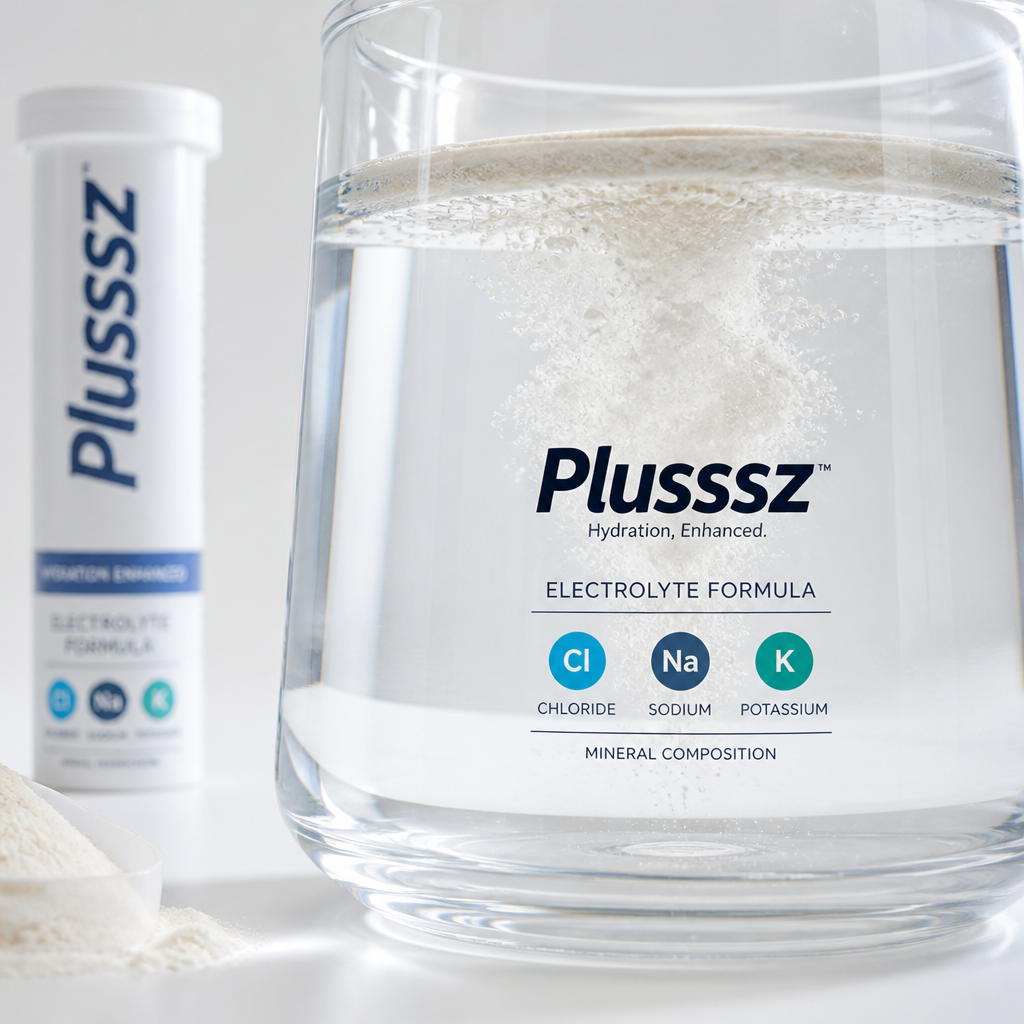
Plusssz UK formulations are built specifically around this principle: precise electrolyte delivery, including the often-omitted chloride component, without added sugar. That design serves both the performance and the daily usability requirements of active individuals across different training disciplines.
The most practical approach to chloride replacement is not session-specific calculation; it is consistent daily inclusion. Before sessions lasting over an hour, a full electrolyte formula that includes chloride alongside sodium, potassium, and magnesium provides a stable starting point. During sessions lasting beyond 60 to 90 minutes, continuing to sip an electrolyte drink maintains the balance rather than trying to restore it after the fact.
Post-exercise replacement is equally important. Plain water rehydration after a demanding session dilutes the electrolytes that remain in the body, worsening the relative deficit. A post-session electrolyte drink, or food sources naturally high in chloride such as olives, seaweed, or tomatoes alongside adequate salt intake, helps restore balance before the next training day.
The UK's autumn and winter training seasons bring specific challenges. Cold outdoor runs and cycles reduce the perceived intensity of sweat, so athletes underestimate losses. Indoor heating in gyms and sports halls creates warm, often humid environments where sweat rates remain high even when temperatures outdoors are low. Summer training, particularly for road cyclists, marathon runners, and open water swimmers, brings additional heat load. In all of these scenarios, chloride loss is occurring at rates the body cannot restore through diet alone without conscious effort.
The fundamental principle is that sports hydration minerals need to be treated as a complete set, not a pick-and-mix of whichever electrolytes happen to appear most prominently on labels or in training guides. Chloride belongs in that complete set, every session, every week.
Chloride is a negatively charged ion (Cl-) that, when dissolved in body fluids, conducts electrical activity. This is what makes it an electrolyte. It works alongside positively charged ions like sodium and potassium to create the electrochemical gradients that allow nerves to fire, muscles to contract, and cells to regulate their internal environment. Without a stable charge balance, these fundamental physiological processes become unreliable.
Losses depend on sweat rate, session duration, and conditions, but data shows athletes can lose between 710 and 2,840 mg of chloride per litre of sweat. During a 60-minute moderate-to-hard session with a sweat rate of around 1 litre per hour, a conservative estimate puts chloride loss in the range of 700 to 1,500 mg. Over multiple training sessions in a week, that cumulative deficit matters if it is not being actively replaced.
For lightly active individuals eating a varied diet with adequate salt, dietary chloride intake is usually sufficient. For athletes training multiple times per week, particularly those sweating heavily, dietary sources alone are unlikely to keep pace with losses during demanding training blocks. This is especially true for athletes who restrict processed foods and added salt, as natural food sources provide chloride in smaller, less predictable quantities. A targeted electrolyte supplement that includes chloride alongside sodium removes the guesswork.
They are related but different. Sodium chloride is the compound we know as table salt, made up of one sodium ion and one chloride ion bonded together. When dissolved in fluid, they separate into individual ions that perform different functions. Sodium manages nerve transmission and fluid retention in a different way to chloride, which handles acid-base balance and cellular osmotic pressure. Replacing one without the other after heavy sweating leaves half the job undone.
Persistently low chloride, hypochloraemia, can impair stomach acid production and slow protein digestion and nutrient absorption. Over time, this undermines the recovery process and reduces the benefit of post-workout nutrition. Chronically low chloride also affects blood pH regulation and nerve function, contributing to symptoms including muscle weakness, fatigue, and poor concentration during training. In severe cases, it creates conditions for metabolic alkalosis. For athletes, the performance consequences typically appear long before any clinical threshold is reached.
Yes, and this is a practical filtering step worth applying to any hydration product you consider. Many formulas list sodium prominently but provide no breakdown of chloride content. Given that chloride is lost in sweat at comparable or greater rates than sodium, a formula that omits it is not a complete electrolyte replacement. Look for it listed in the mineral panel with a meaningful milligram amount per serving, not a trace-level inclusion included purely to appear on the ingredients list.
Have you noticed a difference in how you perform or recover when paying closer attention to your full electrolyte intake, chloride included? Share your experience below.