Most people buying supplements in the UK are buying the wrong thing. Not because the product is poor quality, but because it was never designed for them. A generic multivitamin blended for a theoretical "average adult" has to compromise on almost every ingredient: the dose is modest enough not to harm anyone, and broad enough not to help anyone in particular. Specialized supplement formulas UK shoppers are increasingly seeking cut through this noise by targeting what the body actually needs based on age, sex, activity level, and metabolic demand. The difference in outcome is not subtle.
Key Insight |
Explanation |
|---|---|
Generic formulas over-deliver on some nutrients and under-deliver on others |
A formula built around average requirements misses the specific deficits most common in active individuals, older adults, or women of childbearing age. |
Electrolyte loss during exercise is not replaced by water alone |
Hard training sessions cause sodium, potassium, and magnesium loss that plain water cannot correct, leading to cramps, fatigue, and slower recovery. |
Nutrient interactions matter in formula design |
Calcium and iron compete for absorption. A well-designed specialized formula accounts for these conflicts; a generic blended product frequently ignores them. |
Demographic differences in nutritional need are medically significant |
Men, women, seniors, and active athletes have genuinely different micronutrient requirements, not minor variations around a common baseline. |
No added sugar is a functional requirement, not a marketing label |
For consistent hydration support, avoiding glucose spikes keeps osmolality in the range the gut absorbs fluids most efficiently. |
Targeted vitamins and minerals improve compliance |
People take supplements they notice working. Targeted formulas produce more perceptible results, which sustains the habit long enough to see real benefit. |
Personalized supplementation reduces the risk of excess intake |
Over-supplementing fat-soluble vitamins carries real risk. Targeted formulas include only what the target group needs, reducing unnecessary surplus. |
Walk into any UK pharmacy or supermarket and the shelf is full of products claiming to cover all your nutritional bases. The reality is more complicated. Generic multivitamins are designed to be safe for almost everyone, which means they are optimized for no one. The doses are calibrated around reference nutrient intakes for a sedentary adult of average body weight, and the formula stays constant regardless of whether the buyer is a 55-year-old woman managing bone density or a 28-year-old man training six days a week.
The independent pharmacist community in the UK has long flagged this issue. One consistent concern is that the supplement market has expanded dramatically in product count without a corresponding improvement in formulation relevance. Wider choice does not automatically mean better targeting.
A common mistake active people make is treating a generic multivitamin as a performance supplement. It is not. It was not engineered for sweat loss, increased metabolic turnover of B vitamins under training load, or the elevated magnesium demand that comes with hard exercise. Using it that way produces partial results at best and false reassurance at worst.


Choosing a supplement designed for a population you do not belong to is like wearing shoes sized for someone else. Technically still a shoe. Practically useless.
Targeted formulation is not a marketing phrase. It is a design process that starts with a specific physiological profile and works backwards to determine which nutrients are most likely to be deficient, which doses are appropriate for that activity level or demographic, and which delivery format maximizes absorption.
A formula designed for senior consumers, for example, prioritizes vitamin D3, B12, and magnesium because absorption of all three deteriorates with age and dietary sources become less reliable. A formula aimed at active adults needs to address a different set of priorities: electrolyte replenishment, B-complex support for energy metabolism, and antioxidants that counter the oxidative load of high-intensity exercise.
These are not overlapping lists. Designing one product that genuinely serves both groups requires compromises that weaken the product for each. Specialized formulas refuse to make those compromises.
Targeted vitamins and minerals also differ in how they are delivered. An effervescent tablet dissolves completely before ingestion, which means the nutrients are already in solution when they reach the gut. This matters because nutrient absorption starts immediately, without waiting for a tablet coating to dissolve. For hydration products in particular, this format is not just convenient. It is physiologically more efficient.
Pro tip: If you are using a supplement around training, choose an effervescent or liquid format over a hard tablet. The dissolved form reaches circulation faster, which is exactly what you want when you are trying to replace electrolytes mid-session or immediately post-workout.
Exercise changes the nutritional equation significantly. The harder and more frequently you train, the more your body diverges from the sedentary baseline that generic supplements assume. This is not a minor deviation. It is a categorical difference in metabolic demand.
Sweat more than 1.5 litres during a hard session and the body loses enough sodium, potassium, and magnesium to impair muscle contraction, slow cognitive function, and push perceived effort higher than it should be. Most active people in the UK reach for water alone after a session, or a carbohydrate drink loaded with sugar, and wonder why their legs still cramp and their energy crashes. The answer is rarely calories. It is almost always a compound electrolyte deficit that water cannot fix.
Research comparing multi-ingredient hydration supplements against carbohydrate-electrolyte beverages and plain water has consistently found performance differences in exercise conditions, particularly around time-trial performance and blood electrolyte concentration maintenance. The mechanisms are straightforward: replacing what the body loses during exertion, rather than just adding fluid volume.
The B-complex vitamins, particularly B1, B2, B3, and B6, are directly involved in energy metabolism. They are cofactors in the pathways that convert carbohydrate, fat, and protein into usable fuel. Under training load, turnover increases. A sedentary person's reference intake for thiamine (B1) is not the same target that applies to someone running 50 kilometres a week. Generic formulas built around sedentary RNIs are not wrong for their intended audience. They are just the wrong product for this one.
Pro tip: Do not judge a supplement by the length of its ingredient list. A shorter list of well-dosed, bioavailable nutrients relevant to your specific profile will outperform a longer list of poorly absorbed or irrelevant compounds every time.
The nutritional differences between demographic groups are not subtle preferences. They are established physiological realities that inform clinical nutrition guidelines. Personalized supplementation takes these differences seriously rather than averaging them away.
Iron requirements for women of reproductive age are substantially higher than for men of the same age. A gender-neutral multivitamin that averages these requirements either provides too little for women or an unnecessary surplus for men. Neither outcome is ideal. A formula designed specifically for women can prioritize iron, folate, and calcium at doses that reflect actual female physiology, without padding the formula with nutrients that serve a different group.
After the age of approximately 50, the gut's ability to absorb vitamin B12 from food declines because intrinsic factor production decreases. Vitamin D synthesis in the skin also becomes less efficient. A senior-specific formula addresses this not just by including these vitamins, but by including them in forms and doses that compensate for reduced absorption. The generic product does not make this adjustment because it cannot afford to, by design it must suit a wide population.
Men in active employment or high-volume sport generate higher oxidative stress than the reference nutrient intake tables were built around. Selenium, vitamin C, and vitamin E work together in the antioxidant defence system. A formula designed for active men can weight these appropriately without inflating the dose of nutrients that carry a ceiling risk for other demographic groups.
Even a formula with the right ingredients at the right dose can fail if the nutrients are in forms the body absorbs poorly. Bioavailability is the percentage of an ingested nutrient that actually enters systemic circulation and reaches the tissues that need it. Generic supplements frequently use lower-cost forms of nutrients that are less bioavailable, not because the manufacturer is negligent, but because keeping unit cost low at mass market scale requires ingredient compromises.
In practice, this means the stated dose on the label is not the dose that reaches your cells. Magnesium oxide, for example, is one of the most commonly used magnesium forms in mass market supplements. Its bioavailability is substantially lower than magnesium citrate or magnesium glycinate. The same pattern appears across zinc, vitamin K2, and folate. Specialized formulas invest in higher-quality forms precisely because the target demographic's results depend on actual absorption, not label claims.
Some nutrient combinations actively compete for absorption. Calcium and iron share transport mechanisms in the gut and effectively block each other when taken together in high doses. A thoughtfully designed specialized formula accounts for this, either by separating competing nutrients or by omitting nutrients that are not relevant to the target group's needs. Generic blended products cannot make these trade-offs cleanly because they are trying to do too many things at once.
A supplement that lists twenty nutrients but delivers five of them efficiently is not a comprehensive product. It is a compromise dressed up as one.
The table below illustrates the practical differences between three approaches to supplementation that active UK consumers typically encounter.
Approach |
Strengths |
Limitations |
|---|---|---|
Generic mass-market multivitamin |
Low cost, widely available, covers basic micronutrient gaps for sedentary adults |
Averaged doses, often lower bioavailability forms, ignores demographic and activity-level differences, may include irrelevant nutrients |
Specialized demographic formula (e.g. senior, women's, men's) |
Doses calibrated for specific physiological profile, higher relevance for target group, avoids unnecessary nutrients for that demographic |
Does not account for individual training load or sweat loss; may still under-serve very active members of the target group |
Specialized activity-targeted formula (e.g. electrolyte hydration complex) |
Directly addresses exercise-driven losses, optimized for absorption during and after training, no added sugar, precise electrolyte ratios |
Designed for a specific use case and time of day; not a replacement for a broader micronutrient strategy |
The practical conclusion from this comparison is not that one approach is universally superior. It is that using a specialized activity formula alongside a demographic-targeted multivitamin covers far more ground than a generic multivitamin ever can. This is the logic behind combining an electrolyte hydration product with a targeted vitamin complex, rather than relying on a single all-purpose supplement to do everything.
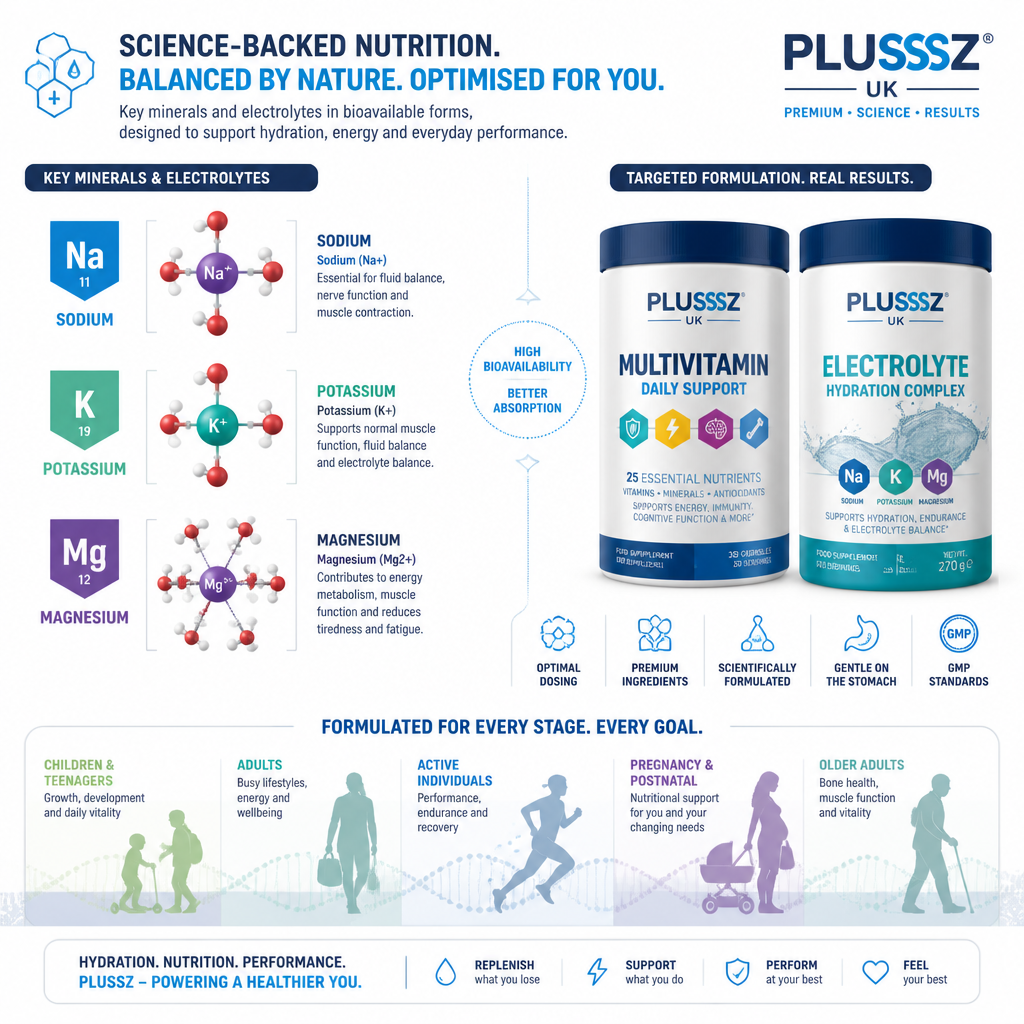
At Plusssz, this is precisely the reasoning behind offering both electrolyte hydration formulas and targeted multivitamin complexes for different demographics. The two product types are complementary because they address genuinely different nutritional needs, each one designed around a specific physiological context rather than a generic average.
Yes, if the formula is genuinely targeted rather than just marketed as such. The value comes from higher-bioavailability ingredient forms, appropriate doses for your specific profile, and the absence of nutrients that add cost without adding benefit to you. A cheaper product that delivers a fraction of its stated dose is not actually cheaper.
Not only can you, it is often the better approach. Electrolyte hydration formulas address acute losses from sweat and exercise. Multivitamin complexes address longer-term micronutrient adequacy. They operate on different timescales and cover different physiological needs, so they complement each other without meaningful overlap when formulated correctly.
Look at the ingredient forms, not just the ingredient names. Magnesium citrate versus magnesium oxide, methylfolate versus folic acid, these differences reveal whether formulation quality was prioritized. Also check whether the demographic claim is reflected in actual dose differences rather than just label branding. A genuine women's formula will have meaningfully higher iron and folate than a men's formula of the same brand.
Yes. The differences are most pronounced around iron, calcium, and folate for women, and around antioxidant support and zinc for men. These are not marginal differences. A formula built around female physiology will look noticeably different from one built around male physiology, even when both target the same activity level. Using the wrong one means either missing key nutrients or taking unnecessary surplus of others.
It is functional, not fashionable. The gut absorbs fluids most efficiently when the osmolality of a drink is close to that of blood plasma. High sugar concentrations push a drink into hypertonic territory, which slows gastric emptying and can cause the gut discomfort familiar to many runners who have used sugary sports drinks mid-race. A well-formulated electrolyte product replaces ions without creating a sugar load that works against rapid absorption.
There is no fixed cut-off, but the physiological changes that reduce B12 absorption and vitamin D synthesis typically become significant from the early to mid-fifties onwards. A senior-specific formula that addresses these declining absorptive efficiencies makes sense from that point. Waiting until a deficiency is symptomatic means the body has already been running below optimal for some time.
If you are using specialized supplement formulas yourself, or if someone in your life recommended Plusssz, we would genuinely like to hear what difference you have noticed and which product combination has worked best for your training or daily routine.