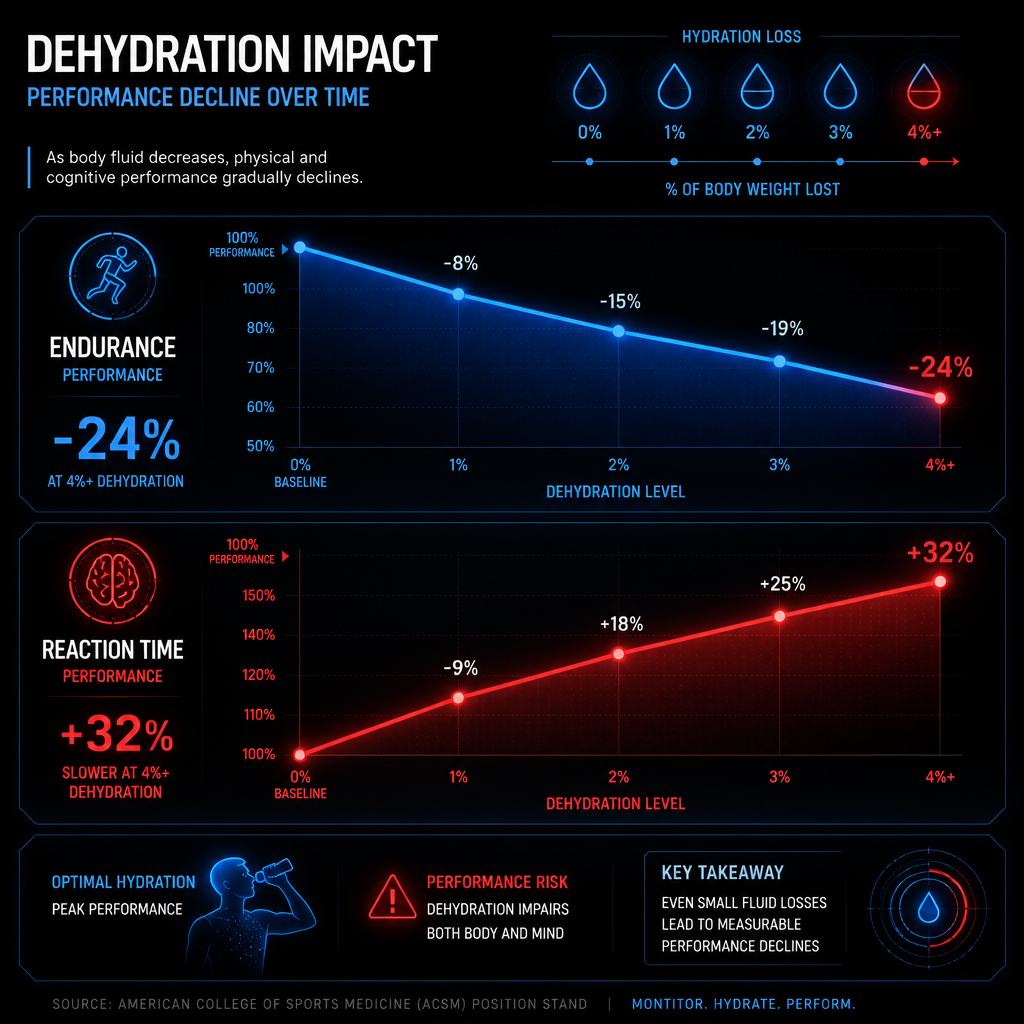
Most athletes obsess over their training loads, sleep, and nutrition macros, yet treat hydration as an afterthought. That is a serious performance leak. Research consistently shows that losing as little as 2% of body weight through sweat is enough to impair endurance, reaction time, and cognitive sharpness during competition. The hydration mistakes athletes make are not dramatic or obscure, they are repeated daily by people who genuinely believe they are doing things right. If you are active and you care about performing at your ceiling, this breakdown of the five most damaging hydration errors, and exactly how to fix each one, is for you.
Key Insight |
Explanation |
|---|---|
Thirst is a lagging indicator |
By the time you feel thirsty during exercise, you are already meaningfully dehydrated. Hydrate on a schedule, not on sensation. |
Water alone is not enough for sessions over 60 minutes |
Sweat contains sodium, potassium, magnesium, and chloride. Replacing fluid without replacing these minerals leaves you under-fuelled even if you feel hydrated. |
Overhydration with plain water is a real risk |
Drinking excessive plain water dilutes blood sodium and can trigger exercise-associated hyponatremia, a condition that impairs and in extreme cases endangers athletes. |
Pre-exercise hydration primes your plasma volume |
Arriving at a session already dehydrated forces your cardiovascular system to work harder from the first minute. Front-loading fluids and electrolytes in the hours before training pays dividends. |
Post-exercise rehydration is where most athletes fall short |
Stopping fluid intake when the session ends means you start the next session at a deficit. A structured plan that extends 2 hours post-session closes this gap. |
Urine colour is your most practical daily hydration check |
Pale straw yellow indicates good hydration. Dark yellow or amber is a signal to act before your next training session, not during it. |
No-added-sugar electrolyte formulas outperform sugary drinks for daily hydration |
High-sugar sports drinks add unnecessary calories and can cause insulin spikes. A clean electrolyte formula delivers minerals without the metabolic noise. |
Thirst is a useful survival mechanism, but it is a poor real-time hydration guide for athletes. During exercise, the physiological signals that trigger thirst lag behind actual fluid losses. By the time your brain registers that you need water, your blood volume has already dropped and your performance has already started to slip.
Dehydration affects athletes across multiple dimensions simultaneously. Reduced flexibility, lower endurance capacity, impaired breathing efficiency, and declining concentration are all documented effects, and they compound quickly once you cross even a modest fluid deficit. Waiting to feel thirsty means you are always chasing a deficit rather than preventing one.
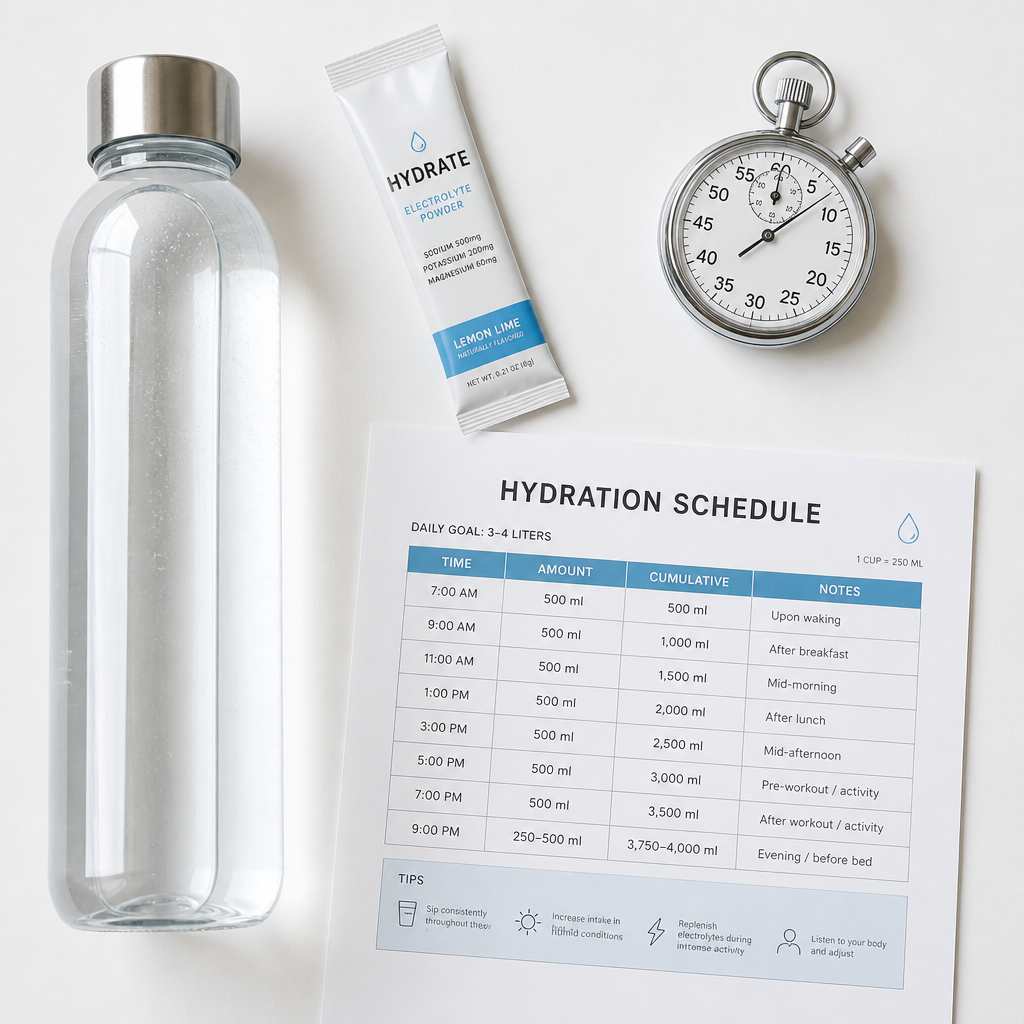
Build hydration into your session structure the same way you build in rest intervals. A practical approach during moderate to intense activity is to take small amounts of fluid regularly throughout, roughly every 15 to 20 minutes, rather than gulping large volumes sporadically. The exact volume depends on your sweat rate, session intensity, and ambient temperature, but the principle is consistent: scheduled intake beats reactive intake every time.
Pro tip: Set a recurring timer on your watch or phone during long training sessions. Removing the decision entirely means you will never skip a fluid break because you were too focused on the effort.
Hydration is not something you manage at the point of thirst. It is something you manage across the entire day and across the entire session. Thirst tells you what already happened, not what is about to happen.
Plain water handles basic fluid replacement, but it does not replace what sweat actually removes from your body. Sweat is not pure water. It contains significant amounts of sodium, potassium, magnesium, chloride, and smaller quantities of other minerals. When you exercise and sweat heavily, you are losing all of these, not just fluid volume.
This is where many common hydration errors in sport start. Athletes drink water, feel like they have done the right thing, and still experience muscle cramps, early fatigue, or foggy thinking, because the electrolyte deficit remains unaddressed.
Sodium is the primary electrolyte lost in sweat, and it plays a central role in fluid balance, nerve signalling, and muscle contraction. Potassium and magnesium support muscle function and help prevent the cramping that so often derails endurance athletes mid-session. Without these minerals, your cells cannot move fluid efficiently across membranes, and your muscles cannot contract and relax properly regardless of how much water you have consumed.
Some athletes, often called "salty sweaters," lose substantially more sodium per litre of sweat than average. These individuals are at a higher risk of electrolyte-driven performance drops and need to be especially deliberate about mineral replacement. If you consistently notice a white residue on your skin or kit after sessions, that is your sodium loss made visible.
A quality electrolyte drink for sport should list meaningful amounts of sodium, potassium, and magnesium on the label, not token quantities used as marketing decoration. It should work without loading you with added sugar, which contributes unnecessary calories and can disrupt blood glucose stability during longer efforts. Plusssz UK's electrolyte hydration formulas are designed precisely around this gap: a complete mineral profile, no added sugar, and formulations calibrated for active individuals who want clean, targeted support rather than a sugar-heavy sports drink dressed up in athletic branding.
Pro tip: For any session lasting more than 60 minutes, or any session in warm conditions regardless of duration, switch from plain water to an electrolyte solution. Make it automatic based on session length and temperature, not based on how hard you feel like you are working.
This one surprises most athletes. The assumption that more water is always better is wrong, and in some cases it is dangerous. Drinking excessive amounts of plain water during exercise dilutes the sodium concentration in your blood. This condition, known as exercise-associated hyponatremia (EAH), occurs when fluid intake outpaces the body's ability to excrete the excess.
Symptoms of hyponatremia range from nausea and headache to confusion and, in severe cases, seizure. It is documented across a wide range of sports including endurance running, triathlon, cycling, and rugby. The athletes most at risk are typically those who drink heavily throughout an event out of anxiety rather than genuine physiological need, particularly when consuming only plain water without electrolytes.
The goal is to replace fluid roughly in proportion to what you are losing through sweat, not to aggressively top up beyond that. Drinking to thirst, while imperfect as a sole strategy, is at minimum a safer upper-bound guide for fluid volume than drinking to a fixed maximum target. Pairing your fluids with an electrolyte formula adds sodium back into the equation, which helps your body regulate fluid balance far more effectively than plain water alone.
One practical marker: if you are gaining body weight during a session, you are overdrinking. Weighing yourself before and after a training session is a straightforward method to calibrate your intake over time. Aim for roughly neutral weight, accepting a small loss of 1% or less as normal and acceptable.
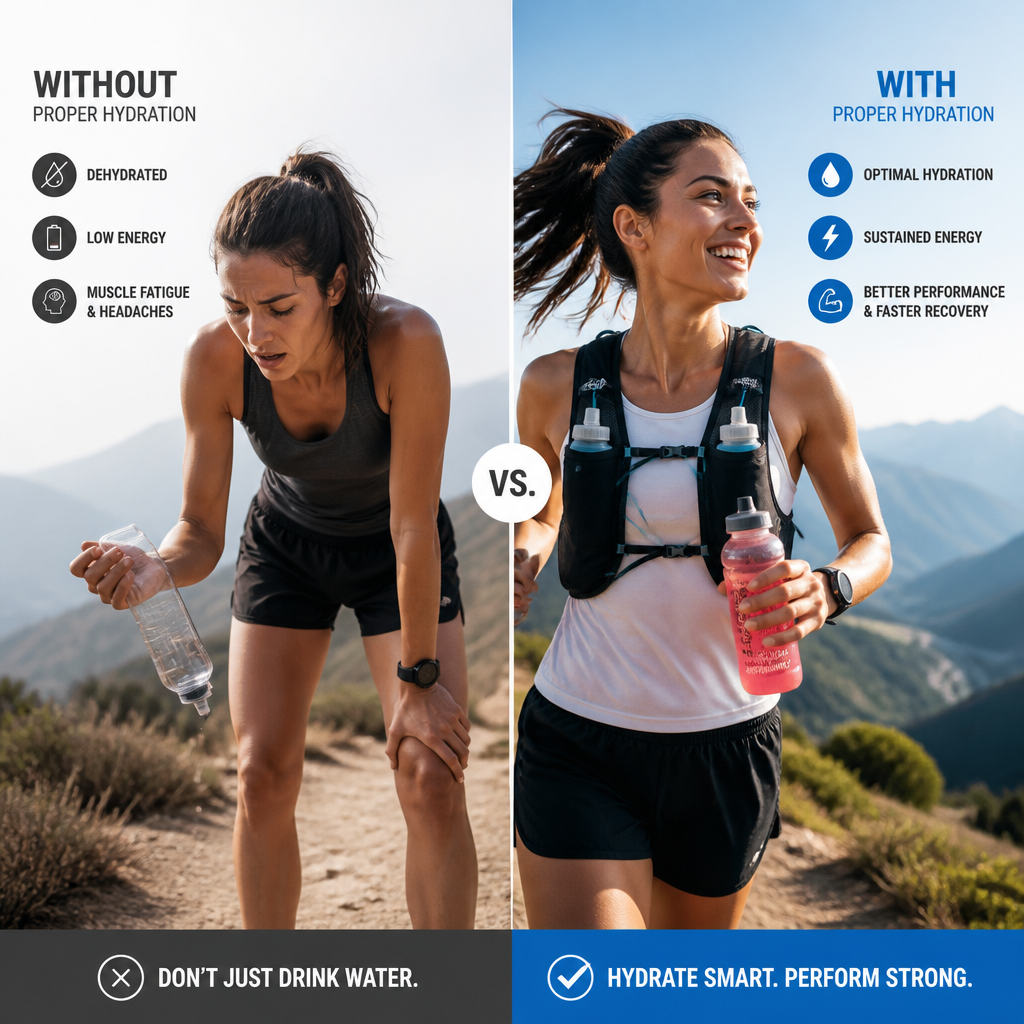
Many athletes treat hydration as something that begins when the session starts. It does not. If you arrive at your session already dehydrated, your cardiovascular system is already operating under stress. Your heart has to work harder to circulate a reduced blood volume, your muscles receive less oxygen per beat, and your core temperature rises faster than it would in a well-hydrated state.
Evidence suggests that in the hours leading up to exercise, consuming fluid with sodium-containing foods or an electrolyte supplement increases plasma volume and sodium availability before any losses begin. This means that pre-exercise hydration with electrolytes, not just water, primes your body to handle the demands ahead more efficiently from the opening minutes of the session.
The general guidance supported by sports nutrition research recommends starting a hydration top-up several hours before exercise rather than scrambling in the final minutes before a session begins. A modest, sodium-containing electrolyte drink in the 30 to 60 minutes before training can help prime plasma volume without causing gastrointestinal discomfort. Arriving at your session with pale, straw-coloured urine is the simplest confirmation that you have done your pre-session work correctly.
Avoid the common shortcut of gulping a large volume of plain water in the ten minutes before a session. It floods the gut, can cause discomfort, and does nothing for the electrolyte balance your muscles actually need once the effort starts.
The session ends. Most athletes stop thinking about hydration the moment they cool down. This is one of the most consequential hydration mistakes athletes make in terms of cumulative impact, because the deficit left unresolved after one session becomes the starting point for the next.
Full rehydration after intense exercise is not instant. It takes time for fluid to move from the gut into circulation and from circulation into cells. If you do not actively manage this window, you begin your next training session, or your next day, at a structural disadvantage.
A straightforward approach is to use the session weigh-in strategy mentioned earlier: for every kilogram of body weight lost, consume roughly 1 to 1.5 litres of fluid over the next couple of hours. Critically, that fluid should contain electrolytes, especially sodium, to support fluid retention and help the body actually absorb and hold what you are drinking rather than losing it rapidly through urine.
Recovery is also the moment when your body starts the repair process for muscle tissue. Electrolytes support this environment by facilitating nutrient transport, maintaining the fluid balance inside and outside cells, and supporting the nervous system signalling that underpins muscle recovery. A no-added-sugar electrolyte formula taken post-session is not a luxury. It is a basic piece of the recovery architecture for any athlete who trains more than a few days per week.
For active individuals looking at products specifically designed for this post-session window, Plusssz UK's electrolyte range covers this with formulations that combine a complete mineral profile with no added sugar, making them straightforward to use as part of a daily routine rather than only around high-intensity events.
Not all hydration approaches deliver the same results. The table below compares the three most common approaches athletes take, with honest assessments of where each falls short or succeeds.
Hydration Approach |
What It Gets Right |
Where It Falls Short |
|---|---|---|
Plain water only |
Simple, accessible, no cost. Adequate for low-intensity activity under 45 minutes in cool conditions. |
Does not replace electrolytes lost in sweat. Risk of dilutional hyponatremia if consumed in large volumes. Ineffective for sessions over 60 minutes or in heat. |
High-sugar sports drinks |
Provides fast carbohydrate energy alongside fluids. Can be useful for very prolonged efforts where calorie replacement is also needed. |
Often contain more sugar than electrolytes. Adds unnecessary calories for shorter sessions. Can cause GI upset and insulin spikes. Poor choice for daily hydration use. |
No-added-sugar electrolyte formula (e.g. Plusssz UK) |
Complete mineral profile replacing what sweat actually removes. No sugar loading. Suitable for daily use, pre, during, and post session. Clean label formulation with no unnecessary additives. |
Requires a small amount of planning to include in the routine. Not a carbohydrate fuel source for ultra-endurance events where calorie replacement is the primary goal. |
There is no single universal figure because individual sweat rates, body sizes, training volumes, and ambient temperatures vary significantly. A practical starting point is to monitor urine colour consistently. Pale straw yellow across most of the day indicates adequate hydration. Adjust fluid intake up or down to maintain that colour. Athletes in heavy training or hot environments will consistently need more than sedentary individuals, and electrolyte intake should scale upward with fluid intake.
Yes. Drinking excessive plain water during exercise can dilute blood sodium levels, causing exercise-associated hyponatremia. Early symptoms include nausea, bloating, and headache. In more serious cases it can cause confusion and impair neurological function. The solution is not to drink less, it is to match fluid intake with electrolyte intake so that sodium balance is maintained as volume increases.
The best electrolyte drink for sport during a session contains meaningful amounts of sodium, potassium, and magnesium, matches the intensity and duration of the effort, and does not overload you with added sugar. For most training sessions, a no-added-sugar electrolyte formula dissolved in water is the most versatile and practical choice. Reserve higher-carbohydrate options for events where calorie replacement during the effort is genuinely necessary.
Look for white or salty residue on your skin, kit, or helmet after sessions. Notice if you experience muscle cramps, headaches, or fatigue that seems disproportionate to the effort, particularly in warm conditions. Heavy sweaters lose more sodium per litre of sweat than average and benefit from a higher-sodium electrolyte formula. Experimenting with increased electrolyte intake during training will usually make the difference obvious within a few sessions.
Yes, this is worth doing if you trained in the evening and your urine is still darker than pale yellow before bed. Taking an electrolyte formula in the hour or two after your session and again before sleep, if you are still in deficit, supports overnight recovery, reduces the likelihood of muscle cramps during the night, and means you wake up closer to a hydrated baseline for the next day's activity.
Both have diuretic effects, though research suggests the diuretic impact of moderate caffeine consumption is relatively transient for habituated users. Alcohol, particularly in larger amounts, meaningfully increases fluid and electrolyte losses. If either is part of your routine, account for additional electrolyte-containing fluid intake around them rather than assuming they are simply neutral.
If any of these mistakes sound familiar from your own training routine, share which one has cost you the most in performance or recovery. Hearing from athletes with real experience helps others improve faster.