You finish a tough training session, drink some water, and expect to feel sharp again. But an hour later, your concentration is scattered, decisions feel slower, and you cannot string a thought together. The problem often is not willpower or sleep. It is the state of your hydration, and more specifically, whether your electrolyte balance has been properly restored. The link between hydration and cognitive performance is well established in the research literature, yet most active people still treat it as a physical issue rather than a mental one. That is a costly mistake, especially if your goals go beyond finishing a workout.
The brain is not a machine that runs on willpower. It is a biological organ with a very specific chemical environment it needs to maintain. Water makes up roughly 75% of brain mass, which means your brain is among the most water-dependent organs in your body. When total body water drops, even slightly, the brain is one of the first systems to register the disruption.
Dehydration reduces brain volume. Studies using MRI imaging have found measurable changes in brain structure during dehydrated states, with brain volume increasing again following rehydration. These are not trivial shifts. They correspond to real changes in how efficiently neurons communicate and how well your brain manages tasks that require sustained attention or complex reasoning.
For active individuals who are already pushing their bodies through training, this matters more than average. Every workout generates heat and sweat. Every sauna session, long commute, or skipped water bottle accelerates the process. The brain does not get a warning light. The decline starts quietly, which is why so many people fail to connect their foggy afternoon with their dehydrated morning.
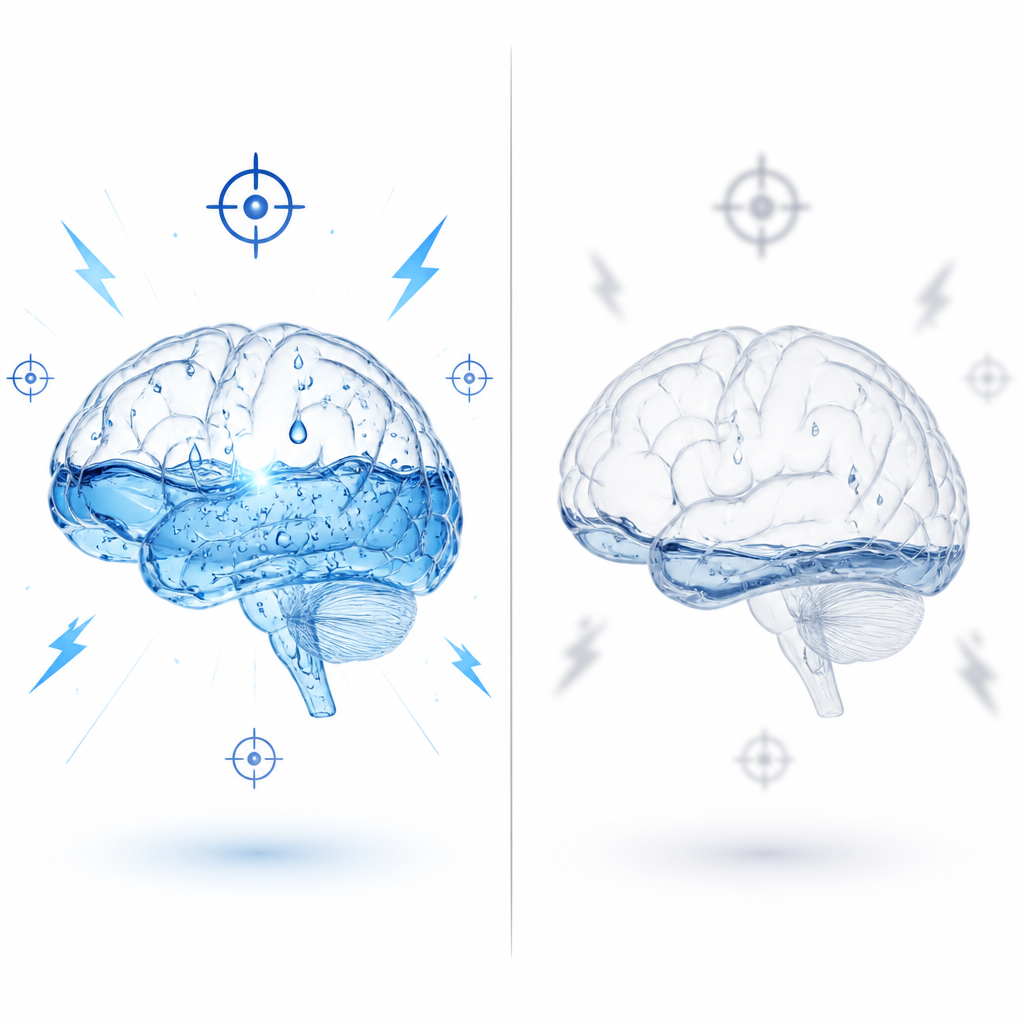
The research on this is more alarming than most people expect. A body water loss of around 2% of body mass is enough to impair cognitive functions including concentration, attention, and short-term memory. And newer research suggests the threshold may be even lower, with effects observed in some studies at losses between 1% and 2% of body weight. For a person weighing 75 kg, that is less than one and a half litres of fluid, well within what a moderate workout or a warm day can produce.
The specific cognitive functions most affected are the ones active people rely on most: reaction time slows, sustained attention falters, and short-term memory becomes less reliable. These are not trivial inconveniences. For athletes making split-second decisions during competition, or for anyone with a demanding job on top of their training schedule, these impairments have real-world consequences.
Dehydration of 2% or more body mass loss can increase perception of fatigue, impair cognitive functions such as memory and attention, and alter mood. The mood component is underappreciated. Irritability, reduced motivation, and a sense of mental heaviness are frequently linked to inadequate hydration, and they can undermine training consistency over time just as effectively as physical fatigue.
The brain relies on consistent hydration not just for cell survival, but for the precise electrochemical conditions that make clear thinking possible. When those conditions shift, so does your ability to focus, remember, and decide.
Research has noted performance differences in reaction time between individuals who were thirsty versus those who were adequately hydrated. For athletes, this is particularly significant. Speed of response, whether on the pitch, in the gym, or on a bike, depends on how quickly the brain processes signals and sends instructions to the body. A dehydrated brain works harder to perform the same tasks, which means you are burning more mental energy for the same cognitive output.
In practice, this often shows up as decision fatigue arriving earlier than expected, or as technique errors that appear in the second half of a session rather than the first. The physical capacity may still be there. The cognitive sharpness to execute it correctly may not be.
Short-term memory is directly affected by hydration status. Multiple studies have shown that memory-related task performance improves after water consumption compared to no-water conditions. If you are trying to learn a new movement pattern, absorb coaching instructions, or retain nutrition or training information, your hydration state at the moment of learning directly affects how well that information sticks.
Pro tip: Do not wait until you are thirsty to drink. Thirst is a lagging indicator of dehydration, not a reliable early warning. By the time your brain registers thirst, you may already be experiencing measurable cognitive effects.
Water alone is not the full answer. This is the part most people miss, and it is why drinking plain water after a heavy sweat session does not always restore mental sharpness as quickly as expected. Electrolytes, the charged minerals dissolved in your body fluids, are as critical to brain function as water itself. Without the right electrolyte balance, neurons cannot communicate properly, regardless of how much fluid you have consumed.
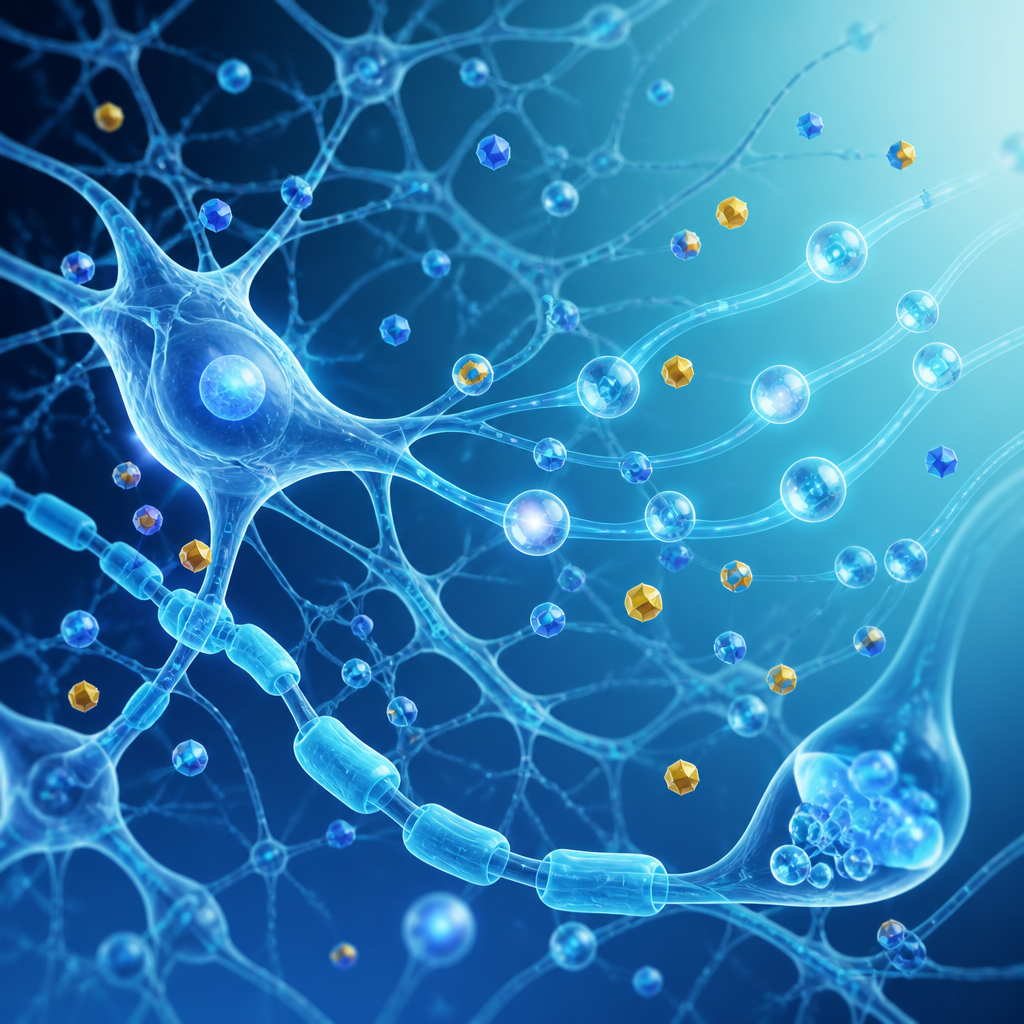
Sodium is what enables the brain to initiate the electrical impulses necessary for cell-to-cell communication. Every thought, memory recall, or motor command starts with a sodium-mediated electrical signal. When sodium levels drop, the brain's ability to start and sustain these signals is compromised. This is why hyponatremia, a condition of low blood sodium that can develop if athletes drink excessive plain water without replacing sodium, carries serious neurological consequences.
Potassium works alongside sodium to maintain the resting electrical potential of neurons. After a neuron fires, potassium is responsible for resetting it to its resting state so it can fire again. A potassium-deficient neuron cannot complete this reset cycle efficiently, meaning neural communication becomes sluggish and unreliable. Potassium is also crucial for the release and action of neurotransmitters, the chemicals that transmit signals between neurons and underpin memory formation and learning.
Magnesium activates enzymes in the brain and controls the flow of sodium and potassium in and out of nerve cells. It also plays a role in protecting the brain from stress-related damage and supports neurotransmitter regulation. Low magnesium levels have been linked to brain fog, anxiety, impaired concentration, and disrupted sleep. Magnesium deficiency is more common than most people realise, which makes it a particularly relevant electrolyte for active individuals whose needs exceed the sedentary baseline.
Pro tip: After long training sessions or events in warm conditions, focus on replacing sodium, potassium, and magnesium alongside fluids. An electrolyte formula that covers all three will support mental recovery more effectively than water alone. Plusssz electrolyte products are formulated specifically with this multi-electrolyte approach in mind, making it easier to get all three in a single, convenient serving.
Getting hydration right for cognitive performance requires a more deliberate approach than most people apply. The common advice of "drink eight glasses of water a day" gives no account of your activity level, sweat rate, environment, or electrolyte losses. Active individuals need a more targeted framework.
Starting any training session or demanding cognitive task in a well-hydrated state gives you a meaningful buffer. Aim to be well hydrated in the two to three hours before significant physical or mental effort. Urine colour is a practical field check: pale yellow indicates adequate hydration, dark yellow or amber signals a deficit that needs addressing before you begin.
During moderate to intense exercise, plain water handles some of the fluid deficit, but not the electrolyte losses. Sweat contains sodium, potassium, magnesium, and other minerals. Replacing water without replacing these minerals dilutes your remaining electrolyte concentrations, which can impair neural function even as total fluid volume is maintained. This is why electrolyte supplementation during prolonged activity is relevant to both physical and cognitive output.
Recovery hydration is where most people cut corners. You finish the session, drink some water, and consider the job done. But if your electrolytes are still depleted, your brain is still working in a compromised environment. A well-formulated electrolyte supplement taken after training, especially one with no added sugar that will not spike and crash your blood glucose, supports faster restoration of the electrochemical conditions the brain depends on. Plusssz electrolyte formulas are designed without added sugar precisely because blood glucose stability matters for sustained cognitive function, not just for physical recovery.
For people whose goals include consistent cognitive sharpness across work and training, daily hydration habits matter more than any single big drink. Spreading fluid intake across the day, particularly with small electrolyte additions during active periods, keeps the brain operating in a consistently well-supported state. Pairing electrolyte hydration with a quality multivitamin complex rounds out the nutritional foundations that cognitive function depends on, since B vitamins, vitamin D, zinc, and other micronutrients play their own roles in brain health alongside fluid and mineral balance.
Not all hydration strategies deliver the same cognitive benefits. The table below compares three commonly used approaches on the criteria that matter most for mental performance in active individuals.
Hydration Approach |
Cognitive Benefits |
Key Limitations |
|---|---|---|
Plain water only |
Restores fluid volume; can reduce headache from dehydration; supports basic cell function |
Does not replace lost sodium, potassium, or magnesium; can dilute existing electrolytes if consumed in large volumes; slower cognitive recovery after sweating |
Electrolyte supplement with no added sugar |
Restores fluid and key minerals simultaneously; supports neuron firing, memory, and mood; avoids blood glucose spikes that impair sustained focus |
Requires consistent use; quality varies significantly between products; needs to be taken at the right times relative to activity |
Sugar-based sports drinks |
Provides rapid energy and some electrolytes; useful for very high-intensity prolonged efforts where glucose is needed |
Blood glucose spike followed by crash can worsen cognitive performance; not suitable for lower-intensity activity or daily use; added sugar undermines body composition goals |
The practical verdict is straightforward. Plain water is essential but insufficient after any significant physical effort. Sugar-based products carry trade-offs that most active people do not want to deal with every day. A quality electrolyte formula with no added sugar fills the gap by covering both the fluid deficit and the mineral deficit without the blood glucose rollercoaster.
Faster than most people expect. Research shows that cognitive impairment can begin at a body water loss of between 1% and 2% of body weight, which is achievable within a single moderate workout or a warm day without adequate fluid intake. Mental effects often appear before physical performance noticeably drops, which means your thinking can be compromised while you still feel physically capable.
Partially, but not fully. Water restores fluid volume, which helps, but it does not replace the electrolytes lost through sweat. Sodium, potassium, and magnesium are essential for the electrochemical processes that underpin clear thinking. Drinking large amounts of plain water after heavy sweating can actually dilute the electrolytes remaining in your blood, potentially worsening the cognitive effects. An electrolyte supplement addresses both losses simultaneously.
Sodium, potassium, and magnesium are the three most directly relevant to cognitive performance. Sodium initiates the electrical impulses neurons use to communicate. Potassium resets neurons after firing so they can continue sending signals. Magnesium regulates the flow of both, activates brain enzymes, and supports neurotransmitter function. All three need to be adequately maintained, not just one in isolation.
Yes, and this is frequently underestimated. Even mild dehydration has been associated with increased fatigue, reduced alertness, lower mood, and greater perception of effort during tasks. These effects can make training feel harder than it is, undermine motivation, and erode the consistency needed to see results over time. Hydration is not purely a physical issue; it has a direct bearing on how you feel and how motivated you stay.
It is relevant on rest days too, particularly if your work involves sustained concentration, if you live in a warm climate, or if you sweat during daily activities. The brain needs a stable electrolyte environment around the clock, not just during exercise windows. For people with cognitively demanding jobs alongside active lifestyles, maintaining consistent electrolyte intake as part of a daily routine supports mental performance across the full day, not just recovery from a session.
Yes. Electrolytes handle the electrochemical environment the brain needs, but a range of vitamins and minerals also directly support brain function. B vitamins are involved in energy metabolism within neurons. Vitamin D plays a role in cognitive health over the longer term. Zinc supports neurotransmitter activity. A well-formulated multivitamin complex that complements an electrolyte hydration routine covers more of the nutritional bases that clear thinking depends on, which is why the combination is worth considering as a daily habit rather than treating them as separate interventions.
We would love to hear how hydration has affected your mental performance during training or your working day. Share your experience in the comments.