Most people walk into the gym already behind on fluids and have no idea. You did not eat badly or skip your warm-up - you just forgot that hydration starts hours before the first rep. Pre-workout hydration in the UK is often treated as an afterthought: drink a bit of water on the way in and get on with it. That approach costs you performance, focus, and recovery before you have even broken a sweat. Research consistently shows that performance can be affected when the body is even 2% dehydrated, and by the time you feel thirsty, you are already past that threshold. This guide tells you exactly what to drink, when to drink it, and why electrolytes belong in your pre-training routine, not just in your post-workout bottle.
Key Insight |
Explanation |
|---|---|
Start hydrating hours before, not minutes before |
Aim for 400-600 ml of fluid two to three hours before exercise, then a further 200-250 ml closer to the session start. |
Pale yellow urine is your real hydration test |
Dark yellow or amber urine before training is a reliable signal you are already dehydrated and need to top up before you start. |
A 2% body weight fluid deficit reduces performance |
Even mild dehydration measurably impairs endurance, focus, reaction time, and increases perceived effort during training. |
Electrolytes help your body hold onto fluid |
Sodium, potassium, and magnesium support fluid balance, nerve signalling, and muscle contractions - water alone cannot replace them. |
Early morning exercisers need a different approach |
With limited lead time, drinking 200-300 ml of electrolyte fluid 10-20 minutes before training is a practical and effective strategy. |
Overhydrating with plain water carries its own risk |
Drinking excessive plain water without electrolytes can dilute sodium levels, contributing to hyponatraemia and associated fatigue. |
No-added-sugar electrolyte formats are better for daily use |
Sugary sports drinks add unnecessary calories. Electrolyte supplements without added sugar deliver the minerals you need without the drawbacks. |
Your muscles are roughly 75% water. Your blood - which carries oxygen and nutrients to working tissue - depends on adequate fluid volume to move efficiently. When you start a training session even slightly dehydrated, your heart works harder, your core temperature rises faster, and your muscles fatigue earlier than they should. None of that is a soft inconvenience. It is a direct mechanical disadvantage built into every set, every sprint, and every climb.
The common mistake is treating hydration as a during-exercise problem. By the time you are mid-session and reaching for a bottle, your body has already been managing the deficit for some time. Pre-workout hydration is about showing up to training in a ready state, not trying to catch up while you are already working.
The stakes are higher on hot days, in heated studio environments, or during sessions that last longer than 60 minutes. Under those conditions, sweat rates increase, and the electrolytes lost in sweat - particularly sodium - cannot be replaced by drinking water alone. That is why the conversation about hydrating before exercise is not just about volume of fluid. It is about composition.
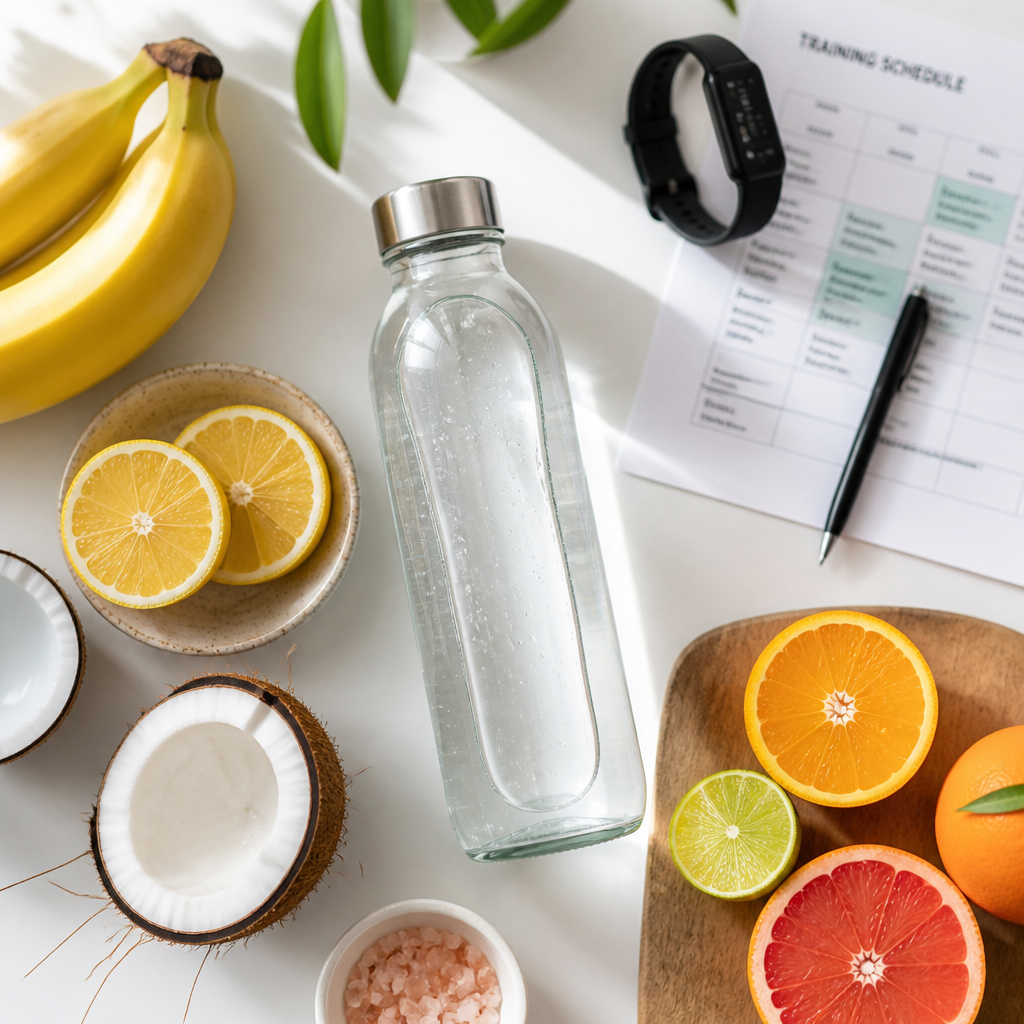
The simplest and most practical method requires no equipment. Check the colour of your urine before you leave for the gym. Pale yellow, like lemonade, means you are well hydrated. Dark yellow or amber means you need to drink before you train - and you need to give yourself enough time to absorb it, not just gulp a bottle in the car park and hope for the best.
A common mistake is chugging large amounts of fluid right before a session. Drinking too much water too quickly causes your body to excrete it rapidly rather than absorb it effectively. The goal is steady, timed intake over the hours before training, not a last-minute volume dump.
The body cannot be rapidly rehydrated at the last moment. Consistent pre-session fluid intake, timed correctly across the hours before training, produces a meaningfully better physiological state than hurried drinking in the final minutes before you start.
If your schedule rarely allows you to check before leaving home, make the habit of monitoring urine colour first thing in the morning and again in the early afternoon on training days. It costs nothing and gives you an honest, real-time picture of where you stand.
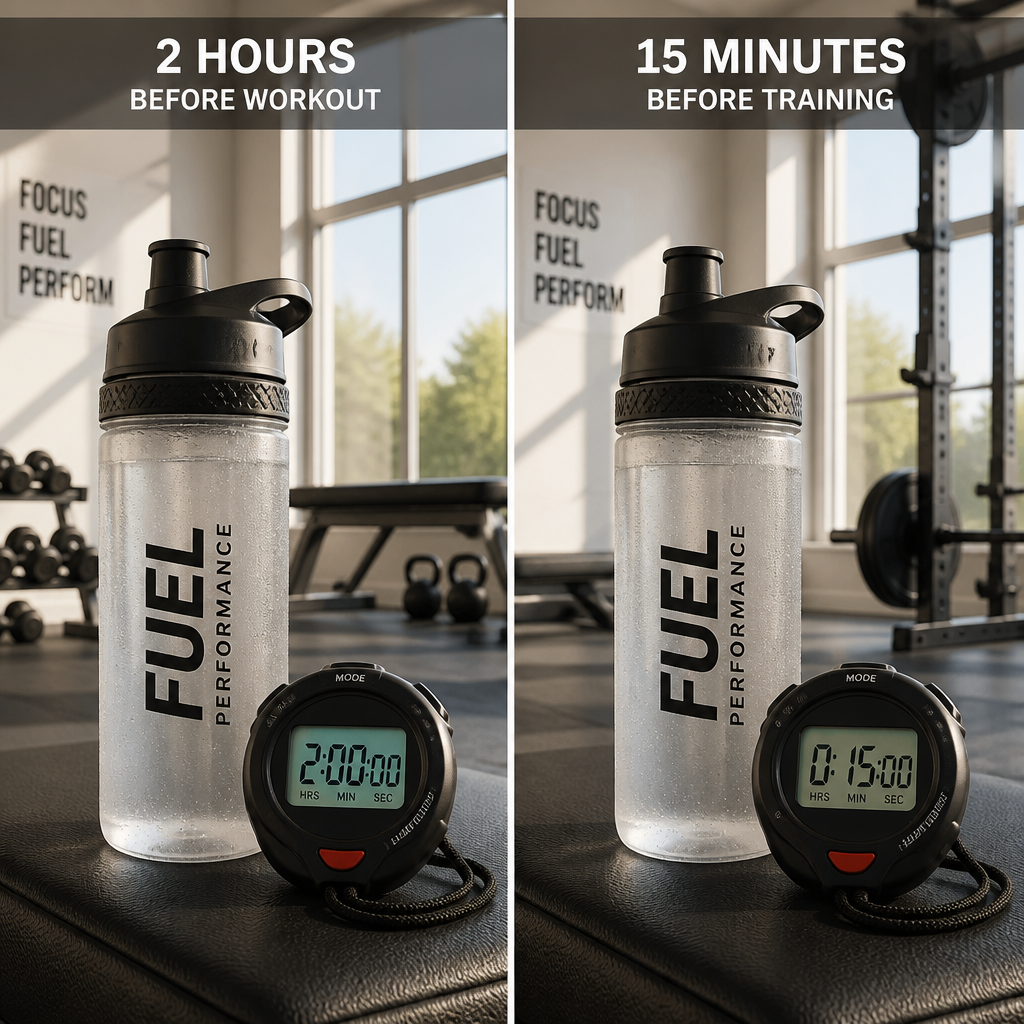
This is your primary hydration window. Aim for 400-600 ml of fluid at this point. This gives your digestive system time to absorb the fluid properly and allows your kidneys to regulate what is surplus before you start exercising. If you are also eating a pre-workout meal, fluid from food counts toward your intake but should not replace dedicated fluid consumption.
This is also the ideal window to include an electrolyte supplement if your session will be intense, long (over 60 minutes), or takes place in warm conditions. The 2-4 hours before exercise is the window during which your body can absorb mineral electrolytes most effectively in preparation for the demands ahead.
Top up with a further 200-250 ml of fluid. At this stage, avoid very large volumes. Your stomach needs to be comfortable when you start moving. If you are using an electrolyte drink, this is a sensible time for a second smaller serving, particularly if you sweat heavily or are training in heat.
Early morning exercisers face the tightest window. You wake up in a mild deficit from overnight fluid losses and often do not have two hours to rehydrate before a 6am session. In this scenario, drink 200-300 ml of electrolyte fluid in the 10-20 minutes before your workout. It is not the ideal approach but it is a practical one, and the electrolytes will help your body make the most of the fluid available.
Pro tip: If you train first thing in the morning, place your electrolyte drink on your bedside table the night before. Drink 150-200 ml as soon as you wake up, before coffee, before scrolling, before anything. Those extra minutes of absorption time make a real difference.
Plain water is the foundation of hydration. Nobody is arguing against it. But for active individuals training with genuine intensity, water on its own has a meaningful limitation: it does not replace the minerals your body loses through sweat, and it does not help your cells hold onto fluid the way electrolyte-containing drinks do.
During exercise, your body loses water and electrolytes simultaneously through sweat. Sodium is lost in the largest quantity, followed by chloride, with potassium, magnesium, and calcium lost in smaller amounts. Replacing the fluid without replacing the minerals leaves an incomplete equation. Your muscles may still cramp. Your energy production may still flag. And your fluid balance may actually be disrupted if sodium levels drop too far relative to water intake.
This does not mean you need to stop drinking water before workouts. It means that for anyone training consistently, especially at moderate-to-high intensity, an electrolyte supplement taken alongside water before training is a smarter strategy than water alone.
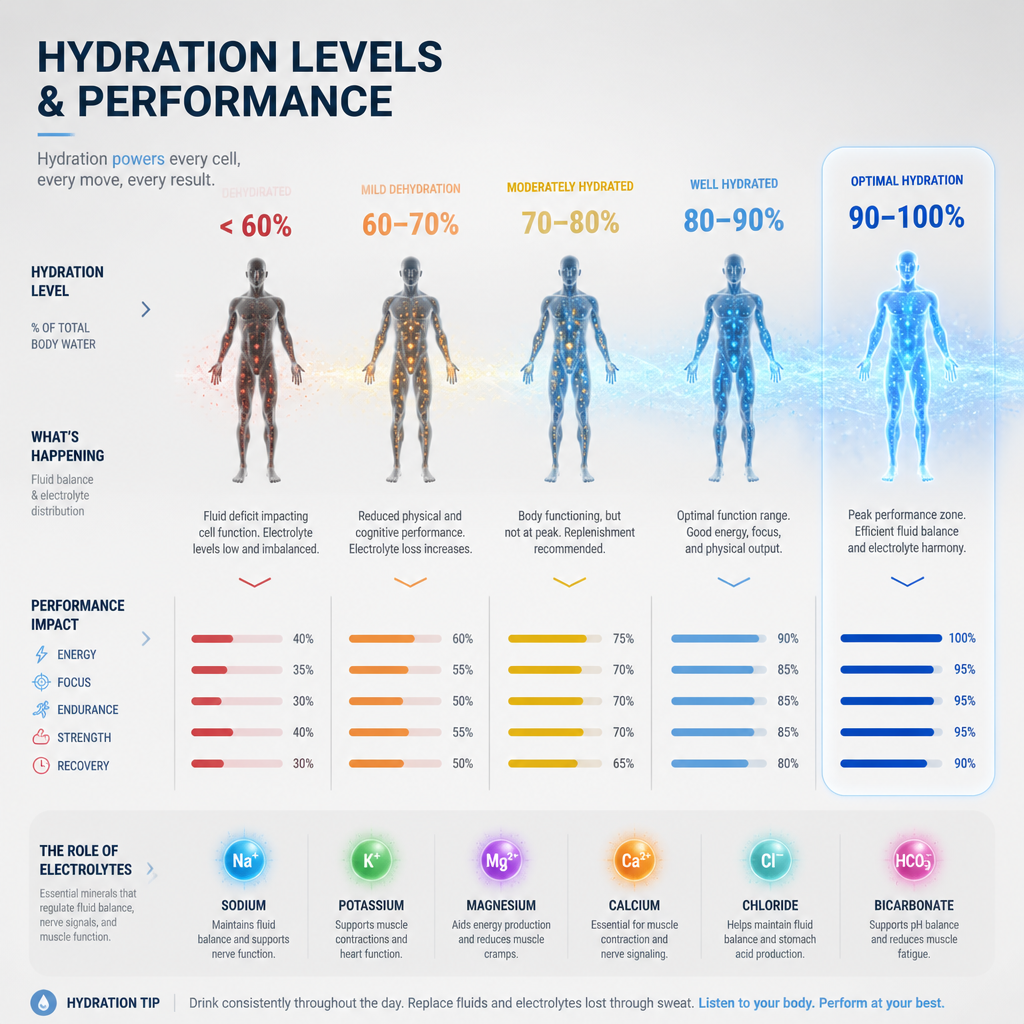
Sodium is the primary electrolyte governing fluid balance inside and outside your cells. Before a workout, adequate sodium supports blood volume and helps your body retain the fluid you are consuming rather than flushing it out. Foods with higher sodium content - and electrolyte supplements containing sodium - contribute to this pre-loading effect. Without it, drinking large volumes of plain water before exercise can paradoxically leave you less well-prepared, not more.
Potassium works in tandem with sodium to regulate fluid between cells. It is also essential for muscle contractions and maintaining a healthy heart rhythm during exertion. A deficit going into training means your muscles are already starting from a compromised position.
Magnesium supports muscle function, aids in relaxation of muscle tissue (relevant for preventing cramps), and is directly involved in energy production. It is also one of the minerals most commonly underconsumed in typical diets, making supplementation before training particularly worthwhile for active individuals.
The Plusssz Electrolyte Sport formula is built around exactly this combination of minerals - designed to be taken before, during, or after training with no added sugar, making it a clean and practical choice for daily use without adding unnecessary calories or artificial sweeteners to your routine. If you are also looking at broader nutritional support, the Plusssz multivitamin range is formulated to complement an active lifestyle alongside targeted hydration products.
Pro tip: Avoid electrolyte drinks with high sugar content before training. Sugary drinks can cause a rapid glucose spike followed by a dip in energy mid-session. Choose a no-added-sugar electrolyte supplement that delivers minerals without the glycaemic rollercoaster.
Approach |
What It Delivers |
Practical Verdict |
|---|---|---|
Plain water only |
Fluid volume with no added minerals |
Adequate for low-intensity, short sessions. Insufficient for intense or prolonged training, hot conditions, or heavy sweaters. |
Sugary sports drinks |
Fluid, electrolytes, and fast-release carbohydrates |
Useful during endurance events. Overkill and calorie-dense for standard gym sessions. Not ideal for daily pre-workout use. |
No-added-sugar electrolyte supplement (e.g. Plusssz Electrolyte Sport) |
Targeted electrolytes (sodium, potassium, magnesium) plus vitamins with no added sugar |
Best all-round option for regular training. Replaces minerals without added calories, suitable for everyday pre-workout hydration. |
Thirst is a lagging indicator. By the time you feel genuinely thirsty, you are already in a fluid deficit that will affect your session. Using urine colour as your guide - rather than how thirsty you feel - is a more reliable and earlier indicator of where your hydration actually stands.
Rapidly drinking large volumes of plain water in the minutes before training is not effective pre-workout hydration. Your body excretes excess water faster than it can absorb it under those conditions. The productive approach is timed, moderate intake spread across the hours before training, ideally with electrolytes included to support absorption and retention.
If you train early in the morning, your pre-workout hydration actually begins the evening before. Going to bed dehydrated guarantees you will start training in a deficit, regardless of what you drink in the morning. Consistent daily fluid intake - not just targeted pre-session drinking - is the foundation that makes everything else work.
A 30-minute weights session in a cool gym has different hydration demands to a 90-minute HIIT class in a hot studio. Adjust your pre-workout fluid and electrolyte intake based on the duration, intensity, and environment of the session ahead, not just out of habit.
High-sugar hydration products are designed for prolonged endurance exercise where rapid carbohydrate delivery is genuinely useful. For the majority of gym sessions and everyday training, they add unnecessary sugar and calories without a proportionate benefit. A no-added-sugar electrolyte supplement is the cleaner, more versatile option for consistent pre-workout use. Explore the Plusssz electrolyte range for formulations built specifically around this principle.
If you are also looking to support your overall nutritional base - particularly if you train regularly and want to ensure vitamins and minerals are covered alongside your hydration strategy - the Plusssz multivitamin products for men, women, and active individuals are worth exploring as a complementary part of your daily routine.
The general guidance is to drink 400-600 ml of fluid two to three hours before exercise, followed by a further 200-250 ml in the 30-60 minutes before you start. The exact amount depends on your body size, sweat rate, session intensity, and environmental conditions. Use urine colour as your real-time check: pale yellow means you are on track, dark yellow means you need more fluid and more time before training.
Both windows are valuable, but pre-workout electrolyte intake is frequently underutilised. Consuming electrolytes 2-4 hours before exercise allows your body to absorb the minerals fully and supports optimal fluid balance going into the session. Post-workout electrolytes support recovery. For intense sessions, hot conditions, or long durations, supplementing before training gives your muscles and nerves the mineral support they need from the first minute.
Even mild dehydration of around 2% of body weight impairs endurance, slows cognitive function including focus and reaction time, increases perceived effort, and raises the risk of muscle cramps and injury. For context, a 75 kg person reaches that 2% threshold with a loss of just 1.5 litres of fluid - entirely achievable through sweating in a moderately intense session without pre-hydrating adequately.
Yes, excessive plain water intake immediately before exercise is counterproductive. Your body excretes surplus water rapidly, meaning a large volume consumed in the final minutes before training does not meaningfully improve hydration. More importantly, drinking very large amounts of plain water without electrolytes can dilute blood sodium levels, which leads to fatigue, nausea, and in extreme cases, a condition called hyponatraemia. Timed, moderate intake with adequate electrolytes is the correct approach.
Yes, and for most gym-goers and regular exercisers, a no-added-sugar electrolyte supplement is a better choice than a sugary sports drink for pre-workout use. Sports drinks are formulated with fast-release carbohydrates primarily for prolonged endurance events. For standard training sessions, the extra sugar is unnecessary. An electrolyte supplement delivers the sodium, potassium, and magnesium you need without added calories or sugar.
Coffee contributes some fluid volume but it also has a mild diuretic effect, meaning it stimulates urine output. It should not be your primary source of pre-workout fluid. Having a coffee before training is fine and even beneficial for performance focus, but it does not substitute for water and electrolyte intake. Drink your electrolyte fluid alongside or instead of relying on coffee for hydration.
Drink 200-300 ml of electrolyte fluid within the first 10-20 minutes of waking, before coffee or food. The electrolytes help your body absorb and retain the fluid more efficiently than plain water in a short window. Prepare your drink the night before so there is no barrier to doing it. Also focus on being well-hydrated the evening before, since that reduces the deficit you wake up with.
Have a pre-workout hydration approach that has worked well for you, or a question about fitting electrolyte supplementation into your routine? Share your experience in the comments - we would genuinely like to hear what is working for active people across the UK.