Most parents know children need to drink more water during sport. Far fewer realise that water alone is not always enough. When kids sweat through football training, gymnastics, or a summer athletics session, they lose not just fluid but sodium, potassium, and magnesium, the minerals that keep muscles firing and concentration sharp. Without replacing those electrolytes, a child can feel flat, crampy, and irritable long before they feel noticeably thirsty. Understanding electrolytes for kids UK is not about turning junior sport into a science experiment. It is about giving active children what their bodies actually need to perform, recover, and feel good doing it.
Key Insight |
Explanation |
|---|---|
Thirst is a late signal |
By the time a child feels thirsty during exercise, mild dehydration has often already set in. Build regular drinking into the session, not around it. |
Water alone is not enough for sessions over 60 minutes |
For sustained exercise or hot-weather activity, children need electrolytes alongside fluid to replace what sweat removes. |
NHS fluid targets vary by age |
Sheffield Children's NHS guidance recommends at least 1 litre per day for under-6s, rising to 1.5 litres for ages 7-11. Active children need more. |
Urine colour is the most practical check |
Pale yellow means well hydrated. Dark yellow or amber means your child needs more fluid now, not after the match. |
Sugar in sports drinks is often unnecessary for kids |
Many commercial drinks carry high sugar loads that children doing casual or recreational sport do not need. A no-added-sugar electrolyte formula is a smarter choice. |
Electrolyte supplements designed for children differ from adult versions |
Appropriate doses of sodium, potassium, and magnesium matter. Products formulated specifically for juniors account for smaller body mass and lower sweat rates. |
Consistent pre-hydration outperforms reactive drinking |
A child who arrives at training already hydrated performs better and is easier to keep topped up than one who starts in deficit. |
Children are not simply small adults when it comes to hydration physiology. Their bodies regulate temperature less efficiently, which means they generate more heat relative to their size during exercise and rely heavily on sweat to cool down. That sweat carries sodium, potassium, chloride, and magnesium out of the body, and because children have a larger surface-area-to-body-mass ratio than adults, the effect is proportionally significant.
A common mistake parents make is assuming that because their child sweated less visibly than an adult at the same session, hydration is not a concern. Sweat rate is not always visible. Training indoors in a warm sports hall, or playing football on a mild UK spring day, can still produce meaningful fluid and electrolyte losses, particularly in sessions that run beyond 45 to 60 minutes.
Children are also poor judges of their own thirst. Research consistently shows that young athletes can experience clear signs of dehydration, including fatigue, irritability, and headaches, before they recognise or report feeling thirsty. This is not a character flaw. It is physiology, and it means parents and coaches have to lead hydration strategy, not leave it to the child.
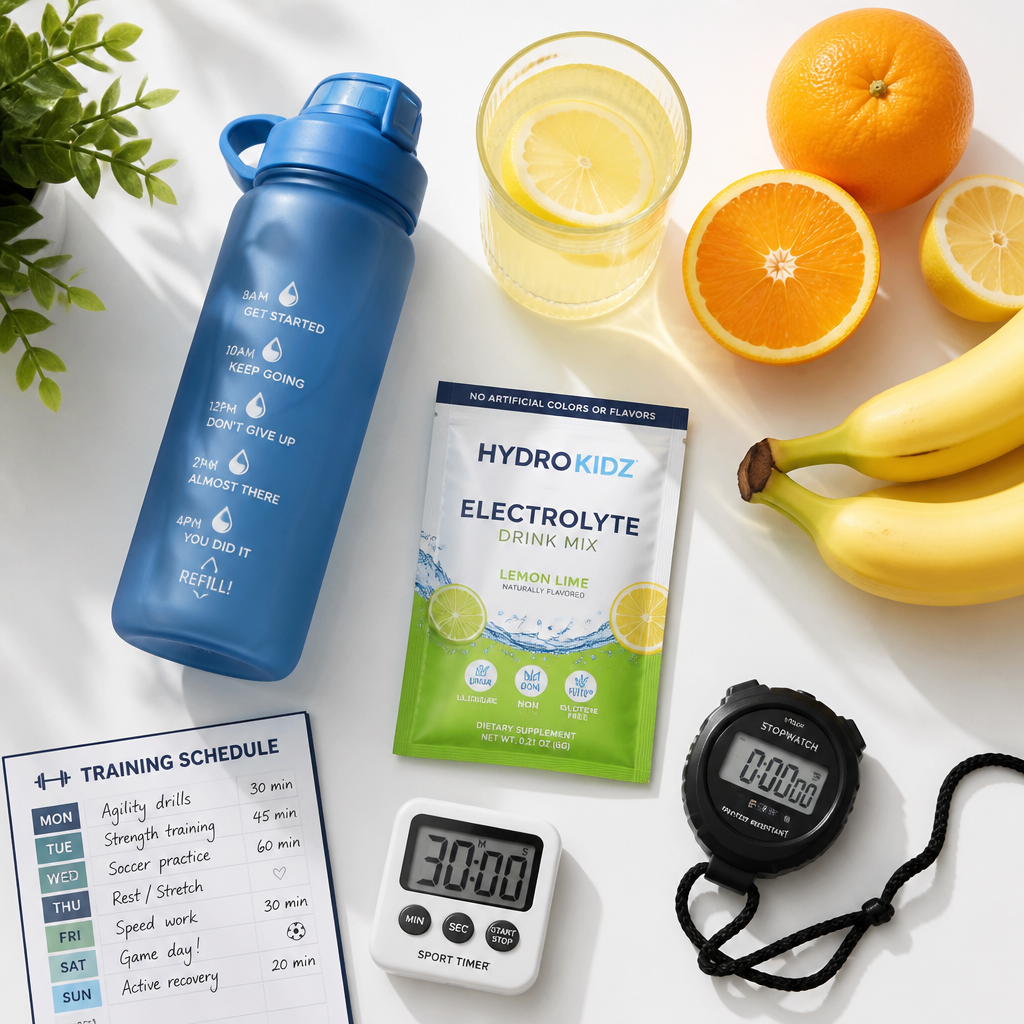
Sheffield Children's NHS Trust guidance sets minimum daily fluid targets at roughly 1 litre for children under 6, and 1.5 litres for children aged 7 to 11. These figures are baselines for everyday activity, not for sport. A child spending 90 minutes at football training or an afternoon at athletics club will need meaningfully more than the baseline, and the right type of fluid matters as much as the volume.
For practical planning, the urine colour test remains the most reliable at-home check available to parents. Pale straw yellow indicates adequate hydration. Dark yellow or amber is a straightforward signal to drink more. It is worth reminding children to check before training, not just after, since starting a session already in deficit is one of the most avoidable performance mistakes in junior sport.
Monitoring hydration does not have to be complicated. Pale yellow urine generally means good hydration. Dark yellow or amber signals a need for more fluids before activity begins.
For very active children, the 6-8 glasses per day figure cited by NHS community health guidance (using 150-200ml glasses for younger children) is a reasonable daily scaffold. In practice, that means a drink at breakfast, before school, at break, at lunch, after school, and around training. A junior electrolyte supplement dissolved in water is a sensible way to cover the training window without adding sugar or caffeine.
Plain water is the right default drink for the vast majority of a child's day. The question is what changes when sport is involved, and the answer depends on session length, intensity, and conditions.
For recreational activity under 45 to 60 minutes in moderate temperatures, water before and after is usually sufficient. A child kicking a ball around the garden, walking to school, or attending a short gymnastics class does not need electrolyte supplementation. Overcomplicated hydration routines for low-intensity activity are unnecessary.
The picture changes for sessions lasting over an hour, for training in warm or humid conditions, and for children competing in sports with high movement demands such as football, rugby, swimming galas, or athletics. In these contexts, replacing only water while electrolytes remain depleted can leave muscles cramping and concentration flagging well before the session ends.
Specific warning signs to watch for during or after activity include muscle cramps, unusual irritability, headache, nausea, and a sudden drop in energy or engagement. If your child consistently complains of these symptoms after sport, dehydration or electrolyte loss is a likely contributing factor worth addressing before assuming it is a motivation or sleep issue.
Pro tip: Pack a pre-dissolved electrolyte drink in your child's kit bag for any session running over 60 minutes. It takes ten seconds to prepare the night before and removes the guesswork on the day.
Understanding what each electrolyte actually does makes it easier to choose a suitable product and to explain hydration to older children in a way that gets their buy-in.
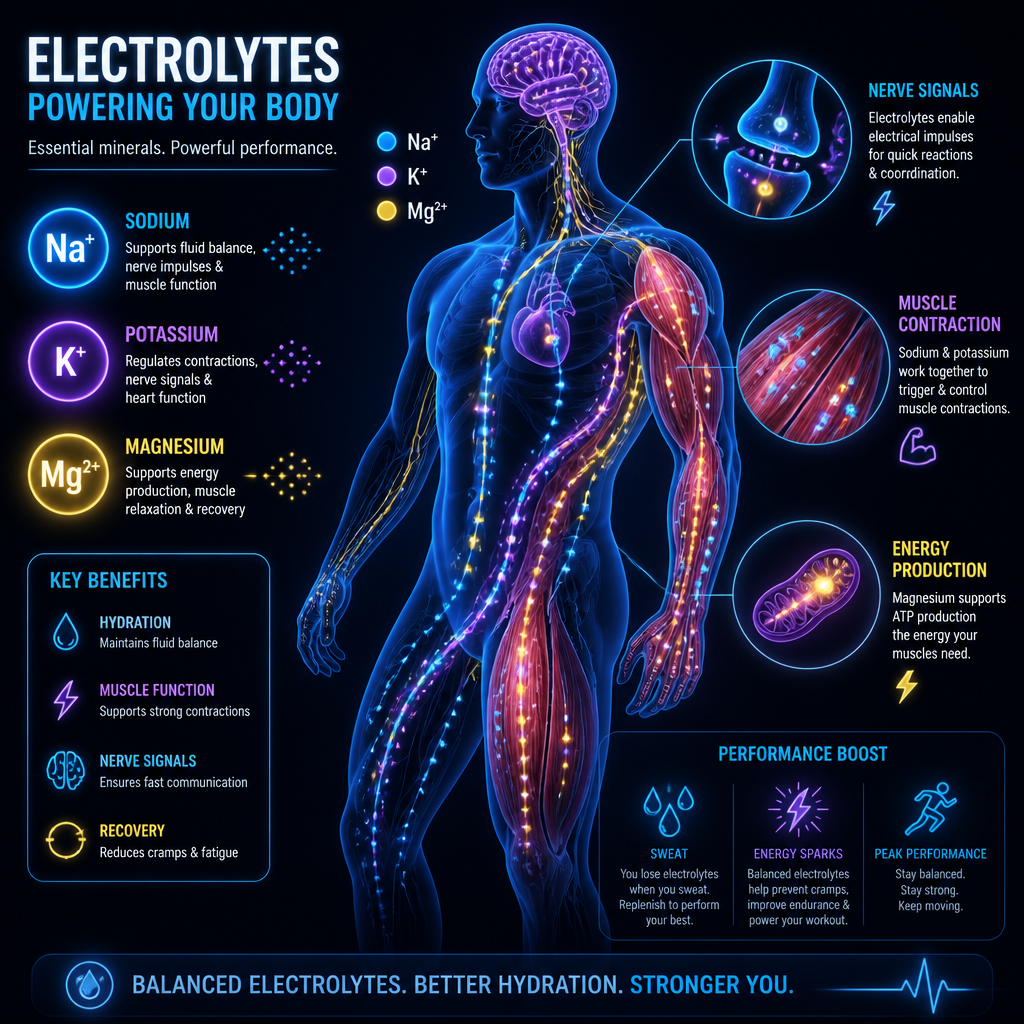
Sodium is the primary electrolyte lost in sweat and the one that matters most for fluid balance. It helps cells hold water, supports nerve signals, and keeps blood pressure stable. Without adequate sodium, even large volumes of water cannot be properly retained by the body. This is why plain water alone can fall short during prolonged exercise.
Potassium works in close partnership with sodium to regulate fluid inside and outside cells. It plays a direct role in muscle contraction and relaxation, which is why low potassium is a common culprit behind the muscle cramps that junior athletes complain about after hard sessions.
Magnesium supports energy production, muscle function, and sleep quality. Active children who are low in magnesium often experience tiredness that seems disproportionate to their training load, and recovery between sessions can suffer. Because magnesium is involved in over 300 enzymatic reactions in the body, its role in a child's development goes well beyond sport.
Chloride works alongside sodium to maintain fluid balance and supports the production of stomach acid needed for digestion. It is typically present in formulations that include sodium chloride (a form of salt) and is often overlooked in discussions about electrolytes for children, despite being consistently lost through sweat.

Parents shopping for children hydration sport solutions face a confusing range of options. The table below cuts through the noise by comparing the three main categories on the criteria that actually matter for active children.
Option |
Best For |
Key Considerations |
|---|---|---|
Plain water |
Everyday hydration, low-intensity activity under 60 minutes |
No electrolytes replaced. Ideal as the baseline drink throughout the day. Becomes insufficient as a standalone for prolonged or intense sport. |
Commercial sugary sports drinks |
High-intensity endurance events where carbohydrate fuel is also needed |
High sugar content inappropriate for most children's recreational sport. Many contain additives, colourings, and caffeine variants not tested in children. Not a daily hydration tool. |
Junior electrolyte supplement (no added sugar) |
Sessions over 60 minutes, warm conditions, active training days, recovery |
Replaces sodium, potassium, and magnesium without unnecessary sugar or stimulants. Effervescent formats dissolve easily in water and are palatable for children. A suitable daily option for active kids. |
The honest takeaway from this comparison is that sugary sports drinks occupy a very narrow appropriate use case for children. For most junior athletes in the UK, a purposefully formulated junior electrolyte supplement dissolved in water covers the hydration and mineral replacement need without the sugar load that undermines the health goals sport is supposed to support.
Pro tip: Check the ingredient list of any children's electrolyte product for added stimulants, artificial dyes, and excessive sugar before purchasing. A clean formula with verified electrolyte doses is always preferable to a product that markets itself as a sports drink but functions more like a flavoured confection.
A hydration routine does not need to be complicated to be effective. It just needs to be consistent and to start before training, not during it.
Encourage your child to drink a full glass of water or an electrolyte drink around 30 to 60 minutes before training. This is the single highest-return action a parent can take. A child arriving at training pre-hydrated is already at an advantage over peers who grab a drink only when they feel thirsty mid-session.
For sessions under 60 minutes, small sips of water at natural breaks (half-time, rest periods, water breaks in summer) are adequate. For sessions over 60 minutes, or in warm conditions, a junior electrolyte drink in the bottle is a practical upgrade. Aim for sips every 15 to 20 minutes rather than large gulps infrequently, which can cause stomach discomfort.
Post-training recovery hydration is often forgotten because the visible effort has stopped. But this is when the body is actively repairing muscle and restoring fluid balance. A drink with electrolytes in the 30 minutes following exercise supports that recovery process. Paired with a balanced snack, it sets the child up for better quality sleep and readiness for the next session.
In practice, building this routine works best when it becomes as automatic as packing boots or remembering shin pads. A labelled bottle in the kit bag, kept stocked with the right product, removes the decision entirely on training days.
Not all electrolyte products are created equal, and products marketed at children deserve particular scrutiny. Here is what to look for when choosing a junior electrolyte supplement in the UK.
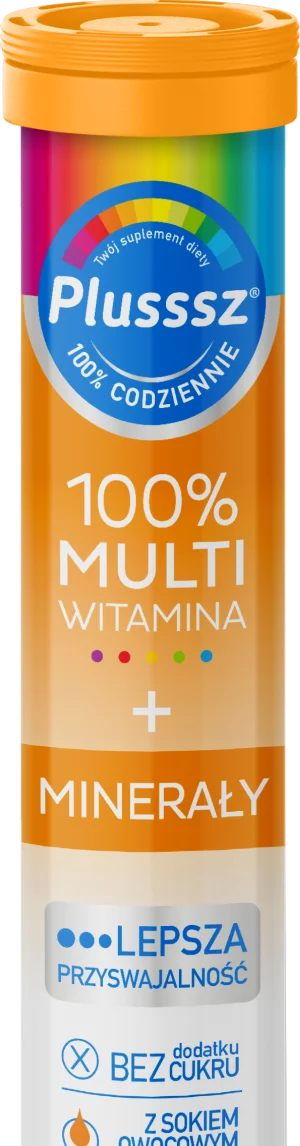
Products formulated for children account for lower body mass and different sweat rates compared to adult athletes. Look for a product that specifies its intended age range clearly. Plusssz Junior Electrolytes, for example, is formulated for children over 3 years of age and combines a carefully selected electrolyte complex with vitamins to support active young bodies.
This is non-negotiable for a daily-use product. Sugar in hydration drinks adds calories without meaningful benefit for children doing recreational sport. A formula using no added sugar means the product can be used routinely without contributing to the sugar intake concerns that parents are rightly mindful of.
Sodium, potassium, and magnesium should appear in the formula at doses that are actually functional, not just token amounts added for label appeal. Read the nutrition panel, not just the front-of-pack claims.
Effervescent tablet formats work particularly well for children. They dissolve in cold water, are palatable (orange and citrus flavours are consistently popular), and remove the need for measuring scoops or powders. A product that a child actually enjoys drinking is one they will actually use.
If you want to explore Plusssz's range of electrolyte and multivitamin products designed for different life stages, the Plusssz UK website is the most direct place to review current formulations and find the right fit for your child's activity level.
This depends on the specific product formulation. Some junior electrolyte products are suitable for children over 3 years of age when formulated at appropriate doses. Always check the age guidance on the product label and, if in doubt, consult your GP or a paediatric dietitian, particularly for very young children.
For a product formulated specifically for children with no added sugar, no caffeine, and age-appropriate mineral doses, daily use on active days is generally well within what is appropriate. It is not the same as giving a child a high-sugar commercial sports drink daily. The goal is replacing what activity depletes, not supplementing beyond what the body needs.
Practical signs include a drop in energy or focus, complaints of headache or stomach ache, muscle cramps, unusual irritability, and dark yellow or amber urine before the session. Children are poor at self-reporting thirst, so visible behavioural and physical cues are more reliable indicators than whether your child says they feel fine.
Water is the right daily foundation drink for children. For sessions lasting over 60 minutes, activity in warm conditions, or competitive sport, water alone does not replace the sodium, potassium, and magnesium lost through sweat. In these specific contexts, electrolytes are not optional extras but functional necessities for maintaining performance and safety.
A purposefully formulated junior electrolyte supplement contains specific doses of key minerals with no added sugar and no stimulants, designed to restore what exercise depletes. Many commercial sports drinks contain high sugar levels, artificial colourings, and sometimes caffeine-adjacent ingredients that are not appropriate or necessary for children. Reading the label is the only reliable way to tell them apart.
Ideally all three, adjusted to session length and intensity. Pre-session hydration is the most overlooked and highest-impact window. During longer sessions, small sips every 15 to 20 minutes maintain performance. Post-session is important for recovery, particularly on days with multiple training blocks or competitions.
If you have found this guide useful or have questions about your child's hydration routine, we would love to hear your experience in the comments below.