If you have been training consistently, sleeping well, and eating reasonably well, yet still feel flat, slow, and inexplicably tired, iron is the first thing worth investigating. Iron deficiency is the most common nutritional deficiency in pre-menopausal women in the UK, and active women face a compounded risk: monthly losses through menstruation, iron burned through exercise-driven oxygen demand, and additional losses from the physical mechanics of endurance sport itself. Finding the right iron supplement for women in the UK is not just a wellness consideration. For anyone training regularly, it is a performance imperative that most women find out about far too late.
Key Insight |
Explanation |
|---|---|
Women need nearly double the daily iron of men |
The NHS recommends 14.8 mg of iron daily for women aged 19 to 50, compared to 8.7 mg for men of the same age, primarily due to monthly menstrual losses. |
Up to 60% of female athletes experience iron deficiency |
Research published in peer-reviewed literature finds that a substantial proportion of female athletes across multiple sports have compromised iron status, often without obvious symptoms. |
Iron deficiency reduces endurance performance measurably |
Studies indicate iron deficiency negatively affects endurance performance by around 3 to 4 percent. When iron is restored, maximal aerobic capacity can improve by 6 to 15 percent. |
Your GP's blood test may miss the problem |
The NHS considers ferritin above 12 to 15 ng/mL technically normal. Sports medicine research consistently suggests active women need ferritin of at least 30 to 50 ng/mL to perform well. |
Aerobic sports carry the highest risk |
Female athletes in distance running, cycling, and triathlon face greater iron depletion than those in anaerobic sports, because aerobic activity drives higher oxygen and therefore higher iron demand in muscle tissue. |
Vitamin C meaningfully improves non-heme iron absorption |
Taking non-heme iron (from plants or supplements) alongside vitamin C at the same meal or dose significantly improves how much iron your body actually absorbs and uses. |
A women's multivitamin formula is not interchangeable with a standard one |
A correctly formulated women's multivitamin includes adequate iron in a bioavailable form. Generic or unisex formulas frequently omit iron or include it at levels that are irrelevant for active pre-menopausal women. |
Iron loss in active women is not a single problem with a single solution. It stacks up from several directions simultaneously, which is exactly why so many women miss it until performance has already slipped.
Monthly blood loss through menstruation is the most widely cited reason women need more iron than men. It is estimated that women lose around 1.6 mg of iron through the menstrual cycle alone, and that figure does not account for women with heavier periods, which increase losses substantially. This is one reason the NHS sets the recommended daily intake for iron at 14.8 mg for women aged 19 to 50, nearly double the 8.7 mg recommended for men of the same age.
Endurance exercise independently drives up iron requirements, because it stimulates red blood cell production and increases the body's demand for oxygen delivery to working muscles. This means active women face higher daily iron requirements than sedentary women, on top of an already higher baseline than men.
Beyond menstruation, training introduces additional iron-loss mechanisms that many women are simply not told about. Foot-strike haemolysis is one: the physical impact of running compresses blood vessels in the soles of the feet, destroying red blood cells with each stride. Gastrointestinal micro-bleeding, common in high-volume runners, causes further loss. Sweating contributes too, as does the body's inflammatory response to hard training sessions, which temporarily sequesters iron and reduces its availability.
Vegan and vegetarian active women face a compounded disadvantage. Plant-based diets rely on non-heme iron, which the body absorbs less efficiently than the heme iron found in meat. Combined with menstrual losses and exercise demands, the gap between iron consumed and iron retained can become significant.
Pro tip: If you are a female runner or cyclist who follows a plant-based diet and has not had a ferritin blood test in the past year, consider asking your GP to include one at your next check-up. Do not wait for symptoms to appear. By the time tiredness becomes obvious, stores have often been depleted for months.
This is where a lot of active women get caught out, and it is worth being direct about it: the clinical definition of iron sufficiency and the functional standard required for sport are not the same thing.
The NHS considers a ferritin level above 12 to 15 ng/mL technically within the normal range. Sports medicine research consistently shows that active women need ferritin levels of at least 30 to 50 ng/mL to perform optimally. Some researchers working with elite endurance athletes argue the target should be closer to 50 to 75 ng/mL. A woman with ferritin at 16 ng/mL will be told by her GP that her results are normal. For someone training five days a week, they are not.
The gap between clinical sufficiency and athlete sufficiency is exactly where most iron-deficient active women fall, often for months or years before connecting the dots between their blood test and their performance.
Serum ferritin is the protein that stores iron in the body, and it is the most sensitive early indicator of iron depletion. It drops long before haemoglobin is affected, which is why a standard full blood count can come back entirely normal while iron stores are already compromised. If you are having iron status tested and want a result that is actually useful for an active lifestyle, request ferritin specifically. Haemoglobin alone tells you very little until deficiency is already advanced.
NHS Highland guidance on iron deficiency management suggests aiming for ferritin above 50 micrograms per litre as a treatment target, which aligns more closely with what sports medicine professionals consider adequate for performance. That figure is a more useful benchmark than the minimum clinical threshold.
Iron deficiency does not announce itself dramatically. It tends to arrive gradually, which makes it easy to attribute to overtraining, poor sleep, life stress, or simply "a bad week." In practice, the pattern that should trigger investigation is sustained rather than acute: several weeks of unexplained performance decline that does not resolve with rest.
The most frequently reported symptoms in active women with iron deficiency are persistent fatigue that does not clear after rest days, a sensation often described as "empty legs" during training, slower recovery between sessions, reduced tolerance to effort at paces or intensities that previously felt manageable, and an unexplained drop in performance that cannot be accounted for by training load changes.
Other symptoms include shortness of breath during exercise, difficulty concentrating, and mood changes. The challenge is that these symptoms overlap with overtraining syndrome, low energy availability, and general fatigue, which is why blood testing is the only reliable way to distinguish iron deficiency from other causes.
Iron deficiency progresses in stages. In the earliest stage, iron stores are depleted but red blood cell production and haemoglobin are not yet affected. This is the stage at which most active women are sitting when they feel off but receive a normal blood test result. In the second stage, iron availability for red blood cell production begins to fall. In the third stage, iron deficiency anaemia develops, with reduced haemoglobin and direct impairment of oxygen delivery. The first stage is where the problem should be caught and addressed. Most women unfortunately reach the GP at the second or third.
Pro tip: If you suspect iron deficiency but your GP is hesitant to order ferritin specifically, explain that you are an endurance athlete with significant training load and that haemoglobin alone is insufficient to assess your iron status. Providing that clinical context makes a ferritin request much more likely to be accommodated.
The relationship between iron and endurance performance is direct and well-evidenced. Iron is essential to haemoglobin, the oxygen-carrying protein in red blood cells, and to myoglobin, which transports oxygen within muscle cells to the mitochondria. It is also a key component in the enzymes involved in breaking down glycogen and other fuel sources for energy. Every aerobic function in the body depends on iron somewhere in the chain.
A systematic review examining iron deficiency in female athletes found that iron deficiency negatively affects endurance performance by around 3 to 4 percent. That may sound modest, but for a woman running a half marathon, it translates to several minutes of lost time, not a rounding error. When iron-deficient athletes were treated with oral iron supplementation, endurance performance improved by 2 to 20 percent. Maximal aerobic capacity improved by 6 to 15 percent following iron supplementation across a range of dosing protocols.
Female athletes in aerobic endurance sports, including distance running, cycling, and triathlon, carry the highest risk of iron deficiency compared to those in anaerobic sports. This is because aerobic activity drives a sustained, elevated demand for oxygen in muscle tissue, increasing the body's iron requirements beyond what standard dietary intake often provides.
Research published in 2022 found that among non-professional, highly trained female endurance athletes competing at international age-group level, 46 percent were classified as iron deficient. This is not a problem confined to elite professionals. Recreational runners, cyclists, and triathletes who train seriously carry a comparable risk, yet typically have far less access to medical and nutritional support than professional athletes receive.
A study of female intercollegiate athletes across multiple sports found that 31 percent were iron deficient at the start of a season. Iron-deficient athletes consistently rated their own performance as worse than normal athletes, even in cases where objective measures had not yet deteriorated significantly. The subjective experience of deficiency precedes measurable performance decline, which means self-assessment is actually a useful early signal.
Not all iron in food or supplements behaves the same way in the body. The form of iron you consume, and what you consume alongside it, has a direct impact on how much of it your body actually uses.
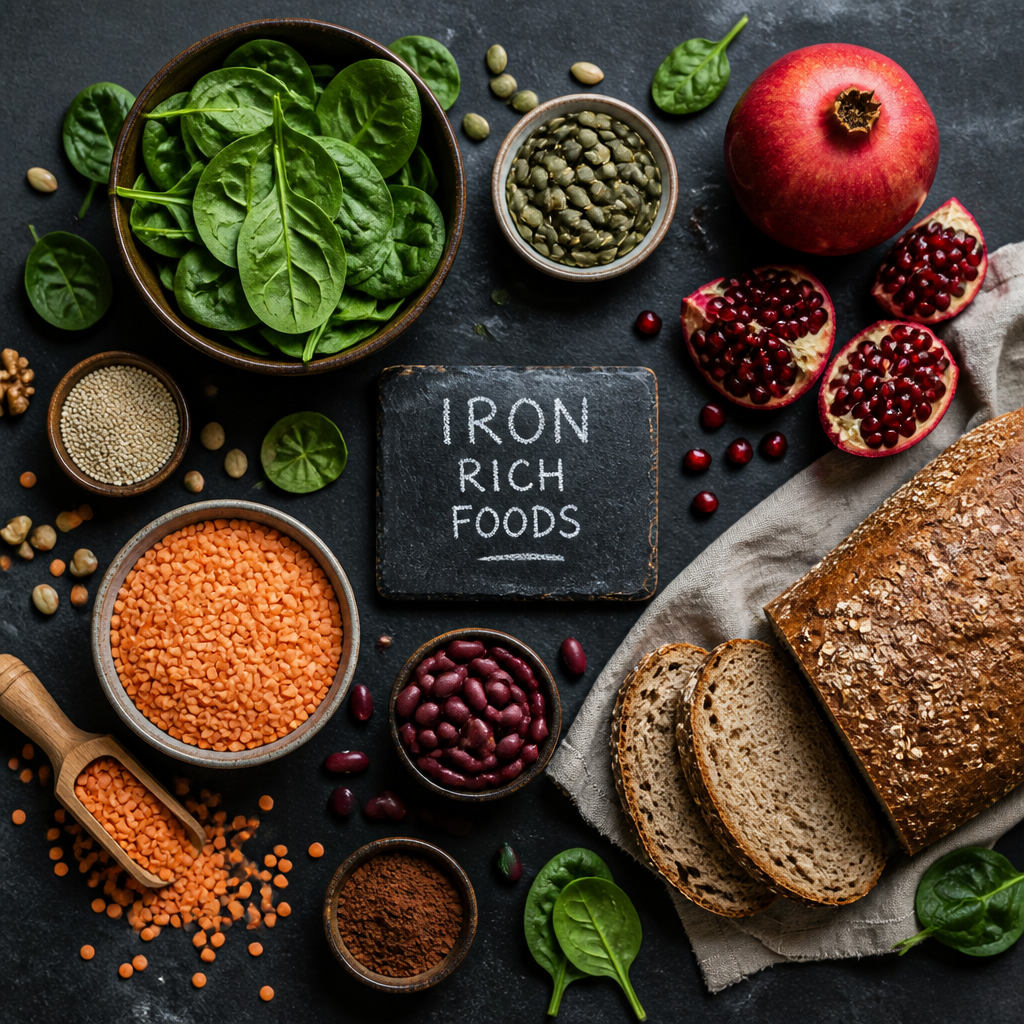
Heme iron is found in meat, fish, and poultry. The body absorbs it more efficiently than any plant-based source. Non-heme iron is found in plants, beans, lentils, leafy greens, flour, and cereals. It provides important dietary iron, particularly for women who eat little or no meat, but it is absorbed less efficiently. Practically speaking, iron from a portion of lean red meat is more bioavailable than the same weight of iron from spinach, even though spinach is frequently cited as an iron-rich food.
Good dietary sources of iron for active women include lean red meat and turkey, green leafy vegetables, lentils, and chickpeas. Women who eat little red meat or follow a plant-based diet need to be particularly attentive to both total iron intake and absorption optimization.
Vitamin C is the most well-established enhancer of non-heme iron absorption. Taking a vitamin C-rich food or a supplement containing vitamin C at the same time as a non-heme iron source increases the amount absorbed. This applies to both dietary sources and iron supplements. If you take an iron supplement or a women's multivitamin containing iron, pairing it with a vitamin C source makes the iron in that supplement more useful.
Conversely, several common substances inhibit iron absorption and should not be consumed at the same time as iron: large doses of calcium (particularly from supplements), tannins from tea and coffee, and phytates found in bran and some whole grains. A common mistake is taking a multivitamin with a cup of tea. That single habit can meaningfully reduce the iron you absorb from your supplement. Take iron-containing supplements with water or a small glass of orange juice instead.
Approach |
Best For |
Key Consideration |
|---|---|---|
Women's multivitamin with iron (e.g., Plusssz Women's formula) |
Active women managing general iron maintenance as part of daily nutrition |
Must contain iron in a bioavailable form such as ferrous bisglycinate. Generic unisex formulas often omit iron or include inadequate amounts for pre-menopausal women. |
Standalone ferrous sulphate (NHS prescribed) |
Women with confirmed iron deficiency anaemia requiring therapeutic doses |
Effective but frequently causes GI side effects including constipation and nausea. Not designed for long-term maintenance use in otherwise healthy active women. |
Dietary iron optimization with targeted food choices |
Women with mild insufficiency or as a complement to supplementation |
Requires consistent attention to food pairing and variety. Insufficient as a sole strategy for women with heavy training loads or confirmed deficiency. |
The supplement market is full of products that technically contain iron but are not designed with active women's physiology in mind. Knowing what to look for makes the difference between a supplement that works and one that sits in a drawer.
A correctly formulated women's multivitamin for active individuals includes iron at a meaningful daily level, in a bioavailable form such as ferrous bisglycinate, alongside nutrients that work with it. A women's formula that includes higher iron, alongside folic acid or methylfolate and iodine, reflects the actual divergent nutritional needs of pre-menopausal women versus men or seniors. For reference, a multivitamin without adequate iron in a bioavailable form is insufficient for active women in this demographic.
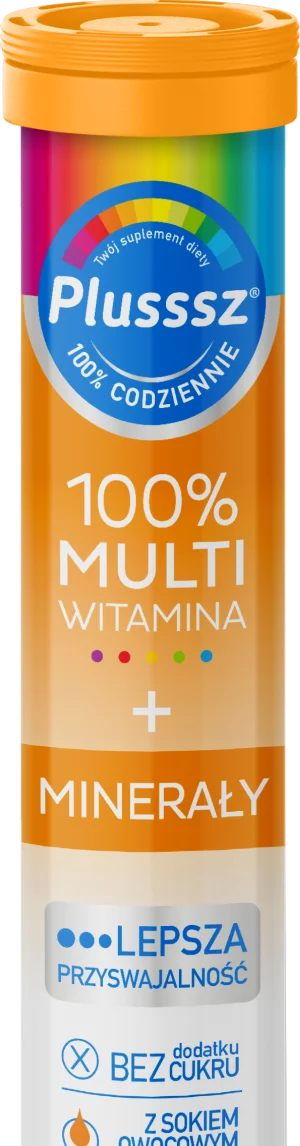
Active women specifically benefit from formulas that also include higher magnesium, calcium, and vitamin D alongside iron, because these nutrients support bone health and energy metabolism in ways that are disproportionately important for female athletes. This is where products designed with demographic specificity, like the Plusssz women's formulation, differ meaningfully from one-size-fits-all multivitamins that fill supermarket shelves.
Avoid taking iron supplements or iron-containing multivitamins with tea, coffee, or calcium-rich foods. Avoid taking high-dose iron supplements without blood test confirmation of deficiency. Iron toxicity from food and standard supplements is rare, but supplementing aggressively without knowing your baseline is unnecessary and occasionally counterproductive. The goal is consistent, moderate intake that keeps ferritin levels in the range where performance and health are both well supported.
Also avoid generic "one a day" formulas that were clearly not designed for active women. The supplement industry spent decades selling a single multivitamin formula to every adult regardless of age, sex, or activity level. That approach persists widely, and the evidence against it is substantial. Nutrient requirements diverge significantly across demographics, and choosing a correctly targeted product is among the most impactful single decisions you can make in this category.
Pro tip: If you are combining an iron-containing women's multivitamin with an electrolyte supplement as part of your training routine, check that you are not also supplementing high-dose calcium separately at the same time of day. Calcium at high doses can inhibit iron absorption. Take calcium-heavy supplements at a different time from your iron-containing products to keep both effective.
The clearest indicator is a blood test showing low serum ferritin. Symptoms like persistent tiredness, slower training times, and poor recovery that do not resolve with rest are common warning signs, but they overlap with other conditions, so testing is the only way to confirm. Ask your GP to test serum ferritin specifically, not just a standard full blood count, as ferritin drops before haemoglobin is affected and is therefore a more sensitive early indicator for active women.
The NHS minimum clinical threshold is around 12 to 15 ng/mL for women, but this is a floor, not a target. Sports medicine guidance consistently suggests active women perform better with ferritin of at least 30 to 50 ng/mL. Women with high training volumes in endurance sports may benefit from targeting the higher end of that range. If your GP reports your results as normal but your ferritin is below 30 ng/mL, it is worth discussing this in the context of your training load.
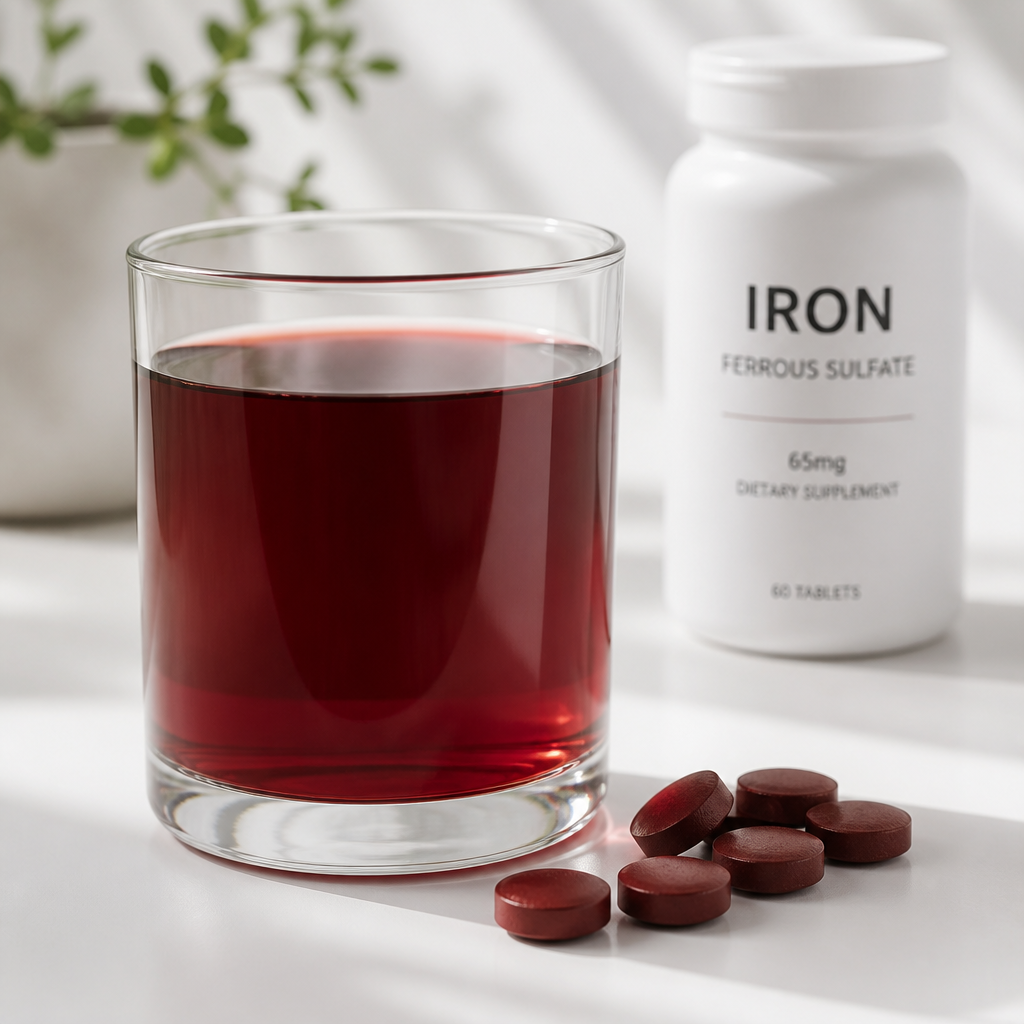
Ferrous sulphate is the most commonly prescribed iron supplement in the UK and is effective, but it frequently causes gastrointestinal side effects including constipation and nausea. Ferrous bisglycinate (also called iron bisglycinate or iron glycinate) is generally better tolerated, causes fewer GI side effects, and is adequately absorbed. Women who have stopped taking iron previously because of digestive discomfort should consider this form specifically.
Yes, and this is one of the most important points for active women to understand. Iron-deficient non-anaemic athletes, those with depleted iron stores but normal haemoglobin, may still experience reduced maximal aerobic capacity and endurance performance. Studies show that iron supplementation in this group improves both markers meaningfully. You do not need full anaemia to have iron deficiency affecting your training. The earlier stages of iron depletion are where most active women sit and where addressing the issue produces the greatest performance benefit.
Some women can, but it is genuinely difficult at high training loads without careful dietary planning. Women who eat red meat and poultry several times per week, pay attention to iron-vitamin C pairings, and do not have heavy periods may maintain adequate status from food alone. Women who are vegetarian or vegan, have heavier menstrual cycles, or train at high volumes are much more likely to need supplemental iron to meet requirements. Diet should always be the foundation, but supplementation is a practical and often necessary addition for active women in the UK.
A women's multivitamin providing iron at the recommended daily intake level (around 14.8 mg for women aged 19 to 50) is appropriate for regular daily use in active pre-menopausal women. High-dose standalone iron supplements (therapeutic doses used to treat deficiency) should only be taken under medical guidance with a confirmed deficiency. Iron toxicity from food and standard-dose supplements is uncommon, but unnecessary aggressive supplementation is not advisable. Regular ferritin testing every six to twelve months makes sense for women with high training volumes.
If you are an active woman who has quietly been wondering whether iron could be the missing piece in your training, we would love to hear what you found when you got tested, and what changed.