If you have ever reached for a third coffee before noon and still felt flat, you are not alone, and ginseng keeps coming up as the answer. The interest in ginseng benefits UK has grown sharply among active people who want sustained energy without the crash that caffeine delivers. But the supplement aisle is full of noise, and deciding whether ginseng belongs in your stack, how much to take, and what it actually does at a biological level requires cutting through a lot of marketing. This article pulls the research together and tells you, plainly, whether ginseng earns its place alongside your electrolytes and multivitamins.
Key Insight |
Explanation |
|---|---|
Ginsenosides are the active compounds that matter |
Different ginseng species and products contain different concentrations of ginsenosides. Standardised extracts are far more reliable than raw root powders when comparing products. |
The energy effect is not the same as caffeine |
Ginseng does not stimulate the central nervous system directly. It works by reducing oxidative stress and supporting cellular energy production, which means no jitters and no hard crash. |
Research supports fatigue reduction, not acute performance spikes |
Clinical evidence is strongest for reducing perceived fatigue over several weeks, not for immediate pre-workout boosts. Setting the right expectation matters. |
Panax ginseng is the best-studied form |
Asian or Korean Panax ginseng has the largest body of clinical evidence for energy and cognitive performance. Siberian ginseng is a different plant entirely with a different evidence base. |
200 mg daily extract is the most commonly studied dose |
Most trials that show positive fatigue and energy outcomes have used 200 mg of standardised Panax ginseng extract per day. Going much higher does not appear to improve results linearly. |
Ginseng pairs well with a broad multivitamin |
B vitamins, magnesium, and vitamin D all support the same cellular energy pathways ginseng targets. A combined supplement that includes ginseng alongside these nutrients addresses the problem from multiple angles. |
Cycling is recommended for long-term use |
Standard guidance based on clinical trial durations and traditional use suggests cycling ginseng: roughly eight to twelve weeks on, followed by a two to four week break, to maintain sensitivity. |
Ginseng is a slow-growing plant with fleshy roots that has been used in traditional Asian medicine for centuries. The name covers several species, but they are not interchangeable. Panax ginseng (Asian or Korean ginseng) and Panax quinquefolius (American ginseng) are true ginsengs. Siberian ginseng, despite the name, belongs to a different plant genus entirely and does not contain ginsenosides, the compounds most associated with ginseng's documented effects.
The root can be classified as fresh, white, or red depending on how long it has been grown and how it is processed. Red ginseng, which is steamed and dried, tends to have a higher concentration of certain ginsenosides and is the form most often used in clinical trials studying energy and fatigue outcomes.
What matters when buying a ginseng supplement is whether the product specifies the ginsenoside content and the form of extract used. A product labelled simply "ginseng root powder" with no standardisation data gives you very little assurance about what you are actually getting.

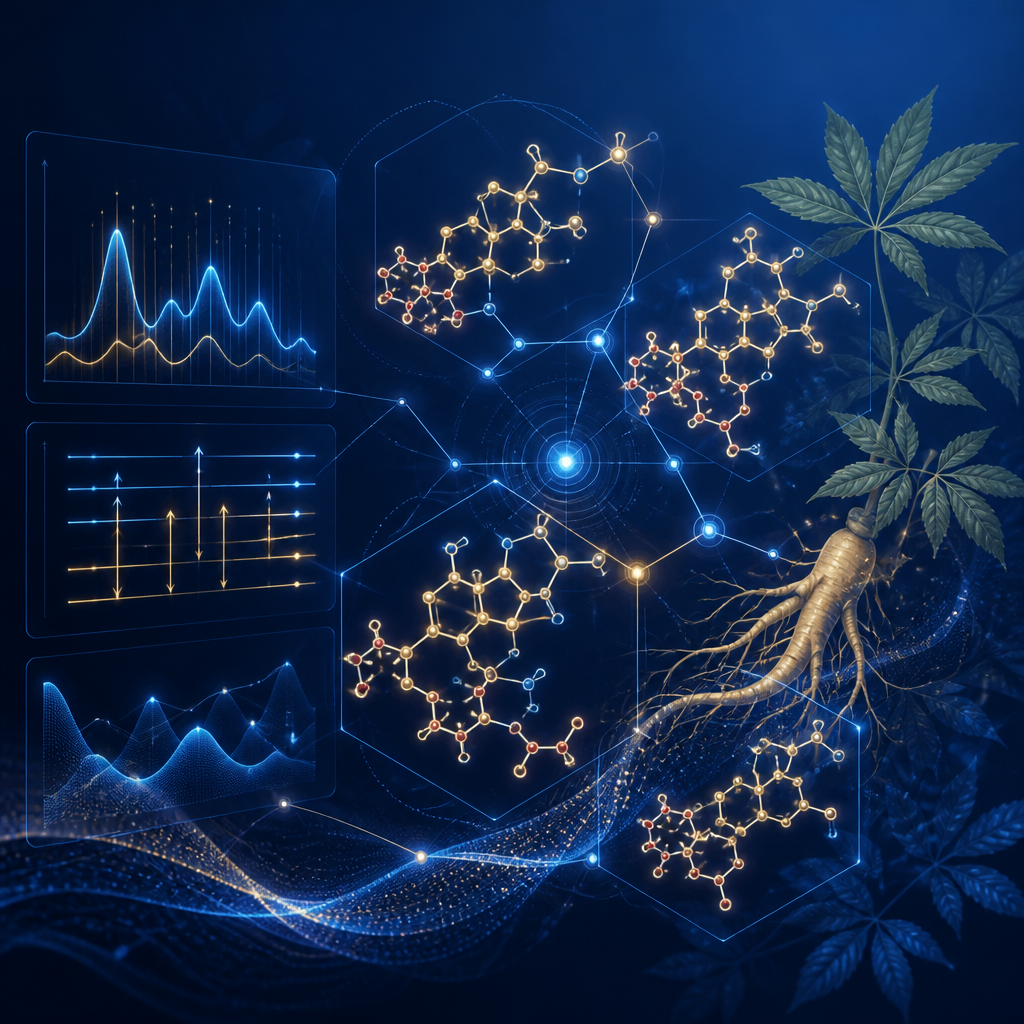
The evidence for ginseng and energy is more specific than most supplement marketing suggests. The strongest signal in the clinical literature is around fatigue reduction, not a direct increase in physical power output. Research has linked components in ginseng, including polysaccharides and oligopeptides, to lower oxidative stress and higher energy production at the cellular level. This is a meaningful mechanism, but it operates over days and weeks, not hours.
Studies involving participants with chronic fatigue have shown measurable reductions in fatigue scores over intervention periods ranging from three to twelve weeks. A randomised controlled trial examining ginseng supplementation at 250 mg twice daily over three months found statistically significant improvements in fatigue severity compared to a placebo group. The effect was gradual, which is exactly what you would expect from an adaptogenic compound supporting cellular metabolism rather than one that switches on the nervous system acutely.
Research into ginseng's effect on fatigue in patient populations has been replicated in healthy individuals showing improvements in reported energy, mood, and mental performance. One study found that men and women taking ginseng reported improvements in energy, sleep quality, and general wellbeing. These are subjective outcomes, but they are consistent across multiple trial designs.
Pro tip: Do not expect ginseng to feel like a pre-workout within thirty minutes of taking it. Take it at the same time each morning with breakfast for at least three weeks before assessing whether it is working for you.
There is also a cognitive angle to the ginseng energy story. Early research suggests Panax ginseng can support mental functions including memory and concentration. For active people who train hard, cognitive fatigue is as real as physical fatigue, and a supplement that reduces mental tiredness alongside physical tiredness has genuine practical value. This is distinct from the stimulant effect of caffeine, which tends to sharpen focus acutely but can worsen cognitive performance once it wears off.
Ginseng is classified as an adaptogen, meaning it is believed to help the body adapt to physical and psychological stress without simply suppressing or amplifying the stress response. The mechanism is not fully understood, but research suggests that ginseng compounds influence pathways connected to the hypothalamic-pituitary-adrenal axis, which governs the body's stress hormone response.
Research on Panax ginseng supplementation and resistance exercise has produced findings suggesting it can be useful for managing exercise-induced stress and supporting recovery. One study's findings indicated that ginseng supplementation promoted a favourable hormonal environment for athletes by influencing cortisol and other markers of exercise-induced stress. This makes ginseng particularly interesting for people who train at high intensities and struggle with poor recovery or persistent low-grade fatigue between sessions.
The value of an adaptogen is not that it makes you feel artificially wired, it is that it raises your floor. You recover faster, fatigue less deeply, and maintain output more consistently over time. That is the kind of energy support that actually compounds across a training block.
For athletes and active individuals, this recovery angle often matters more than the direct energy claim. If you are training four or five times per week, the limiting factor is rarely the single session. It is how well you show up for the next one.
Pro tip: If you are using ginseng primarily for recovery support, consider pairing it with an electrolyte hydration product post-training. Electrolytes restore mineral balance at the same time ginseng is working to support cellular stress recovery, addressing both the physiological and biochemical sides of post-exercise fatigue simultaneously.

Choosing the right type of ginseng is the first real decision you face, and most supplement labels do not make it easy. Here is a direct comparison of the three forms most commonly found in UK supplements.
Type |
Active Compounds |
Primary Evidence for Energy and Fatigue |
|---|---|---|
Panax Ginseng (Korean / Asian) |
Ginsenosides (Rg1, Rb1, and others); polysaccharides; oligopeptides |
Strongest. Multiple randomised controlled trials support fatigue reduction, cognitive function, and adaptogenic effects at 200-400 mg extract daily. |
American Ginseng (Panax quinquefolius) |
Ginsenosides, but in a different ratio to Korean ginseng, typically higher in Rb-type |
Moderate. Some evidence for immune support and blood sugar management. Less studied for energy and athletic performance than Panax ginseng. |
Siberian Ginseng (Eleutherococcus senticosus) |
Eleutherosides, not ginsenosides. A different plant species entirely. |
Separate evidence base. Has its own adaptogenic research, but should not be assumed to produce the same effects as Panax ginseng. Often cheaper and used as a filler. |
The practical takeaway: if you are buying a ginseng energy supplement specifically for fatigue and recovery support, look for Panax ginseng with a standardised ginsenoside content listed on the label. If the product just says "ginseng" and lists no species or standardisation, that is a red flag, not a green one.
Dosage is where a lot of people get ginseng wrong, usually by assuming more is better. The clinical literature tells a more specific story. Most research studies that show positive outcomes for fatigue and energy have used daily doses of around 200 mg of standardised Panax ginseng extract, or between 0.5 g and 2 g of dry root per day. Capsule formulations typically fall in the 100 to 600 mg range per day.
Going beyond 400 mg of extract daily does not appear to deliver proportionally greater benefits based on the available evidence, and very high doses have been associated with mild adverse effects including insomnia and headaches in some users. There is a clear window of effective use, and it is not at the high end of the range.
Expect a minimum of two to three weeks before noticing consistent changes in energy or fatigue. The research trials that show significant results tend to run for eight to twelve weeks. This is not a supplement you will feel acutely on day one, and if a product promises otherwise, that claim is not supported by the evidence base for ginseng specifically.
Cycling is a reasonable practice with ginseng. Traditional use guidance and the durations of most clinical trials suggest using it for eight to twelve weeks continuously, then taking a break of two to four weeks before resuming. This is not a hard rule backed by a large controlled trial, but it aligns with practical experience and avoids potential diminishing returns from continuous use.
This is where the practical decision-making happens. Ginseng does not exist in isolation in most people's supplement routines, and understanding how it fits alongside a multivitamin and an electrolyte product is more useful than treating it as a standalone intervention.
A multivitamin with ginseng UK formulation makes sense for a specific reason: the nutrients that support cellular energy production overlap directly with ginseng's mechanism of action. B vitamins, particularly B2, B3, B5, B6, and B12, are essential cofactors in the mitochondrial pathways that produce ATP. Magnesium plays a role in over 300 enzymatic reactions including many involved in energy metabolism. Vitamin D is linked to muscle function and fatigue in populations where deficiency is common, including the UK where sunlight exposure is limited for much of the year.
When ginseng is combined with these nutrients in a single formulation, you address the energy and fatigue problem from multiple physiological angles at once. A randomised controlled study comparing a multivitamin-and-ginseng combination against a multivitamin alone found that the combination produced significantly greater improvements in quality-of-life measures, with the ginseng group showing meaningful improvement across multiple subjective wellbeing markers while the multivitamin-only group did not show significant improvement in those same metrics.
For active individuals, dehydration and electrolyte depletion are among the most common and most underappreciated causes of perceived low energy and poor performance. Even mild dehydration affects cognitive function and physical output. Electrolyte supplements that restore sodium, potassium, and magnesium after exercise address a fundamentally different layer of the energy problem than ginseng does, which is why the two complement each other rather than compete.
A practical approach: take your ginseng (ideally as part of a well-formulated multivitamin) in the morning with food, and use an electrolyte supplement around your training session. The two interventions are not redundant; they target different limiting factors in your energy and recovery picture.
At Plusssz, the multivitamin formulations are built around exactly this principle: combining nutrients that support the cellular energy pathways ginseng also targets, in formulas designed for active individuals who train consistently and need reliable daily support rather than acute stimulation. If you have been recommended Plusssz by a training partner or friend, this is the reason the combination approach resonates with people who actually use it.
Ginseng is not a performance-enhancing drug in the acute sense. It will not add kilograms to your lifts on the day you take it. The evidence for direct improvements in VO2 max or peak power output from ginseng supplementation is limited and inconsistent. Studies examining ginseng's effect on endurance performance have produced mixed results, and claims around acute ergogenic effects should be treated with scepticism.
It also will not compensate for poor sleep, inadequate protein intake, or a training load that is genuinely too high for your recovery capacity. Adaptogens raise your baseline resilience; they do not override poor foundations. If your energy problem is rooted in sleeping five hours a night and under-eating, no supplement, including ginseng, is going to solve it.
A common mistake is stacking ginseng with multiple stimulants in the hope of amplifying the effect. Combining it with high doses of caffeine does not produce additive benefits, and may introduce side effects that neither compound causes alone. The smarter approach is to use ginseng as part of a well-designed, moderate supplement routine, alongside a quality multivitamin and an electrolyte product, rather than as one layer in an elaborate stimulant protocol.
The most well-supported benefits for active individuals are reduced perceived fatigue over time, improved recovery from exercise-induced stress, and modest improvements in cognitive function and general wellbeing. These effects are most clearly seen with Panax ginseng at standardised doses, taken consistently over several weeks. Ginseng is not a substitute for good training hygiene, but it is a reasonable addition for people who are already doing the basics well and want supplementary support.
Caffeine works by blocking adenosine receptors, producing an acute alertness effect that wears off and can cause a rebound crash. Ginseng works through different mechanisms, supporting cellular energy production and reducing oxidative stress, without acting as a direct central nervous system stimulant. This means no pre-workout spike, but also no crash. The two can coexist in a sensible stack if caffeine is used in moderation, but they are solving different parts of the energy equation.
For most people, a combined formulation makes sense. The B vitamins, magnesium, and vitamin D that are central to a quality multivitamin support the same cellular energy pathways that ginseng targets. Taking them together in a single formula removes the complexity of managing multiple separate products and addresses the energy and fatigue problem more comprehensively than either does alone. Clinical evidence supports the combined approach over multivitamins alone.
The most frequently studied and supported dose for standardised Panax ginseng extract is 200 mg per day, taken in the morning with food. Some trials have used up to 400 mg daily with positive results. Dry root preparations range from 0.5 g to 2 g per day. Going higher than this does not appear to improve outcomes meaningfully and may introduce mild side effects in some people. Consistency over several weeks matters more than the precise dose within the effective range.
Most clinical trials run for eight to twelve weeks, which aligns with the traditional guidance of cycling ginseng rather than taking it indefinitely. A sensible approach is to use it for eight to twelve weeks, take a two to four week break, then resume if you want to continue. There is no strong evidence that continuous long-term use is harmful, but cycling is a reasonable precaution given that most positive evidence comes from time-limited trials.
No significant interactions have been identified between ginseng and electrolyte supplements. In fact, they complement each other well for active individuals: electrolytes address hydration and mineral balance around training, while ginseng supports cellular energy metabolism and recovery over time. If you are taking any prescription medication, it is worth checking with a healthcare professional, as ginseng has some known interactions with certain drugs including blood thinners and diabetes medications.
Have you tried ginseng as part of your supplement routine, and did you notice a genuine difference in your energy or recovery? Share your experience.