Most people who take supplements are wasting a meaningful percentage of every dose they swallow. Not because the products are fraudulent, and not because nutrition science is wrong, but because they have never been told the one thing that separates a supplement that works from one that does not: nutrient assimilability. You can choose a product with the right ingredients, the right dosages, and the right brand reputation, and still absorb a fraction of what you paid for, if the form of the nutrient, the timing of the dose, and the surrounding nutritional context are wrong. For active individuals investing in electrolyte hydration and multivitamin support, this is not a minor detail. It is the entire point.
Key Insight |
Explanation |
|---|---|
Nutrient form determines absorption rate |
Chelated minerals like magnesium glycinate are absorbed through different intestinal pathways than oxide forms, resulting in meaningfully higher uptake from the same listed dose. |
Fat-soluble vitamins need dietary fat to absorb |
Vitamins D3 and K2 are barely absorbed when taken on an empty stomach. Taking them with a meal containing healthy fats can dramatically increase how much actually enters your bloodstream. |
Synergistic pairings amplify each other |
D3 promotes calcium absorption, while K2 directs calcium to bones rather than arteries. Taking D3 alone without K2 means you are only doing half the job. |
No-added-sugar electrolytes outperform sugar-loaded alternatives |
Excess sugar in hydration drinks causes blood glucose spikes that can actually interfere with consistent fluid absorption during sustained exercise. Sodium, potassium, and magnesium do the real work. |
Gut health directly governs what you absorb |
A healthy gastrointestinal microbiota increases the absorption of multiple vitamins and minerals. Poor gut health silently sabotages even well-formulated supplements. |
Bioavailability varies significantly between individuals |
Age, sex, gut bacteria composition, and individual genetic variations all create large natural differences in how much of a given nutrient any one person actually absorbs. |
Supplement form often outperforms food sources |
Some nutrients, like supplemental folate, are more bioavailable than their food-based counterparts because they do not need to be released from a complex food matrix before absorption can begin. |
Assimilability is the practical, downstream version of bioavailability. Bioavailability measures how much of a nutrient enters your bloodstream. Assimilability goes one step further: it measures how much of that nutrient your body can actually use for the biological processes it is supposed to support. A nutrient can be absorbed and still fail to reach the tissue where it is needed, or fail to convert into the physiologically active compound that does the actual work.
The scientific definition covers it clearly: nutrient bioavailability is the proportion of a nutrient in food, diet, or supplements that is absorbed and utilized by the body for normal metabolic functions, influenced by factors including dietary composition, nutrient form, and the physiological conditions of the individual. That last part is where most supplement marketing falls short. It describes the ingredient list, not the conditions under which the body can actually use it.
For active individuals, this matters in a direct and measurable way. If you are training hard, sweating, and relying on an electrolyte product or a multivitamin complex to support recovery and performance, the gap between what is listed on the label and what your cells receive is a performance variable you are currently leaving unmanaged.


The variation is not random. It comes from two distinct categories of factors: those related to the supplement itself, and those related to the person taking it.
On the product side, the key variables are the chemical form of the nutrient, the nature of the delivery matrix, interactions between nutrients, and how the product was processed and manufactured. A supplement listing "magnesium" on the label could contain magnesium oxide (one of the least absorbed forms) or magnesium glycinate (one of the most effectively absorbed forms). Both are technically "magnesium." They behave very differently inside your body.
The food matrix problem is equally relevant. When nutrients are locked inside whole food structures, your digestive system must first break down those cellular structures before absorption can begin. A well-formulated supplement bypasses this step entirely. This is why, for certain nutrients, the bioavailability of a supplement can actually exceed that of the same nutrient from a whole food source.
On the individual side, factors include the secretion of gastric acid and hydrochloric acid, the permeability of your intestinal lining, your current nutrient status, age, sex, and your gut microbiome composition. Individual variations in gut bacteria and genetic single-nucleotide polymorphisms create large natural differences in how efficiently any two people absorb the same dose of the same supplement. This is not a marginal effect. It is the reason two people can take identical products with very different outcomes.
Pro tip: If you are over 40 and notice that supplements seem less effective than they did a decade ago, this is often not placebo effect. Gastric acid secretion naturally declines with age, which directly reduces your ability to absorb certain minerals and B vitamins from standard supplement forms.
Most people take their supplements with good intentions and little strategy. A common mistake is taking fat-soluble vitamins on an empty stomach. Vitamins D3 and K2 are both fat-soluble. Without dietary fat present in the digestive tract at the time of ingestion, only a fraction of these vitamins will be absorbed, which reduces the effectiveness of the supplement significantly. Taking them with a meal containing healthy fats is not optional. It is the baseline condition for the supplement to work at all.
Nutrient competition is another absorption killer that barely gets mentioned on product packaging. Certain minerals compete for the same intestinal transport pathways. High-dose calcium and high-dose magnesium taken at exactly the same time can reduce the absorption of both. This is not an argument against taking them together in a balanced formula, but it is a strong argument against taking poorly balanced, high-dose single-mineral supplements simultaneously.
Plant-based diets also introduce a specific absorption challenge worth naming directly. Phytate and fibre in plant foods bind to minerals and reduce their bioavailability. Someone eating a predominantly whole-food plant-based diet may have genuinely higher mineral needs from supplementation than someone eating a more varied diet, not because their diet is nutritionally incomplete, but because the absorption environment is different.
The bioavailability of a nutrient is not a fixed property of that nutrient. It is the result of the interaction between the nutrient's form, the delivery context, and the physiology of the individual absorbing it. Optimise all three and supplementation becomes a precision tool, not a gamble.
Electrolytes are where the assimilability conversation becomes most urgent for anyone training seriously. The popular narrative around hydration focuses almost entirely on water intake. It significantly underweights the role of electrolyte composition in how effectively that water is actually absorbed and distributed.
Research in sports medicine has established consistently that losing as little as 2% of body weight in fluids impairs both physical and cognitive performance. More specifically, it is the concurrent loss of electrolytes alongside fluid, not water loss alone, that drives cramping, fatigue, and the mid-session energy crash that is so familiar to endurance athletes. Replacing water without replacing electrolytes does not solve the problem. It can actively worsen it by diluting the electrolytes that remain.
A credible electrolyte supplement should contain at minimum sodium, potassium, and magnesium in meaningful doses. Sodium should be present at roughly 300 to 600 mg per serving. Potassium at roughly 150 to 300 mg. Magnesium at roughly 50 to 100 mg. Products that list these minerals but include them at 10 to 20 mg per serving are using them for marketing, not function. The assimilability of a nutrient at sub-threshold doses is irrelevant because the dose itself is not physiologically meaningful.
Added sugar in electrolyte drinks deserves specific criticism here. For sessions under 90 minutes, the sugar in most mainstream electrolyte drinks provides calories the body does not need during that window, and can cause blood glucose fluctuations that reduce sustained energy output. A no-added-sugar formulation delivering sodium, potassium, and magnesium in effective quantities supports fluid absorption, muscle function, and endurance without the caloric burden or the post-sugar energy dip. For active individuals who train regularly, this is the meaningful distinction between a hydration product that performs and one that markets.
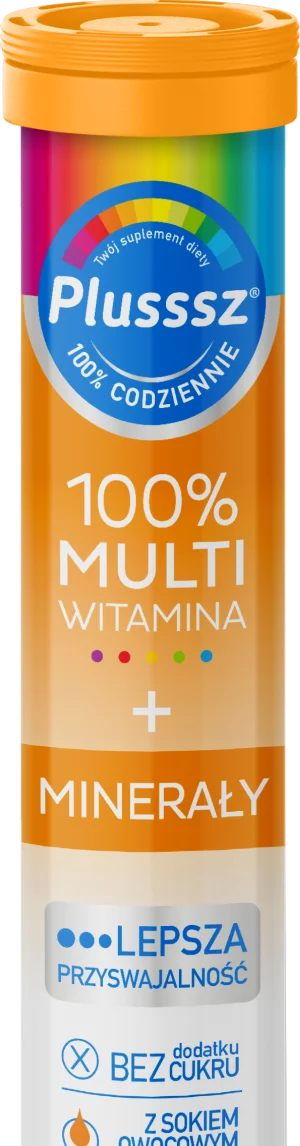
The electrolyte range at Plusssz UK is built around exactly this principle: no added sugar, meaningful electrolyte doses, and formulations designed for regular training rather than for occasional gym-goers who want a flavoured water.

This is the section most supplement brands would prefer you to skip, because it reveals how much difference formulation decisions make and how little of that difference shows up on a standard label comparison.
Chelated minerals are minerals bound to organic compounds, typically amino acids, specifically to improve absorption. Chelated magnesium, such as magnesium glycinate, is absorbed through intestinal pathways that bypass some of the competition and interference that affects simpler mineral salts. The result is better uptake from the same listed dose, alongside generally better tolerance and less gastrointestinal disruption. For active individuals who are already putting their digestive systems through significant stress from training, this is a practical advantage, not a premium-tier luxury.
Methylfolate is more bioavailable than folic acid for a significant portion of the population. The reason is genetic: a common variant of the MTHFR enzyme reduces the body's ability to convert folic acid into its active methylated form. A multivitamin using methylfolate bypasses this conversion step entirely. Similarly, methylcobalamin (the active form of B12) does not require the same metabolic conversion as cyanocobalamin. For a meaningful proportion of people, the standard forms in budget supplements are simply not the forms their bodies can effectively use.
Vitamin D3 and K2 are a well-documented synergistic pair. D3 promotes calcium absorption. K2 directs that calcium to bones rather than allowing it to accumulate in arteries. Taking D3 alone without K2 means calcium absorption increases without the directional signal that routes it to the right tissue. This is not a minor nuance. It is a fundamental pairing that genuinely changes the physiological outcome of vitamin D supplementation.
Pro tip: When reviewing a multivitamin label, check not just which vitamins and minerals are included, but which forms are listed. If the label says "magnesium" with no further description, or "folic acid" rather than "methylfolate," or "cyanocobalamin" rather than "methylcobalamin," those are signals about the assimilability decisions that went into the formula. Plusssz UK's approach to formulation prioritises nutrient forms chosen for improved assimilability, which is the detail that separates functional supplementation from expensive urine.
Not all supplementation strategies are created equal. The table below compares three common approaches based on their practical assimilability for active individuals taking electrolyte and multivitamin products regularly.
Approach |
Assimilability Strengths |
Assimilability Weaknesses |
|---|---|---|
Standard budget multivitamin (oxide/carbonate minerals, folic acid, cyanocobalamin) |
Low cost, widely available, covers basic nutritional gaps on paper |
Oxide mineral forms have poor absorption rates; folic acid and cyanocobalamin require conversion steps that a significant portion of users cannot perform efficiently; no synergistic pairing considered |
Targeted formulation with chelated minerals and active vitamin forms (methylfolate, methylcobalamin, D3 plus K2) |
Higher absorption per dose, bypasses common enzymatic conversion barriers, synergistic pairings direct nutrients to correct tissues, gentler on digestion |
Higher product cost; requires a brand that has invested in formulation quality rather than label appeal |
Food-first with standard supplement backup |
Whole foods provide co-factors and a nutritional matrix that supports absorption; lower risk of over-supplementing individual nutrients |
Food matrix can actually reduce absorption of certain minerals due to phytate and fibre binding; does not address electrolyte losses from training; inconsistent nutrient delivery depending on diet quality on any given day |
The practical conclusion is not that food is irrelevant or that supplementation replaces diet. It is that for active individuals with specific performance, recovery, and hydration needs, a well-formulated targeted supplement with high assimilability is doing work that neither food alone nor a generic budget product can reliably replicate.
Bioavailability refers to the proportion of a nutrient that enters the bloodstream after ingestion. Assimilability goes further, describing how effectively that nutrient is then used by the body's tissues for its intended biological function. A nutrient can be bioavailable but still fail to convert into its active form, reach the right tissue, or perform its metabolic role. Assimilability accounts for the full chain from ingestion to utilisation.
Chelated minerals are bound to amino acids or other organic compounds, which creates a stable structure that survives gastric acid more effectively and is absorbed through different intestinal transport mechanisms than simple mineral salts. This means a higher percentage of the listed dose actually crosses the intestinal wall and enters the bloodstream. Chelated forms are also generally gentler on the digestive system, which matters for people who train regularly and are already placing demands on their gut.
For fat-soluble vitamins like D3, K2, and vitamin A, yes, significantly. These vitamins require dietary fat in the digestive tract to be properly absorbed. Taking them on an empty stomach means only a fraction reaches your bloodstream. Water-soluble vitamins like the B vitamins and vitamin C are less sensitive to this, though some are still better absorbed with food simply because food slows gastric emptying and gives absorption more time to occur.
No. The electrolytes themselves, primarily sodium, potassium, and magnesium, are what drive fluid balance, muscle function, and nerve signalling during exercise. Sugar provides calories, and carbohydrates can be useful for very long sessions where energy substrate matters, but they are not necessary for electrolyte absorption to occur. For sessions under 90 minutes, a no-added-sugar electrolyte formula delivers what is physiologically needed without the blood glucose disruption that comes with sugar-loaded alternatives.
Assimilability generally decreases with age for a range of nutrients. Gastric acid production declines, which reduces the ability to absorb certain minerals and B vitamins from standard forms. The intestinal mucosa can become less permeable in ways that affect nutrient transport. Older adults may also have reduced intrinsic factor production, which specifically affects vitamin B12 absorption. This is part of why senior-specific supplement formulations exist and why the form of each nutrient becomes more important, not less, as people age.
Yes, substantially. A healthy gastrointestinal microbiota actively increases the absorption of multiple vitamins and minerals. Dysbiosis, bacterial overgrowth, or chronic gut inflammation can reduce the availability of several key nutrients regardless of supplement quality. In practice, this means two people taking the same high-assimilability product can have quite different outcomes if their gut health differs significantly. Supporting gut health through diet and, where appropriate, probiotic use is a genuine factor in how much benefit you get from supplementation.
If you have tried a supplement approach that made a real difference to your training or recovery, or if you have noticed that switching nutrient forms changed your results, share your experience below. Real-world feedback from active people is more useful than almost any lab study for others trying to make these decisions.