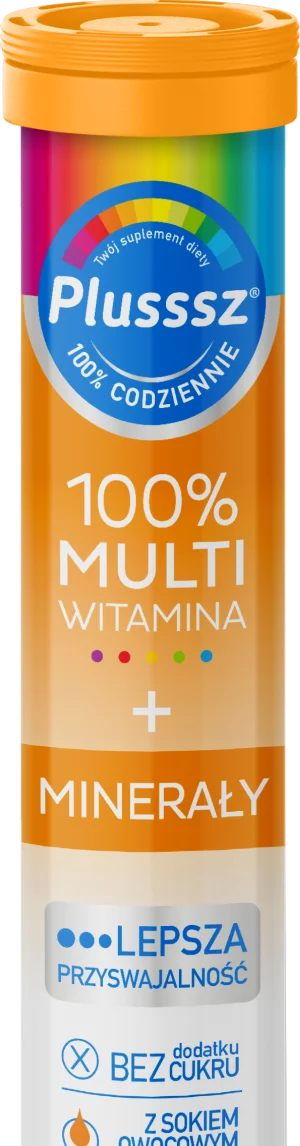
Most people finish a session, grab a protein shake, and call it done. That is leaving a significant amount of recovery on the table. Post-workout recovery in the UK is not just about protein and rest - it is a structured process that involves rehydrating with the right electrolytes, replenishing specific vitamins and minerals, and giving your body the quality sleep it actually needs to rebuild. Miss any one of those pillars and you will keep hitting the same performance ceiling, week after week. This checklist cuts through the noise and gives you a practical, sequenced protocol you can start using today.
Key Insight |
Explanation |
|---|---|
Rehydrate within 30 minutes post-exercise |
The first 30 minutes after a session is the most critical window for fluid and electrolyte replacement. Delaying it extends muscle soreness and fatigue. |
Water without electrolytes can make dehydration worse |
Drinking large amounts of plain water after sweating heavily dilutes remaining sodium, which disrupts fluid balance at the cellular level. |
Sodium, potassium, and magnesium are the recovery trio |
These three electrolytes drive fluid retention, muscle contraction, and over 300 enzymatic reactions including protein synthesis. |
Vitamin D supports measurable muscle recovery |
Peer-reviewed research shows vitamin D plays a direct role in skeletal muscle function and reduces markers of post-exercise muscle damage. |
Sleep is when growth hormone is released |
Muscle repair literally happens during sleep. Cutting sleep short reduces growth hormone output and directly impairs adaptation to training. |
No-added-sugar electrolyte formulas matter post-workout |
High-sugar sports drinks spike insulin and can cause energy crashes. Sugar-free electrolyte products with real mineral content are more effective for recovery. |
Post-workout nutrition timing: 60-minute rule |
The ideal window for post-workout nutrition, including carbohydrate and protein intake, is within 60 minutes of finishing exercise. |
Exercise is a controlled stressor. Every time you train, you create microscopic tears in muscle tissue, deplete your glycogen stores, lose fluid and minerals through sweat, and trigger an inflammatory response. The workout itself is the stimulus. Your body gets stronger, faster, and more resilient during the recovery phase - not during the session itself.
This is why two athletes on identical training programmes can produce wildly different results. The one recovering smarter will adapt faster, sustain higher training volumes, and stay injury-free longer. Skipping or shortcutting post-workout recovery does not just slow your progress - it accumulates as a physiological debt that compounds over weeks and months.
A proper post-workout recovery checklist for UK active individuals covers three non-negotiable pillars: hydration with electrolytes, targeted vitamin and mineral replenishment, and structured rest. Everything else, from foam rolling to cold baths, is supplementary. Get the three pillars right first.
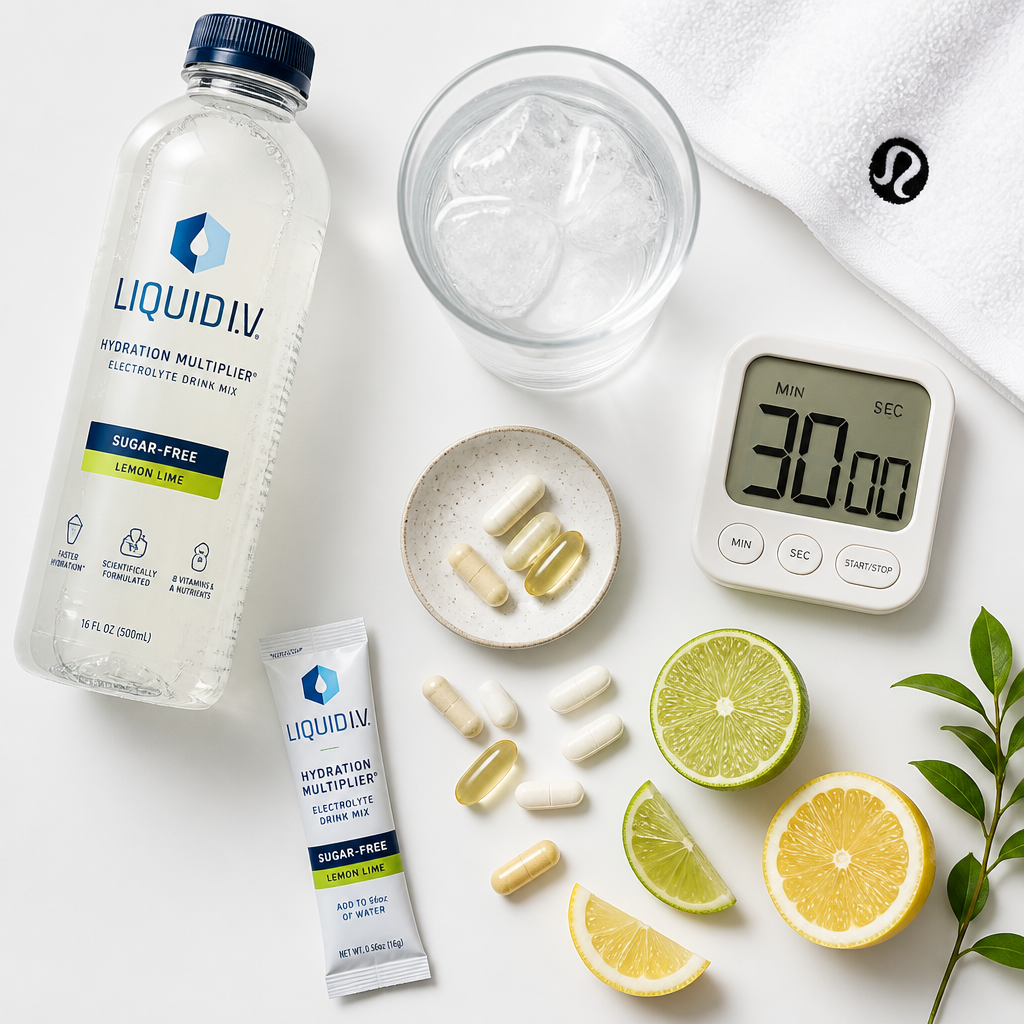
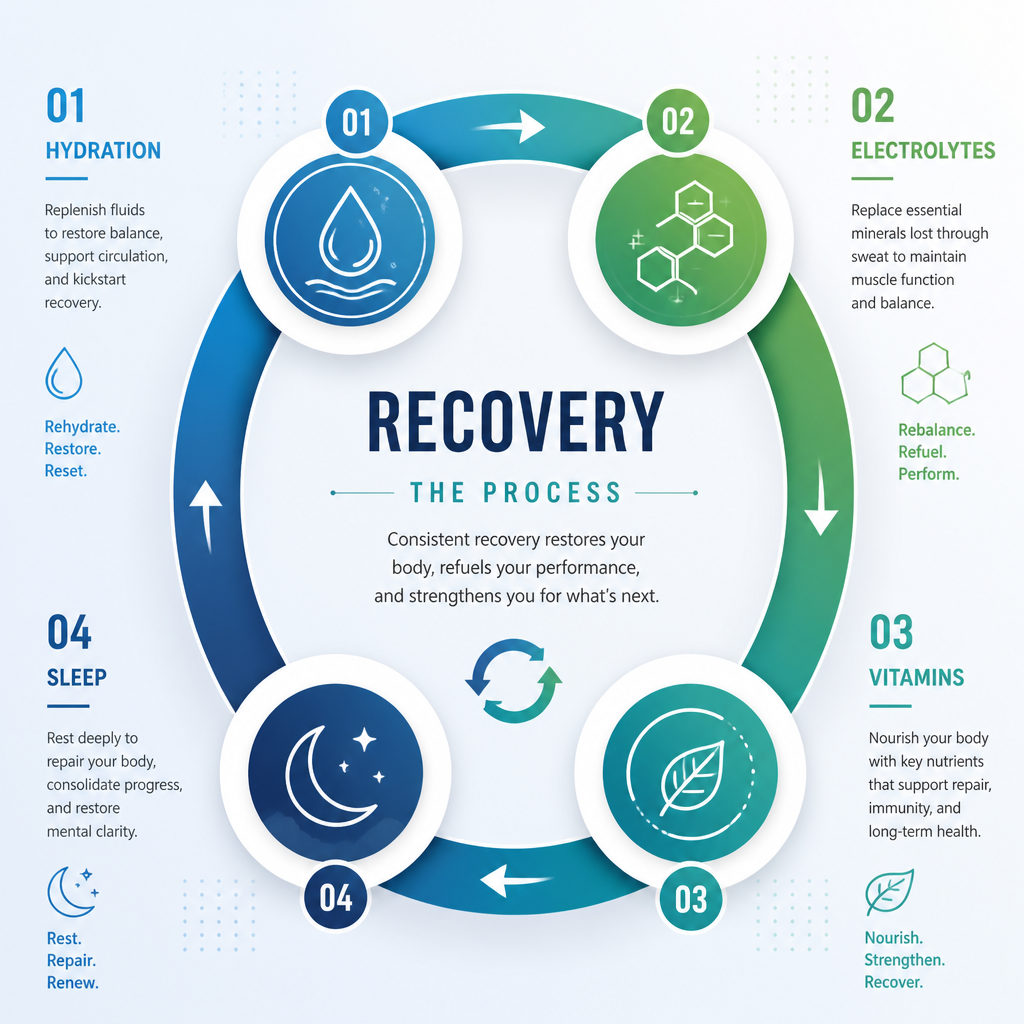
The post-workout hydration window is real and it matters. Research consistently points to the 30-minute mark after finishing exercise as the most critical period for restoring fluid balance. Leave it much longer and muscle soreness deepens, mental clarity drops, and the next session becomes harder before it has even started.
Here is the part most people get wrong: drinking large volumes of plain water after a hard workout can actually make the situation worse. When you sweat heavily, you lose sodium alongside fluid. Flooding your system with plain water without replacing that sodium dilutes what little sodium remains in your blood, which disrupts the osmotic balance that drives fluid into cells. You can end up feeling bloated and still physiologically dehydrated at the tissue level.
How Much Fluid Do You Actually Need?
A practical benchmark is to weigh yourself before and after a session. Every 0.5 kg of body weight lost represents approximately 500 ml of fluid deficit. Aim to replace 125-150% of that loss over the two hours following exercise to account for ongoing urinary losses. For most one-hour moderate-intensity UK gym sessions, that means consuming 500-750 ml of a well-formulated electrolyte drink in the first 30 minutes, then continuing to hydrate with food and fluids through the rest of the day.
Pro tip: If you are training indoors in a heated UK gym during winter months, do not underestimate sweat losses. The dry, warm air accelerates fluid loss even when you do not feel particularly hot. Check your urine colour - pale straw is the target. Anything darker than apple juice means you are behind on fluids.
When we talk about the best electrolytes for recovery, the conversation needs to start with what exercise actually depletes. Sweat is not just water - it contains sodium, potassium, magnesium, calcium, and chloride in varying concentrations depending on the individual, exercise intensity, and environmental conditions. A recovery hydration product that does not replace these minerals is selling you an expensive flavoured water.
Sodium is the primary driver of fluid retention and nerve function. It helps the body hold onto the fluids you consume rather than excreting them rapidly. For moderate-intensity sessions lasting under 60 minutes, a recovery drink providing 200-300 mg of sodium is a reasonable starting point. For high-intensity training or longer sessions, that figure rises to 400-600 mg. Athletes who train in hot conditions or are heavy sweaters will need to sit at the upper end of that range.
Potassium works in tandem with sodium to regulate fluid inside and outside cells. It also plays a direct role in muscle contraction. After intense exercise, a recovery product providing 150-350 mg of potassium supports the cellular rehydration process that plain water misses entirely. A common sign of low potassium post-workout is that feeling of heavy, stubborn legs that simply will not loosen up despite stretching.
Magnesium is involved in over 300 enzymatic reactions, including protein synthesis. After exercise, it supports muscle relaxation and recovery. What makes magnesium particularly valuable in a post-workout context is its dual role - it contributes to both faster physical recovery and improved sleep quality. Given that sleep is the primary mechanism of muscle repair, a formulation that includes meaningful magnesium is doing double duty. Look for 75-100 mg in a post-workout electrolyte product for moderate to high training loads.
Electrolytes play a fundamental role in post-workout recovery that extends far beyond simple hydration. Proper electrolyte management supports faster recovery times, reduced muscle soreness, and improved readiness for the next training session.
Products like those from Plusssz UK's electrolyte range are formulated with no added sugar and with meaningful mineral content across the sodium-potassium-magnesium trio - which is exactly the profile that makes a difference in real post-workout recovery, rather than a product that leans on sweeteners and colour to mask low electrolyte concentrations.
Pro tip: Timing matters more than most people realise. Consuming your electrolyte drink within 30 minutes post-exercise is most critical for recovery. Pre-workout electrolytes can be useful for sessions exceeding 90 minutes or in hot conditions, but the post-workout window is non-negotiable for everyone.

Hydration gets most of the attention in recovery circles, but vitamins and minerals are where the actual cellular repair machinery operates. After exercise, your body enters a state of elevated oxidative stress and inflammation. The micronutrients you supply in the hours following a session either support or limit how effectively your body can manage that process.
Vitamin D is not just a bone health nutrient. Peer-reviewed research, including a systematic review and meta-analysis published in the journal Nutrients, shows that vitamin D is a key micronutrient modulating function and health in skeletal muscle, with measurable effects on post-exercise muscle damage markers. UK active individuals are particularly at risk of suboptimal vitamin D levels due to limited sunlight exposure for much of the year, making targeted supplementation especially relevant.
Vitamin C plays a role in collagen synthesis, which matters for the repair of connective tissue, tendons, and cartilage stressed during exercise. It also acts as an antioxidant, helping to manage the oxidative stress that exercise generates. It is one of the most practical vitamins to include in a post-workout micronutrient stack.
Iron supports oxygen transport and energy metabolism - both of which are taxed by regular training. B vitamins, particularly B6 and B12, are involved in protein metabolism and red blood cell production. For active women especially, iron levels warrant monitoring. A quality multivitamin complex designed for active individuals should cover these bases without requiring multiple separate products.
The practical takeaway: a post-workout recovery protocol that focuses only on macronutrients and hydration, while ignoring vitamin and mineral status, is incomplete. The micronutrient layer is where consistent adaptation happens at the cellular level. For UK athletes training four or more times per week, a targeted daily multivitamin with improved nutrient assimilability is worth the investment.
There is no supplement, electrolyte drink, or recovery modality that substitutes for adequate sleep. Full stop. During sleep, the body releases growth hormone, which is the primary driver of muscle repair and growth. When sleep is cut short or quality is poor, growth hormone output drops and the muscle damage from training fails to be fully repaired before the next session accumulates more.
Sleep deprivation does not just slow recovery - it actively impairs performance in the subsequent session. Energy, reaction time, coordination, and focus all deteriorate with insufficient sleep. For anyone training consistently, consistently poor sleep is the equivalent of building a house on sand. The structural adaptation your training programme is designed to produce simply cannot happen efficiently without 7-9 hours of quality sleep per night.
Active recovery on rest days, such as light walking, gentle mobility work, or low-intensity cycling, promotes blood flow to recovering muscles without imposing additional damage. This is not the same as doing a full session "because you feel fine." In practice, scheduling at least one full rest day per four days of training, and two rest days if you are in a higher-volume block, produces better long-term adaptation than training every day at reduced capacity.
Magnesium, as mentioned in the electrolytes section, contributes to sleep quality as well as physical recovery. Taking a magnesium-containing supplement or electrolyte product in the evening can support the transition into deeper, more restorative sleep stages. This is one of the less-discussed but genuinely practical reasons to choose an electrolyte product with meaningful magnesium content rather than a sodium-only formula.
Not all post-workout recovery strategies are equally effective. The table below compares three common approaches used by UK active individuals, based on what the evidence actually supports.
Recovery Approach |
Strengths |
Weaknesses |
|---|---|---|
Plain water rehydration only |
Convenient, zero cost, widely available |
Does not replace sodium, potassium, or magnesium lost in sweat. Can dilute remaining sodium and worsen cellular dehydration after heavy sessions. |
No-added-sugar electrolyte drink (e.g., Plusssz UK electrolyte formula) |
Replaces the full electrolyte profile lost in sweat. No sugar crash. Supports cellular rehydration, muscle function, and can include magnesium for sleep quality. |
Requires purchasing a quality product. Must check label for actual mineral doses rather than token amounts. |
Traditional sugar-heavy sports drink (e.g., mainstream commercial isotonic) |
Rapid energy availability during prolonged endurance events. Widely available in UK shops. |
High sugar content is counterproductive for post-workout recovery in non-endurance contexts. Can cause insulin spike and energy crash. Often low in magnesium. |
The comparison above reflects a broader principle in recovery supplementation: more sugar does not mean better hydration. The sports drink market has historically conflated energy delivery during exercise with post-workout recovery, which are different physiological needs requiring different formulations.
After working with the recovery protocols that active individuals actually follow, a pattern of recurring mistakes becomes clear. Recognising them is the first step to fixing them.
The 30-60 minute window after exercise is metabolically distinct from the rest of your day. Muscle cells are primed to absorb nutrients, electrolytes, and fluids more efficiently during this period. Waiting two or three hours to eat and rehydrate because "you're not hungry yet" means missing the period of highest uptake efficiency. You are not actually delaying recovery - you are skipping the most productive part of it.
Read the label on your electrolyte product. Many mainstream recovery drinks contain token amounts of electrolytes - so low they would not make a measurable difference even if consumed in volume. A product that lists sodium at 10 mg per serving is not a hydration product. It is flavoured water with branding. Effective recovery formulas for moderate-to-high intensity training should provide sodium in the range of 200-500 mg, meaningful potassium, and at least 50-100 mg of magnesium per serving.
A single training session does not deplete your vitamin D stores. But months of training without addressing micronutrient status absolutely does create deficits that compound over time - particularly in the UK where sunlight-derived vitamin D is limited for six or more months of the year. Getting a blood panel done once or twice a year and supplementing accordingly is one of the highest-return actions an active person in the UK can take.
Consistently sleeping six hours when your body needs eight is not a minor inconvenience - it is a systematic impairment of the recovery process that makes every other element of your protocol less effective. No amount of electrolyte drinks, protein, or supplements compensates for chronic sleep debt. If sleep quality is an issue, addressing magnesium intake and reducing screen time before bed are two practical, evidence-informed starting points.
Pro tip: Build your post-workout routine as a simple three-step sequence you can execute automatically: (1) drink your electrolyte product within 30 minutes, (2) eat a protein and carbohydrate meal within 60 minutes, (3) plan for 7-9 hours of sleep. If you cannot hit all three consistently, fix the one you miss most before adding complexity. Systems beat willpower every time.
The best electrolyte drink for post-workout recovery in the UK is one that provides a meaningful dose of sodium (200-500 mg), potassium (150-300 mg), and magnesium (75-100 mg) without added sugar. Products with token electrolyte levels are not effective for recovery from moderate or intense exercise. Plusssz UK's electrolyte formulations are specifically designed for this purpose, with no added sugar and real mineral content rather than primarily sweeteners and flavour.
For electrolyte and hydration products, within 30 minutes of finishing exercise is the most critical window. For protein and carbohydrate intake, the ideal post-workout nutrition window extends to roughly 60 minutes. Vitamins and minerals from a daily multivitamin can be taken at any consistent time, though taking them with a meal improves absorption for most fat-soluble vitamins including vitamin D.
For low-to-moderate intensity training two or three times per week, a well-balanced diet with good hydration can cover most recovery needs. For active individuals training four or more times per week at moderate-to-high intensity, the practical reality is that diet alone rarely delivers optimal electrolyte and micronutrient replenishment, particularly in the UK where vitamin D from sunlight is limited for much of the year and where sweat losses from indoor heated gyms are often underestimated.
Yes. Magnesium is involved in over 300 enzymatic reactions, including protein synthesis and muscle relaxation. After exercise, adequate magnesium supports faster muscular recovery and also contributes to improved sleep quality, which is the primary mechanism of overnight muscle repair. Many active individuals in the UK are below optimal magnesium levels, making it one of the most practically impactful minerals to include in a post-workout recovery protocol.
Sleep is at least as important as nutrition for post-workout recovery, and for many people it is more impactful because it is the phase most consistently shortchanged. Growth hormone, which drives muscle repair and growth, is primarily released during deep sleep. Consistently sleeping less than seven hours per night reduces growth hormone output, increases cortisol, and impairs the body's ability to rebuild muscle tissue regardless of how well you eat or what supplements you take.
For UK active individuals specifically, vitamin D is the highest priority due to the limited sunlight exposure available for much of the year. Vitamin C supports connective tissue repair and manages post-exercise oxidative stress. B vitamins support energy metabolism and protein utilisation. Iron is particularly relevant for active women. A multivitamin formulated for active lifestyles and with improved nutrient assimilability covers these bases more efficiently than individual supplements stacked separately.
There are meaningful physiological differences that warrant different formulations. Women, for example, have higher iron requirements during reproductive years, and hormonal variation across the menstrual cycle affects hydration and electrolyte needs. Men typically have higher baseline muscle mass and different sweat rates. A multivitamin or supplement specifically formulated for your demographic, rather than a one-size-fits-all product, will better address these nuances. Plusssz UK offers targeted formulations for women, men, and seniors as separate products.
If you have a specific recovery protocol you swear by - or one that completely failed you - share it in the comments. Real-world experience from fellow active individuals is often more useful than theory.