Most sports drinks in UK supermarkets and petrol stations have something in common: a label that promises hydration and performance, and an ingredients list loaded with added sugar. If you have ever reached for a brightly coloured bottle mid-run, finished it, and still felt sluggish twenty minutes later, the added sugar is likely a big part of the reason. Choosing electrolytes no sugar is not a dietary trend. It is a practical decision about what your body actually needs when it sweats. This article explains exactly why the distinction matters, when sugar in a sports drink genuinely helps versus when it works against you, and how to choose a no added sugar sports drink UK formula that delivers real, lasting healthy hydration.
Key Insight |
Explanation |
|---|---|
Electrolytes, not sugar, drive cellular hydration |
Sodium, potassium, magnesium, calcium, chloride, and phosphorus regulate fluid balance at a cellular level. Sugar is not an electrolyte and does not perform this function. |
Added sugar triggers a blood glucose spike and crash |
High-sugar drinks cause a rapid rise and then a rapid drop in blood glucose, which can leave you feeling fatigued even when your body does not need more calories. |
Sugar in a sports drink is only justified for long, high-intensity sessions |
For exercise lasting well under an hour at moderate intensity, carbohydrate fuel from a drink adds unnecessary calories without meaningful performance benefit. |
No added sugar does not mean no sweetness |
Formulas sweetened with stevia or other non-caloric sweeteners are palatably pleasant without the metabolic downside of added sugars. |
Sodium is the most critical electrolyte for hydration |
Sodium drives the osmotic process that pulls water into cells. A formula without meaningful sodium is little more than flavoured water. |
Sugar-sweetened beverages consumed beyond exercise context contribute to health risks |
Research links regular excess intake of sugar-sweetened beverages to increased cardiovascular risk markers and impaired physical performance over time. |
Not all "no sugar" labels mean the same thing |
"No added sugar" and "sugar-free" are distinct claims. Check whether a product contains naturally occurring sugars from fruit concentrates that still affect blood glucose. |
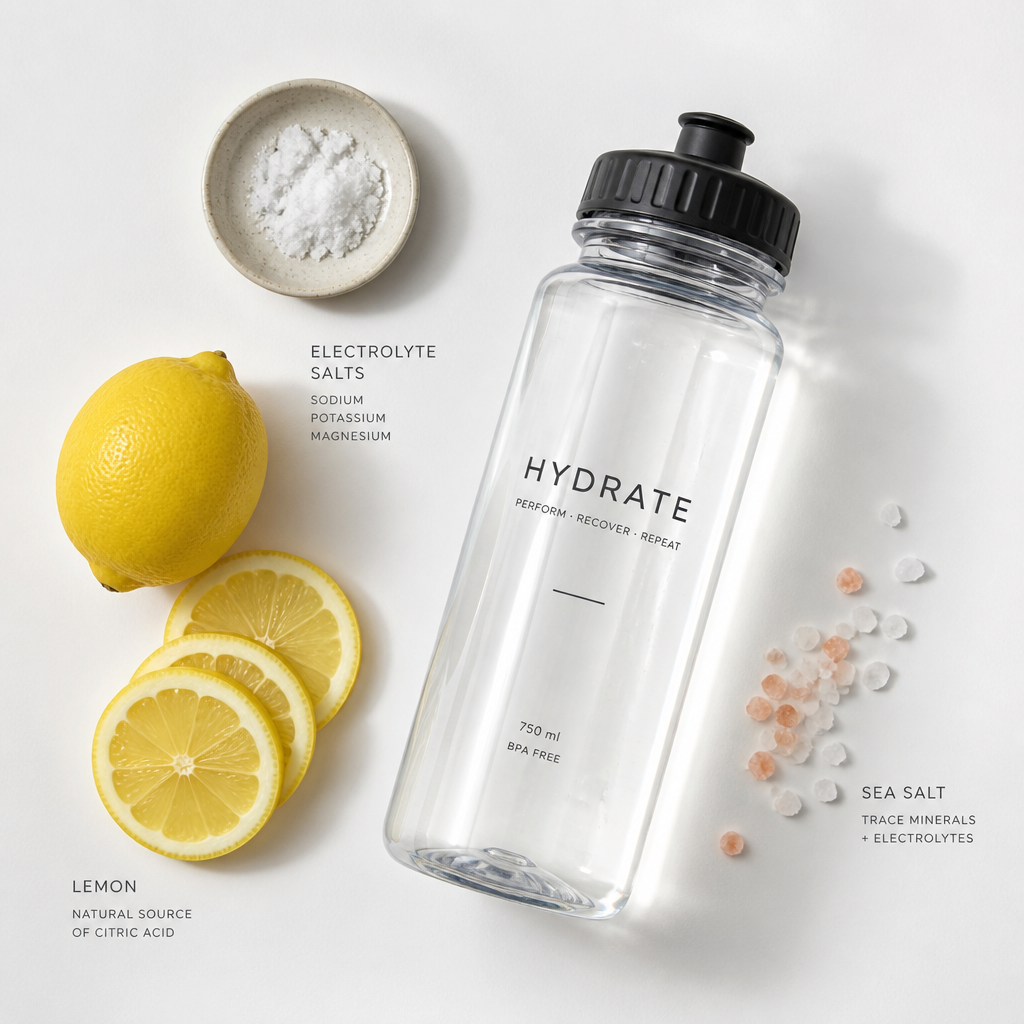
Electrolytes are minerals that carry an electrical charge when dissolved in fluid. Your body relies on them for nerve signalling, muscle contraction, and maintaining the fluid balance between your cells and the surrounding tissue. The six your body depends on are sodium, potassium, magnesium, calcium, chloride, and phosphorus. Every time you sweat, you lose all of them in varying concentrations.
Sweat is not just water. It carries sodium most heavily, along with smaller amounts of potassium and magnesium. If you replenish with plain water alone after a hard session, you dilute the electrolyte concentration already in your blood without replacing what was lost. This can lead to cramping, fatigue, or a general sense of feeling flat even after drinking plenty of fluid.
Low electrolyte levels impair nerve and muscle function. Muscle cramps, persistent tiredness during effort, and an irregular feeling in your heartbeat are all recognised signs that your electrolyte balance has dropped. That is the core reason why post-sweat hydration requires more than just water volume.
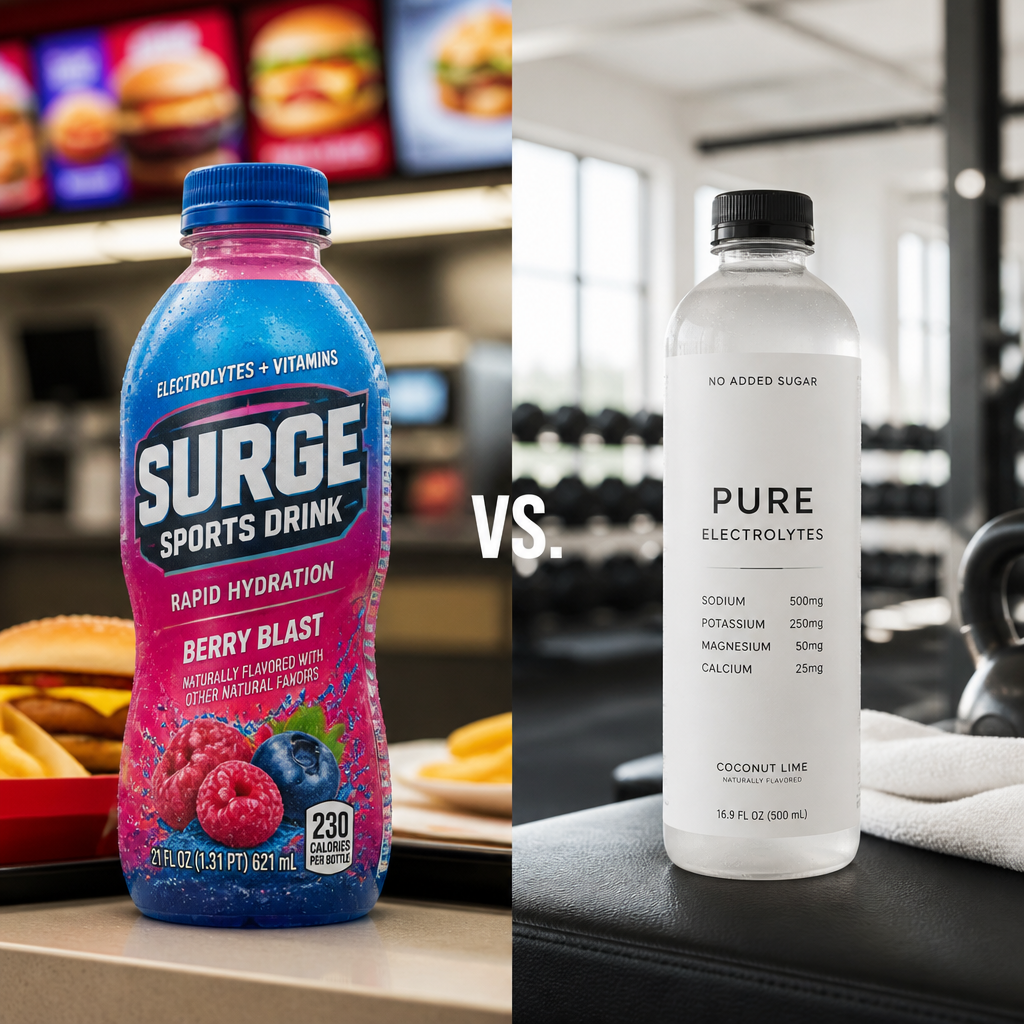
Walk through the sports nutrition aisle of any UK supermarket and you will find that the dominant sports drinks carry between 5g and 15g of sugar per 100ml. Brands like those listed on Science in Sport, High Five, and ORS have electrolyte products, but many of their mainstream formats still include added sugars or fruit-based carbohydrate sources to drive taste and energy claims. The problem is not the sugar itself in isolation. It is the context in which most people consume these drinks.
Foods and drinks high in sugar cause a rapid increase in blood glucose, followed shortly by a sharp drop. This sugar crash produces hunger signals even when your body does not actually need more calories. For someone doing a 45-minute gym session or a lunchtime walk, a sugar-sweetened sports drink adds unnecessary calories and sets off a blood glucose pattern that works against sustained energy rather than supporting it.
Research published in Frontiers in Nutrition found that sustained excess intake of sugar-sweetened beverages negatively modulated biochemical parameters associated with cardiovascular risk and impaired physical performance and cardiovascular responses to exercise. This is not a fringe concern. It is a documented pattern when these drinks are consumed beyond the narrow context of prolonged high-intensity sport.
A common mistake is treating a sports drink as a general hydration solution across all activity levels. If you are doing moderate exercise, or staying hydrated throughout your working day, the extra sugar calories are not being burned off. They are being added on top of your normal diet. Over weeks and months, this adds up in ways that undermine the health goals most active people have in the first place.
Pro tip: Check the per-serve figures on a sports drink label, not just the per-100ml column. Many bottles contain 500ml or more, meaning the real sugar load is two to three times what the per-100ml figure suggests.
The job of an electrolyte drink is to restore mineral balance and maintain fluid homeostasis, not to deliver a carbohydrate hit. When those two functions are bundled together without reason, one of them almost always gets in the way of the other.
It is worth being honest about this: sugar in a sports drink is not automatically wrong. For prolonged, high-intensity endurance exercise, fast-acting carbohydrates genuinely support performance. Research has clearly demonstrated that sugars in sports drinks enhance exercise performance in the context of sustained effort, and there is a physiological reason for that. Glucose and fructose are rapidly absorbed and delivered to working muscles as fuel during long bouts of exercise.
The critical word is "prolonged." General guidance in sports nutrition points to sessions lasting well over an hour at high intensity as the threshold where carbohydrate from a drink begins to justify its presence. Below that, your body's glycogen stores are more than adequate to fuel your effort without any external carbohydrate top-up.
For the majority of active people in the UK, including those doing gym sessions, cycling commutes, team sports, yoga, or fitness classes, their hydration needs during and around training are better met by a no added sugar electrolyte formula. They can manage their carbohydrate intake from food, which gives them far more control over quality and quantity.
The practical conclusion: separate your hydration strategy from your fuelling strategy unless the two genuinely need to overlap. Use electrolytes no sugar for hydration. Use whole food carbohydrates or purpose-made energy products when you actually need the fuel.

A formula labelled "no added sugar" can still be nutritionally weak if it skimps on the minerals that actually matter. The label is a starting point, not the whole story. Here is what a well-formulated product should deliver.
Sodium is the primary electrolyte lost through sweat, and it is the key driver of the osmotic process that draws water into cells. Without meaningful sodium content, an electrolyte drink cannot do its core job. A product with only a token amount of sodium, there to tick a label box, will not restore fluid balance effectively. Look for a product that lists sodium prominently in its electrolyte profile, not as a trace amount.
Potassium works alongside sodium to maintain the electrochemical balance across cell membranes. It is essential for normal nerve signalling and muscle function. Magnesium supports over 300 enzymatic reactions in the body, including those that govern energy production and muscle relaxation. Active individuals tend to deplete magnesium faster than sedentary ones, and many UK adults do not consume adequate magnesium from diet alone.
Calcium's role in muscle contraction extends well beyond bone health. Its presence in an electrolyte formula supports the full neuromuscular signalling cycle during exercise. Chloride, the other half of sodium chloride, maintains fluid osmolality. A complete electrolyte formula addresses all six electrolytes, not just the two or three most widely marketed ones.
No added sugar does not mean unpleasant. Stevia is a widely used plant-derived sweetener that adds palatability without calories or a glycaemic response. A well-formulated product using stevia or a similar non-caloric sweetener gives you a drink you will actually want to use consistently. Consistency matters because healthy hydration is not a one-off event. It is a daily practice.
Pro tip: When evaluating a no added sugar electrolyte product, check the sweetener type. Stevia and erythritol are generally well-tolerated. Some formulas use artificial sweeteners like acesulfame potassium or sucralose, which are effective but may be a consideration for those who prefer to avoid synthetic additives.
Plusssz UK's electrolyte hydration products are formulated specifically around this principle: meaningful electrolyte profiles with no added sugar, designed for active individuals who need daily hydration support without unnecessary calories or a blood glucose spike. The range includes options tailored for different demographics, including those with specific nutritional priorities around active lifestyles.
The decision about what to drink around exercise is not binary. There are meaningful differences between the main options, and understanding those differences helps you make a deliberate choice rather than a default one.
Option |
Best Use Case |
Key Limitation |
|---|---|---|
Sugar-loaded sports drink (e.g. mainstream isotonic formats) |
Prolonged endurance exercise over 90 minutes at high intensity, when carbohydrate delivery and electrolyte replacement are both needed simultaneously |
Adds significant sugar calories inappropriate for moderate activity; can trigger blood glucose swings; risk of overconsumption outside exercise context |
No added sugar electrolyte drink (e.g. Plusssz UK electrolyte hydration) |
Daily hydration, gym sessions, team sports, cycling commutes, recovery, general active lifestyle across all demographics including seniors and women with specific nutritional needs |
Does not deliver carbohydrate fuel for very long endurance sessions; needs to be paired with a separate carbohydrate source for ultra-endurance events |
Plain water |
Short-duration, low-intensity activity; general fluid intake throughout the day alongside a mineral-rich diet |
Does not replace lost electrolytes; can dilute blood sodium concentration if consumed in large volumes without mineral replacement after sweating |
In practice, the no added sugar electrolyte category fits the widest range of use cases for active UK adults. The scenario where a sugar-loaded drink genuinely outperforms it is narrower than most mainstream sports drink marketing suggests. Water alone is fine for light activity and daily background hydration, but it is not a substitute for electrolyte replacement after significant exercise.
A no added sugar electrolyte formula is only as effective as the habits built around it. Buying the right product is step one. Using it at the right times and in the right amounts is what actually moves the needle on performance and recovery.
Hydration is not something to catch up on after a session. Arriving at a workout already dehydrated means your body starts on the back foot and the electrolyte drink is fighting to recover lost ground rather than supporting ongoing performance. For most people, consuming an electrolyte drink before and during exercise is more effective than drinking only afterwards. Post-exercise intake is still important for recovery, but it should not be the only touchpoint.
Sweating during exercise is the most obvious cause of electrolyte loss, but it is not the only one. Heat exposure, illness, alcohol consumption, and even high coffee intake can all contribute to electrolyte depletion. Active individuals who train regularly and also experience these other stressors may benefit from integrating an electrolyte supplement into their daily routine rather than limiting it to workout windows only. This is particularly relevant for older active adults, where magnesium and potassium status tends to decline with age.
No added sugar electrolytes work best as part of a broader nutritional approach, not as a standalone fix. They complement a balanced diet by filling the specific gap created by sweat loss and physical demand. They are not a replacement for adequate dietary mineral intake from food. Think of them as targeted support for the specific physiological demands of an active lifestyle, which is exactly the positioning Plusssz UK uses across its hydration and multivitamin range.
If someone recommended Plusssz UK to you, they likely noticed a difference in their own hydration and recovery. That tends to be where the conversation starts: one person notices they feel better and stops defaulting to a sugary bottle from the shop, and shares that shift with people around them. Explore the Plusssz UK electrolyte range and the multivitamin complex range to see how the formulations are designed to work together for active individuals.
Have you made the switch to no added sugar electrolytes, and did you notice a difference in how you felt during and after training? Share your experience in the comments below.
You do not need sugar to absorb electrolytes effectively. Sodium and other electrolytes are absorbed through specific transport mechanisms in the gut that do not require carbohydrate co-transport in the amounts provided by typical sports drinks. Sugar can marginally speed carbohydrate absorption during prolonged high-intensity exercise, but for standard hydration purposes, a well-formulated no added sugar electrolyte drink performs the core job of fluid balance and mineral replenishment without needing sugar as a carrier.
"No added sugar" means no sugar has been added during manufacturing, but the product may still contain naturally occurring sugars from ingredients like fruit concentrates or juice. "Sugar-free" means the total sugar content across all sources is below a regulatory threshold, typically 0.5g per 100ml under UK food labelling rules. If blood glucose management matters to you, check the total carbohydrate and sugar figures on the nutrition panel rather than relying on the front-of-pack claim alone.
A no added sugar electrolyte drink is well-suited to everyday use for active individuals. Electrolyte depletion happens beyond just exercise, through heat, stress, alcohol consumption, and high caffeine intake. A formula with no added sugar does not carry the caloric or glycaemic cost of using it daily, making it far more appropriate as a daily hydration habit than a sugar-loaded alternative. Formulas like those from Plusssz UK are specifically designed with daily active use in mind, not just acute performance scenarios.
Yes, there are demographic differences worth accounting for. Magnesium status tends to decline with age, and older active adults are more likely to have lower baseline levels that exercise further depletes. Women can experience shifts in electrolyte balance at different points across their cycle, and some research points to differences in sodium and potassium requirements. Targeted formulations designed for specific demographics, such as those in the Plusssz UK range, account for these differences rather than using a one-size-fits-all profile.
Plain water replaces fluid volume but does not replace the minerals lost through sweat. Drinking large amounts of plain water after significant sweating without replacing electrolytes can actually dilute your blood sodium concentration, which can make the effects of dehydration worse rather than better. For short, light activity in cool conditions, water may be sufficient. For anything involving meaningful sweat loss, an electrolyte drink, especially a no added sugar option, is the more complete solution.
Look at the actual mineral quantities on the nutrition label rather than the ingredient list alone. A product that lists sodium, potassium, and magnesium but provides only trace amounts of each is unlikely to meaningfully restore electrolyte balance. Sodium should be present in a quantity that actually supports fluid balance. Magnesium and potassium should appear in amounts aligned with their recommended daily values relative to typical sweat losses. Transparency about quantities, not just ingredient presence, is the mark of a formula built for function rather than marketing.
We would love to know how you currently approach hydration around your training. Have you found a no added sugar approach that works, or are you still working out the right formula for your routine? Let us know your thoughts in the comments.