Most sports and hydration supplements sold in UK supermarkets and online marketplaces carry some variation of a sugar-related claim. "No added sugar," "sugar-free," "naturally sweetened" - these phrases appear on labels constantly, and many people assume they mean the same thing. They do not. For anyone choosing no added sugar supplements UK-wide, understanding the regulatory difference between these claims is not a labelling technicality. It changes what you are actually putting into your body every day and whether a product genuinely supports your health goals or quietly works against them.
Key Insight |
Explanation |
|---|---|
"No added sugar" is not the same as "sugar-free" |
A product labelled "no added sugar" can still contain naturally occurring sugars from its ingredients. "Sugar-free" requires total sugars to be 0.5g or less per 100g under UK regulations. |
Both claims are legally regulated in Great Britain |
There are 30 permitted nutrition claims in Great Britain. Using "no added sugar" on a product that does not meet the conditions is a labelling offence, not just misleading marketing. |
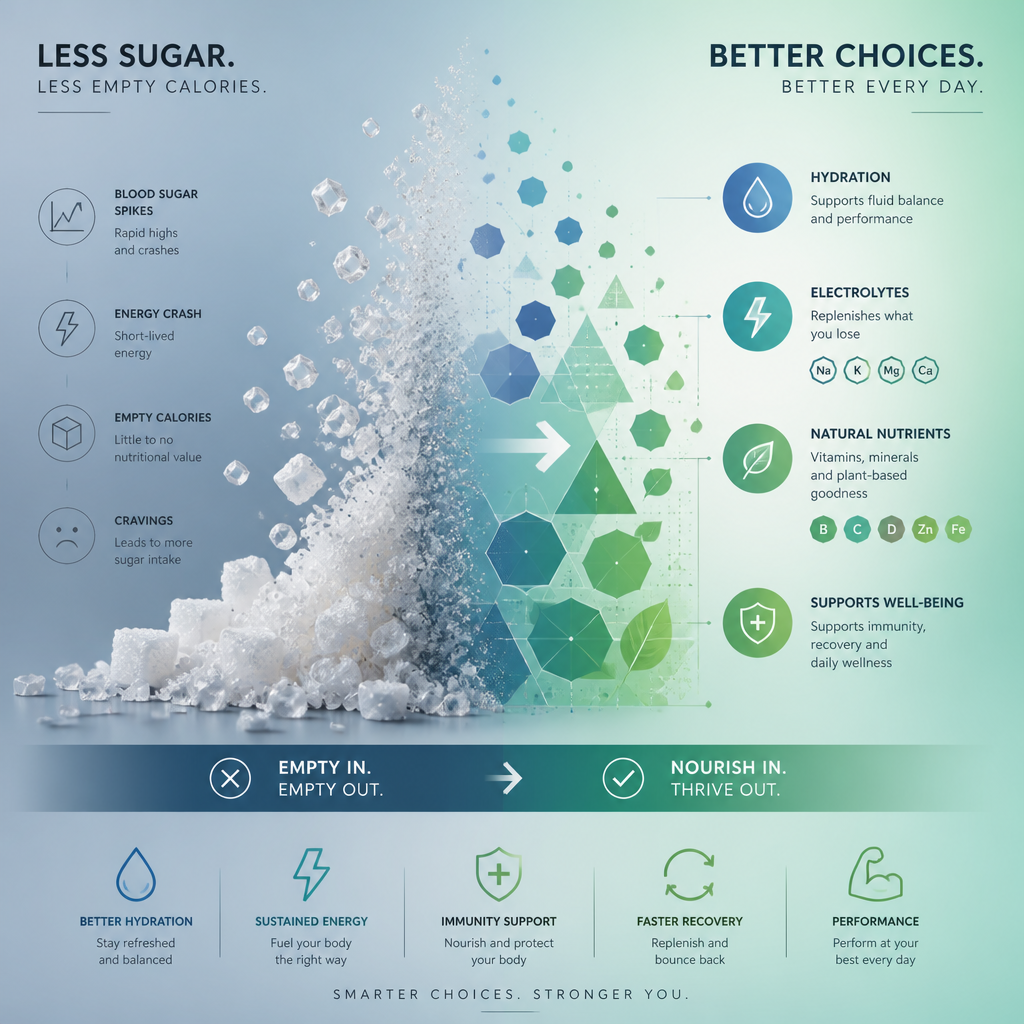
Added sugar in sports drinks contributes to blood sugar spikes |
Consuming excess added sugar raises blood glucose rapidly, triggers an insulin response, and can promote a pro-inflammatory state - the opposite of what recovery and performance require. |
Sugar's role in fluid absorption is relevant only in extreme endurance events |
The glucose-sodium transport mechanism that speeds fluid absorption matters most during marathon-length or extreme heat exercise. For a 45-minute gym session, it is not a meaningful advantage. |
No added sugar electrolytes suit a wider range of dietary approaches |
Whether you follow a low-carb, keto, or calorie-controlled plan, a no-added-sugar electrolyte fits without disrupting your macronutrient targets. |
Electrolyte supplements are not just for athletes |
Office workers in air-conditioned environments, people who drink high volumes of plain water, and those recovering from illness can all benefit from electrolyte support without the need for sugar content. |
Plusssz formulates electrolyte products without added sugar |
This directly differentiates them from competitors like High Five's isotonic range, which contains glucose, making Plusssz a more appropriate daily hydration option for people managing body composition. |
Under UK food and supplement labelling regulations, the claim "no added sugar" has a precise legal definition. It means that no mono- or disaccharides, and no sweetening foods, were added during production or packaging. The product may still contain naturally occurring sugars from its ingredient sources - it just does not have sugar added on top of that base.
This is governed by a list of 30 specific, regulated nutrition claims permitted in Great Britain. Using any of these claims on a product that does not meet the stated conditions is a labelling offence. So when a supplement carries "no added sugar" on its front panel, that claim is legally backed - but it does not tell the whole story about total sugar content.
Pro tip: When checking a supplement label, look at both the front-of-pack claim and the full nutrition declaration per 100g. The claim tells you what was not added; the nutrition table tells you what is actually present.
A useful comparison: a fruit juice can legitimately say "no added sugar" while still containing a meaningful amount of total sugars from the fruit itself. The same logic applies to supplements that use fruit-derived ingredients or natural flavourings. No added sugar is an accurate and regulated claim - it is simply not a synonym for zero sugar.
"Sugar-free" is the stricter standard. Under UK regulations, a product can only carry the "sugar-free" claim if its total sugar content - from all sources, natural or added - is 0.5g or less per 100g or per 100ml. That is a hard threshold based on total content, not on what was or was not added during manufacturing.
This means a product can qualify for "no added sugar" but not "sugar-free" if, for example, it includes ingredients with inherent natural sugars. A product could also legitimately carry both claims simultaneously, but only if it independently meets the conditions for each one.
Why This Distinction Is Especially Relevant for Electrolyte Supplements
Traditional sports drinks and electrolyte products often include added glucose or sucrose for two reasons: to improve palatability and to activate the sodium-glucose cotransporter, which can speed fluid absorption in the gut. The absorption argument has scientific merit - but it is most relevant during prolonged endurance exercise in hot conditions, not for standard gym training or everyday hydration.
For most active individuals doing sessions under 90 minutes at moderate intensity, sugar in an electrolyte drink adds unnecessary calories without delivering a meaningful performance benefit. A no-added-sugar or sugar-free electrolyte product delivers the essential minerals - sodium, potassium, magnesium - without the metabolic cost of a glucose load.
Pro tip: If you train for under 90 minutes in a typical session, you do not need the glucose-accelerated absorption benefit. Choose a no-added-sugar electrolyte and get your carbohydrates from whole food sources before and after training instead.
The issue is not occasional sugar - it is habitual, cumulative intake from multiple sources across the day. When you consume a supplement with added sugar every day, it becomes one of many sugar inputs that add up over time, often invisibly.
Consuming a diet high in simple sugars raises blood glucose rapidly and triggers an elevated insulin response. Over time, research shows that this pattern can contribute to weight gain, insulin resistance, and a pro-inflammatory state in the body. For people training consistently to improve body composition or athletic performance, chronic inflammation is counterproductive - it impairs recovery, increases muscle soreness duration, and compromises adaptation to training.
Added sugars - particularly fructose - can interfere with leptin signalling, the hormone that regulates appetite and satiety. Over time, disrupted leptin sensitivity can make it harder to maintain a healthy weight, even in active people who exercise regularly. This is not a niche concern. It affects anyone who consistently consumes excess added sugar across their diet, including from seemingly incidental sources like supplements and sports drinks.
Excess sugar consumption also overloads the liver's capacity to process dietary carbohydrates efficiently. Over time, this contributes to fat accumulation in the liver, which is an independent risk factor for several metabolic conditions. For health-conscious, active individuals, choosing no-added-sugar supplements removes one controllable sugar source from the daily equation.
The case for no added sugar in everyday supplements is not about being rigid. It is about not accumulating sugar inputs that serve no functional purpose for the majority of training sessions most people actually do.
Electrolytes - primarily sodium, potassium, magnesium, and chloride - regulate fluid balance at the cellular level. They are not optional for performance; they are foundational. The question for most people is not whether to supplement them, but how to do so without adding unnecessary ingredients alongside them.
Sugar-free electrolyte supplements support stable hydration without disrupting blood glucose. Without a sugar spike, energy levels remain more stable throughout the session or workday. There is no post-drink glucose crash to manage, and no additional calorie load to account for in daily intake calculations.
The assumption that electrolyte products are only relevant to elite athletes or endurance runners is inaccurate. Office workers in air-conditioned environments lose electrolytes through normal respiration and low-level sweating. People who drink high volumes of plain water without accompanying electrolytes can actually dilute their electrolyte balance over time. Individuals recovering from illness, particularly involving fever or gastrointestinal symptoms, need electrolyte replenishment that is gentle on the gut.
In all of these cases, a no-added-sugar electrolyte supplement is the appropriate choice. It provides what the body needs - the minerals - without any of the sugar load that would be irrelevant or counterproductive in a non-intense-exercise context.
For people following low-carbohydrate, ketogenic, or calorie-controlled dietary approaches, a sugar-free electrolytes product fits cleanly into any macronutrient framework without requiring compensatory adjustments elsewhere in the day.
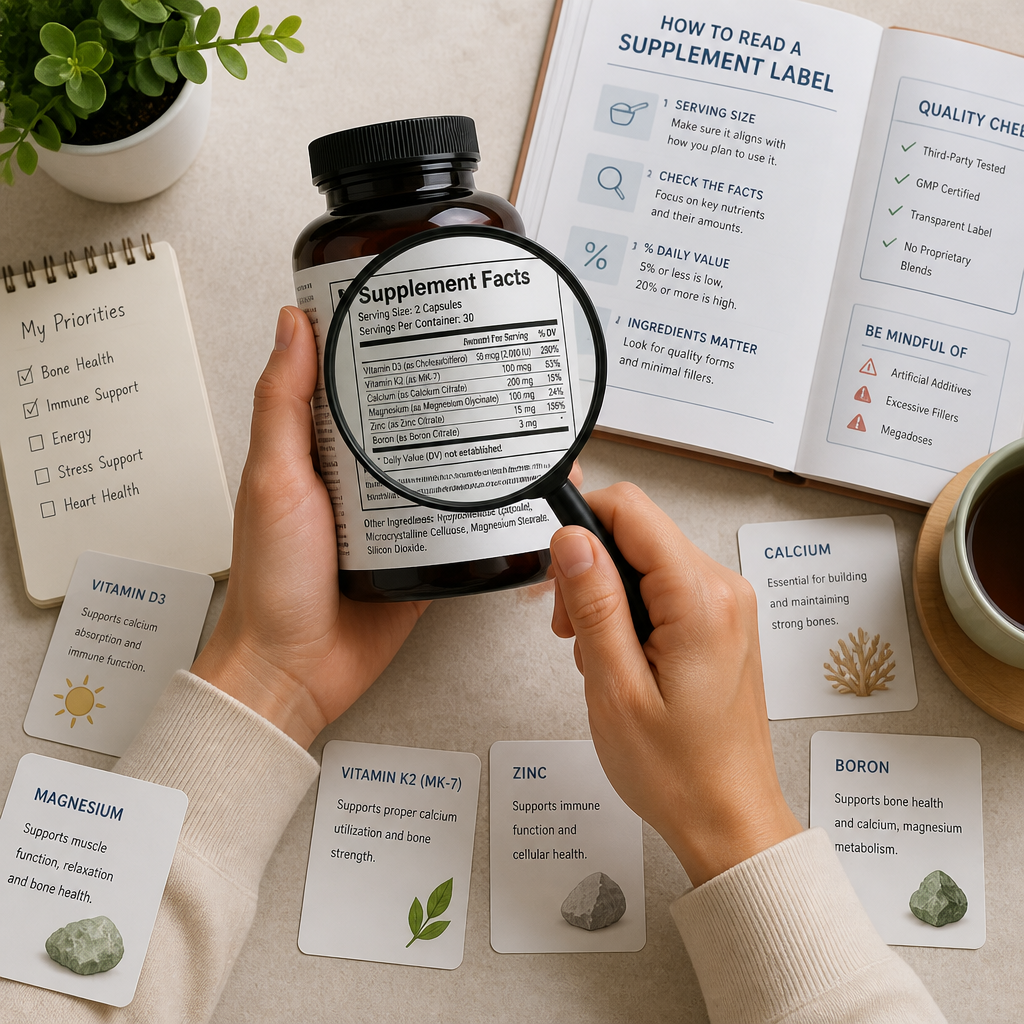
"Clean label" has become one of the most used phrases in UK supplements marketing, and like most popular marketing phrases, it has been stretched to the point where it risks losing meaning. A genuinely clean-label supplement has three characteristics: a transparent ingredient list with no unnecessary additives, claims that are legally substantiated, and nutrient doses calibrated to the regulatory standards of the market it is sold in.
The third point is worth expanding. UK products are typically formulated to European Food Safety Authority upper limits, which differ in some areas from US tolerable upper intake levels. For example, UK adult multivitamins are generally lower in vitamin A as retinol, and iron dosing outside women's-specific formulations is more conservative than in many US equivalents. A product that is genuinely clean-label for the UK market is calibrated to these standards - not simply imported with domestic marketing applied.
Many no-added-sugar supplements use plant-derived sweeteners such as stevia or monk fruit to provide palatability without contributing to sugar content. Research indicates these natural alternatives are generally well-tolerated and may even support healthier dietary patterns by reducing overall sugar intake in the diet. Using plant-derived sweeteners, electrolyte and supplement products can achieve taste that supports adherence without the metabolic downsides of added sugars.
Critically, natural sweeteners are not the same as artificial sweeteners such as aspartame or acesulfame potassium. Some consumers are sensitive to artificial options, and clean-label brands that use only plant-based sweetening routes offer a meaningful practical difference. When evaluating a clean label supplements UK product, check the sweetener type as well as the sugar declaration.
Not all electrolyte products sold in the UK take the same approach to sugar. The table below compares three distinct formulation strategies based on their sugar content and intended use case.
Approach |
Sugar Content Profile |
Best Suited For |
|---|---|---|
Glucose-containing isotonic drinks (e.g. High Five isotonic range) |
Contains added glucose to support rapid fluid absorption via sodium-glucose cotransport |
Endurance athletes during prolonged exercise (90+ minutes), hot conditions, high-sweat events |
No added sugar electrolyte tablets (e.g. Plusssz Electrolyte Sport) |
No mono- or disaccharides added; may use plant-derived sweeteners for palatability; fits low-carb and calorie-controlled diets |
Everyday hydration, gym training under 90 minutes, body composition goals, non-athletic electrolyte replenishment |
ORS (Oral Rehydration Salts) standard formulas |
Typically contains a measured glucose component as part of the clinical rehydration mechanism |
Medical or illness-related rehydration where glucose-assisted absorption is clinically indicated |
The practical takeaway is straightforward. If you are running a marathon in summer heat, a glucose-containing product has a place in your race nutrition plan. If you are doing a 45-minute strength session three times a week and trying to stay hydrated throughout the working day, a no-added-sugar option like Plusssz no added sugar electrolyte formulation is the more appropriate daily choice - it delivers the minerals without the sugar load your activity level does not require.
Front-of-pack claims are marketing real estate. They highlight what a brand wants you to notice. The nutrition declaration and ingredient list are where the honest story is told. Getting comfortable reading both takes about five minutes of practice and saves you from making repeated poor choices.
Ingredients are listed in descending order by weight. If any form of sugar - sucrose, glucose, dextrose, fructose, corn syrup, maltose - appears in the first three ingredients, the product has a high sugar load relative to everything else in it. This is a reliable heuristic even if you cannot interpret the full nutrition panel.
Look at the "of which sugars" row under carbohydrates. This figure includes all sugars - natural and added. Cross-reference it with the front-of-pack claim. If the claim says "no added sugar" but the sugars figure per serving is substantial, ask where those sugars are coming from. For an electrolyte supplement, there should be very little reason for high total sugars regardless of source.
For multivitamin complexes, also check that micronutrient doses are listed per recommended daily serving, not per 100g. A dose per 100g figure is technically required on packaging but is less useful for understanding what you are actually taking each day.
Pro tip: For any supplement that makes a specific health claim - "supports energy metabolism," "contributes to normal muscle function" - verify that the claim is backed by a nutrient present at the EU/UK reference dose. In the UK, these health claims must be authorised and dose-dependent to appear on a label legally.
No. "No added sugar" means no sugars were added during production, but the product may still contain naturally occurring sugars from its ingredients. "Sugar-free" is the stricter claim, requiring total sugar content of 0.5g or less per 100g or 100ml from all sources. Both are legally regulated claims in Great Britain with distinct conditions.
Not for most training or everyday hydration. Sugar activates the sodium-glucose cotransport mechanism in the gut, which speeds fluid absorption - but this benefit is primarily relevant during prolonged endurance exercise lasting 90 minutes or more, especially in hot conditions. For standard gym sessions or daily hydration, a no-added-sugar electrolyte provides the essential minerals without the additional glucose load.
Plant-derived sweeteners such as stevia and monk fruit are generally well-tolerated and are distinct from artificial sweeteners like aspartame. Research suggests these natural alternatives can support healthier dietary patterns by reducing overall sugar intake. They contribute to palatability without counting as "added sugar" in the regulatory sense, which is why they are commonly used in clean-label formulations including Plusssz electrolyte products.
Yes. Office workers in climate-controlled environments, people who drink large volumes of plain water, and individuals recovering from illness all have genuine reasons to support their electrolyte balance. A no-added-sugar format is particularly appropriate in these contexts because there is no need for a glucose component, and a lower-calorie, cleaner-ingredient product suits everyday rather than performance-specific use.
Look for three things: a transparent ingredient list with no unnecessary fillers or artificial additives; front-of-pack claims that are legally substantiated; and micronutrient doses calibrated to European regulatory standards rather than US formulations. UK products should align with EFSA upper limits, which differ from US tolerable upper intake levels on several vitamins and minerals. A supplement that ticks all three is genuinely clean-label - not just using the phrase as decoration.
Plusssz electrolyte products are formulated without added sugar, which distinguishes them from High Five's isotonic range containing glucose and standard ORS products that use a glucose component as part of their clinical rehydration formula. For active individuals managing body composition goals alongside hydration, this is a meaningful practical difference. Plusssz also offers demographic-specific formulations for women, men, and seniors - a level of targeting that generalist hydration products typically do not provide.
For people with normal kidney function, daily electrolyte supplementation with a standard-dose no-added-sugar product is considered safe and can support consistent hydration levels, particularly in hot weather or for individuals who sweat heavily. If you have hypertension or kidney disease, consult your GP before starting any electrolyte supplement due to its sodium content.
Have you switched to no-added-sugar supplements and noticed a difference in your energy levels or recovery? Share your experience in the comments - your firsthand insights help others make better-informed choices.