You finished a hard training session. Your muscles are burning, your kit is soaked, and you are already thinking about your next session. The problem is that most people immediately undo a significant portion of their training effort in the two hours that follow, not by doing anything dramatic, but by getting their post-workout recovery nutrition completely wrong. They either eat nothing, drink only plain water, or reach for something convenient but nutritionally useless. If your recovery is poor, your next session will be harder than it needs to be, and over time, that compounds into stalled progress, persistent fatigue, and elevated injury risk.
Key Insight |
Explanation |
|---|---|
Protein timing window is wider than you think |
Muscle protein synthesis remains elevated for 24 to 48 hours after resistance training, not just 30 minutes. You have time to eat a proper meal. |
Electrolyte replacement is non-negotiable after sweating |
Sweat contains sodium, potassium, and magnesium. Replacing fluid with water alone dilutes remaining electrolytes and can worsen cramps and fatigue. |
Carbohydrates refuel your engine, not just protein |
Glycogen depleted during training must be replenished with carbohydrates. Protein alone will not restore training capacity for your next session. |
The 15-25g protein target is well-supported |
Consuming 15 to 25g of protein within two hours post-workout is recommended to meaningfully stimulate muscle protein synthesis without excess. |
No-added-sugar electrolyte supplements suit most training goals |
If body composition is a goal alongside performance, no-added-sugar electrolyte formulas deliver mineral replacement without unnecessary caloric load. |
Rehydration requires more than thirst |
For every kilogram of body weight lost during training, approximately 1.25 to 1.5 litres of fluid should be consumed post-exercise. |
Multivitamins complement recovery on rest days |
Micronutrient gaps, particularly in active individuals with high metabolic turnover, are best addressed with a consistent multivitamin routine on lower-intensity days. |
Recovery is not a passive process. It is an active physiological cascade triggered the moment you stop training. Your muscles are torn down, your glycogen stores are depleted, your core temperature is elevated, and your hormonal environment is primed for repair. Whether that repair happens efficiently or poorly depends almost entirely on what you consume in the hours that follow a session. This is why post-workout recovery nutrition in the UK context matters so much: training density is high, and most active people in Britain are fitting sessions around demanding schedules, which makes every recovery window count.
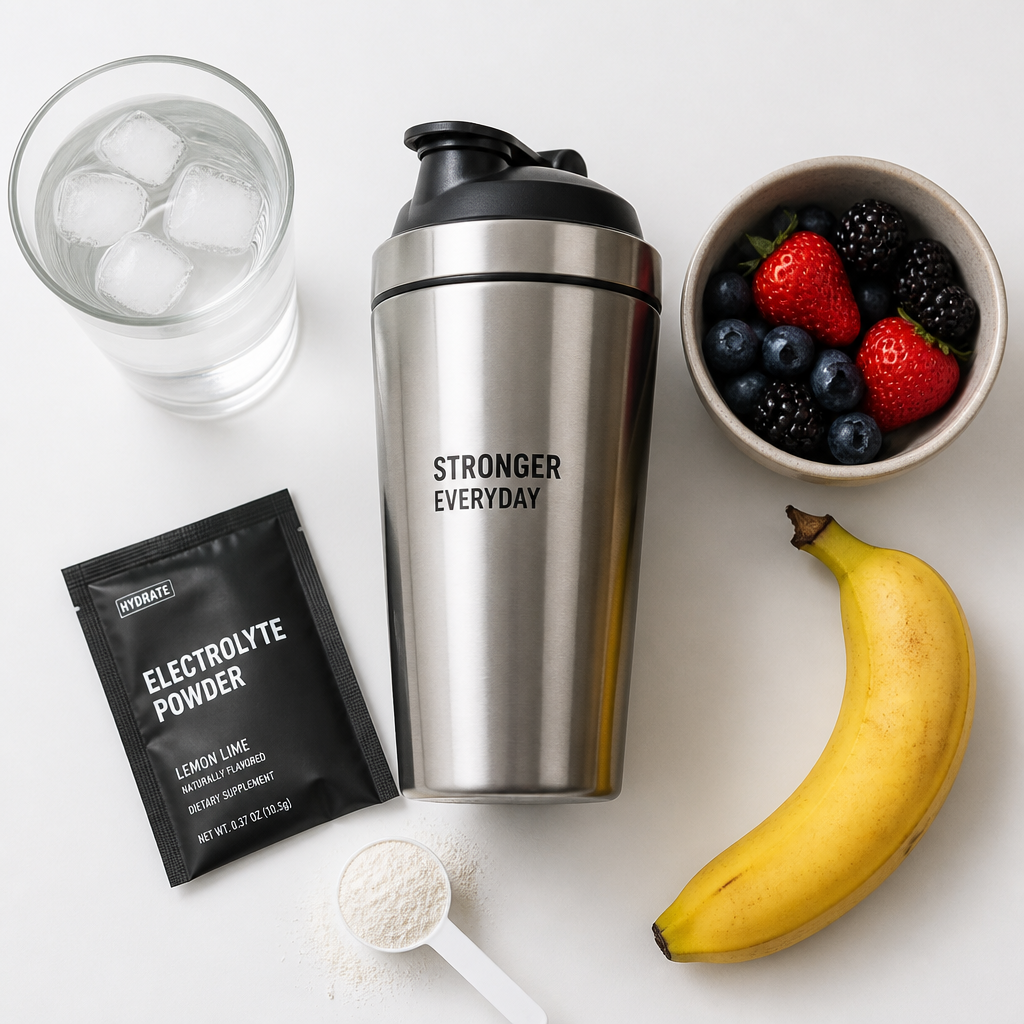
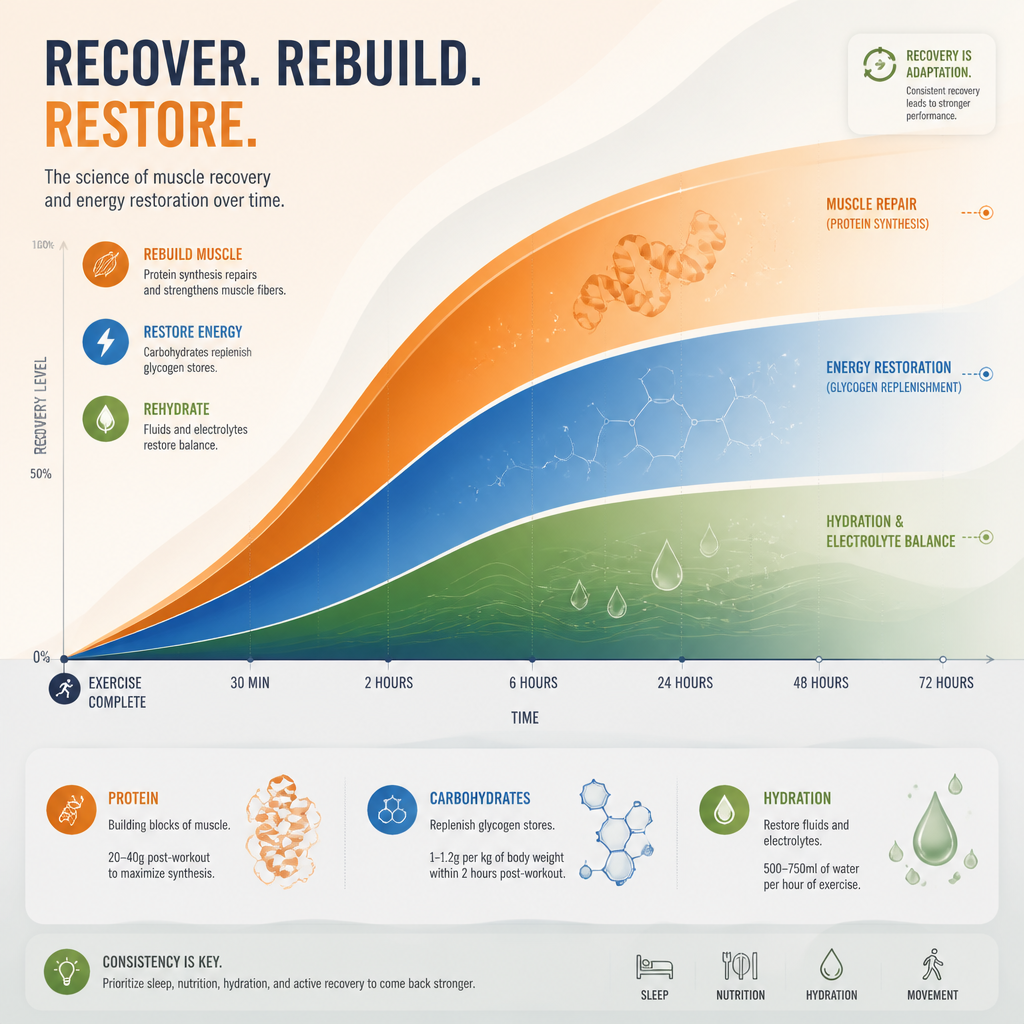
Every effective recovery nutrition plan rests on three pillars: protein for muscle repair, carbohydrates for glycogen replenishment, and electrolytes for fluid and mineral balance. Strip away the marketing language around recovery products and you always come back to these three. Miss any one of them and you are leaving a meaningful gap in your recovery.
After resistance or high-intensity training, damaged muscle fibres require amino acids to initiate repair. The research is consistent here. Consuming 15 to 25 grams of protein within the two-hour post-workout period provides a sufficient stimulus for muscle protein synthesis. For heavier athletes or those coming off particularly demanding sessions, the upper end of that range is more appropriate. Whey protein is fast-digesting and well-studied, but a whole-food source such as Greek yoghurt, eggs, or grilled chicken works equally well if you have access to a meal.
A common mistake is fixating on protein to the exclusion of everything else. Protein alone does not restore your capacity for the next session. It repairs; it does not refuel.
Glycogen is the primary fuel for moderate-to-high-intensity exercise, and it is depleted significantly during hard training. Research published in peer-reviewed sports nutrition literature indicates that combining a small amount of protein (around 0.2 to 0.4 g per kg of body weight per hour) alongside carbohydrates (around 0.8 g per kg per hour) can stimulate insulin release and achieve glycogen repletion rates comparable to consuming a higher carbohydrate intake alone. For athletes with multiple sessions in a day or back-to-back training days, carbohydrate timing around sessions becomes more critical, not less.
For recreational athletes training three to five times a week, a post-workout meal containing both a protein source and a carbohydrate source within two hours is entirely sufficient. You do not need a specialised recovery shake to achieve this.
This is the area where most UK athletes, even experienced ones, fall short. Sweat is not simply water. It contains sodium, potassium, magnesium, and calcium in measurable quantities, and losing these minerals without replacing them has consequences that go well beyond thirst. Muscle cramps, sluggish recovery, poor concentration, and disrupted sleep are all associated with post-exercise electrolyte depletion, yet plain water intake, which is the default for most people, does nothing to address this.
Replacing fluid with water alone after intense exercise can dilute the electrolytes that remain in your body, making the imbalance worse rather than better. The goal is not just fluid volume, it is mineral restoration alongside that fluid.
Sodium is the dominant electrolyte lost in sweat, with losses varying significantly depending on sweat rate and exercise intensity. For potassium, studies suggest losses per litre of sweat range from 160 to 390 mg, while magnesium losses sit considerably lower per litre but still accumulate over long or intense sessions. An effective post-exercise electrolyte formula should prioritise sodium, followed by potassium and magnesium, in biologically relevant amounts rather than token doses.
Optimal post-workout targets, based on sports nutrition guidance, typically cluster around 300 to 500 mg of sodium, 200 to 300 mg of potassium, and 50 to 100 mg of magnesium. These figures represent what is meaningful for recovery, not merely trace mineral supplementation.
The standard argument for sugar in electrolyte drinks is that glucose assists with sodium absorption and provides quick energy. For endurance athletes mid-race or during exercise lasting over 90 minutes, that argument holds. For the vast majority of gym-goers and club-level athletes consuming an electrolyte drink post-workout alongside a real meal, the additional sugar is unnecessary. No-added-sugar electrolyte formulas, such as those made by Plusssz UK, deliver full mineral replacement without the caloric overhead of glucose-based products. This matters particularly for people managing body composition alongside performance.
Pro tip: Weigh yourself before and after a hard training session. For every kilogram of body weight you have lost, target 1.25 to 1.5 litres of fluid containing electrolytes, not plain water, in the two hours that follow.
The "anabolic window" concept, the idea that you have a rigid 30-minute slot after training to consume protein or miss the gains, has been one of the most persistent myths in sports nutrition. The practical consequence is that people either panic-drink a protein shake in the gym car park or, more destructively, write off an entire session because they missed the narrow window. Both reactions are misguided.
Current evidence shows that muscle protein synthesis remains elevated for 24 to 48 hours after resistance training. The window within which post-exercise nutrition matters is not 30 minutes. It is closer to five to six hours surrounding the training session. For athletes who train in a fasted state, the urgency to consume protein soon after training does increase somewhat, because the body has had no recent pre-workout protein intake. For those who ate a protein-containing meal one to two hours before training, the post-workout window is more flexible.
The practical takeaway: prioritise your total daily protein intake and ensure a post-workout meal arrives within a reasonable timeframe. Obsessing over minutes does not serve you. Getting the nutritional quality right does.

The UK supplement market is saturated with products claiming accelerated recovery, reduced DOMS, and superior muscle repair. Most of these claims are overstated. A small number of supplements have genuine, evidence-supported roles in post-workout recovery, and being clear about that distinction saves money and sets realistic expectations.
Protein supplements, specifically whey protein, are the most studied and most reliably effective recovery supplement. They do not offer magical advantages over whole-food protein sources, but they are convenient, fast-digesting, and consistent in their amino acid profile. Electrolyte supplements are equally well-supported for anyone training at moderate-to-high intensity, particularly in warm conditions or when sessions exceed 60 minutes. Creatine monohydrate has strong evidence for supporting repeated high-intensity efforts and muscle recovery, though it functions as a daily supplement rather than an acute post-workout intervention.
BCAAs (branched-chain amino acids) taken post-workout offer little additional benefit if your total protein intake is already adequate. The amino acids you need are present in any complete protein source. Glutamine supplementation is widely marketed but shows minimal impact on recovery in individuals not under extreme training loads. Tart cherry and similar antioxidant supplements show some evidence for reducing delayed onset muscle soreness (DOMS), but the effect is modest and inconsistent across studies.
Multivitamin complexes are valuable not for acute post-workout recovery but for covering micronutrient gaps across the broader training week. Plusssz UK's multivitamin range is designed for active individuals who have elevated micronutrient turnover due to training demands, and they are most logically used on rest and lower-intensity days when dietary variety may not cover all bases.
Pro tip: Do not use recovery supplements as a substitute for a structured post-workout meal. Think of electrolyte products and multivitamins as filling specific gaps, not replacing the carbohydrate-protein foundation that your recovery actually depends on.
Not every post-workout recovery strategy is equally suited to every athlete or training goal. The table below compares three distinct approaches based on the type of active person most likely to use them.
Recovery Approach |
Best Suited For |
Key Limitations |
|---|---|---|
Carbohydrate-electrolyte recovery drink (e.g. sugared isotonic formula) |
Endurance athletes, those with two sessions per day, or events over 90 minutes requiring rapid glycogen restoration |
Unnecessary sugar load for gym-based or shorter sessions; poorly suited if body composition is a priority |
No-added-sugar electrolyte supplement plus whole-food meal |
Active individuals training 3-5 times per week who want precise mineral replacement without excess calories; suits most UK recreational athletes |
Requires planning a real post-workout meal rather than relying on a single drink product |
Protein shake with water only |
Those focused purely on muscle repair with adequate daily carbohydrate from meals; useful for fasted morning training |
Does not address electrolyte loss; insufficient for glycogen restoration if next session is within 24 hours |
The middle approach, a well-formulated no-added-sugar electrolyte supplement alongside a protein-and-carbohydrate meal within two hours, serves the widest range of active people most effectively. It separates the function of mineral replacement from caloric nutrition, giving you control over both without compromise.
One-size-fits-all advice on recovery nutrition tends to serve no one well. The specific demands of your training modality change what you need most in the post-workout window.
The primary goal is muscle protein synthesis. Aim for 20 to 25 grams of protein from a fast-digesting or whole-food source within two hours. Include a moderate carbohydrate serving (40 to 60 grams from whole grains, fruit, or starchy vegetables) to restore partial glycogen and support the insulin response that helps drive amino acids into muscle cells. An electrolyte supplement is still relevant here, particularly if the session was long or involved significant exertion, but the mineral loss is typically less extreme than in endurance training.
Glycogen restoration becomes the primary concern, and carbohydrate intake should be prioritised accordingly. Research supports carbohydrate intake of around 0.8 g per kg of body weight per hour in the period after training, alongside protein. Electrolyte replacement is more critical here: sodium, potassium, and magnesium losses through sweat accumulate significantly over sessions lasting 60 minutes or more, and rehydration with plain water actively dilutes remaining electrolytes. This is the context where a quality electrolyte hydration supplement earns its place most clearly.
HIIT creates a mixed metabolic demand. You need both muscle repair support from protein and glycogen restoration from carbohydrate. Sweat rate during intense interval work can be high relative to session length, making electrolyte replacement worth addressing even in sessions under 45 minutes. The post-workout period after HIIT is also when many people experience appetite suppression, which makes a liquid or semi-liquid recovery option practical. An electrolyte drink alongside a protein-containing snack, such as a yoghurt or a handful of nuts with fruit, is often more realistic than sitting down to a full meal immediately.
For active people across all these training types, the Plusssz UK electrolyte range is formulated specifically to deliver meaningful sodium, potassium, and magnesium replacement without added sugar, making it a practical fit regardless of whether your session was a 45-minute gym lift or a 90-minute run. Their multivitamin complexes sit alongside this as a way of keeping micronutrient status solid across the training week, particularly in demographics like women and seniors where specific deficiencies are more common.
For most people training in a fed state, eating a proper post-workout meal within one to two hours is sufficient. If you trained fasted, getting protein and carbohydrates in closer to the end of the session is more beneficial. The idea that you have a strict 30-minute window is not supported by current evidence. Muscle protein synthesis remains elevated for many hours after training, so quality matters more than the exact minute you eat.
If your session lasted less than 30 minutes and was low intensity, plain water is likely sufficient. For any session lasting over 45 to 60 minutes, any training in warm conditions, or any session that produced significant sweating, electrolyte replacement is genuinely warranted. Replacing lost fluid with water alone can dilute the electrolytes remaining in your body, which worsens rather than resolves dehydration at the cellular level.
The core requirements, protein, carbohydrate, and electrolytes, are the same regardless of sex. However, women who train regularly have specific micronutrient considerations, particularly around iron, magnesium, and B vitamins, which are more commonly depleted in active women. A multivitamin formulated for active women used consistently across the training week helps address these gaps. Post-workout, the same protein and carbohydrate targets apply, though portion sizes may differ based on body weight and training volume.
No. A protein shake addresses one part of the recovery equation, muscle protein synthesis, but does nothing for glycogen restoration or electrolyte replacement. Relying on a protein shake alone after a hard session leaves your energy stores depleted and your mineral balance unaddressed. Use it as a protein source within a broader post-workout meal or snack that also includes a carbohydrate source and an electrolyte product if you have been sweating significantly.
This depends on sweat rate and session length, both of which vary considerably between individuals. General guidance from sports nutrition research points to post-workout sodium targets of roughly 300 to 500 mg as a useful starting range for moderate sessions. Athletes with high sweat rates or training in warm environments may need more. The key point is that sodium, not sugar, is the critical ingredient in a post-workout electrolyte product for most training scenarios.
It depends on your session type and overall nutrition strategy. Carbohydrate-electrolyte drinks make sense for endurance athletes who need rapid glycogen restoration and are consuming the drink as a primary post-exercise fuel source. For most gym-based, strength, or moderate cardio sessions where you will also eat a post-workout meal, a no-added-sugar electrolyte supplement is the more logical choice: it restores minerals without the sugar load, and your carbohydrate needs are met by actual food.
Multivitamins do not play a direct acute role in the immediate post-workout window in the way that protein and electrolytes do. Their contribution is across the broader training week, keeping micronutrient status consistent so that all the enzymatic processes involved in muscle repair, immune function, and energy metabolism have the cofactors they need. For active individuals with high training loads, a quality multivitamin used daily provides a reliable safety net against the micronutrient gaps that a busy lifestyle and high metabolic demand create.
What does your post-workout recovery routine currently look like, and is there one part of it you have always felt uncertain about? Share your experience in the comments below.