Most supplement powders taste either like a chemistry lab or like a children's party drink. The ones that fall into the second category are usually relying on artificial sweeteners and synthetic flavouring agents to mask the mineral bitterness that's inherent in any serious electrolyte or multivitamin formulation. Fruit juice powder supplements take a different route entirely, and the science behind how they work is both more interesting and more practically relevant than most people realise. Plusssz uses fruit juice powder to deliver real flavour without adding sugar, without synthetic taste compounds, and without compromising the nutritional integrity of the product. This article explains exactly how that works and why it matters for anyone using supplements daily.
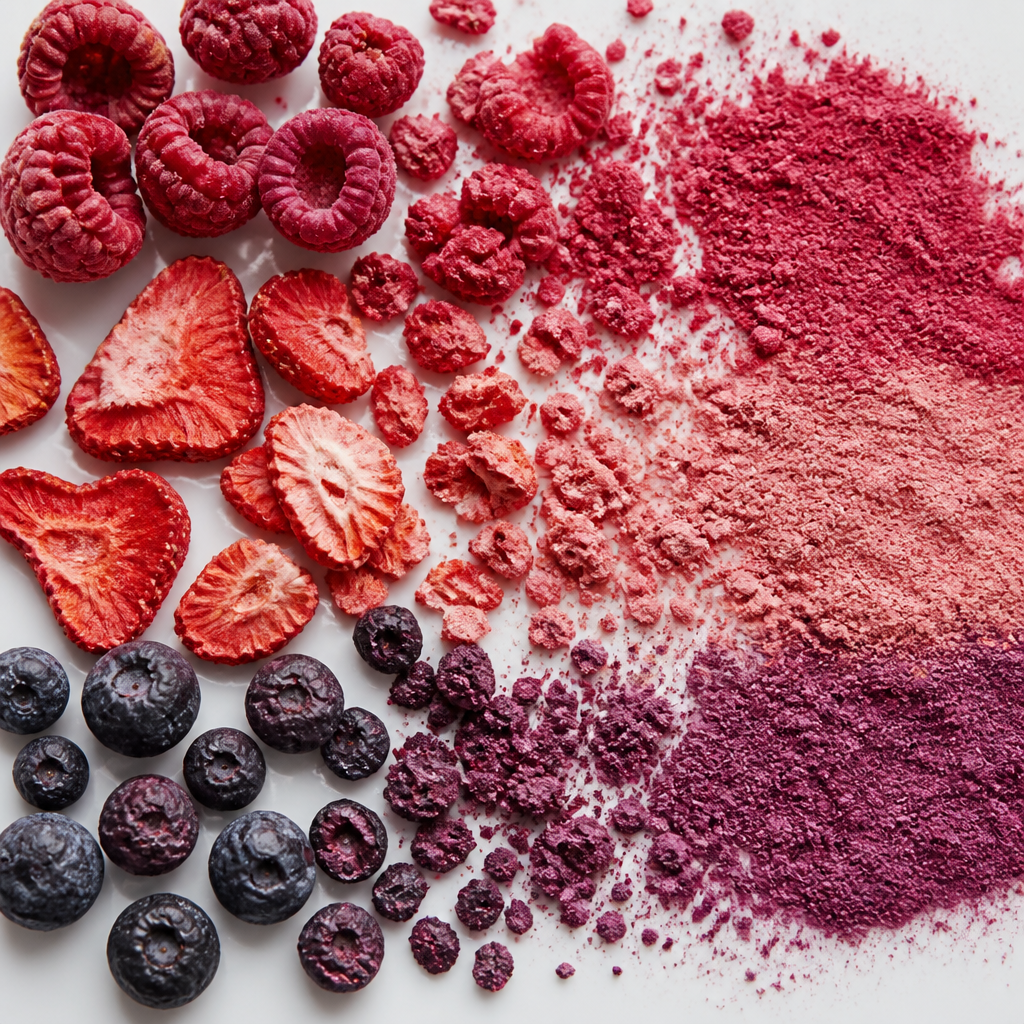
Fruit juice powder is exactly what the name says: fresh fruit juice that has been concentrated and then dehydrated into a fine, shelf-stable powder. The moisture content of the finished product typically sits between 1% and 3%, which is low enough to prevent microbial growth and allow blending with other dry supplement ingredients.
The dominant production method at industrial scale is spray drying. The concentrated juice is fed into an atomiser, which breaks the liquid into an extremely fine spray. That spray enters a drying chamber where controlled hot air rapidly evaporates the remaining moisture. The dried particles are separated from the exit air and collected as powder. The whole process works in three main steps: atomisation of the liquid feed into fine droplets, contact with hot drying air for rapid moisture evaporation, and separation of the dry powder from the exit air.
Spray drying is fast and cost-effective, but the heat involved creates a real tension with nutrient retention. Vitamins like vitamin C and heat-sensitive antioxidants can degrade during the process if temperature and dwell time are not carefully controlled. Vacuum drying, by contrast, operates under reduced pressure, which means water evaporates at temperatures as low as 40 to 60 degrees Celsius. This significantly reduces thermal damage to heat-sensitive compounds including vitamins, antioxidants, and delicate flavour molecules. The trade-off is that vacuum drying is slower, more energy-intensive, and more expensive.
For a supplement brand, the method chosen matters practically. A fruit juice powder produced via a well-controlled spray drying process with appropriate carrier materials can retain its flavour compounds and a meaningful proportion of its antioxidant content. A poorly controlled process produces a powder that tastes faintly of the original fruit but delivers little of its nutritional character. The method and the formulation controls around it are what separates a functional flavouring ingredient from a cosmetic one.
Pro tip: When reading a supplement ingredient list, "fruit juice powder" as a named ingredient carries more informational weight than vague entries like "natural flavouring." It tells you the source and gives you a basis for evaluating the product's clean-label credentials.
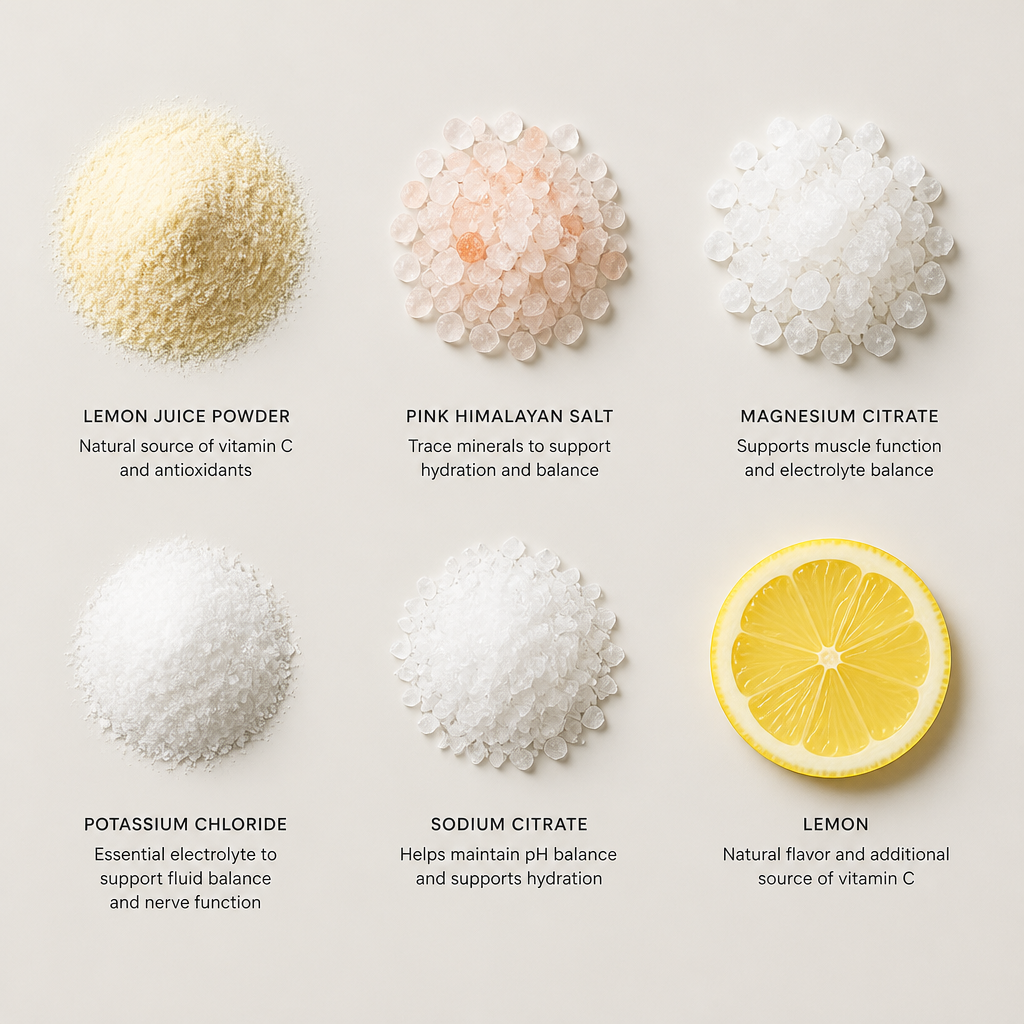
Electrolyte and multivitamin powders are not naturally pleasant to consume. Sodium, magnesium, and potassium salts carry strong mineral and sometimes metallic tastes. B vitamins, particularly at the doses needed for meaningful support, have a distinct and often off-putting flavour profile. Without some form of flavouring, compliance drops. If a supplement tastes bad, people stop taking it, and a product that sits unused in a cupboard has zero benefit regardless of how good its formulation is.
The conventional industry response has been artificial sweeteners and synthetic flavouring agents. Sucralose, acesulfame potassium, and aspartame are common choices because they add sweetness without calories and mask bitterness effectively. The problem is that a growing segment of health-conscious consumers, which is precisely the audience using electrolyte supplements daily, actively avoids these compounds. There are legitimate questions about whether artificial sweeteners affect gut health, appetite regulation, and blood glucose responses, particularly for people using them every single day over months or years.
Many supplement brands market products as "zero sugar" while still relying entirely on sucralose or acesulfame potassium to deliver a sweet taste. This is technically accurate but practically misleading for anyone trying to reduce their exposure to synthetic compounds. "Zero sugar" does not mean "no sweeteners." It means no sucrose, fructose, or glucose has been added. The product can still be sweetened aggressively with artificial compounds and labelled zero sugar.
Fruit juice powder sidesteps this entirely. It provides flavour through the same volatile organic compounds and natural acids present in the original fruit. The flavour is real because the source is real. For someone taking an electrolyte drink before a morning run or mixing a multivitamin into water at their desk, that distinction is what determines whether the product feels like food or feels like medicine.
The mineral bitterness in a serious electrolyte formulation cannot be ignored - it can only be masked with synthetic compounds or genuinely addressed with real flavour sources. Fruit juice powder is one of the few ingredients that does the second of those things.
The phrase "no added sugar" has a specific regulatory meaning in the UK and EU context. It means no sugars have been introduced during manufacturing, whether as sucrose, fructose, glucose, maltodextrin in significant quantities, or other sugar forms. A product carrying this label may still contain naturally occurring sugars from its ingredients, which in the case of fruit juice powder would be present in trace amounts given the small quantities used as a flavouring.
This matters practically for several groups within Plusssz's core audience. Active individuals managing body composition want to avoid blood glucose fluctuations that added sugar creates, particularly around training sessions. For sessions under 90 minutes, added sugar in a hydration product provides calories you do not need and can cause blood glucose instability that actually reduces sustained energy output. No added sugar electrolytes deliver the sodium, potassium, and magnesium needed for fluid balance and muscle function without the caloric overhead.
A supplement taken once or twice a week can tolerate some compromise in its formulation. A product taken daily for months as part of a consistent health routine cannot. Several grams of sugar per serving multiplies quickly across weeks and months, contributing meaningfully to total sugar intake in a context where the consumer specifically chose a supplement to avoid that outcome.
The no-added-sugar characteristic is also what makes fruit juice powder-flavoured electrolytes more suitable than most commercial sports hydration drinks for people managing blood glucose levels. Standard sports drinks often carry 20 or more grams of added sugar per serving, which is appropriate for high-intensity endurance events but entirely counterproductive for a daily hydration habit built around an active lifestyle rather than a specific race.
Pro tip: Check the carbohydrates per serving figure on any supplement you are considering for daily use. A product claiming no added sugar but showing 8 or more grams of carbohydrate per serving warrants closer examination of the full ingredient list for hidden sugar sources such as dextrose or maltodextrin.
The regulatory category of "natural flavouring" in the UK permits a wide range of processing methods and still allows the term on the label, provided the original flavour source was a natural material. This means that two products both labelled "with natural flavouring" can be substantively different in what they actually contain.
A product using genuine fruit juice powder contains the complex mixture of volatile compounds, organic acids, and phytonutrients naturally present in the fruit. The flavour is a profile, not a single compound. A product using "natural flavouring" derived through heavy chemical extraction from a natural source might have a single dominant flavour compound that replicates the taste without any of the accompanying nutritional context.
For the majority of supplement buyers, the practical implication is this: a product listing "fruit juice powder" as a named ingredient gives you a concrete, verifiable flavour source. A product listing "natural flavouring" without further specification does not. Both may be on-label compliant. Only one tells you what is actually in the product.
This distinction is particularly relevant for active individuals with dietary sensitivities or those following specific nutritional approaches. Knowing that a citrus flavour comes from lemon juice powder rather than an undisclosed natural citrus extract is material information, and responsible supplement formulation treats it that way.
Plusssz uses fruit juice powder as the flavouring component across its electrolyte hydration and multivitamin complex products. The fruit juice powder delivers the taste profile that makes the product palatable without requiring the brand to add sugar, artificial sweeteners, or synthetic flavour compounds. The result is a product that meets the no-added-sugar standard while still being genuinely pleasant to drink.
This approach is directly relevant to the core product promise at Plusssz: 100% of your daily vitamin needs, no added sugar, with fruit juice powder. Those three attributes sit together intentionally. The no-added-sugar position would mean nothing to the consumer experience if the product was difficult to drink. The fruit juice powder is what closes that gap.
Plusssz formulates separately for women, men, seniors, and sport-focused individuals. Each of these groups has a different relationship with flavour and sweetness in supplements. For men tracking body composition, the absence of added sugar matters for glycaemic control around training. For seniors taking a daily electrolyte product, the no-added-sugar characteristic makes the product appropriate for routine use without contributing to glycaemic load, which is particularly relevant for those managing blood glucose levels.
The consistent use of fruit juice powder across these demographics means the flavour quality is not a function of which demographic segment you fall into. The electrolyte product for active adults and the product for seniors share the same underlying approach to clean-label flavouring. That formulation consistency is a meaningful quality signal.
Brands such as Science in Sport and High Five are strong electrolyte and sports nutrition products. They are primarily built for carbohydrate fuelling during endurance events, which means sugar is often a deliberate and functional ingredient in their formulations rather than an oversight. ORS Hydration uses glucose as part of the oral rehydration mechanism, which again serves a specific clinical purpose. These are not inferior products in their intended context. But that context is not daily hydration for active individuals who are not in the middle of a marathon or recovering from illness.
Where Plusssz positions differently is in the daily-use, no-added-sugar electrolyte and multivitamin category, where fruit juice powder enables the palatable product experience without the sugar loading that characterises most of the competitive set. If someone has been recommended Plusssz by a friend or training partner, this is likely the specific formulation logic their contact was describing.
Not all flavouring strategies in the supplement market are created equal. Below is a direct comparison of the three main approaches you will encounter in the UK electrolyte and multivitamin supplement space.
Flavouring Approach |
How It Works |
Typical Trade-offs for Daily Use |
|---|---|---|
Fruit Juice Powder (e.g., Plusssz) |
Concentrated real fruit juice dehydrated into powder; flavour comes from authentic volatile compounds and organic acids present in the original fruit |
No added sugar; clean-label; complex, natural taste profile; trace naturally occurring sugars from the fruit source; higher formulation cost |
Artificial Sweeteners and Synthetic Flavouring (common across mass-market sports supplements) |
Sucralose, acesulfame potassium, or aspartame provide sweetness; synthetic compounds replicate a single dominant flavour note |
Zero sugar and zero calories; strong, one-dimensional sweetness; growing consumer concern about gut microbiome and metabolic effects with long-term daily use |
Added Sugar with Natural Flavouring (e.g., glucose-based isotonic drinks such as High Five and ORS Hydration) |
Glucose or sucrose provides both sweetness and an energy source; natural flavouring agents add the specific taste profile |
Functional for endurance events and clinical rehydration; adds 20 or more grams of sugar per serving; inappropriate for daily no-added-sugar supplementation goals or blood glucose management |
The comparison above shows that the fruit juice powder approach occupies a specific and deliberate position. It is not a compromise between the other two. It is a distinct formulation philosophy that prioritises clean-label palatability over either caloric convenience or sweetness intensity.
Fruit juice powder is used in very small quantities as a flavouring ingredient, not as a primary component. The amount used to impart flavour contains negligible naturally occurring sugars, which is why products using it correctly can still carry a no-added-sugar label. The key distinction is that no sugars are added during manufacturing. Any trace sugar comes from the natural composition of the fruit source, not from deliberate addition.
Artificial flavouring is synthesised to replicate a specific flavour note, typically using a single dominant compound. Fruit juice powder contains the full range of volatile organic acids, esters, and phytonutrients naturally present in the fruit. The flavour is a complex profile rather than a single compound. This is why products flavoured with real fruit juice powder taste noticeably different from those using synthetic flavouring, even when the target flavour is nominally the same.
In the quantities used as a flavouring ingredient, fruit juice powder does not meaningfully contribute to glycaemic load. The no-added-sugar characteristic of Plusssz products makes them appropriate for daily use by most people managing blood glucose. However, anyone with diabetes or a specific medical condition should review the full ingredient list and consult their GP or diabetes nurse before adding any new supplement to their routine.
The regulatory category of "natural flavouring" covers a broad range of processing methods. A flavour derived by chemical extraction from a natural source can still qualify as natural flavouring on a UK label. Fruit juice powder, by contrast, is the dehydrated form of the juice itself. Products that use fruit juice powder will typically list it as a named ingredient rather than simply listing "natural flavouring," because naming the source is more specific and more informative for the consumer.
Fruit juice powders are naturally hygroscopic, meaning they absorb moisture from the air. This is a known formulation challenge. Well-made supplements using fruit juice powder address this through appropriate packaging, moisture barrier sachets, and carrier materials that improve powder flow and solubility. The result, when formulated correctly, is a powder that dissolves cleanly in water and delivers a consistent flavour experience without clumping or residue.
In the small quantities used for flavouring, the direct nutritional contribution of fruit juice powder is modest. Its primary function is palatability. However, it does carry trace amounts of naturally occurring vitamin C and antioxidant compounds from the source fruit, which is more than can be said for synthetic flavouring agents. The meaningful nutritional work in a Plusssz product is done by the active vitamin and mineral ingredients, not the flavouring, but the fact that the flavouring source is a real food rather than a synthetic compound is a consistent signal of the brand's formulation philosophy.
Have you made the switch from sugar-sweetened sports drinks to a no-added-sugar electrolyte supplement? Tell us what difference you noticed in how you felt during and after training.