Most people buying an electrolyte supplement in the UK get it wrong for one of two reasons: they pick something with barely any sodium in it, or they buy a product loaded with sugar that belongs in a fizzy drinks aisle. If you have been recommended a product by a friend and want to know whether it actually holds up, this guide will give you the tools to assess it properly. Knowing how to choose an electrolyte supplement UK buyers can trust means looking past the packaging and checking three things: the dose of sodium, the potassium-to-sodium ratio, and the form of magnesium used. Everything else is secondary.
Key Insight |
Explanation |
|---|---|
Sodium dose is the most important number |
Look for at least 300 mg of sodium per serving. Below 100 mg has little meaningful hydration effect for active individuals. |
Sodium and potassium should balance each other |
A roughly 1:1 ratio (around 400 to 600 mg each) means your cells hydrate properly, not just your blood plasma. |
Magnesium form changes how well you absorb it |
Magnesium malate or glycinate is absorbed significantly better than magnesium oxide, which is the cheapest and least effective form. |
Zero added sugar is non-negotiable for active users |
Products with more than 5 g of added sugar per serving undermine the purpose of a clean electrolyte formula. |
Third-party testing matters more than marketing claims |
Look for evidence of actual lab reports, not just the phrase "tested" on the label. UK GMP manufacture is a meaningful quality signal. |
Proprietary blends hide underdosed ingredients |
If a label lists a "blend" without individual amounts, you cannot verify whether any ingredient is present in a useful quantity. |
Format affects convenience, not efficacy |
Powders offer the best dose flexibility. Tablets are portable. Ready-to-drink options are rarely cost-effective for regular training use. |
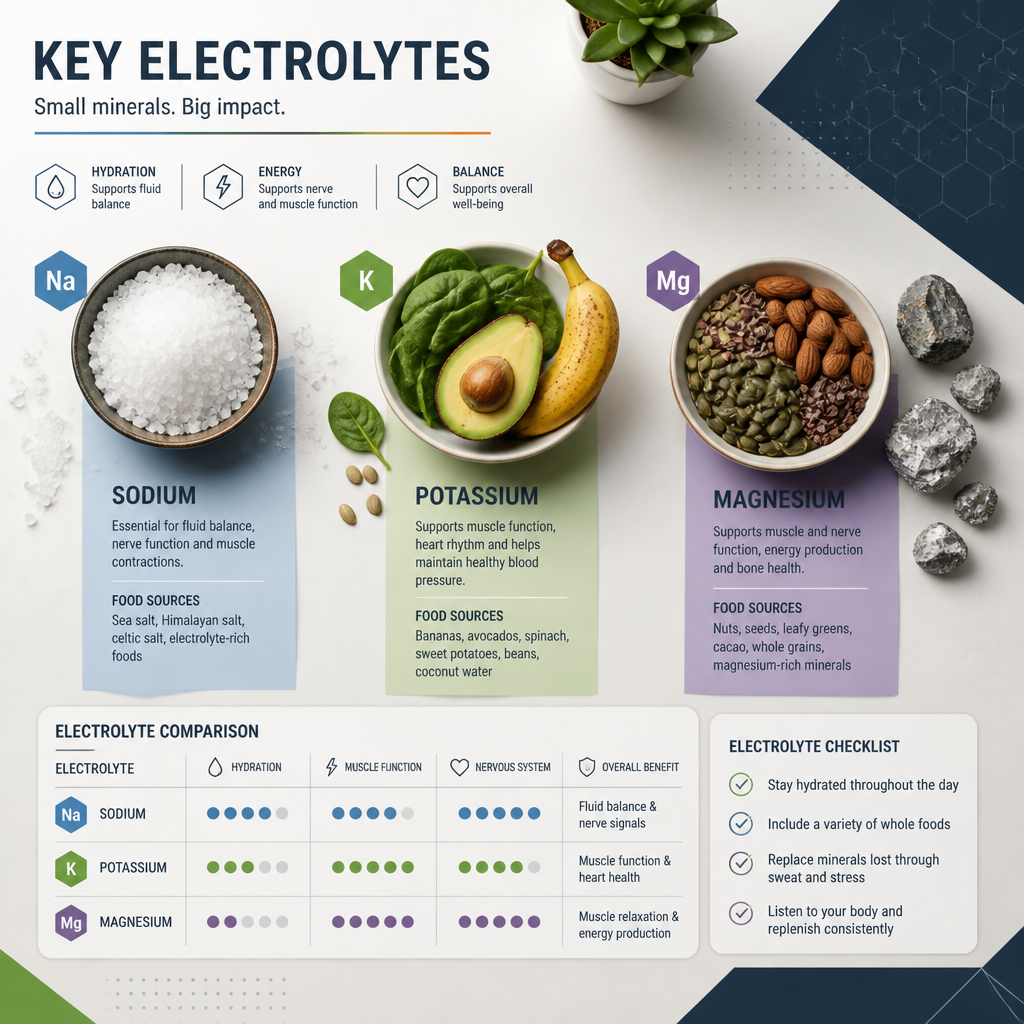
Water is not hydration by itself. Electrolytes, which include sodium, potassium, magnesium, calcium, chloride, and bicarbonate, are the minerals that carry electrical charges and govern how water is distributed across your body. They regulate nerve signalling, muscle contraction, fluid balance, and pH levels. When you sweat, you lose these minerals alongside water, and replacing the water without replacing the minerals leaves you in a worse position than you might realise.
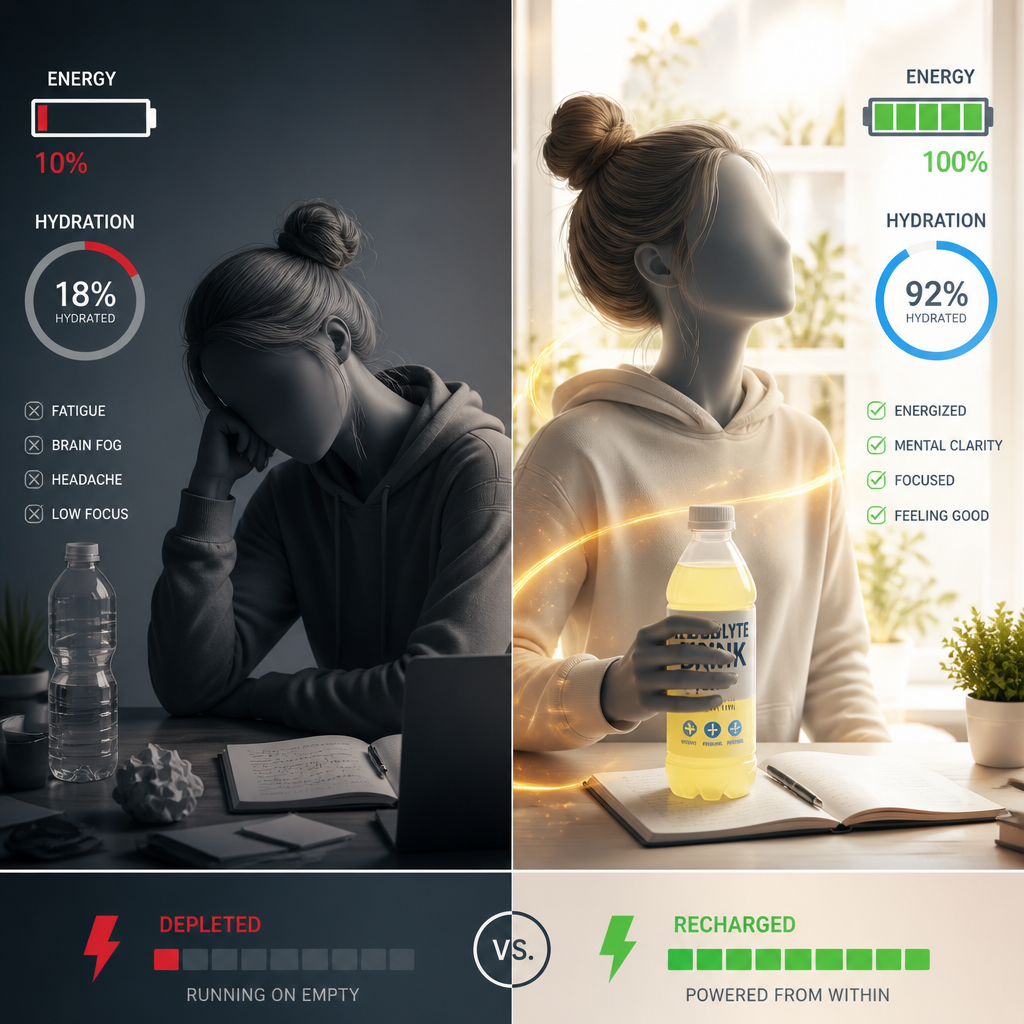
For active individuals, the consequences show up quickly: muscle cramps during or after exercise, a heavy feeling in the legs, brain fog after a long run, or a headache that persists even after drinking plenty of water. These are not signs that you need more water. They are signs of electrolyte depletion, most commonly sodium and magnesium.
The practical implication is straightforward. If you are training for more than 60 minutes, exercising in warm conditions, or sweating heavily, plain water is not enough. A properly dosed electrolyte supplement is not a luxury product in that situation. It is a functional tool for recovery and performance.
Hydration is a balance problem, not a volume problem. You can drink two litres of water and still be functionally dehydrated if you have lost enough sodium and potassium through sweat to disrupt your fluid balance at the cellular level.
Not all electrolytes are equally important in a supplement, and not all are lost in equal quantities during exercise. Understanding what to prioritise makes it much easier to filter out products that are essentially marketing dressed up as nutrition.
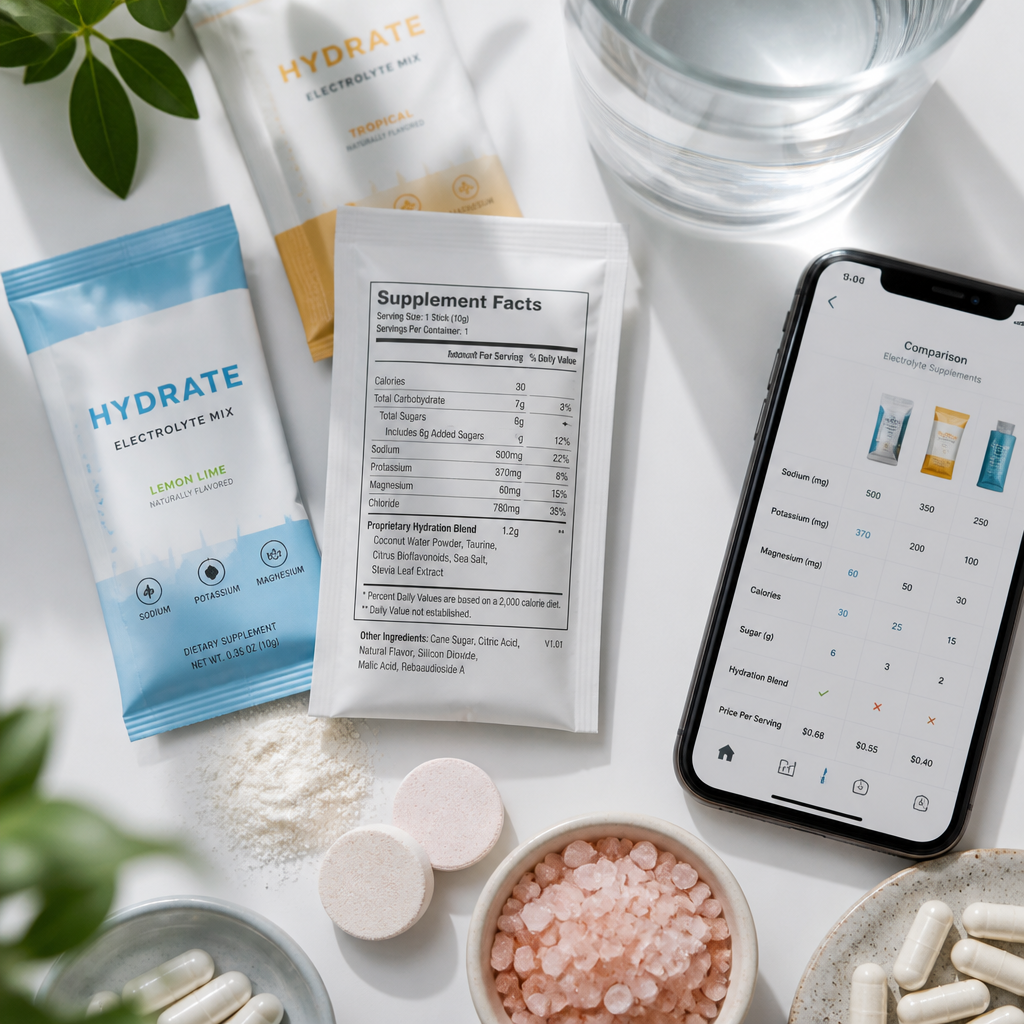
Sodium is the primary electrolyte lost in sweat and the one most directly responsible for retaining water in your bloodstream. A serving with less than 300 mg of sodium is unlikely to do much for someone who has been training hard. The best formulations sit in the 400 to 600 mg range per serving, which is meaningful without tipping into excess for most adults. Products that list sodium in milligrams but only deliver trace amounts are one of the most common ways cheaper supplements mislead buyers.
Potassium works on the other side of the equation. Where sodium maintains fluid in the bloodstream, potassium regulates fluid inside your cells. A formula with plenty of sodium but minimal potassium may reduce your thirst response without actually hydrating your muscle cells. The ideal ratio is roughly 1:1 with sodium, so if a supplement has 500 mg of sodium, you want to see something close to 500 mg of potassium alongside it.
Magnesium supports ATP energy production and muscle relaxation, which makes it particularly relevant for endurance athletes and anyone prone to cramping. The critical point here is that the form matters enormously. Magnesium oxide is the cheapest form and has poor bioavailability. Magnesium malate and magnesium glycinate are absorbed far more effectively by the body. A supplement that lists magnesium malate at 150 mg is worth considerably more in practice than one listing 400 mg of magnesium oxide.
Pro tip: If a supplement's label just says "magnesium" without specifying the form, assume it is oxide unless the manufacturer confirms otherwise. This is a reliable indicator of a budget formulation.
Reading a supplement label correctly is a skill that takes about five minutes to learn and saves a lot of money and frustration over time. The nutrition information panel is your starting point, not the front of the packet.
UK supplement labels are required to show values per 100 g, but the column you care about is per serving. A product might look impressive per 100 g but deliver a tiny dose when you look at the actual serving size being recommended, which can sometimes be as small as 3 or 4 g.
Any supplement that lists a "hydration blend" or "electrolyte complex" without breaking down individual ingredient amounts is using a proprietary blend. This is not inherently dishonest, but it means you cannot verify whether any single ingredient is present in a useful quantity. For electrolytes specifically, this is a red flag. Sodium, potassium, and magnesium should each appear with their own milligram values.
Sodium chloride (standard salt), potassium citrate or potassium chloride, and magnesium malate or glycinate are the forms you want to see. These are the more absorbable, better-tolerated versions. The presence of these specific compound names on a label tells you the manufacturer is thinking about quality, not just cost.
Pro tip: Cross-reference the label claims against any available certificate of analysis from a third-party lab. Reputable UK supplement brands will either publish these or provide them on request. If a brand cannot or will not share lab results, that is a meaningful signal about how much their "tested" claim is worth.
The format of an electrolyte supplement affects how you use it day to day, and each has genuine trade-offs. The right choice depends on your lifestyle and training habits, not on which format happens to look most premium on a shelf.
Format |
Best For |
Key Limitation |
|---|---|---|
Powder (scoop or sachet) |
Athletes who train regularly and want dose flexibility; most cost-effective per serving for daily use |
Requires water and a bottle or shaker; sachets can be bulky for races or commutes |
Effervescent tablet |
Commuters, travellers, and anyone training away from home who values compactness |
Fixed dose per tablet; some products use bulking agents or flavourings that add unnecessary ingredients |
Ready-to-drink (RTD) |
One-off convenience when you have no other option; post-session drinks in gym settings |
Significantly more expensive per serving; packaging waste; harder to find zero-sugar versions |
In practice, most active individuals in the UK who are using electrolytes consistently end up with a powder format for training days and tablets for travel or events. Ready-to-drink options are rarely the right choice as a regular purchase. The cost per serving is high, and the quality control on sugar content is inconsistent across the market.
Knowing what to reject is just as useful as knowing what to look for, and there are several patterns in the UK electrolyte market that consistently indicate a poor-value or poorly designed product.
Some products on the market market themselves as hydration drinks but contain significant amounts of added sugar. For endurance athletes doing very long sessions, a small amount of sugar alongside electrolytes may serve a carbohydrate-replacement purpose. But for the vast majority of active individuals using an electrolyte supplement for daily hydration or post-workout recovery, more than 5 g of added sugar per serving is unnecessary and counterproductive for anyone managing calorie intake or blood sugar. Always check the "of which sugars" line in the nutrition panel.
A product that contains 50 mg of sodium or 30 mg of potassium per serving is not an electrolyte supplement in any meaningful sense. These doses are so small that they function more as a label claim than as a physiological intervention. This is one of the more common ways that supplement brands appear to offer electrolytes while delivering nothing of practical value.
Bright coloured electrolyte drinks are often achieving that colour through synthetic dyes that serve no functional purpose. A clean formula has no need for artificial colours. This does not mean a product is bad because it has some colour, but artificial colouring agents are a signal that a brand may be prioritising aesthetics over formula integrity.
The phrases "lab tested," "clinically proven," and "doctor recommended" appear frequently in supplement marketing with no supporting evidence behind them. UK GMP (Good Manufacturing Practice) certification and BRC (British Retail Consortium) manufacture are more meaningful standards, because they relate to the conditions and processes under which a product is made. Third-party tested means an independent laboratory has verified the contents, not that the manufacturer ran their own internal check. These distinctions matter when you are choosing a product you intend to use regularly.
It is worth being direct about this: most healthy UK adults eating a varied diet who do moderate amounts of exercise do not need an electrolyte supplement every day. Potatoes, bananas, spinach, and dairy products provide meaningful amounts of potassium and magnesium for people who are not sweating heavily on a regular basis.
The picture changes significantly in specific situations. If you are training for more than an hour at a time, particularly in warm conditions or in heated indoor gyms, your sweat losses justify supplementation. If you are doing endurance events, cycling long distances, running regularly, or doing multiple training sessions per week, a daily electrolyte product is a reasonable and practical tool.
Older adults also fall into a category where electrolyte attention makes sense. Reduced thirst perception and changes in kidney efficiency mean that people aged 65 and over are more susceptible to mild chronic dehydration, and supplementation may help. That said, anyone in this group who is taking diuretics or has a pre-existing health condition should speak to a GP before starting regular electrolyte supplementation, since medication interactions around sodium and potassium are clinically significant.
For the core audience that Plusssz products are designed for, which is active individuals and sports enthusiasts who are serious about their training and recovery, a well-formulated electrolyte product is one of the simplest and most direct ways to support performance. The key is choosing one built around the right doses of the right minerals, not one built around marketing language.
For active individuals, look for a minimum of 300 mg of sodium per serving, with 400 to 600 mg being the range most appropriate for regular training use. Below 100 mg per serving is unlikely to provide any meaningful hydration support for someone exercising regularly.
This depends on the length and intensity of your session. For sessions under 60 minutes in a cool environment, taking electrolytes after is sufficient. For sessions over 60 minutes, particularly in the heat, taking a serving before and potentially during the session helps maintain performance. Pre-loading with electrolytes the evening before a long event or race is also a common and sensible approach.
Most commercial sports drinks in the UK contain significant amounts of sugar and relatively low levels of sodium and potassium compared to purpose-built electrolyte powders. They were originally designed to provide both carbohydrate energy and hydration for very long endurance efforts. For most training sessions and everyday active use, a zero-sugar electrolyte powder delivers better hydration support without unnecessary calories.
Yes. Taking very high doses of sodium or potassium well above recommended levels can cause adverse effects, particularly for people with kidney conditions, cardiovascular issues, or those on certain medications. Following the recommended serving size on any supplement is important, and people with pre-existing conditions should consult a healthcare professional before starting regular use.
Not directly. A salty or slightly mineral taste is normal and actually a positive sign that the product contains meaningful sodium. Supplements that taste extremely sweet or fruity with no mineral note may be relying heavily on flavourings and sweeteners to mask a low-dose or poor-quality formula. That said, taste is not a reliable quality indicator on its own. Always go back to the label.
Electrolyte supplements sold in the UK fall under food supplement regulations rather than pharmaceutical licensing. This means manufacturers are responsible for safety and accuracy of labelling, but products are not pre-approved by the MHRA in the way medicines are. This makes independent third-party testing and UK GMP manufacture important quality signals, since regulatory pre-approval cannot be relied upon.
If you have recently switched electrolyte supplements or are comparing products a friend recommended, let us know in the comments what difference you noticed and what you looked for on the label when making your choice.