If you train consistently and still feel flat, cramp-prone, or slow to recover, the problem is often not your programme. It is your minerals. Magnesium for athletic performance is one of the most researched and most ignored levers in sport nutrition, and when it works in concert with other key minerals such as potassium, zinc, and sodium, the effect on output and recovery is measurable. This article cuts through the noise and gives you a precise, practical account of what magnesium and its mineral partners actually do, what the research says, which forms work best, and how to build a supplement approach that fits a structured training week rather than just race day.
Most active people in the UK are already thinking about protein, carbohydrates, and hydration. Fewer are tracking minerals with any precision, and the result is a surprisingly common performance ceiling that shows up as fatigue that does not resolve with sleep, cramps that occur during or after hard sessions, and recovery that lags behind training load.
The underlying mechanism is not complicated. Exercise increases mineral losses through sweat at a rate that a typical diet cannot always replenish, particularly in those training five or more days per week. Based on survey data from national nutrition studies, less than half of active individuals consistently meet their daily magnesium requirement from food alone. The shortfall tends to be subclinical, meaning it does not show up as obvious illness, but it accumulates and quietly degrades performance.
Minerals for sport in the UK context carry an additional consideration: climate. Because UK training conditions often include cold, wet environments, athletes underestimate sweat loss. You sweat in cold weather too, just less visibly. The mineral deficit still builds.
Pro tip: If you are eating a balanced diet but still cramping, feeling flat in the final third of sessions, or sleeping poorly after hard training days, a full electrolyte review is a better first step than adding more carbohydrates or caffeine.
Magnesium is involved in more than 300 enzymatic reactions in the human body, and a significant proportion of those reactions are directly relevant to sport. The three that matter most to a training athlete are energy production, muscle contraction, and nerve signal transmission.
Every time your muscles produce energy during exercise, they use adenosine triphosphate, commonly known as ATP. Magnesium is required to activate ATP. Without adequate magnesium, your cells cannot efficiently access the energy substrate that is already present. This means a magnesium-deficient athlete is working harder than their fuel supply should require, which manifests as early fatigue and reduced power output, particularly in the later stages of longer sessions.
Magnesium regulates the interaction between actin and myosin, the proteins responsible for muscle contraction and relaxation. Calcium drives contraction. Magnesium drives relaxation. When magnesium levels drop, the relaxation phase becomes inefficient, which is the direct physiological cause of cramping and the sustained muscle tension that contributes to post-session soreness. A subclinical magnesium deficiency can build up and lead to muscle cramps, soreness, and palpitations when the body is under severe physical stress.
Magnesium has a well-documented mild calming effect on the nervous system via its role in regulating GABA activity. For athletes who train in the evening or who carry high stress loads alongside a training programme, this is not a minor detail. Poor sleep degrades recovery, and a large portion of poorly sleeping active people are also suboptimally fuelled in terms of magnesium. Research consistently flags magnesium as relevant to both sleep quality and the inflammatory response to hard exercise.
Regular exercise increases the body's need for magnesium due to greater losses through sweat and urine, and this elevated demand is rarely met by diet alone in people training at moderate-to-high frequency.
A common mistake is treating magnesium as a single-mineral fix. In practice, mineral function in the body is interdependent. Correcting magnesium alone while remaining deficient in potassium or zinc will produce partial results at best.

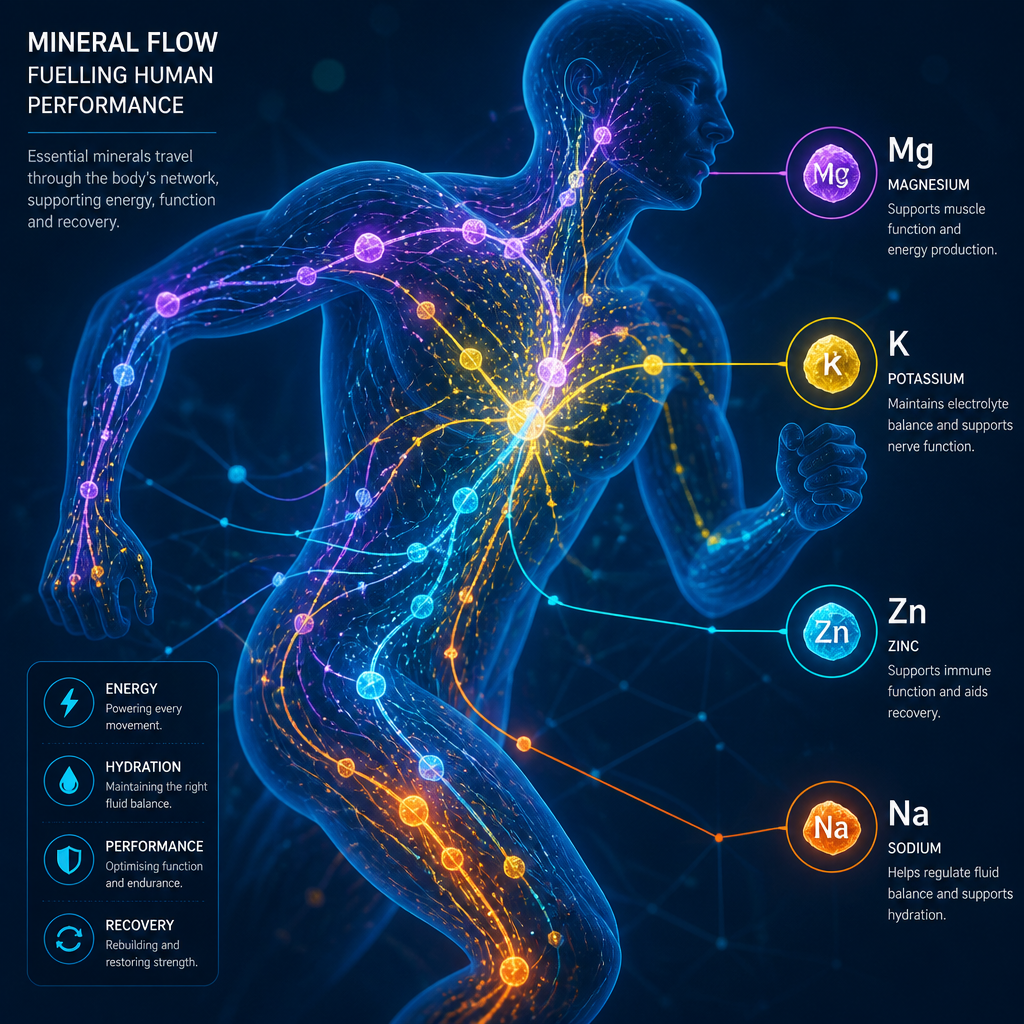
Potassium works directly alongside sodium to regulate fluid movement into and out of cells. During sustained exercise, potassium loss through sweat is significant. When potassium drops, cell membrane excitability is impaired, which affects both nerve signalling and muscle contraction quality. Athletes who supplement sodium without potassium are addressing only half of the electrolyte equation for fluid and muscle function.
Zinc is often associated with immunity, but its role in athletic recovery is equally important. Zinc participates in protein synthesis, wound repair, and testosterone regulation, all of which are directly relevant to adaptation from training stress. Men's-specific multivitamin formulas typically prioritise zinc and selenium alongside B6 precisely because the hormonal dimension of recovery is magnified by training load. Zinc loss through sweat is real and consistent in hard-training athletes.
Sodium gets attention in the context of hydration, but its interaction with magnesium is underappreciated. Some athletes focus solely on sodium replacement and find that cramping persists. The remaining cramps are often driven by a full electrolyte deficit that sodium alone cannot compensate for. A full-spectrum electrolyte approach addresses all key minerals in appropriate ratios.
Calcium and magnesium are physiological opposites in muscle function. An excess of calcium relative to magnesium, which can happen when athletes take high-dose calcium supplements without balancing magnesium, contributes to a state where muscles are biased toward contraction over relaxation. This is particularly relevant for endurance athletes and those doing high volume strength work. Supplement timing matters here: high-dose calcium taken alongside zinc-containing formulas can compete for absorption pathways, making separation of doses by at least two hours the practical recommendation.
Pro tip: When reviewing your supplement stack, check whether your electrolyte product addresses all four key minerals: sodium, potassium, magnesium, and calcium. Single-mineral products are often a gap-filling band-aid rather than a complete solution.
Not all magnesium supplements are equivalent. The form of magnesium, meaning the compound it is bound to, determines both how well it is absorbed and what it is best suited for. When comparing products, the form listed in the ingredients is more informative than the headline milligram dose on the front of the pack.
Here is a direct comparison of the three forms most relevant to athletic use:
Magnesium Form |
Best Use Case for Athletes |
Key Characteristic |
|---|---|---|
Magnesium Glycinate (Bisglycinate) |
Chronic deficiency correction, evening recovery, sleep quality |
Highest tolerability at higher doses, gentle on the gut, highly bioavailable |
Magnesium Malate |
Endurance athletes, energy production, reducing exercise-related fatigue |
Supports ATP production via malic acid, well-absorbed, good for morning or pre-training use |
Magnesium Citrate |
General daily maintenance, pre-workout supplementation |
Well-absorbed, good digestive tolerance, widely available, cost-effective |
Magnesium oxide is a form commonly used by manufacturers to hit a high milligram number on the label cheaply, but its bioavailability is significantly lower than any of the three forms above. A well-designed supplement formula will use glycinate, malate, or citrate rather than defaulting to oxide. When a product lists magnesium bisglycinate rather than oxide, that is a meaningful formulation decision that costs more to produce and delivers better results in practice.
Pro tip: If you train in the evening, favour magnesium glycinate taken post-workout rather than pre-workout. Its mild relaxation effect works in your favour during the recovery window but is not what you want an hour before a hard session.
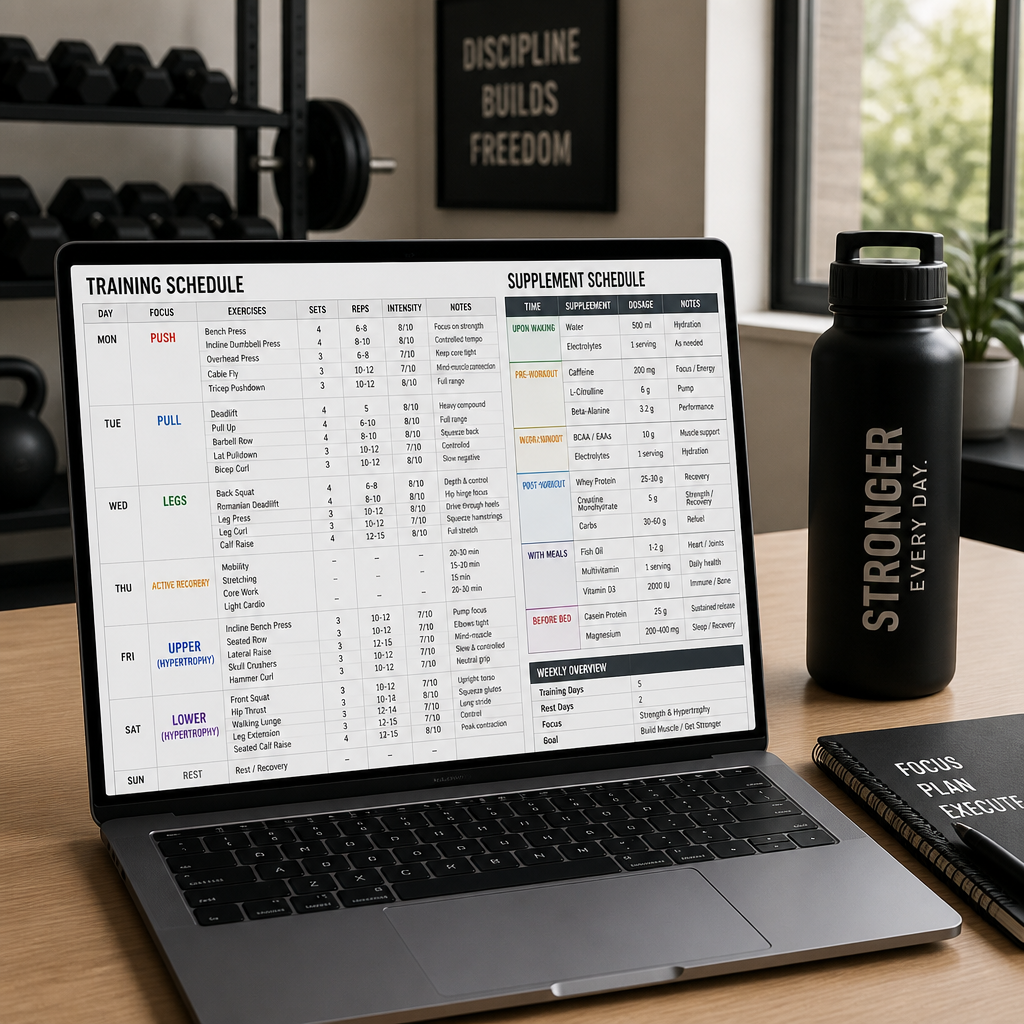
The most common error in mineral supplementation for sport is treating it as a reactive measure. Athletes reach for electrolytes only on race day or during a particularly sweaty session. This misunderstands how mineral deficiency accumulates and how mineral repletion works. Consistency across the training week, not just around peak sessions, is what produces measurable results.
An electrolyte hydration product with a full mineral profile, no added sugar, and a sensible sodium-to-potassium ratio is the right tool for acute mineral replenishment around training sessions. Use it before and during sessions lasting more than 45 minutes, and after any session that produces significant sweat output. Where competitors such as Science in Sport and High Five prioritise carbohydrate fuelling products designed primarily for endurance race contexts, a daily-use electrolyte approach addresses consistent weekly training across all formats, not just event day.
Rest days are when the body consolidates the adaptive response to training stress, and micronutrient availability on those days matters. A multivitamin minerals supplement that includes bioavailable forms of magnesium, zinc, and other key minerals covers the baseline gap when training load and sweat losses are lower but tissue repair is still occurring. These are different physiological needs from acute electrolyte replacement, and they are best addressed at different times with different products.
Separate high-dose calcium supplements from zinc-containing multivitamins by at least two hours to avoid absorption competition. Avoid magnesium-containing supplements immediately before high-intensity sessions if you are sensitive to its mild calming effect. Take magnesium-containing products with food to improve tolerability and reduce the risk of gastrointestinal discomfort at higher doses.
The debate between a comprehensive multivitamin minerals supplement and a stack of individual mineral supplements is one where the answer depends on your baseline and your goals. For the majority of active people in the UK who are not tracking micronutrient intake with clinical precision, a well-formulated multivitamin mineral product provides the broadest and most practical coverage.
A quality multivitamin minerals supplement designed for active individuals should include bioavailable mineral forms, not just adequate doses. The formulation should reflect the specific demands of the target user: a women's formula addresses higher iron, folate, and iodine needs; a men's formula prioritises zinc, selenium, and B6 for hormonal and recovery support; a sports-focused formula should include the full electrolyte mineral set in forms that are absorbed efficiently.
Standalone mineral supplementation makes sense when a specific deficiency has been identified or when training volume is high enough that single-mineral requirements exceed what a multivitamin covers. In those cases, pairing an electrolyte hydration product with a daily multivitamin minerals supplement provides complementary coverage rather than redundancy. The electrolyte product handles acute replenishment around sessions; the multivitamin covers the background baseline that food alone often misses.
The distinction matters because trying to consolidate everything into a single product invariably means compromising the dose or form of at least some minerals. A product that contains 400mg of magnesium, 700mg of calcium, high-dose zinc, and a full B complex in a single tablet is almost certainly using cheaper forms to make the formulation economically viable. Purpose-built products for specific roles in the training week produce better outcomes than an all-in-one that does everything at a mediocre level.
The standard adult reference nutrient intake for magnesium in the UK is around 300mg per day for men and 270mg per day for women, but these figures are set for the general population. Active individuals, particularly those training at moderate to high frequency, have elevated magnesium requirements due to losses through sweat and increased metabolic demand. The practical implication is that dietary intake sufficient for a sedentary person is often insufficient for someone training four or more days per week.
In theory, yes. Dark leafy greens, nuts, seeds, legumes, and wholegrains provide reasonable magnesium, potassium, and zinc. In practice, the combination of processed food intake, elevated losses through exercise, and the reduced mineral density of intensively farmed produce means that many active people carry a consistent shortfall. Supplementation is not a replacement for a good diet, but it is a practical tool for closing the gap that food alone regularly fails to fill in a high-training context.
Common indicators include muscle cramps during or after exercise, persistent fatigue that does not resolve with additional sleep, poor sleep quality despite physical tiredness, elevated resting heart rate, and prolonged muscle soreness after sessions that would not normally cause it. These are subclinical signs, meaning a standard blood test may not flag the deficiency, since magnesium is stored primarily in bone and muscle tissue rather than circulating freely in blood.
Yes, and the distinction matters. An electrolyte product is designed for acute mineral replenishment around exercise, typically containing sodium, potassium, magnesium, and calcium in ratios suited to hydration and muscle function during and after sessions. A standalone magnesium supplement is designed for sustained baseline repletion, usually at higher doses of a single mineral and taken at a set time daily. Both have legitimate roles in a training supplement protocol, and they address different physiological windows.
It matters considerably. Magnesium oxide, the cheapest and most commonly used form in budget multivitamins, has lower bioavailability than chelated forms such as glycinate or malate. A product listing 300mg of magnesium oxide delivers less usable magnesium than one listing 200mg of magnesium bisglycinate, despite the higher headline number. When evaluating a multivitamin minerals supplement, always check the ingredient list for the specific form rather than relying on the front-of-pack dose claim.
Zinc and magnesium are both depleted through sweat and both play distinct roles in recovery: magnesium in muscle relaxation, sleep quality, and energy metabolism; zinc in protein synthesis, hormonal regulation, and immune function. They are complementary rather than competing minerals in a recovery context. The interaction to be aware of is not between zinc and magnesium but between high-dose zinc and high-dose calcium, which can compete for absorption when taken together. A sensibly formulated multivitamin minerals supplement accounts for these interactions in its dosing and ratio design.
What has made the biggest difference to your recovery or performance when you started paying closer attention to mineral intake? Share your experience below.