Most people who take a daily multivitamin are consistent for months, then miss a day and immediately wonder if they have undone all their progress. The honest answer depends on how good your diet is and how long you have been skipping. One day will not hurt you. One week of wondering what happens if you skip multivitamin probably will not either. But the pattern of skipping, especially if your meals already lack variety, quietly chips away at the nutritional foundation your energy, immunity, and physical performance all rely on. Here is exactly what goes on inside your body when that daily habit breaks.
Key Insight |
Explanation |
|---|---|
Short gaps rarely cause deficiency alone |
Missing one to three days does not deplete fat-soluble vitamins stored in your body, but it does reduce the buffer that water-soluble vitamins provide day to day. |
Energy dips come first |
B vitamins and magnesium are consumed rapidly during exercise and stress. Without a reliable top-up, fatigue and poor concentration are often the earliest signals. |
Vitamin D is the UK's biggest gap |
Nearly half of adults tested in one UK study had vitamin D levels below the optimal range, and UK sunlight is insufficient from October to March to correct this through sun exposure alone. |
Active individuals have higher micronutrient turnover |
Training increases demand for magnesium, iron, zinc, and B vitamins. Skipping supplements during heavy training blocks is higher risk than skipping during a rest week. |
Immune resilience weakens gradually |
Borderline deficiencies in vitamin C, D, and zinc do not make you immediately ill, but they reduce your body's ability to mount a response when you are exposed to infection. |
Diet quality is the deciding factor |
If your meals are varied and nutrient-dense, skipping a multivitamin for a week matters little. If your diet is patchy or you restrict food groups, skipping amplifies existing gaps significantly. |
Consistency matters more than occasional perfection |
A multivitamin taken reliably six days out of seven over months delivers far more benefit than a high-dose supplement taken sporadically. |
Multivitamins are not like medication where a missed dose triggers an immediate and measurable change. They work more like nutritional insurance: consistent coverage that prevents gaps from opening rather than something that acts acutely. Missing one or two days does not send your body into deficiency. Your tissues hold reserves of fat-soluble vitamins including A, D, E, and K that persist for weeks or longer.
The nutrients that drop more quickly are the water-soluble ones: vitamin C, and the entire B complex. These are not stored in significant amounts, so your body depends on a regular supply from food and supplementation. If your diet already provides solid coverage of these, a few skipped days will not register. If your diet is inconsistent, which is true for the majority of active people who eat around a training schedule, the absence of a daily supplement starts to create small but real shortfalls within days.
The subtle signals to watch for after several days without a multivitamin include: slightly lower energy than usual, less mental sharpness during work or training, and a vague sense that your recovery is slower than it should be. None of these feel catastrophic. That is precisely why micronutrient gaps are so easy to dismiss and so easy to accumulate over time.
A multivitamin is nutritional insurance. Missing a few days will not undo months of good habits, but if your diet is patchy, the daily dose becomes more important than most people realise.
Pro tip: If you find yourself regularly forgetting your multivitamin, pair it with a morning habit you never skip, such as making coffee or filling a water bottle before a workout. The habit stack approach works far better than relying on willpower or reminders alone.


Not all nutrients behave the same when you stop supplementing. The ones that matter most to active individuals are also the ones your body cycles through most quickly during physical effort.
Magnesium is involved in over 300 enzymatic processes, including those that produce ATP, the molecule that powers muscular contraction. When you train, you use more of it. When you sweat, you lose more of it. A daily multivitamin that includes a useful dose of magnesium helps offset this drain. Skip it for a week during a hard training block and you may notice the difference as increased muscle cramping, poorer sleep quality, or the feeling that your legs are not recovering between sessions as they normally would.
Vitamins B1, B2, and B12 are central to how your body converts food into usable energy. Without consistent intake, this conversion becomes less efficient. For desk workers, the effect may be subtle. For someone training five or six times a week and relying on efficient energy metabolism to perform and recover, a drop in B vitamin status has a more measurable impact on how strong, sharp, and motivated they feel in training.
Iron is essential for haemoglobin production, the protein in red blood cells that carries oxygen to your muscles and brain. Low iron means less oxygen for your muscles and brain, leading directly to fatigue, weakness, and poor concentration. Runners, women, and people following plant-based diets are particularly at risk of iron insufficiency, and a multivitamin that includes iron provides a meaningful daily contribution toward preventing a deficit from developing.
Pro tip: If your training volume increases significantly, for example when you move from three sessions a week to five or six, treat your multivitamin as non-negotiable during that block. Your micronutrient turnover goes up faster than most people expect, and the gap between what your diet provides and what your body needs widens accordingly.
The daily vitamin importance conversation in the UK is not theoretical. The UK has measurable, documented gaps across the population. Understanding these in concrete terms helps you understand exactly what is at risk when you stop supplementing consistently.
One analysis of over 5,500 UK adults found that 49.5% had vitamin D levels below the optimal range of 75 to 100 nmol/L. The NHS recommends that adults and children over four need 10 micrograms (400 IU) of vitamin D per day. The reason so many fall short is structural: UK sunlight between October and March does not provide enough UVB radiation for the skin to synthesize meaningful amounts of vitamin D regardless of how much time you spend outdoors. For active individuals who train indoors during winter months, this problem compounds further. Deficiency in vitamin D can contribute to bone weakness, lowered immune function, and mood disruption, none of which are symptoms you want carrying into your training.
UK data shows that over 10% of adults aged 75 and over have vitamin B12 deficiency, and among vegetarians and vegans, the deficiency rate can reach 11% across all age groups. B12 deficiency causes fatigue, weakness, and neurological symptoms including numbness and tingling in the extremities. For anyone following a plant-based diet and training regularly without consistent supplementation, B12 is the nutrient most likely to develop into a genuine deficiency if not actively managed.
Symptoms such as persistent tiredness, difficulty concentrating, catching infections repeatedly, and slow wound or tissue healing are among the most common micronutrient deficiency symptoms UK GPs encounter. These symptoms are routinely attributed to stress or busy schedules. In many cases, a modest nutritional deficit is the more accurate explanation, and a daily, well-formulated multivitamin is a straightforward first response before any more complex investigation is needed.

For the general population, skipping a multivitamin for a week might produce symptoms so mild they go unnoticed. For active individuals and sports enthusiasts, the same gap can show up directly in performance metrics. The reason is not that supplements are magic, it is that training raises the body's demand for nearly every micronutrient involved in energy production, immune defence, and tissue repair.
Minerals such as sodium, potassium, calcium, and magnesium help maintain fluid balance and support muscle contraction. When these are depleted through sweat and not adequately replaced, the consequences include elevated heart rate at a given effort level, increased body temperature during exercise, and a greater risk of muscle cramping. These are not theoretical outcomes; they are physiological responses to electrolyte and micronutrient depletion that athletes experience in practice.
Vitamin C and D, alongside zinc, support immune function. Athletes who train hard are well-documented to have temporarily suppressed immune systems in the hours immediately following intense exercise. A consistent supply of these nutrients does not prevent that temporary window of vulnerability, but it does reduce the severity of the impact and helps the immune system recover more quickly. Skip your multivitamin during a high-training block and you increase the probability that you will pick up an infection during your most demanding weeks, which is exactly when you can least afford a disrupted schedule.
Antioxidant vitamins also play a role in recovery from training-induced muscle damage. Intense sessions create micro-tears in muscle fibres, and the repair of those fibres is part of what drives adaptation and strength gains. Nutrients that support this repair process need to be available consistently. A gap in micronutrient supply does not stop muscle repair, but it can slow it, which means more residual soreness and longer recovery time between sessions.
There are several ways to manage micronutrient intake. Not all are equally practical or effective for active individuals. The table below compares the three main approaches honestly.
Approach |
Strengths |
Limitations for Active Individuals |
|---|---|---|
Diet alone (whole foods) |
Provides nutrients in their natural matrix with cofactors that support absorption; no cost beyond food budget; no risk of over-supplementation |
Requires exceptional consistency and variety; very difficult to meet elevated athletic micronutrient demands through food alone; UK seasonal produce and food processing reduce nutrient density; restrictive diets (vegan, keto, gluten-free) remove entire categories of micronutrient sources |
Targeted single-nutrient supplements |
Useful for correcting a confirmed deficiency (e.g., iron or B12 prescribed by a GP); high-dose correction possible when needed |
Requires blood testing to know what to target; does not cover the broad range of vitamins and minerals that active people cycle through; taking multiple individual supplements becomes expensive and complicated to manage consistently |
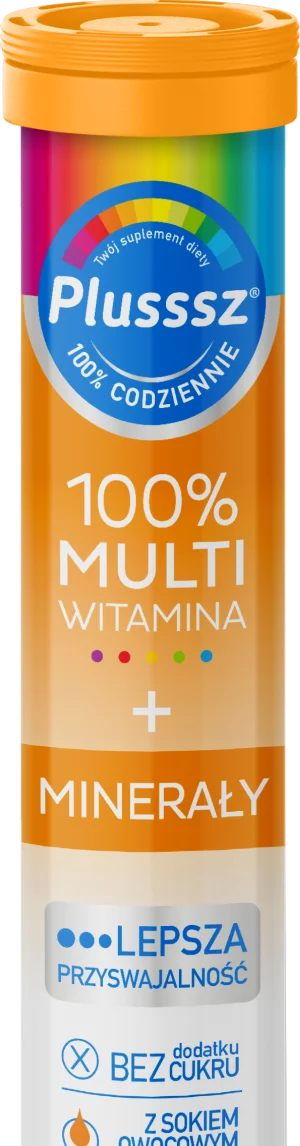
Daily multivitamin formulated for active adults (such as Plusssz Multivitamin range) |
Covers the broad spectrum of micronutrients in one daily dose; formulas designed for active demographics include higher doses of nutrients with greater training turnover; no added sugar in quality formulations; convenient for consistent use |
Does not correct a severe diagnosed deficiency on its own; effectiveness depends entirely on the quality of the formulation, so the specific product choice matters |
There is a difference between missing a few days during a holiday and habitually skipping your multivitamin across weeks and months. The latter creates a compounding problem, particularly for people whose diets are already restricted or inconsistent.
If you are following a vegan or vegetarian diet and relying on a multivitamin to cover B12, iron, calcium, and zinc, those gaps become meaningful within weeks of stopping. These nutrients are present in much lower quantities in plant-only diets, and without supplementation, the body's existing stores become the only buffer. For athletes in this category, sustained skipping is a route to genuine deficiency with real performance and health consequences.
Older adults face a compounding risk for different reasons. The body's ability to absorb certain nutrients, particularly B12, declines with age. UK data shows that over 5% of adults aged 65 to 74 are deficient in B12, rising to over 10% in those aged 75 and over. For anyone in or approaching this demographic who is trying to remain active, a consistent multivitamin is not optional, it is a meaningful health protection measure.
Women who are pregnant or trying to conceive are in the highest-risk category of all. The requirement for B9 (folate) increases substantially before and during early pregnancy. Skipping supplementation in this period is not a minor oversight; it has documented consequences for foetal development that are irreversible once the critical window has passed. This is one area where daily vitamin importance is not a matter of optimisation but of clinical necessity.
If you have been skipping your multivitamin for a period, the approach to restarting is straightforward. You do not need a loading dose or a special protocol. Simply resume your normal daily dose and maintain it consistently. The body is efficient at restoring water-soluble vitamin status within a few days once regular intake resumes. Fat-soluble vitamins, if genuinely depleted, take longer, but most people in this situation were not severely depleted to begin with, just suboptimally supplied.
A common mistake is to restart with an excessively high-dose supplement on the assumption that more is better after a gap. This logic does not hold. Fat-soluble vitamins accumulate in tissue, so taking very large amounts to compensate for a period of skipping can push certain nutrients above safe levels. A well-formulated daily multivitamin at its recommended dose is the right tool. A mega-dose supplement is not.
The more useful question is not how to recover from a gap but how to avoid creating the gap in the first place. The practical answer is to choose a format you will actually use. For active individuals who carry water bottles to the gym, an electrolyte and multivitamin combination in effervescent or dissolvable tablet form is easier to build into a pre-workout or post-workout routine than capsules that require swallowing with food at a specific time. The best supplement is the one you actually take every day. The Plusssz range is built around this principle: no added sugar, formats designed for active use, and formulations calibrated for the demographic taking them rather than a generic average adult.
If you genuinely want to understand your current micronutrient status rather than guessing, a blood test with your GP or a private health check will show you exactly where your gaps are. This is the most informed way to decide whether your current multivitamin is covering what it needs to, and whether any targeted single-nutrient supplementation makes sense alongside it.
For most people with a reasonably varied diet, the effects of skipping a multivitamin for a few days are not noticeable. After one to two weeks, particularly during a period of intensive training or high stress, you may notice reduced energy, slower recovery, or mild mood dips. These are not dramatic, which is why the gradual erosion of micronutrient status is so easy to overlook.
Yes, significantly. Active individuals have higher micronutrient turnover because training increases the demand for nutrients involved in energy production, muscle repair, and immune function. Skipping a multivitamin during a high-training week removes a key top-up at exactly the time your body's requirements are elevated. During a genuine rest week with good food, the impact is much smaller.
Diet should always be the foundation, and improving food quality is always the right first step. However, for active adults in the UK, diet alone is rarely sufficient to cover every micronutrient need consistently. UK growing seasons, food processing, and the practical difficulty of eating a genuinely varied diet around a training schedule all reduce the real-world nutrient content of meals. A multivitamin fills the gaps that even a good diet reliably leaves.
If you are already borderline low in vitamin C, D, or zinc, then yes, skipping supplementation increases your vulnerability to infection. These nutrients support immune cell production and response. The effect is not immediate, but over weeks without supplementation, your immune resilience gradually decreases, particularly during the October to March period in the UK when vitamin D from sunlight becomes effectively unavailable.
The underlying nutrient biochemistry is the same, but the practical risk profile differs. Women are more likely to be iron deficient, particularly those who menstruate regularly, making iron-containing multivitamins more important for them. Men who train heavily may burn through magnesium and zinc at higher rates due to greater muscle mass and sweat output. Women in the reproductive years also have higher folate requirements. A multivitamin formulated for the specific demographic, rather than a generic one-size product, is more likely to address these differences meaningfully.
Yes, because these two products address different needs. An electrolyte supplement replaces the minerals lost through sweat, primarily sodium, potassium, magnesium, and chloride, and supports hydration during and after exercise. A multivitamin covers the broader spectrum of vitamins and trace minerals that support energy metabolism, immune function, and long-term health. They complement each other rather than duplicate each other, which is why combining both makes practical sense for active individuals.
Have you noticed any changes in your energy or recovery when you have gone without your multivitamin for a stretch? Share what you experienced in the comments below.