Most people reach for supplements only when they feel a cold coming on. But your immune system does not operate seasonally, and neither should your nutrition. If you are training regularly, commuting through the winter, or managing a packed schedule year-round, the gap between what your body needs and what your diet actually delivers can quietly undermine your defences. Choosing the right vitamins for immune system support in the UK is not about popping every tablet on the shelf. It is about understanding which micronutrients do measurable work, at what levels, and how to get them consistently without overcomplicating your routine.
Key Insight |
Explanation |
|---|---|
Vitamin D is a year-round priority in the UK |
From October to March, UK sunlight is too weak to trigger skin synthesis. Up to 50% of the UK population may have insufficient vitamin D levels during winter months. |
Vitamin C supports daily maintenance, not just acute illness |
Vitamin C is best used consistently for everyday immune maintenance and leukocyte function, not just when symptoms appear. |
Zinc works best in the first 24 hours of a cold |
Clinical evidence points to zinc as most effective for shortening cold duration when taken at the very onset of symptoms, rather than as a reactive measure days in. |
Magnesium is required to activate vitamin D |
Without adequate magnesium, vitamin D cannot be properly metabolised. Low magnesium has been linked to higher inflammatory markers and impaired immune function. |
Selenium deficiency can worsen viral outcomes |
Low selenium status is associated with worse immune response and can even affect how viruses behave in the body. Active adults often overlook this mineral entirely. |
Electrolyte balance influences immune cell activity |
Hydration and electrolyte status affect how efficiently immune cells communicate and respond. Dehydration during training compounds nutrient depletion. |
Multivitamins work best to address marginal deficiencies |
A broad-spectrum multivitamin for immunity is most beneficial when it corrects genuine nutritional gaps, not as a replacement for a varied diet. |
The UK's climate and lifestyle create a specific set of immune nutrition challenges that simply do not apply the same way in sunnier countries. From October through March, UVB rays are too weak in the UK to allow your skin to synthesise vitamin D at all. That is nearly half the year when you cannot rely on sunlight for this critical immune-regulating nutrient.
The numbers reflect this: up to 50% of the UK population may have insufficient vitamin D levels during winter, and approximately 30-40% reach a clinical deficiency threshold. Office workers, people with limited outdoor time, and individuals from South Asian, Black African, and Caribbean backgrounds face disproportionately higher risk. These are not fringe cases. This is a mainstream public health gap that directly affects how your immune system performs.
At the same time, active individuals face additional demands. Regular training increases your body's turnover of several key micronutrients. Sweat depletes electrolytes and some minerals. High training loads can temporarily suppress immune function, a well-documented phenomenon sometimes called "open window" vulnerability in the hours following intense exercise. Addressing these gaps through smart supplementation is not a luxury. It is a basic maintenance task.

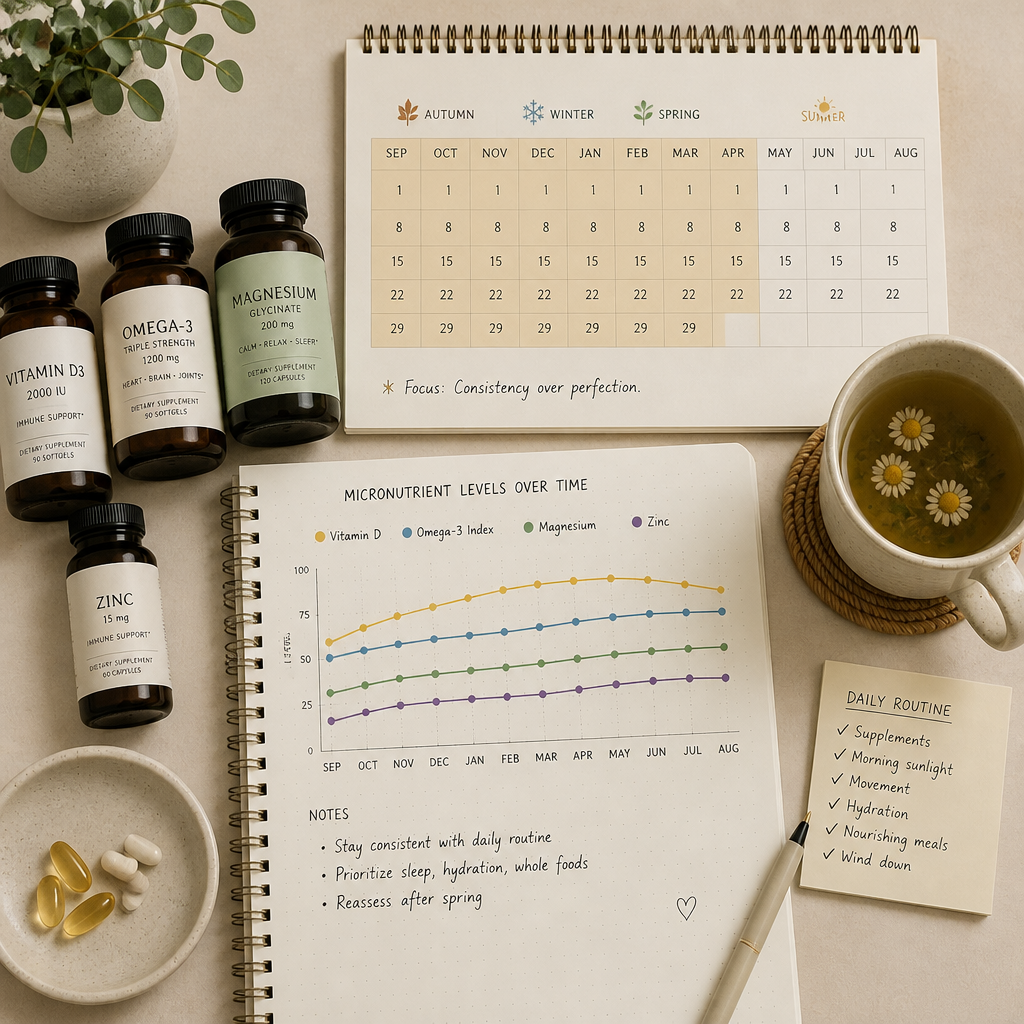
Not all vitamins contribute equally to immune defence. The research points clearly to a short list of nutrients with the strongest and most consistent evidence. Understanding what each one actually does will help you stop guessing and start supplementing with purpose.
Vitamin D is arguably the most important immune-related vitamin for anyone living in the UK. It exerts direct immunomodulatory effects on the adaptive immune system, influencing T lymphocyte activity, B lymphocyte proliferation, and the body's capacity to regulate inflammatory responses. Deficiency does not just leave you slightly under-protected. It actively weakens the communication between immune cells.
The practical implication is straightforward: supplement with vitamin D3 consistently from October through April, and consider year-round supplementation if your sun exposure is limited by job or lifestyle. Public Health England has recommended that all adults consider a daily vitamin D supplement during autumn and winter. A dose of 10 micrograms (400 IU) is the standard recommendation, though some individuals with confirmed deficiency may require more under medical guidance.
Pro tip: Take your vitamin D alongside a magnesium-containing supplement. Magnesium is required to activate vitamin D in the body, and without it, much of your supplemented vitamin D cannot be properly used.
Vitamin C's immune role is best understood as ongoing maintenance rather than a last-minute fix. It supports leukocyte (white blood cell) function, helps protect cells from oxidative stress during infection, and contributes to the integrity of physical barriers like skin and mucosal tissue. The evidence is clearest for daily supplementation reducing the severity of colds, rather than preventing them outright in well-nourished adults.
The recommended daily amount for adults is 40 mg in the UK, but trials examining immune function typically use 500-1,000 mg daily. For active individuals pushing through training loads and exposure to other people in gyms and sports facilities, staying above the minimum is a reasonable and well-supported approach. Vitamin C is water-soluble, so the body clears excess amounts rather than storing them, making consistent daily intake more effective than sporadic high doses.
These vitamins are less discussed but genuinely matter. Vitamins A and E contribute to the protection of cells from oxidative stress and support the structural integrity of immune tissue. Vitamins B6 and B12 are involved in the production and regulation of immune cells, and low B6 status in particular has been associated with worse outcomes in viral infections.
If you are relying on a single multivitamin for immunity to cover these, check that it includes all four. Many cheaper formulations either omit or under-dose vitamin A and B6 while leaning heavily on vitamin C and D, which you can also source more cheaply as standalone supplements.
Vitamins tend to get more attention, but minerals are equally critical to how your immune system functions. Three in particular deserve specific attention from anyone serious about year-round immune support.
Zinc is essential for the development and function of immune cells. The UK Reference Nutrient Intake for zinc is 9.5 mg daily for men and 7 mg for women. Where zinc becomes genuinely interesting is in its role during acute illness. Clinical studies show that zinc can reduce the duration of the common cold when taken within 24 hours of symptom onset. Wait longer than that, and the benefit drops off sharply.
For daily immune maintenance, getting zinc through food (meat, shellfish, legumes, seeds) or a multivitamin at RDA levels is adequate for most adults. Where supplementation becomes particularly valuable is for older adults, vegetarians, and high-volume athletes, who are more prone to marginal deficiency.
Magnesium plays a dual immune role: it directly supports immune cell activity and reduces chronic low-grade inflammation, and it is also required to activate vitamin D. Low magnesium has been linked to higher inflammatory markers, including interleukin-6, and impaired immune function overall. The recommended daily intake for adults sits at 300-400 mg depending on age and sex.
Active individuals are at particular risk of marginal magnesium deficiency because sweat losses during exercise deplete it. This is one reason electrolyte products that include magnesium offer more immune-relevant value than plain carbohydrate drinks for people training consistently.
Selenium is one of the most under-discussed minerals in immune support, but the evidence for it is serious. Selenium deficiency can adversely affect immune response and has been linked to changes in how viruses behave in the body, potentially allowing them to mutate more aggressively. Selenium, zinc, and vitamins A, E, B6, and B12 are all identified by the European Society for Clinical Nutrition and Metabolism as nutrients whose low intake is associated with worse outcomes in viral infections.
Brazil nuts are an exceptionally rich dietary source, but one or two per day is sufficient and over-consuming them carries risk. A well-formulated immunity supplement UK that includes selenium at safe and effective levels makes this easy to manage without food-source guessing.
Micronutrients with the strongest evidence for immune support are vitamins C and D and zinc, but several others including selenium, magnesium, and B vitamins form the broader architecture that keeps immune defences functioning properly year-round.
Electrolytes are most commonly associated with hydration and muscle performance. But the connection to immune function is real and worth understanding, especially if you train regularly and are already thinking about immune support.

Immune cells rely on proper fluid balance and ion gradients to move efficiently, signal correctly, and mount effective responses. Dehydration and electrolyte imbalance do not just affect athletic performance, they can slow the immune response at the cellular level. When you are already depleted from a hard session, and then exposed to an infection, your body is managing two demands on reduced resources.
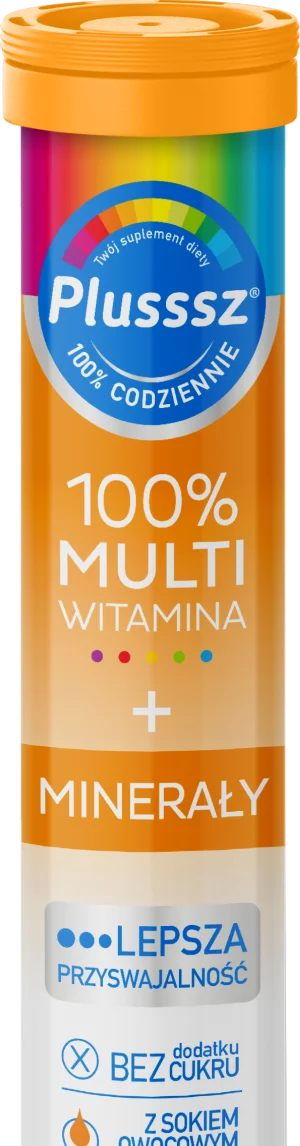
Potassium, sodium, magnesium, and calcium all contribute to maintaining the environment in which immune cells operate. A product like Plusssz Electrolytes Sport, which combines these key electrolytes with a full vitamin complex including immune-relevant nutrients, addresses both performance and immune maintenance in a single, practical format. This is particularly useful in autumn and winter when training load stays high but nutrient intake can slip.
Pro tip: Do not wait until summer to think about electrolyte supplementation. Indoor training in winter can produce just as much sweat as outdoor summer activity, and the vitamin D deficit makes mineral support even more important during these months.
For active individuals comparing options, Plusssz's no-added-sugar electrolyte formulation differs from products like Science in Sport and High5, which tend to prioritise carbohydrate delivery for endurance performance over micronutrient completeness. If immunity is part of your goal, the vitamin and mineral profile of your electrolyte product matters as much as the sodium content.
There are three main approaches to getting your immune-relevant micronutrients. Each has genuine trade-offs, and the right choice depends on your lifestyle, budget, and how consistently you actually take things.
Approach |
Best For |
Key Limitations |
|---|---|---|
Single-nutrient supplements (e.g., standalone vitamin D, vitamin C, zinc) |
Correcting a confirmed specific deficiency; adding to an existing routine |
Easy to over-supplement or miss interactions (e.g., zinc without copper); requires multiple purchases and daily management |
Broad-spectrum multivitamin for immunity |
Covering multiple marginal deficiencies with one daily supplement; ideal for busy people who want comprehensive baseline coverage |
May under-dose some nutrients compared to therapeutic single-nutrient products; quality varies enormously between brands |
Electrolyte complex with vitamin blend (e.g., Plusssz Electrolytes + Multivitamin) |
Active individuals who want hydration support and immune nutrition in one convenient format, especially post-exercise |
Not a replacement for very high therapeutic doses of a specific nutrient; most effective as part of a broader nutritional strategy |
The honest answer is that most active adults benefit most from the third approach as a daily baseline, topped up with standalone vitamin D3 in winter and zinc awareness around illness onset. Single-nutrient megadosing without a confirmed deficiency offers limited additional benefit for otherwise well-nourished individuals, and the evidence for this position is consistent across multiple clinical reviews.
Building a sustainable immune support routine is less about finding the "best" product and more about removing the gaps that consistently appear in your nutrition. In practice, most active people in the UK have three predictable weak spots: vitamin D from October to April, magnesium lost through sweat, and zinc that dips during periods of high training stress or illness recovery.
This is the period that demands the most active management. Add a daily vitamin D3 supplement if you are not already taking one, and maintain consistent electrolyte intake to support both performance and immune cell function. Your multivitamin for immunity should include selenium, B6, B12, and vitamin A alongside the headline nutrients. If you train five or more times a week, magnesium supplementation on top of your electrolyte product is worth considering.
Sunlight returns, but this does not mean immune nutrition becomes irrelevant. Vitamin C, zinc, and selenium remain important year-round. The practical move is to shift from a reactive to a maintenance mindset: keep your electrolyte and multivitamin routine consistent, ease off the additional vitamin D if you are getting regular outdoor sun exposure, and monitor how your body responds across your training cycle.
If you feel symptoms beginning, add zinc at the earliest opportunity. This is where timing genuinely changes outcomes. Keep hydration and electrolyte balance tighter than usual, because the immune response itself creates fluid and mineral demands. Avoid the mistake of treating supplementation as a substitute for rest, which remains the most effective recovery tool at any nutrient level.
Plusssz's range of electrolyte and multivitamin products is designed to make this kind of consistent supplementation practical rather than complicated. The effervescent format, the absence of added sugar, and the combination of immune-relevant vitamins alongside electrolytes mean you can address hydration, performance, and immunity support within a single daily habit rather than managing a shelf full of separate bottles.
You can explore the full range of Plusssz formulations, including options designed for men, women, seniors, and sports-specific use, at plusssz.co.uk. If you have been recommended the brand by someone already using it, chances are they have experienced the difference a well-formulated electrolyte-vitamin complex makes to how consistently they feel during training and through the winter months.
Vitamin D is the most critical one to supplement in the UK, given that sunlight is insufficient for skin synthesis between October and March. Vitamin C, zinc, and selenium have the strongest overall evidence for immune function. Vitamins B6, B12, A, and E also play supporting roles and are worth including through a broad multivitamin if your diet is not consistently varied.
For most active adults, a high-quality multivitamin for immunity that covers the key micronutrients is a solid baseline. The main gap to watch is vitamin D dosing, which many standard multivitamins underdose for the UK context. A separate vitamin D3 supplement in winter, combined with a comprehensive multivitamin and electrolyte product year-round, covers the majority of immune nutrition needs without overcomplicating your routine.
Yes, in specific cases. Fat-soluble vitamins like A, D, E, and K accumulate in the body and can cause toxicity at excessive doses over time. Zinc above safe upper levels can interfere with copper absorption and immune function. Selenium has a narrow therapeutic window, and the NHS advises not exceeding 350 micrograms per day from supplements. Staying within recommended dosages and choosing well-formulated products removes most of this risk for healthy adults.
The connection is real but indirect. Electrolytes maintain the fluid balance and ion environment that immune cells need to function efficiently. Magnesium in particular has a direct immune role, supporting cell activity and activating vitamin D. For active individuals who deplete electrolytes through sweat, consistent replenishment has a practical immune benefit that goes beyond just staying hydrated during workouts.
Zinc's clinical evidence for cold treatment is specifically tied to timing. Studies show it can reduce the duration and severity of cold symptoms when taken within 24 hours of onset. If you wait two or three days into a cold, the benefit diminishes significantly. For daily immune maintenance, meeting your zinc RDA through food or a multivitamin is sufficient. Keep a zinc supplement accessible so you can act quickly at the first sign of symptoms.
Yes, and active individuals often have higher requirements for several immune-relevant nutrients due to sweat losses and increased metabolic demands. The key is choosing products formulated without unnecessary additives, with no added sugar, and at evidence-based dosages. Products designed specifically for active adults, like the Plusssz electrolyte and multivitamin range, are developed with these considerations in mind rather than being generic supplements repackaged for sport.
What has made the biggest difference to your immune health during winter training? Share your experience below, we would love to hear what is working for you.