Grab a bottle of one of the UK's most popular sports drinks and flip it over. That sweet, colourful liquid you've been pouring into your body after workouts contains roughly 34 grams of sugar per 500ml serving - comparable to a standard fizzy drink. Yet millions of active people in the UK still reach for these bottles as their go-to hydration solution. The problem is not that sports drinks are completely useless. The problem is that most of them are badly designed for what real active people actually need. When you understand the difference between electrolytes vs sports drinks - what's actually in each, and what your body requires after sweating - the choice becomes obvious.
Key Insight |
Explanation |
|---|---|
Popular sports drinks are high in sugar |
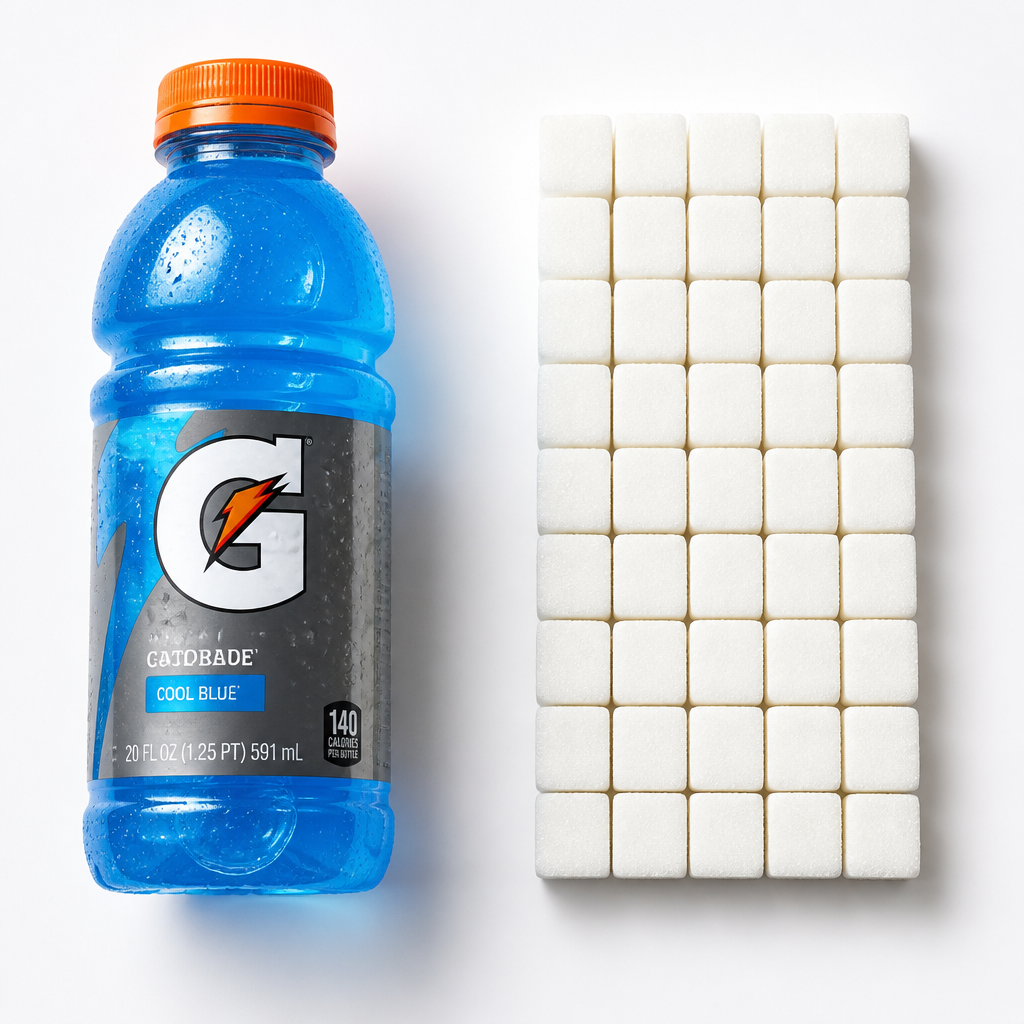
A 500ml bottle of Powerade or Gatorade contains around 34g of sugar - similar to many fizzy drinks - which adds unnecessary calories for most training sessions. |
Sodium is the most critical electrolyte to replace |
Athletes can lose 460-1840mg of sodium per litre of sweat. Drinks low in sodium fail to meaningfully support rehydration during moderate to intense exercise. |
Potassium, magnesium, and calcium play supporting roles |
These minerals matter for muscle function and energy metabolism, but sodium and chloride are the primary losses your hydration product needs to address first. |
Sugar masks poor electrolyte profiles |
Many commercial sports drinks use large amounts of sugar to cover the natural saltiness of proper electrolytes - making them taste good without actually hydrating well. |
No added sugar formulas are better for most active people |
Unless you are doing endurance exercise lasting well over 90 minutes, the sugar in most sports drinks adds calories without benefit to hydration or recovery. |
Electrolyte powders and tablets offer more control |
These formats let you dial in the exact mineral profile you need without accepting the fixed sugar loads built into ready-to-drink bottles. |
Not all zero-sugar products are created equal |
Some "no sugar" electrolyte products hide ingredients like maltodextrin under the label "natural flavours" - always check the full ingredient list, not just the front-of-pack claims. |
Electrolytes are minerals that carry an electrical charge in the body. They govern fluid balance, nerve signalling, and muscle contraction. When you sweat, you lose them - and no amount of plain water replaces them.
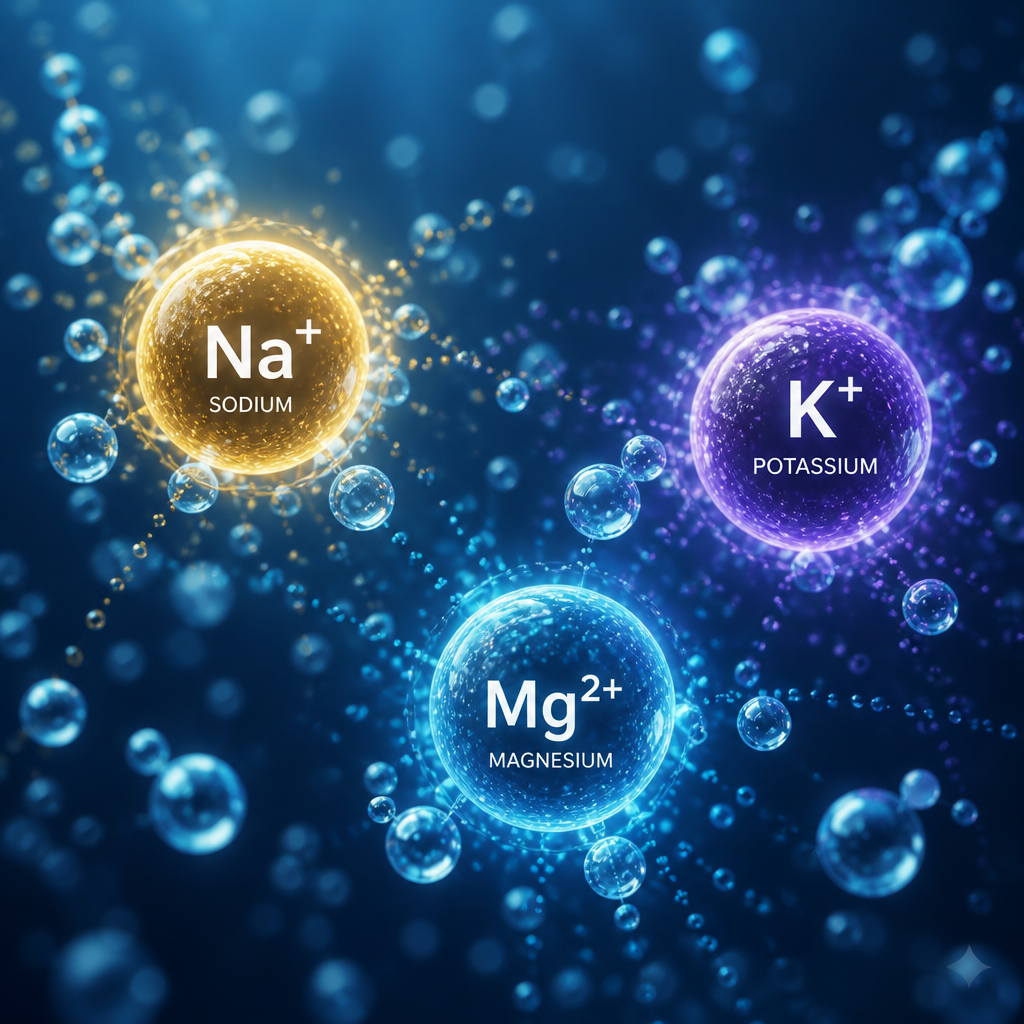
The four key electrolytes relevant to athletic performance are sodium, potassium, chloride, and magnesium, with calcium playing a supporting role. Of these, sodium and chloride are by far the largest components of sweat. Research shows athletes can lose between 460 and 1840mg of sodium per litre of sweat, while potassium losses are considerably smaller at around 160-390mg per litre. Magnesium and calcium are lost in even smaller amounts.
This matters because it tells you what a genuinely effective hydration product needs to prioritise. Sodium helps the body retain water and is the electrolyte that drives fluid absorption. Potassium works with sodium to regulate fluid balance and supports muscle function. Magnesium contributes to energy metabolism and reduces the risk of cramping. Without adequate replacement of these minerals, performance degrades and recovery slows regardless of how much water you drink.
Pro tip: When evaluating any hydration product, check the sodium content per serving before anything else. A product delivering less than 200mg of sodium per serving is unlikely to meaningfully address sweat losses during moderate to intense training.
Walk into any UK supermarket or petrol station and you will find shelves of brightly coloured bottles promising hydration and performance. The reality inside most of those bottles is less impressive than the packaging suggests.
Both of these dominant brands contain roughly 34 grams of sugar per 500ml bottle. Gatorade provides 6g of carbohydrates per 100ml and does include sodium, potassium, magnesium, calcium, and phosphorus in its formula. Powerade has a similar profile. For a session lasting under 60 minutes at moderate intensity, the sugar load in either drink delivers more calories than your workout burns, without offering meaningfully superior mineral replacement compared to a purpose-built electrolyte supplement.
Lucozade Sport contains approximately 18 grams of sugar per 500ml - less than Gatorade or Powerade - but its sodium and potassium content is notably lower. The brand's energy-boosting properties partly come from caffeine rather than a strong electrolyte profile. A 500ml bottle of Lucozade delivers around 186 calories. For occasional intense activity, that calorie load is justifiable. As a daily hydration habit, it is not.
Across most mainstream sports drinks, the formula follows the same pattern: sugar-forward with a modest electrolyte back-end. The sugar does serve a genuine purpose for endurance athletes working at high intensity for 90 minutes or more, where carbohydrate fuelling becomes critical. For everyone else - a gym session, a weekend run, a long day at work, hot weather hydration - the sugar is excess baggage and the electrolyte profile rarely matches what a dedicated supplement delivers.
When you look at the nutrition label of a popular sports drink and see the high sugar content, you are often paying for sugar water with a sprinkle of electrolytes.
The sugar problem in sports drinks is not purely about calories, though unnecessary calories matter. It is about what the sugar is doing to the product's hydration mechanics and your body's response to it.
High sugar concentrations create a hypertonic drink - one with a higher concentration of dissolved particles than your blood plasma. This actually slows the rate at which fluid passes through your gut into your bloodstream. An isotonic drink, matched more closely to blood plasma concentration, absorbs faster. A hypotonic drink (lower solute concentration) absorbs fastest of all. Most sugar-heavy sports drinks sacrifice absorption speed for palatability and carbohydrate delivery, which is a sensible trade-off for endurance sport but a poor one for everyday active use.
Beyond absorption, consistently consuming high-sugar drinks contributes to unnecessary calorie intake and can disrupt stable energy levels. The familiar sugar spike and subsequent dip that follows a highly sweetened drink is the opposite of what most people want from a hydration product. A well-formulated no sugar hydration drink eliminates this problem entirely: you get the mineral replacement without the blood glucose rollercoaster.
Pro tip: If you do choose a sports drink for endurance sessions over 90 minutes, look for an isotonic formulation rather than a hypertonic one. Check that sodium is listed among the first few ingredients after water, not buried at the bottom of the label.
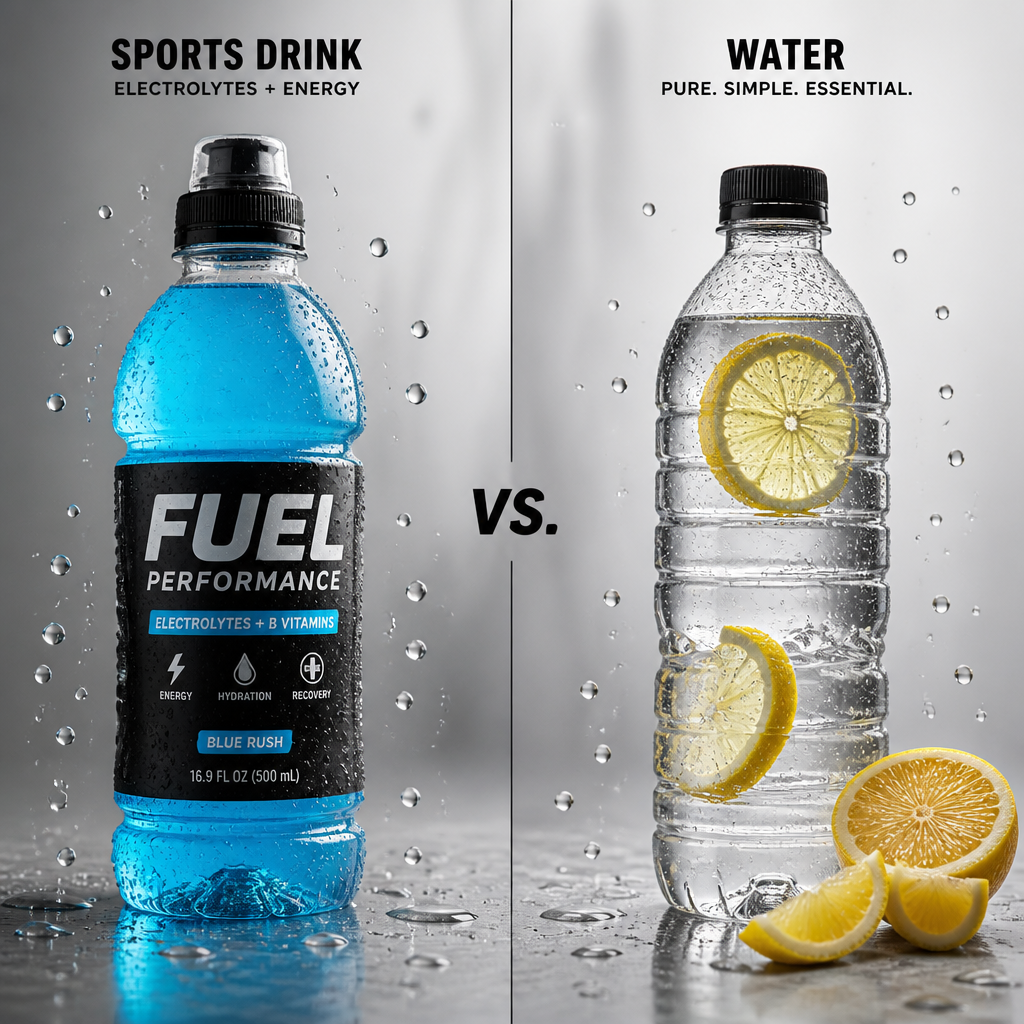
The debate around electrolytes vs sports drinks often gets muddled because people lump very different types of products into the same category. Here is a structured look at how the main options stack up against each other for a typical UK active adult.
Feature |
Popular Sports Drinks (e.g. Gatorade, Lucozade Sport) |
Electrolyte Supplements (No Added Sugar) |
|---|---|---|
Sugar content |
18-34g per 500ml serving |
0g added sugar |
Sodium delivery |
Moderate, variable by brand |
Targeted, often higher per serving |
Mineral profile |
Basic (sodium, potassium, sometimes magnesium) |
Broader, can include vitamins and coenzyme Q10 |
Absorption speed |
Slower for hypertonic formulas |
Faster when hypotonic or isotonic |
Calorie load |
140-186kcal per 500ml bottle |
Near zero |
Best use case |
High-intensity endurance over 90 minutes |
Everyday hydration, training, recovery, hot weather |
Convenience |
Ready to drink, widely available |
Requires mixing, but portable in sachet or tablet form |
In practice, the gap between these two categories widens the closer you look at the mineral profiles. Many mainstream sports drinks include potassium and sodium in amounts that are relatively modest for someone who has been training hard in warm conditions. A purpose-built electrolyte supplement formulated for active people can be engineered to deliver precise levels across the full spectrum of key minerals.
The question of whether to use a sports drink or a dedicated electrolyte product is not complicated once you frame it around duration, intensity, and purpose. The confusion comes from sports drink marketing that presents their products as the solution to every hydration situation - which they are not.
If you are running a half marathon in warm weather, cycling for two hours or more, or competing in a high-intensity team sport with limited rest periods, the carbohydrate content of a sports drink serves a real function. Your body needs fuel, and liquid carbohydrates can be absorbed and used quickly. In this specific context, the sugar is doing genuine work.
For the vast majority of training sessions - a 45-minute gym session, a lunchtime run, hot-weather walking, or post-exercise recovery - you do not need the sugar. You need the minerals. A no sugar hydration drink designed with a strong electrolyte profile addresses exactly what sweat depletes: sodium, potassium, magnesium, and chloride. It supports faster rehydration without the calorie overhead or the energy crash that follows a sugar-heavy drink.
Active people who train regularly need to think about hydration across the full day, not just the 30 minutes after exercise. Plain water replenishes fluid volume but does not replace minerals. A low-dose electrolyte drink with no added sugar is one of the most practical tools for maintaining hydration status between sessions, particularly for those in physically demanding jobs or training twice daily.
The best alternative to sports drinks in the UK for active adults is a purpose-formulated electrolyte supplement with no added sugar, a meaningful sodium content, and a broad mineral profile that goes beyond the basics that most ready-to-drink bottles offer.
What separates a genuinely useful electrolyte product from a re-branded piece of candy? Three things. First, the sodium content per serving needs to be high enough to address real sweat losses - not just token amounts that look good on a label. Second, the product should include potassium and magnesium alongside sodium, because these work together rather than independently. Third, it should not rely on artificial sweeteners that come with their own concerns around gut health and appetite signalling.
Plusssz Electrolytes SPORT is formulated specifically with this audience in mind. It delivers potassium, calcium, and magnesium alongside sodium, with 10 essential vitamins included in the formula - supporting not just hydration but energy metabolism and muscle recovery. The lemon and grapefruit flavour is designed to be refreshing rather than overpoweringly sweet, which is a direct contrast to most competitors on the UK market. For active individuals who want a product that works across gym sessions, outdoor training, hot days, and recovery days without adding unnecessary sugar, this is the format that makes sense.
If you are comparing Plusssz against brands like Science in Sport, High Five, or ORS Hydration, the key differentiator is the multivitamin complex embedded within the electrolyte formula. Most hydration-only competitors give you minerals. Plusssz builds in the vitamins your body also depletes during sustained activity, which means one product covers more of your nutritional bases than a standard electrolyte drink alone. Explore the full range of electrolyte products from Plusssz to find the formulation that fits your training routine.
A common mistake active people make is treating their electrolyte supplement as a post-workout product only. In practice, hydrating with electrolytes before and during exercise - not just after - is what keeps performance consistent throughout a session. The body cannot play catch-up effectively when dehydration is already established.
For most exercise lasting under 60 minutes at moderate intensity, water is adequate. For sessions longer than 60-90 minutes, or any session in hot conditions, water alone does not replace the minerals lost in sweat. A purpose-built electrolyte supplement will outperform both water and most commercial sports drinks in these situations because it delivers minerals without the unnecessary sugar load.
An isotonic drink has a similar concentration of dissolved particles (electrolytes and sugars) to blood plasma, which allows for moderate absorption speed. A hypotonic drink has a lower concentration, which means it absorbs faster into the bloodstream. Most commercial sports drinks are isotonic or close to hypertonic due to their high sugar content. Electrolyte supplements mixed with water at the right concentration can produce a hypotonic solution that rehydrates faster.
No. A small amount of glucose can assist the absorption of sodium through specific transport mechanisms in the gut, but the large quantities of sugar found in mainstream sports drinks (18-34g per serving) far exceed what is needed for this effect. A well-formulated electrolyte product with no added sugar achieves effective mineral delivery without the calorie cost or blood sugar spike of a sugary sports drink.
Sodium is the primary electrolyte lost in sweat and the most important to replace. It helps the body retain fluid and drives the absorption of water into cells. Potassium, magnesium, and chloride also need replenishing, but sodium is the first priority and the one most commonly under-delivered by popular sports drinks relative to actual sweat losses.
Yes, and arguably more so. Competitive athletes doing long endurance sessions have a clearer case for the carbohydrate content in sports drinks. For recreational gym-goers, runners, cyclists, or anyone simply trying to stay hydrated during an active day, a no-sugar electrolyte supplement better matches their actual needs: mineral replacement without the excess calories, sugar crashes, or unnecessary additives that come with most mainstream sports drink brands.
Yes, for most healthy active adults. Daily electrolyte supplementation supports consistent hydration across training and non-training days, which is particularly useful for people doing two-a-day sessions, physically demanding jobs, or training in warm conditions. If you have a medical condition affecting kidney function or blood pressure, consult your GP before starting any regular electrolyte protocol.
Have you switched from a mainstream sports drink to an electrolyte supplement? We would love to hear what difference it made to your training or recovery - drop your experience in the comments below.