Most desk-based professionals in the UK spend eight or more hours a day in an air-conditioned office, drinking coffee on a loop and wondering why they feel foggy by 3pm. The answer, more often than not, is hydration for office workers UK. Research points to mild dehydration as a significant, frequently overlooked cause of fatigue, reduced concentration, and slower working memory among people doing exactly the kind of sedentary, cognitively demanding work that fills a modern workday. The challenge is that you rarely feel acutely thirsty sitting at a desk, which means low-level dehydration builds quietly across the day without ever triggering an obvious warning signal.
The assumption that only physically active people need to worry about hydration is one of the most common and damaging mistakes in workplace wellness. Sitting in a heated or air-conditioned room causes continuous, low-level fluid loss through respiration and skin. You do not sweat visibly, so you assume you are not losing water. You are wrong.
According to research highlighted by Employer News UK, NHS guidance directly links dehydration to symptoms including tiredness, dizziness, headaches, confusion, and reduced concentration, all of which directly affect performance in office and workplace settings. Research published in the British Journal of Nutrition has also linked mild dehydration with impaired vigilance, slower working memory, and increased fatigue.
The threshold at which problems begin is lower than most people expect. Mild dehydration is quantified as a 1% drop in body weight in fluid. At that level, cognitive performance is already measurably impaired. This is not a dramatic state of thirst and dizziness. It is the quiet, background sluggishness that most office workers write off as Monday-morning tiredness or post-lunch slump, when it is actually a correctable physiological problem.
A further complication specific to UK desk workers is the reliance on caffeinated drinks as a substitute for genuine hydration. Survey data from Employer News UK shows that around 45% of UK adults believe tea, coffee, or energy drinks contribute effectively to hydration, while 28% say they rely on caffeine to maintain productivity. In reality, while caffeinated drinks do contribute to overall fluid intake in moderate amounts, using them as your primary hydration strategy means you are chasing energy through stimulation rather than addressing the underlying fluid deficit.
Thirst is a late signal. By the time you feel thirsty, you are already mildly dehydrated, and the cognitive cost has already started accumulating.
The NHS recommends that UK adults drink six to eight glasses of fluid per day, totalling roughly 1.2 to 2 litres. This figure includes water, lower-fat milk, and sugar-free drinks. Tea and coffee also count, though they should not be your dominant source.
That baseline, however, is a minimum starting point rather than a personal target. Your actual requirement shifts depending on several factors that are highly relevant in a UK office context: central heating in winter, air conditioning in summer, the number of caffeinated drinks you consume, whether you exercise before or after work, and even the temperature of the commute. A person running to the station, sitting in a heated Tube carriage, and then spending eight hours in an air-conditioned open-plan office has meaningfully higher fluid needs than the generic NHS guideline captures.
Urine colour is the most practical monitoring tool available without any equipment. Pale straw-yellow indicates adequate hydration. Darker amber signals a deficit that needs correcting. Many desk workers who check for the first time are surprised by how consistently dark their urine runs on a standard workday, particularly in the afternoon when coffee consumption has tapered off and fluid intake has drifted.
The practical implication: aim to produce pale straw urine consistently across the working day, not just in the morning after your first glass of water. If it is consistently darker from noon onward, your current fluid intake is not enough for your actual daily conditions, regardless of what the guidelines say in the abstract.
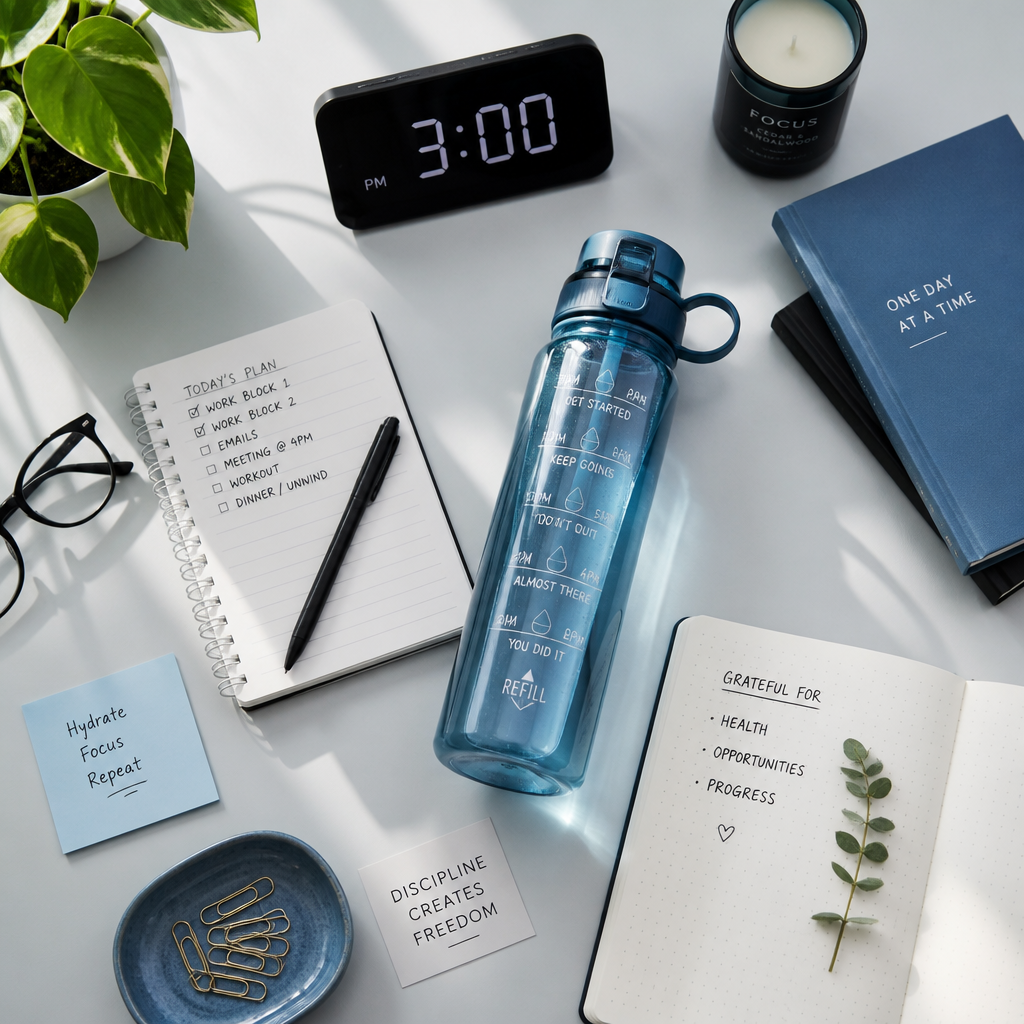
Pro tip: Keep a 750ml to 1 litre refillable bottle on your desk and aim to refill it at least twice before leaving the office. UK research consistently shows that people drink dramatically more water when a bottle is visible in front of them than when they need to walk to a tap or kitchen.
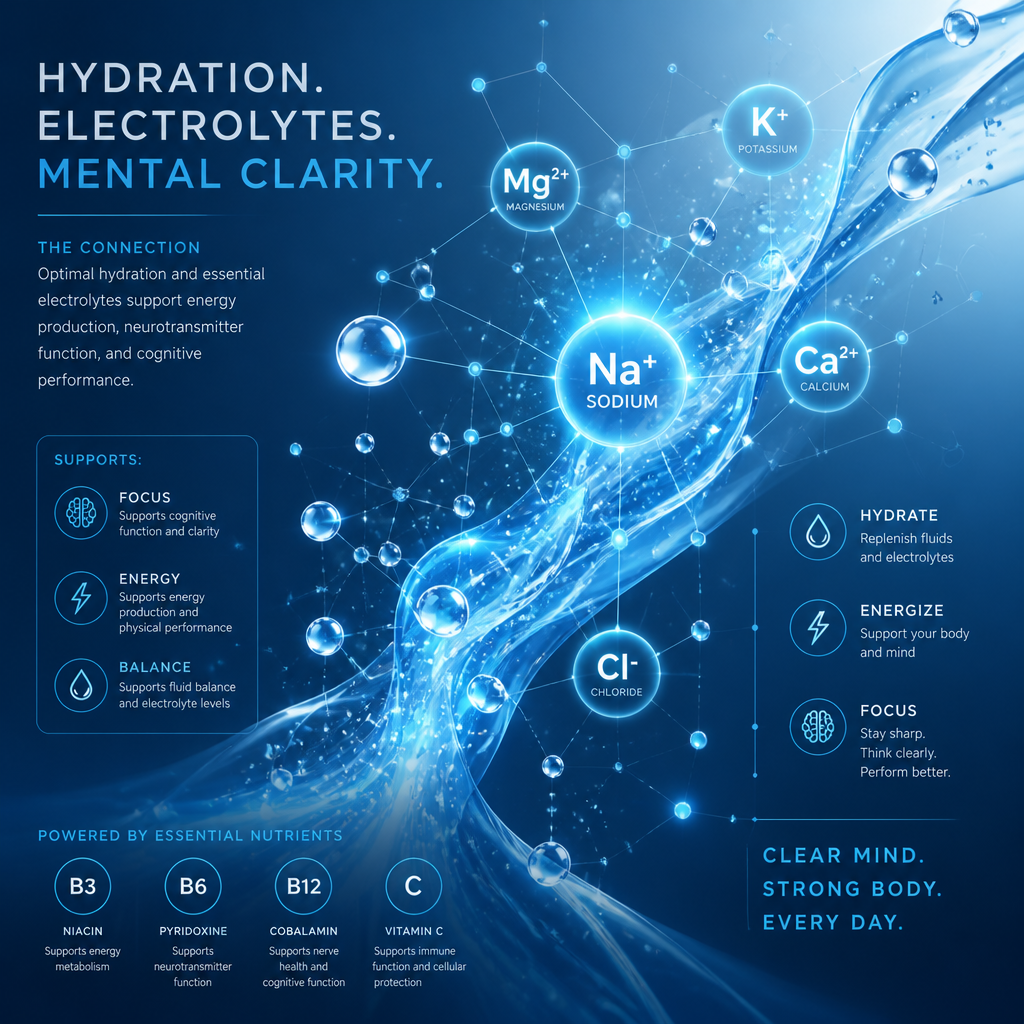
Water is necessary, but it is not the complete solution for electrolytes for energy at work. Electrolytes, specifically sodium, potassium, magnesium, and chloride, govern how effectively your body uses the fluid you drink. Without an adequate electrolyte balance, water is absorbed and excreted less efficiently, and the cellular processes that underpin focus and energy metabolism function below par.
This matters practically for desk workers in two specific situations. First, if you are a frequent coffee drinker, caffeine has a mild diuretic effect that increases urinary excretion of certain minerals over time. Second, if you exercise before or after work, you lose electrolytes through sweat that plain water does not replace. Arriving at your desk already sodium-depleted after a morning run and then drinking only water through the morning compounds the problem rather than fixing it.
The key distinction when choosing an electrolyte supplement for an office setting versus a sports event is the absence of added sugar and the inclusion of vitamins that support energy metabolism. Standard sports drinks are engineered for carbohydrate fuelling during high-output endurance exercise. That formulation is poorly suited to sitting at a computer.
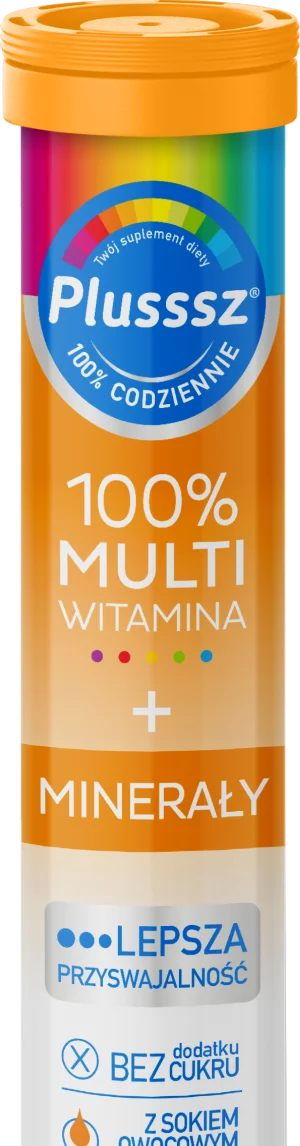
Plusssz UK's electrolyte hydration products are specifically formulated for this gap: no added sugar, improved nutrient assimilability, and a vitamin-mineral blend designed for daily use rather than occasional event fuelling. That is a meaningfully different design brief compared with competitors such as Science in Sport or High Five, which prioritise carbohydrate delivery for endurance athletes rather than sustained daily electrolyte support for active but desk-based adults.
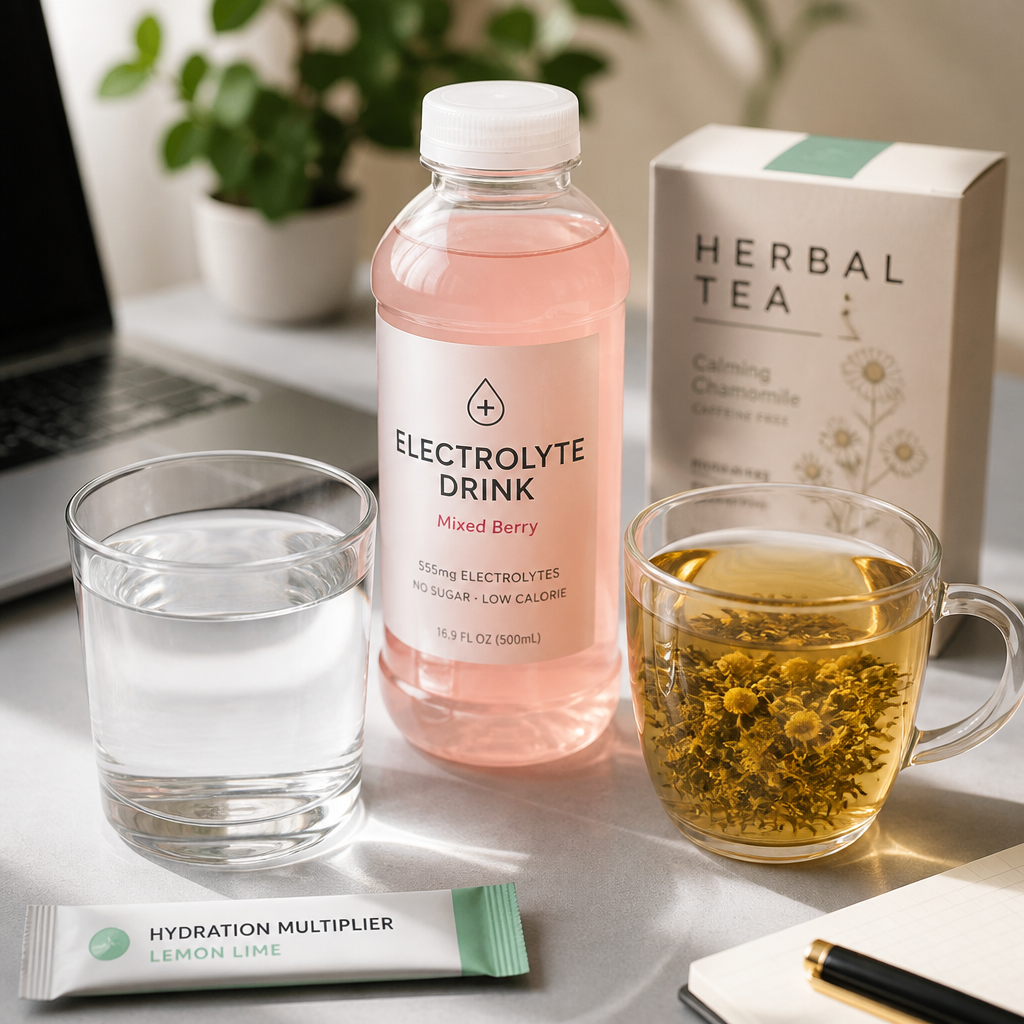
A practical approach is to use an electrolyte supplement at the points in the day where fluid and mineral deficits are most likely to accumulate: mid-morning if you exercised before work, and mid-afternoon when energy naturally dips and coffee consumption has typically tapered.
Pro tip: Do not wait until you feel a headache or a concentration dip before reaching for an electrolyte drink. By that point, the deficit is already affecting your output. Build it into your day as a scheduled input rather than a reactive fix.
The category of vitamins for concentration is cluttered with overclaims. Rather than navigate the marketing noise, it is more useful to focus on the specific micronutrient gaps that desk-based, office-working adults in the UK are most likely to develop, and which have a documented link to cognitive performance and energy metabolism.
B vitamins, particularly B6, B9 (folate), and B12, support the cellular energy pathways that keep focus steady through long workdays. B vitamins facilitate energy metabolism at the cellular level, and low intake is linked to fatigue and reduced mood, both of which are precision killers of afternoon concentration. For desk workers who skip breakfast or rely on highly processed lunch options, B vitamin intake is frequently below optimal levels without any obvious deficiency symptoms.
Magnesium supports neuromuscular calm and is involved in over 300 enzymatic reactions in the body, including those governing energy production. Sustained periods of cognitive stress deplete magnesium from cells, making regular adequate intake particularly relevant for people who spend their days in mentally demanding work. The problem is that low magnesium rarely announces itself dramatically. It manifests as background tiredness, mild muscle tension, and difficulty concentrating, which again gets attributed to the workday rather than the nutrient gap behind it.
UK adults who spend the majority of daylight hours indoors are at genuine risk of low vitamin D, particularly between October and March when the angle of sunlight in the UK is insufficient for skin synthesis even outdoors. Low vitamin D is linked to impaired mood and immune function. For office workers who commute in the dark and leave work in the dark during winter months, supplementation is a practical necessity rather than an optional extra.
The point is not that supplements replace a good diet. They do not. But for desk workers operating in a structured sedentary environment with limited sun exposure, irregular eating patterns, and sustained cognitive demands, targeted micronutrient support fills real gaps that diet alone frequently misses.
Theory is not the problem here. Most people who are chronically underhydrated at work already know they should drink more water. The problem is behavioural: the workday is structured around tasks, meetings, and deadlines, not around fluid intake. Hydration needs to be embedded into existing routines rather than added as a separate discipline that competes for attention.
The most reliable method is time-anchoring: attaching fluid intake to events that already happen consistently. Drink a full glass of water or an electrolyte drink when you arrive at your desk in the morning. Drink before and after each meeting. Drink when you return from lunch. These events happen regardless of workload, which means hydration happens regardless of workload too.
This approach works better in practice than hourly reminders or hydration apps, because it removes the decision-making step. The trigger is the event, not a notification you can dismiss.
Prepare your fluid for the day at the start of the day. Fill your water bottle. Mix an electrolyte sachet if you are using one. Have it ready on your desk before you open your first email. This sounds trivially simple, and it is, but it is the single most effective structural change most desk workers can make. The friction of walking to the kitchen to fill a glass repeatedly throughout the day is enough to suppress fluid intake meaningfully, especially during busy periods.
Between 20% and 30% of daily fluid intake comes from food rather than drinks, according to NHS guidance. Fruit, vegetables, yoghurt, and soups all contribute to your fluid total. A lunch that includes a salad or soup is not just nutritionally superior, it is also actively hydrating in a way that a sandwich eaten at the desk is not. This matters for desk workers who eat quickly and return to screens without any deliberate rehydration step.
Not every hydration approach is equally effective for the specific demands of a long desk-based workday. Here is how the main options compare against the criteria that actually matter for this context: sustained cognitive support, convenience, absence of added sugar, and daily usability.
Approach |
Best For |
Key Limitation for Desk Workers |
|---|---|---|
Plain water only |
Basic fluid replacement, low-intensity days with regular meals |
Does not replenish electrolytes lost through sweat or diuretic effect of coffee. No vitamin or mineral support for concentration or energy metabolism. |
Standard sports drinks (e.g. Science in Sport, High Five) |
Carbohydrate fuelling during prolonged endurance training or events |
High sugar content is inappropriate for desk-based use. Formulated for athletic output, not daily cognitive performance. Unsuitable as a routine office hydration tool. |
No-added-sugar electrolyte supplements (e.g. Plusssz UK) |
Daily electrolyte and vitamin support for active adults with desk jobs |
Requires planning ahead to mix or dissolve. Not a substitute for overall fluid intake. Works best as part of a structured daily hydration approach rather than an occasional top-up. |
The comparison makes the positioning clear. If your goal is fuelling a Saturday half-marathon, a carbohydrate-heavy sports drink has a role. If your goal is performing well across eight hours at a desk, it does not. A no-added-sugar electrolyte supplement with a vitamin-mineral blend designed for daily use is structurally better matched to the desk worker's actual needs.
Yes, coffee does contribute to overall daily fluid intake, despite its mild diuretic effect. The NHS and British Dietetic Association both include caffeinated drinks within the fluid total for UK adults. However, relying on coffee as your primary hydration source is problematic, because caffeine does not deliver electrolytes, contributes to mineral excretion over time, and provides stimulation rather than genuine hydration. Use coffee as part of your fluid intake, not as the whole of it.
The most practical indicator is urine colour. Pale straw-yellow indicates adequate hydration. Dark amber signals a deficit. Secondary signals include mild headaches in the afternoon, difficulty concentrating on tasks that were manageable in the morning, and a general sense of tiredness that arrives earlier than expected. Note that by the time thirst is apparent, mild dehydration has already been established for some time.
Two points in the day are particularly effective for desk workers. Mid-morning works well if you exercised before work or had a heavy coffee intake first thing, since both create electrolyte deficits early. Mid-afternoon, roughly between 2pm and 4pm, addresses the natural energy and concentration dip that many desk workers experience. Using an electrolyte supplement at this point provides a meaningfully better outcome than another coffee, because it addresses the physiological cause of the dip rather than masking it with stimulation.
For a desk worker eating a well-balanced, varied diet with regular meals and no exercise, food can provide adequate electrolytes on most days. The British Dietetic Association notes that a normal mixed diet covers electrolyte requirements for the general population. In practice, many desk workers eat irregularly, consume processed foods at lunch, exercise before or after work, and drink significant amounts of coffee, all of which shift the equation. For this group, a targeted electrolyte supplement fills a genuine gap rather than duplicating what food already provides.
The most evidence-backed vitamins for concentration and energy at work are B vitamins (particularly B6, B9, and B12), magnesium, and vitamin D. B vitamins support cellular energy pathways. Magnesium supports neuromuscular function and is depleted by sustained cognitive stress. Vitamin D is a specific concern for UK desk workers who spend limited time outdoors, particularly in winter. Rather than taking isolated high-dose supplements indiscriminately, look for a multivitamin formulation that covers these bases as part of a combined daily intake alongside an electrolyte supplement.
The fundamental difference is the design brief. Standard sports drinks from brands such as Science in Sport or High Five are formulated to deliver carbohydrates and electrolytes during high-output endurance exercise. They typically contain added sugars that are appropriate when burning calories at pace, but are simply excess sugar for someone sitting at a desk. Plusssz UK products are formulated specifically for daily use by active adults, with no added sugar, improved nutrient assimilability, and a vitamin-mineral blend that supports energy metabolism and general wellbeing across a full day, not just around a training session.
Have you noticed a difference in your concentration or energy levels when you make a conscious effort to stay hydrated through the workday? Share your experience and what has actually worked for you in your routine.