Most UK athletes drink when they are thirsty. That is already too late. Whether you are hammering a squash court in a north London sports centre, grinding out a 60-mile ride through the Peak District, or training for a half marathon on muddy parkland trails, your hydration routine for athletes UK can be the single biggest variable separating a strong session from a wrecked one. This article pulls together what the research says and what experienced UK athletes actually do across three of the most popular active sports, so you can build a hydration plan that works in the real world, not just in a lab.
Key Insight |
Explanation |
|---|---|
Thirst is a lagging indicator |
By the time you feel thirsty during exercise, you are already measurably dehydrated. Start hydrating before training, not during it. |
Sweat rates vary widely by sport |
Elite squash players have been measured at mean sweat rates around 1.11 litres per hour. Cyclists and runners in heat can push well beyond that. Know your sport's demand. |
Water alone is not enough for sessions over 60 minutes |
Drinking plain water on a long ride or run can dilute blood sodium and cause hyponatremia. Add electrolytes once your session exceeds an hour. |
Sodium is the priority electrolyte for sweat loss |
Sodium drives fluid retention and reabsorption. Research on elite squash players found mean sodium losses of over 1,500 mg per training session. Cyclists and runners face similar losses. |
Post-exercise rehydration takes longer than most athletes expect |
Full rehydration after a hard session typically takes 8 to 12 hours of normal eating and drinking. If you train twice in a day, active rehydration with electrolytes is essential. |
Pre-load, do not just react |
Drinking 500 to 750 ml in the two to three hours before exercise means you start a session in a hydrated state, reducing the catch-up burden mid-activity. |
No-added-sugar electrolyte formulas suit active daily use better than sugary sports drinks |
Heavy sugar content in standard sports drinks adds unnecessary calories and can cause gastric discomfort during high-intensity efforts. Clean electrolyte formulas with improved nutrient assimilability are a better fit for consistent daily training. |
There is a persistent myth in British sport culture that dehydration is only a problem in hot climates. Squash courts in the UK are warm and enclosed. Road cycling generates enormous sweat output even in overcast 12-degree weather because of sustained effort. And running, even at conversational pace, produces more heat per kilogram of body weight than almost any other common activity.
The real failure is structural. Athletes plan their training routes, their kit, their nutrition, and their sleep, but hydration gets tacked on as an afterthought. A bottle of water grabbed off the counter before leaving the house is not a hydration strategy. A proper hydration routine for athletes UK is deliberate, timed, and matched to the specific demands of the sport being played.
Developing an optimal hydration strategy is not a one-size-fits-all approach. An athlete's sweat rate is the main determinant of their hydration strategy, with sweat rates being highly individualised due to genetic phenotypes.
That individual variation is exactly why copying someone else's hydration plan rarely works. What a fellow squash club member drinks between games may be completely wrong for your sweat rate and sodium loss profile. The starting point is understanding what your sport demands, then calibrating from there.
Squash is brutal on fluid balance. You are working in a hot, enclosed space, generating repeated short explosive efforts with almost no natural airflow to cool you down. Research on elite squash players found a mean sweat rate of 1.11 litres per hour, with significant differences between male and female players. More importantly, the same research recorded a mean sweat sodium concentration of around 46 mmol per litre, which equates to total sodium losses of well over 1,500 mg across a single training session.
Those numbers matter because squash players routinely underestimate how much they are losing. A one-hour match or training session at a competitive level can leave you in a meaningful fluid deficit even if you have been sipping water throughout.
Arrive hydrated. That means drinking steadily in the hours before play, not downing a large volume immediately beforehand. A practical target is 400 to 600 ml of fluid in the one to two hours before stepping on court. If your session is longer than 45 minutes or the court is warm, add an electrolyte tablet or powder to that pre-match drink. The sodium and potassium in a good electrolyte formula help your body hold onto the fluid rather than simply passing it through.
Use every break. Between games is your only real window, and most squash players let it pass with nothing more than a squirt of plain water. A consistent approach is 150 to 200 ml of an electrolyte drink between each game. Over a competitive five-game match, that adds up to meaningful sodium and potassium replacement that keeps your reaction time and decision-making intact in the fifth game when it matters most.
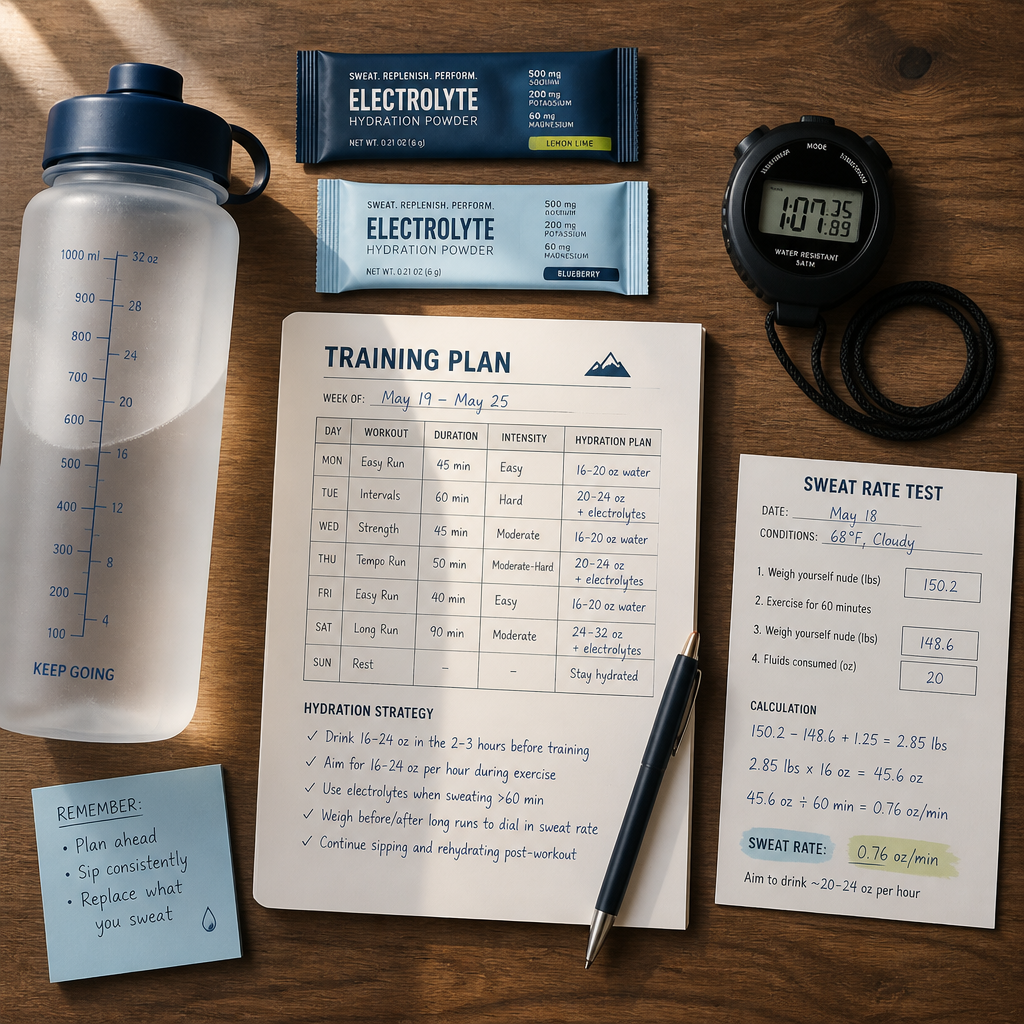
Weigh yourself if you can. Each kilogram of body weight lost during the session represents approximately one litre of fluid deficit. For rapid rehydration, the target is to consume around 1.5 litres of fluid per kilogram of body weight lost, taken steadily over the first two to four hours after finishing. Plain water works for this only if you also eat a sodium-containing meal. A no-added-sugar electrolyte supplement with your post-match drink is a cleaner and faster approach.
Pro tip: Keep a small electrolyte sachet or tablet in your squash bag alongside your racquet grip tape. You will never forget it, and it takes up no space.
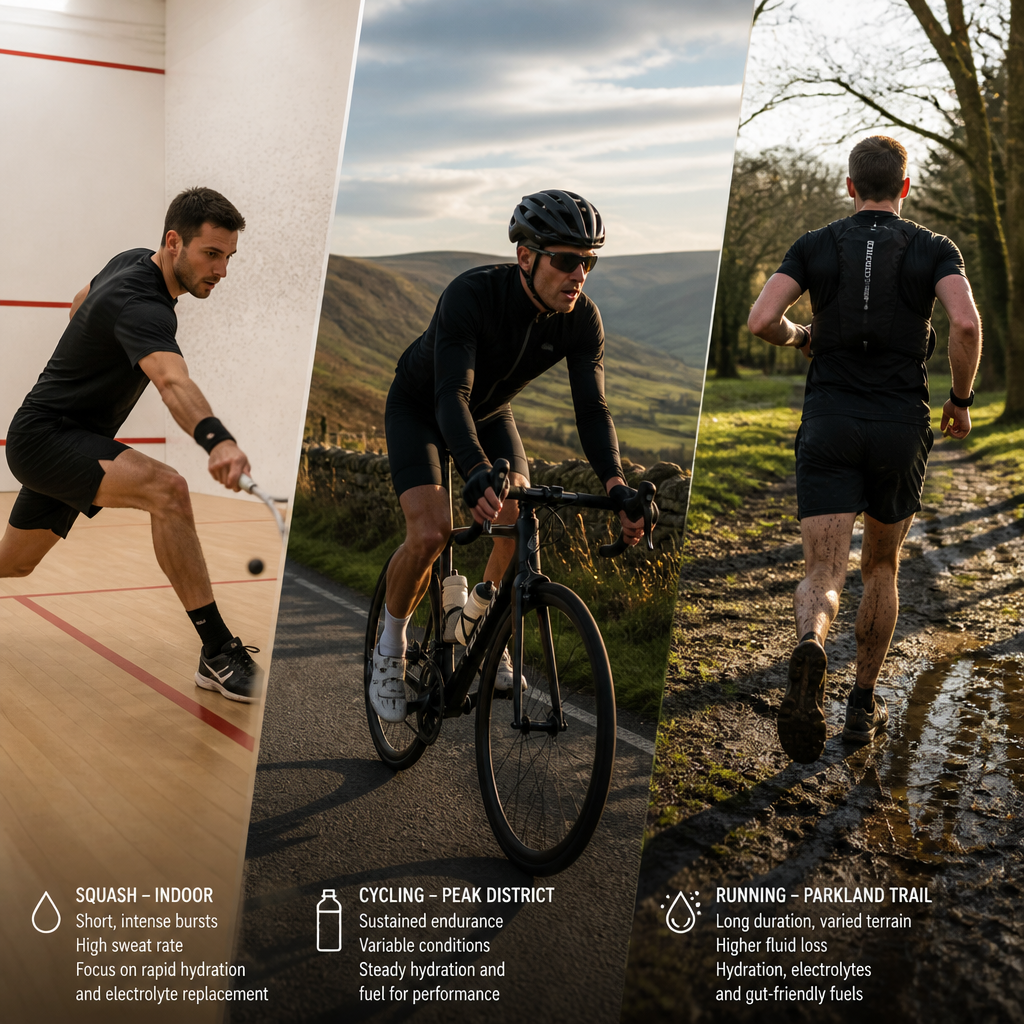
Cycling creates a specific hydration trap. The airflow at speed cools your skin so effectively that many riders underestimate how much they are sweating. By the time you feel depleted on a long ride, you have often been running a fluid deficit for 30 to 45 minutes already. Most cyclists need somewhere between 500 and 750 ml per hour under normal UK conditions, rising to 750 to 1,000 ml per hour during hard indoor sessions or summer sportives where airflow is reduced and effort is sustained.
Losing just 2% of body weight through sweat, roughly 1.5 kg for a 75 kg rider, measurably reduces endurance, power output, and recovery quality. That is a surprisingly small absolute loss. A moderately hard two-hour club ride can easily push you past that threshold if you are not drinking consistently.
Drinking large amounts of plain water on rides over 90 minutes is not neutral. It actively dilutes blood sodium, which can cause hyponatremia, a condition where sodium levels in the blood drop to dangerous levels. This is not a rare problem confined to hot weather ultra-events. It happens to everyday UK cyclists on longer sportives who drink well but drink only plain water. The fix is straightforward: include a source of sodium in what you drink once rides extend past the one-hour mark.
Pre-ride, drink 500 to 750 ml in the two to three hours before leaving. During the ride, sip every 10 to 15 minutes rather than waiting until you are thirsty or until you reach a natural landmark. After the ride, aim to replace 125 to 150% of the fluid you lost, measured by weight if you are serious about getting it right. Add sodium through food or an electrolyte supplement to support genuine reabsorption rather than just passing fluid straight through.
Pro tip: Set a phone or GPS watch alert every 15 minutes during long rides. Most cyclists drink far less than they plan to once they are focused on the effort. The alert removes the guesswork entirely.
Running has the most varied hydration demands of the three sports, simply because the distances and durations range so dramatically. A 5K in 25 minutes has almost no hydration requirement mid-run. A half marathon taking two to three hours in warm conditions demands a structured plan. And a marathon requires rehearsed, practiced hydration that you have tested in training, not improvised on race day.
For training runs under an hour, hydrating well beforehand is more important than drinking during the run itself. Drink steadily through the day, ensure your pre-run urine is pale yellow rather than dark, and you will be fine without carrying a bottle. Reaching for a drink immediately after finishing is both practical and sufficient.
For half marathon distances, a realistic hydration approach involves drinking every three miles or approximately every 20 to 25 minutes, taking around 150 to 200 ml each time. Hot or humid UK summer conditions increase both fluid and electrolyte requirements meaningfully. Do not assume that because it is British weather it is automatically mild. A warm July day with humidity during a major UK half marathon can produce sweat losses comparable to warmer European climates.
Electrolytes become essential once runs extend past 60 to 75 minutes. Including sodium, potassium, and magnesium in your in-run hydration replaces what sweat strips out and keeps muscle contraction functioning properly through the latter stages. This is when cramps and late-race fade most commonly occur, and both are partially preventable with better electrolyte management, not just more water.
A common mistake is drinking differently on race day than in training. Race day adrenaline, changed schedules, and nerves disrupt normal routines. Runners who practise a specific electrolyte drink in training then switch products on race day risk unfamiliar gastric responses at the worst possible moment. Whatever electrolyte formula works for you in training sessions should be the one you use in competition, ideally the same brand and concentration every time.
Factor |
Squash |
Cycling |
Running |
|---|---|---|---|
Typical sweat rate |
Around 1.1 L per hour (elite players in training conditions) |
500 to 1,000 ml per hour depending on intensity and temperature |
Variable; 500 to 1,500 ml per hour in warm conditions |
Drinking opportunity during activity |
Between games only (limited and infrequent) |
Continuous, can sip while riding |
At aid stations or self-carried; challenging at pace |
Key electrolyte priority |
Sodium and potassium (high sweat sodium loss recorded) |
Sodium (hyponatremia risk on long rides without electrolytes) |
Sodium, magnesium, potassium (cramp prevention in later stages) |
Pre-activity hydration window |
1 to 2 hours before, 400 to 600 ml |
2 to 3 hours before, 500 to 750 ml |
2 to 3 hours before, 500 to 750 ml; 10 to 20 min before, 200 ml |
Post-activity rehydration target |
1.5 L per kg of body weight lost over 2 to 4 hours |
125 to 150% of fluid lost, with sodium |
16 to 24 oz per pound lost (with electrolytes) |
When to add electrolytes |
Any session over 45 minutes; always in warm courts |
Any ride over 60 to 90 minutes |
Any run over 60 to 75 minutes |
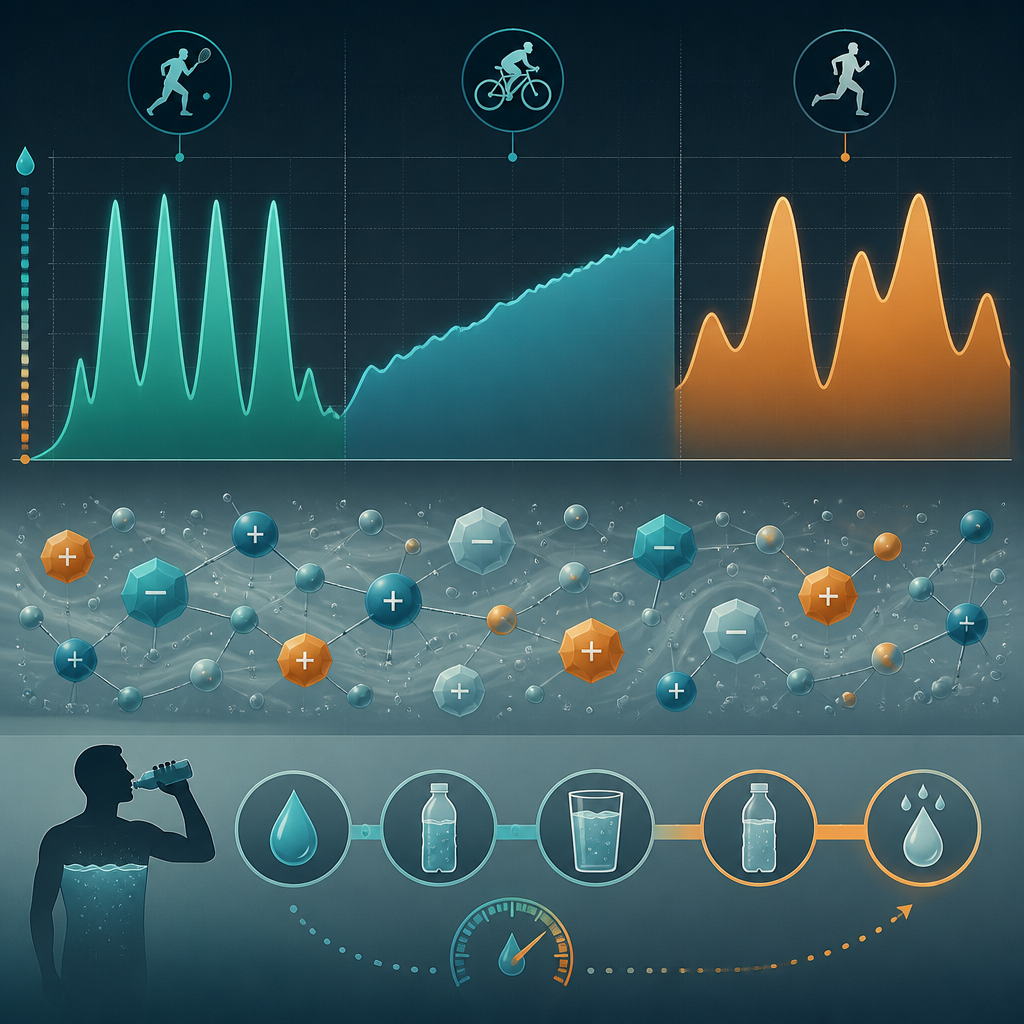
The comparison above makes clear that while the principles overlap, the application is genuinely different across sports. Squash players face the most restricted drinking windows. Cyclists face the highest hyponatremia risk if they rely solely on water. Runners face the widest range of demands depending on distance, meaning a single routine cannot cover all training scenarios.
Electrolytes for endurance sport are not a marketing concept. They are minerals that carry an electrical charge, governing muscle contraction, fluid balance, nerve signalling, and heart function. The main electrolytes lost in sweat are sodium, potassium, magnesium, calcium, and chloride. Of these, sodium drives the most immediate performance impact because it regulates how much fluid your body retains in the right compartments.
Potassium and magnesium matter most for sustained muscular function. If late-race cramping is a recurring problem for you in any of these three sports, magnesium deficiency is a likely contributor, particularly if your diet is not consistently rich in whole grains, nuts, and leafy greens. A well-formulated supplement that covers all three is more practical than trying to address each mineral separately through diet alone on training days.
The format of your electrolyte supplement matters for different sports. For squash, effervescent tablets dissolved in water are ideal because they are compact, easy to carry in a kit bag, and dissolve quickly in the limited time between games. For cycling, a sachet mixed into a bottle at home before a ride is easy to dose accurately. For running, a small tablet or pre-mixed drink you can carry is practical.
The cleaner the formula, the better for high-intensity sport. Standard sports drinks often contain significant added sugar, which is fine for prolonged low-intensity efforts but can cause gastric discomfort during the high-intensity intervals characteristic of squash and race-pace running. A no-added-sugar electrolyte formula that also covers the core micronutrient gaps is a better match for daily training use. This is where Plusssz UK positions its electrolyte hydration range: clean formulation, no unnecessary sugar load, and a mineral and vitamin profile designed for active individuals rather than casual gym-goers.
Watch out for electrolyte products that deliver sodium heavily but skip magnesium and potassium entirely. These are typically designed for a single use case (heavy sweat during extreme endurance events) rather than the varied demands of a UK athlete training across multiple sessions per week. For consistent daily use, a formula that covers the full range of minerals is more useful than a sodium-heavy product designed for one specific race scenario.
Also treat any product with heavy artificial sweetener loads with some caution. Many UK athletes who switch from standard sugary sports drinks to electrolyte-only formats report reduced mid-session gastric discomfort within a few weeks, particularly squash players who are working at high intensity in short bursts where the stomach is not given time to settle.
Pro tip: Calculate your approximate sweat rate at least once per sport. Weigh yourself before and after a representative session without drinking anything during it. The difference in kilograms equals your fluid loss in litres. Do this in two or three different conditions (warm court, cool morning run, indoor turbo session) and you will have a far more accurate hydration target than any generic formula can provide.
Aim for 400 to 600 ml of fluid in the one to two hours before stepping on court. If the court is warm or your session will exceed 45 minutes, add a low or no-sugar electrolyte tablet or sachet to that drink. Arriving already hydrated is more effective than trying to drink during limited breaks mid-match.
Water is sufficient for rides under 60 minutes in mild conditions. For anything longer, or any ride where you are sweating meaningfully, adding sodium through an electrolyte drink or supplement is important. Drinking too much plain water on a long ride without sodium can dilute your blood sodium levels, a condition called hyponatremia, which causes weakness, nausea, and in severe cases can be dangerous. This is not a niche risk. It is a common issue on longer UK sportives.
The most common early signs are a dry mouth, reduced saliva, and a feeling of heavier legs than the effort warrants. Dark yellow urine before your run is a strong signal that you started your session already dehydrated. Mid-run, dizziness, elevated heart rate at a pace that normally feels comfortable, and poor concentration all point to meaningful dehydration. Do not wait for thirst. By the time thirst arrives as a sensation, your performance is already compromised.
Full rehydration after intense exercise typically takes eight to twelve hours of normal eating and drinking. This means that if you train in the morning and plan to train again in the evening, passive rehydration alone will not restore you. Actively consuming an electrolyte drink in the first two to four hours after your morning session, alongside sodium-containing food, is the practical fix for back-to-back training days.
Research on elite squash players specifically found a significant difference in sweat rates between male and female players. Men generally produce higher absolute sweat volumes, while women may have different sodium concentration profiles. Practically, this means men often need to consume more total fluid per session, while women should not assume that lower sweat volume means their electrolyte losses are insignificant. Both groups benefit from a formulation that covers sodium, potassium, and magnesium rather than sodium alone.
Yes. A well-formulated electrolyte supplement covering sodium, potassium, magnesium, and calcium with no added sugar is appropriate across all three sports. The dosing and timing will differ by sport and session length, but you do not need three separate products. Choosing one reliable, clean-formula electrolyte and adjusting how and when you take it is the most practical and consistent approach for multi-sport athletes.
Start with three basics: drink steadily through the day rather than only around training, add electrolytes to any session over 60 minutes, and measure your sweat rate at least once to understand your personal fluid loss. Beginners almost universally underestimate how much fluid sport costs them. Even a modest improvement in hydration consistency produces noticeable gains in energy, concentration, and recovery speed, often faster than most other dietary changes.
If you train for squash, cycling, or running in the UK, we would love to hear how you manage your hydration across different sessions and conditions. Share your experience in the comments below.