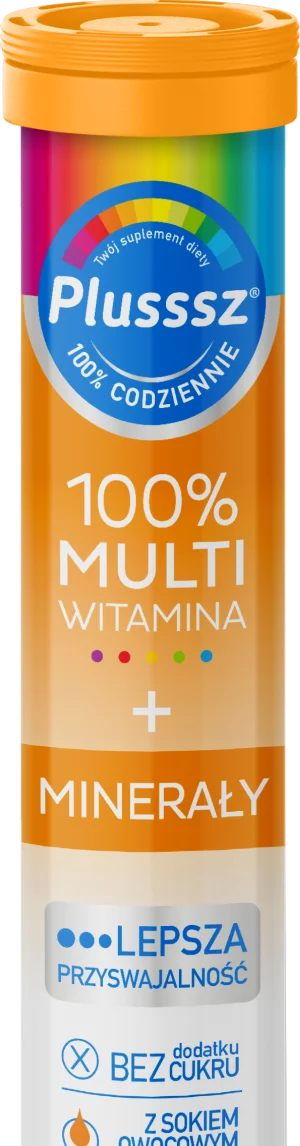
Roughly one in three active women in the UK is deficient in at least one key micronutrient, yet the supplement aisle is still stacked with generic multivitamins designed around a mythical average adult. A women's multivitamin UK buyers actually need looks nothing like those one-size-fits-all tablets. Iron requirements for a woman in her thirties who runs four times a week are dramatically different from a post-menopausal woman, a pregnant woman, or a sedentary man. The gap between what a generic multivitamin delivers and what an active woman genuinely requires is not a minor rounding error. It is the difference between feeling energised and feeling flat.
Key Insight |
Explanation |
|---|---|
Women need more iron than men of the same age |
Menstruating women require around 14.8 mg of iron daily versus 8.7 mg for adult men, according to NHS guidelines. Generic multivitamins often use the lower figure. |
Sweat dramatically increases electrolyte loss |
Active women lose sodium, magnesium, and potassium at rates that rest-based RDAs do not account for. A formula built for exercise must address this directly. |
Folate form matters, not just dose |
Up to 40 percent of people carry MTHFR gene variants that reduce folic acid conversion. Methylfolate is the bioavailable form that bypasses this bottleneck. |
Vitamin D3 and K2 must be paired |
D3 without K2 can lead to calcium being deposited in soft tissue rather than bone. Budget multivitamins routinely omit K2 entirely. |
Iron and calcium compete for absorption |
Taking both at the same time in the same capsule reduces iron uptake by up to 60 percent. Timing or separate formulation is the only practical fix. |
Post-menopausal women need less iron, more calcium and D3 |
Using a product designed for younger women can result in iron overload post-menopause. Demographic-specific formulas matter at every life stage. |
B12 form affects energy metabolism efficiency |
Methylcobalamin is retained in the body at higher rates than cyanocobalamin. Cheaper multivitamins almost universally use cyanocobalamin. |
The core problem is that most mainstream multivitamins are formulated to meet the minimum requirements of an inactive adult, averaged across sexes and age groups. That benchmark is useful for preventing clinical deficiency in a sedentary population. It is not useful for a woman who trains regularly, sweats consistently, and places real physiological demands on her body every week.
In practice, the women who notice the gap first are those who eat well, train consistently, and still feel tired, struggle with recovery, or hit persistent energy lows mid-afternoon. They assume the problem is sleep or stress. Often, it is simply that their supplement is not calibrated to their actual biology.
The NHS nutrient reference values for women of reproductive age set iron at 14.8 mg per day. The same table sets iron for men at 8.7 mg. Many generic multivitamins use a single unisex figure that sits somewhere between the two, meaning women are chronically under-supplemented on this single critical mineral alone.
"Women have fundamentally different micronutrient needs to men across their lifetime, and those needs shift significantly with physical activity levels, life stage, and hormonal status." - British Dietetic Association position statement on women's nutrition
Beyond iron, active women deplete B vitamins faster due to the energy demands of exercise. They lose more magnesium through sweat. They are at statistically higher risk of vitamin D insufficiency than men in the same latitude, partly due to lower baseline levels and partly due to body composition differences affecting storage. A generic formula addresses none of this with any precision.
Pro tip: If you have been taking a standard multivitamin for more than three months and still feel persistently fatigued despite adequate sleep, ask your GP for a full blood panel including ferritin, vitamin D, B12, and folate before assuming the problem is lifestyle.
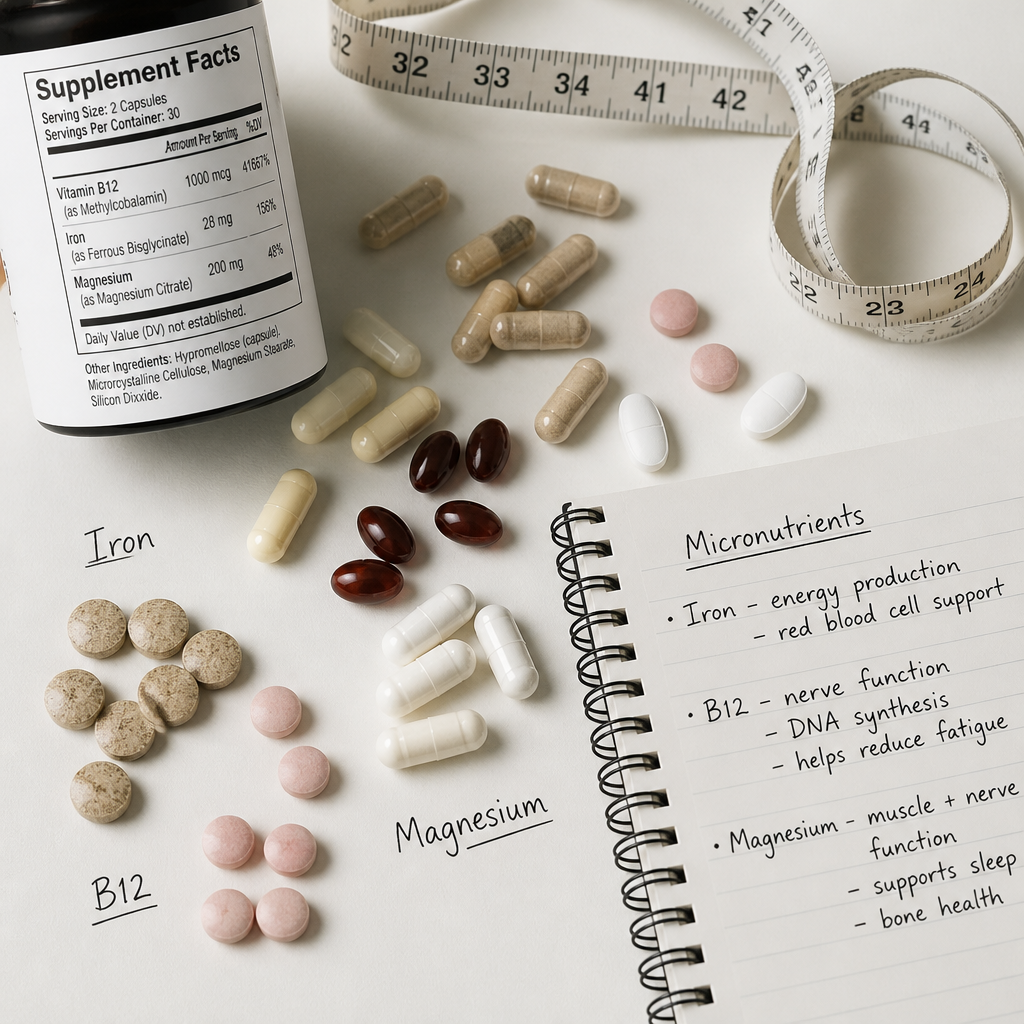
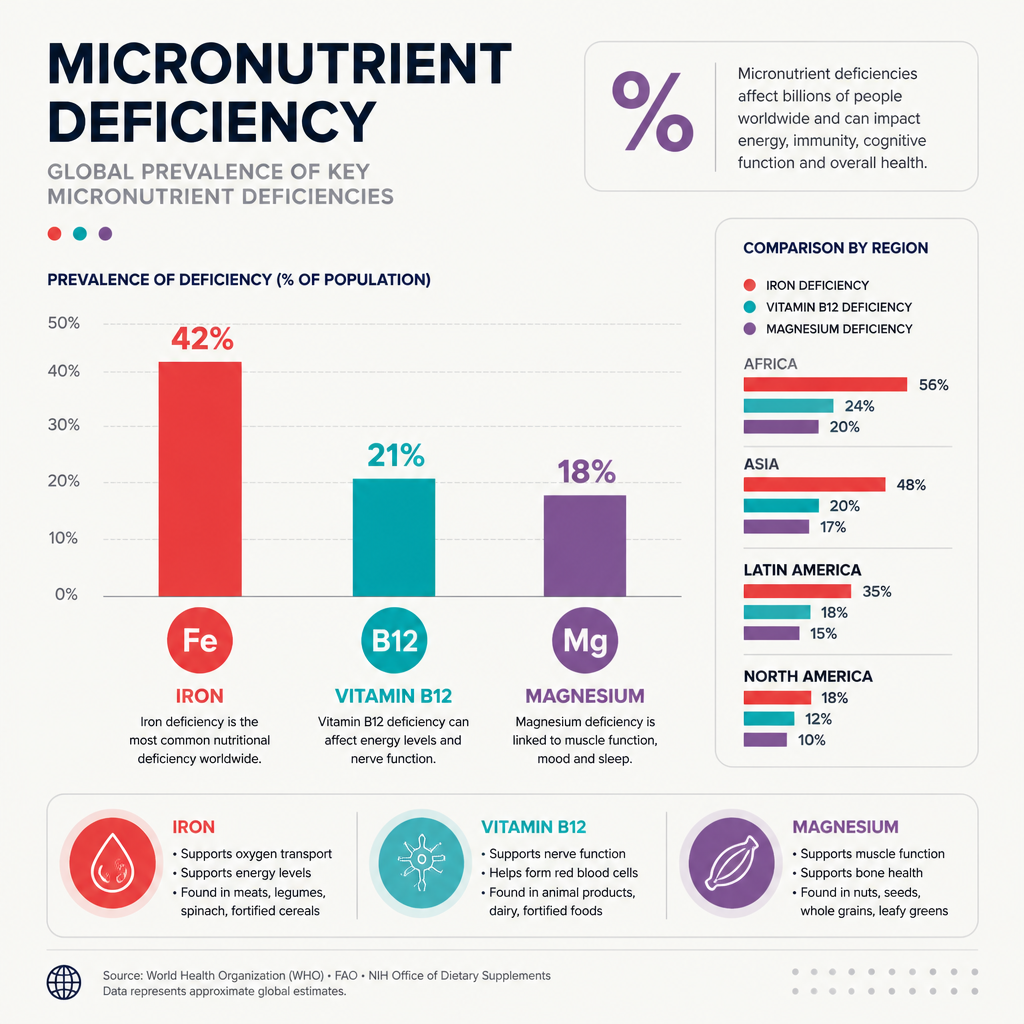
Iron is the nutrient where the one-size-fits-all failure is most visible and most consequential. Iron deficiency anaemia affects an estimated 23 percent of UK women of reproductive age, making it the most common nutritional deficiency in the country. Yet it is also the nutrient where over-supplementation carries real risk, particularly post-menopause.
Monthly blood loss is the primary driver of elevated iron requirements. When you add endurance training to that equation, the situation intensifies. Exercise-induced haemolysis, where red blood cells are destroyed during high-impact repetitive movement such as running, further increases iron turnover. The data consistently shows that female endurance athletes are among the highest-risk groups for iron depletion, with some studies reporting ferritin levels below 20 mcg/L in over 50 percent of female distance runners.
Low ferritin does not always show up as clinical anaemia on a standard blood test, but it absolutely affects performance. Women with ferritin below 30 mcg/L frequently report reduced VO2 max, slower recovery, and persistent cold sensitivity. A generic multivitamin providing 5-8 mg of iron will not move the needle for this group.
Ferrous sulfate is cheap and widely used, but it is also the form most associated with gastrointestinal side effects. Ferrous bisglycinate, a chelated form, is absorbed at roughly twice the rate and causes significantly fewer digestive complaints. A women's supplement brand worth taking seriously will specify the form on the label, not just the dose.
Pro tip: Take your iron supplement separately from any calcium-containing product and away from coffee or tea. Tannins in both beverages reduce non-haem iron absorption by up to 87 percent in some studies. Take iron with a vitamin C source for maximum uptake.
Iron gets most of the attention, but a truly well-formulated women's multivitamin addresses several other nutrients that generic products routinely shortchange.
Magnesium is involved in over 300 enzymatic reactions, including muscle contraction, protein synthesis, and energy production. Active women lose significant magnesium through sweat, and the UK National Diet and Nutrition Survey consistently finds that women aged 19 to 64 fall short of the recommended intake of 270 mg per day. Most generic multivitamins provide 50 to 100 mg at best, and often in oxide form, which has poor bioavailability. Magnesium glycinate or malate are the forms that actually reach tissues at useful concentrations.
The UK has a well-documented vitamin D problem. Public Health England recommends that everyone considers supplementing 10 mcg (400 IU) daily during autumn and winter. For active women training indoors or in low-sunlight months, 1,000 to 2,000 IU of D3 is a more realistic working dose. Most generic multivitamins provide 400 IU in the cheaper D2 form, which has roughly 70 percent of the bioavailability of D3.
The B vitamin complex, particularly B2, B3, B6, and B12, is directly involved in converting food into ATP. Women following plant-based or predominantly plant-forward diets are at elevated risk of B12 insufficiency. B6 is especially relevant for women experiencing hormonal fluctuations, as it supports serotonin synthesis and reduces premenstrual symptom severity in several randomised controlled trials. The active forms of these vitamins, pyridoxal-5-phosphate for B6 and methylcobalamin for B12, are more costly to include but substantially more effective than their inactive precursors.
Not all women's supplements take the same approach. The differences between a budget generic, a sports-specific brand, and a demographically targeted formula like those offered by Plusssz Multivitamin Women are significant enough to affect real outcomes. The table below illustrates the key distinctions.
Feature |
Generic Multivitamin (Unisex) |
Women-Specific Active Formula (e.g. Plusssz UK) |
|---|---|---|
Iron dose and form |
5-8 mg ferrous sulfate, based on male RDA average |
14.8 mg ferrous bisglycinate, aligned to female RDA with improved absorption |
Vitamin D form |
400 IU D2, minimal co-factors |
1,000+ IU D3 paired with K2 for directed calcium metabolism |
B12 form |
Cyanocobalamin (low retention) |
Methylcobalamin (high retention, bioactive form) |
Magnesium inclusion |
Often absent or minimal oxide form |
Glycinate or malate form at exercise-relevant doses |
Electrolyte support |
None |
Sodium, potassium, and magnesium calibrated for active sweat loss |
Folate form |
Folic acid (requires MTHFR conversion) |
Methylfolate (bioavailable for all MTHFR variants) |
Added sugar |
Often present in gummy formats |
No added sugar formulation |
The pattern that emerges from this comparison is consistent. Generic products are designed to tick regulatory boxes at the lowest cost. Targeted formulas are designed to actually work for the person taking them. The price difference is usually smaller than people expect once you account for bioavailability. A higher dose of a poorly absorbed mineral delivers less benefit than a lower dose of a well-absorbed form.
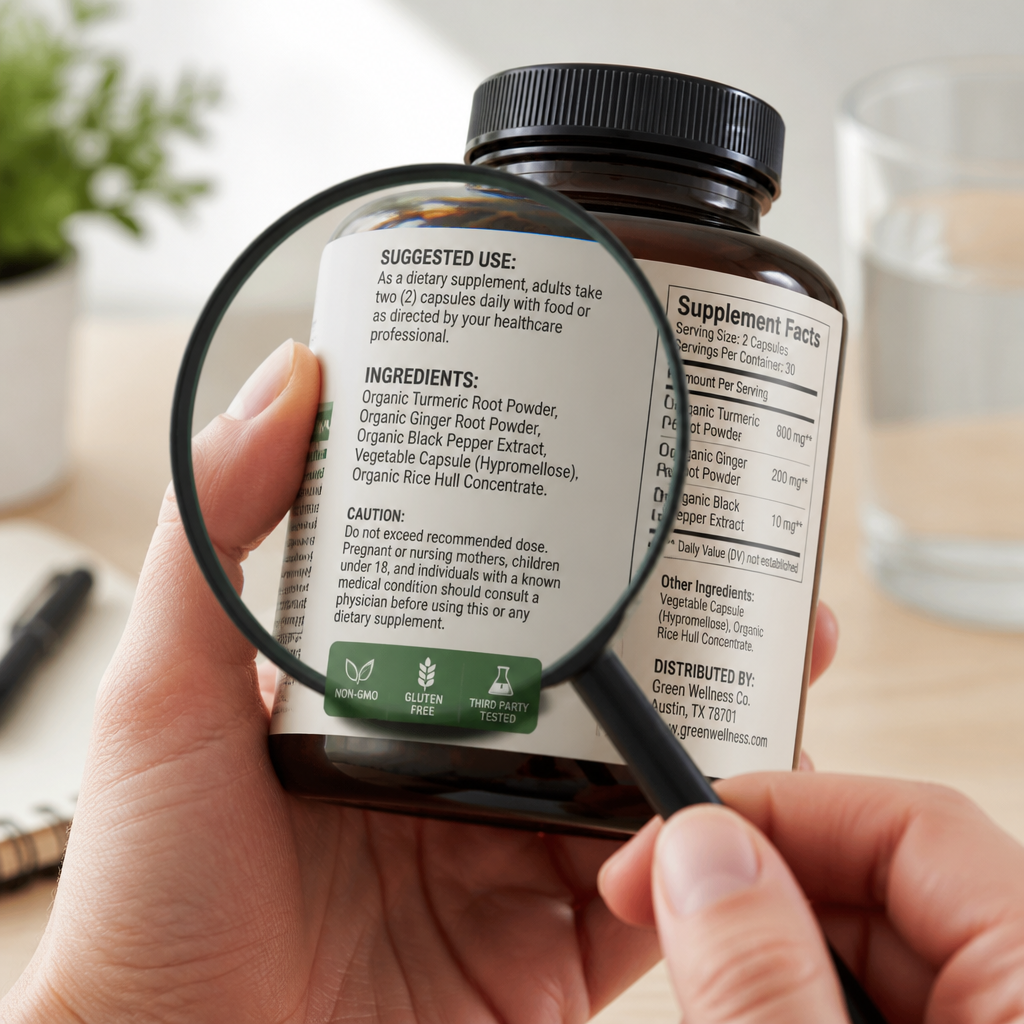
Most supplement labels are written to impress rather than inform. Knowing what to look for cuts through the marketing and gets you to the substance of the formula quickly.
Every mineral on a label should specify its compound form. "Iron 14 mg" tells you almost nothing. "Iron (as ferrous bisglycinate) 14 mg" tells you this is a product worth considering. The same logic applies to magnesium, zinc, selenium, and all B vitamins. If the form is absent from the label, assume the cheapest option was used.
Gummy vitamins have become enormously popular, but many contain 2 to 4 grams of added sugar per serving. For an active woman managing energy intake around training, adding gratuitous sugar to a micronutrient product is counterproductive. A no added sugar formulation is a baseline standard for any serious supplement, and brands like Plusssz UK explicitly build this into their product philosophy.
A multivitamin alone will not cover the sodium, potassium, and magnesium losses of regular training. The smartest approach pairs a targeted women's multivitamin with a well-formulated electrolyte product. This is not doubling up unnecessarily. It is addressing two distinct physiological needs with appropriate specificity. Brands that offer both categories, and design them to work together, eliminate the guesswork of stacking products from different manufacturers with overlapping or conflicting nutrient profiles.
Pro tip: When comparing products, divide the cost per serving by the number of nutrients delivered in bioavailable forms, not total nutrients listed. A product with eight well-absorbed nutrients at a slightly higher price routinely outperforms a product with twenty poorly absorbed nutrients at a lower price per capsule.
The best women's multivitamin UK active women can use is one formulated specifically for exercise-related micronutrient demands. That means higher iron in a chelated form, magnesium in glycinate or malate form, active B vitamins including methylcobalamin and methylfolate, D3 paired with K2, and no added sugar. Generic unisex multivitamins do not meet these criteria reliably. Plusssz Multivitamin Woman formulates specifically for active demographics with these distinctions built into the product rather than added as an afterthought.
An iron supplement for women of reproductive age should align with the NHS reference nutrient intake of 14.8 mg per day. If you are a heavy exerciser or have confirmed low ferritin, a GP may recommend higher therapeutic doses in the short term. The form matters as much as the dose. Ferrous bisglycinate at 14.8 mg delivers more usable iron to your tissues than ferrous sulfate at a higher nominal dose, and with far fewer digestive side effects.
No, and this is a common mistake. Multivitamins are designed to address baseline micronutrient status over time. Electrolyte supplements address acute fluid and mineral replacement during and after exercise. The sodium and potassium quantities needed for proper hydration during a training session cannot be incorporated into a daily multivitamin at safe baseline doses. The two products serve different functions and work best used together rather than one replacing the other.
Not all of them. A standard women's multivitamin is not a prenatal supplement, and the two categories have meaningfully different formulations. Specifically, vitamin A in retinol form above 700 mcg per day carries teratogenic risk in pregnancy. Always check with your GP or midwife before taking any supplement during pregnancy and switch to a product explicitly formulated and licensed for prenatal use.
Yes, significantly so. After menopause, iron requirements drop sharply because menstrual loss ceases. Taking a multivitamin designed for menstruating women post-menopause can contribute to iron accumulation, which carries cardiovascular and liver health risks. Post-menopausal women need higher calcium, more vitamin D3, and a reduced or absent iron content. Using a product calibrated to your life stage is not optional. It is the whole point of demographic-specific formulation.
The best vitamins for active women that go beyond a basic formula include magnesium in a bioavailable form for muscle recovery and sleep quality, CoQ10 for mitochondrial energy support during high training loads, omega-3 fatty acids for inflammation management, and vitamin D3 at doses appropriate for UK sunlight levels. These are not exotic additions. They are consistently supported by sports nutrition research and are the difference between a supplement programme that maintains health and one that actively supports performance.
If you are an active woman who has tried both generic and targeted multivitamins, we would genuinely like to know what difference you noticed in practice, share your experience below.