Most people assume that thirst is a reliable signal for hydration. For older adults, that assumption is genuinely dangerous. Research published by the British Nutrition Foundation confirms that the thirst mechanism weakens significantly with age, meaning many adults over 65 are chronically underhydrated without realising it. The consequences range from fatigue and muscle cramps to cognitive decline and dangerous falls. Understanding electrolytes for seniors UK is not a niche concern. It is a practical health priority that affects millions of active older adults across the country, and the standard advice rarely goes far enough.
Key Insight |
Explanation |
|---|---|
Thirst signals weaken after 65 |
Older adults can be significantly dehydrated before feeling thirsty, making scheduled fluid intake essential rather than optional. |
Kidney efficiency declines with age |
The kidneys become less effective at conserving water and regulating sodium, increasing electrolyte loss even with normal activity levels. |
Sodium and potassium are the priority electrolytes |
These two minerals govern fluid balance at the cellular level. Low levels directly cause muscle weakness, cramps, and confusion in seniors. |
Many common medications deplete electrolytes |
Diuretics, laxatives, and some blood pressure medications accelerate electrolyte loss, making supplementation particularly important for older adults on these drugs. |
No-added-sugar formulas matter more for seniors |
Blood sugar regulation becomes more complex with age. Electrolyte products with no added sugar avoid unnecessary spikes and support metabolic health. |
Hydration supports cognitive function |
Even mild dehydration of 1-2% body weight loss impairs memory and attention in older adults, according to published research from the European Journal of Nutrition. |
Electrolytes work better alongside targeted micronutrients |
Vitamins B6, B12, D, and magnesium all interact with hydration pathways. A senior multivitamin supplement that includes these supports hydration outcomes directly. |
The body's relationship with water changes fundamentally from middle age onwards. Total body water decreases from roughly 60% in younger adults to closer to 50% in adults over 70, according to data from the National Institutes of Health. This means there is less fluid reserve to draw on during any period of reduced intake or increased loss.
The kidneys are also central to this shift. In practice, aging kidneys lose their ability to concentrate urine efficiently. This means more water is lost through urination even when fluid intake is low. The result is a narrower margin between adequate hydration and dangerous deficit.
Muscle mass declines with age too, and muscle tissue holds significantly more water than fat tissue. As muscle mass decreases, the body's overall capacity to store and utilise water shrinks. For active older adults who are exercising to maintain strength and mobility, this creates a real hydration gap that plain water alone does not reliably fill.
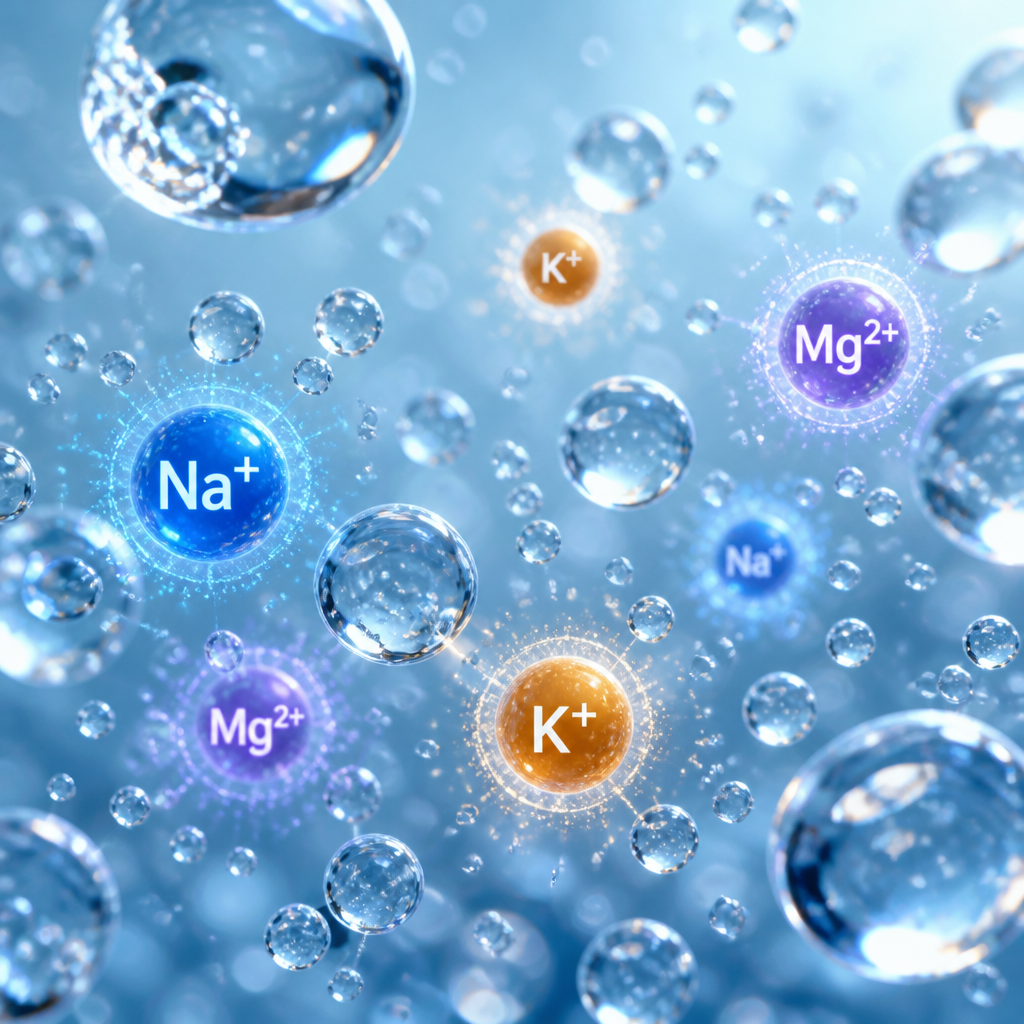

Electrolytes are minerals that carry an electrical charge when dissolved in fluid. The major ones relevant to hydration and health are sodium, potassium, magnesium, calcium, and chloride. They are not optional add-ons to hydration. They are the mechanism through which hydration actually functions at the cellular level.
Sodium controls how much water your cells retain and how water moves between compartments in the body. Without adequate sodium, drinking more water can actually dilute blood sodium levels further, a condition called hyponatraemia that is surprisingly common in older adults who drink large amounts of plain water without electrolyte replacement.
Potassium works alongside sodium to regulate muscle contractions and nerve signals. In older adults, low potassium is directly linked to muscle weakness, leg cramps, and irregular heart rhythm. The data consistently shows that potassium deficiency is widespread in older UK populations, partly because dietary intake of potassium-rich foods like bananas and leafy vegetables declines as appetite decreases with age.
Magnesium supports over 300 enzymatic reactions in the body, including those that govern muscle relaxation and sleep quality. A common mistake is ignoring magnesium when addressing electrolyte imbalance in seniors. It is one of the most frequently depleted minerals in older adults and one of the most overlooked in basic hydration products.
"Dehydration in older adults is frequently underdiagnosed because classic symptoms like thirst and dark urine are unreliable indicators in this population." - British Dietetic Association guidance on fluid intake in older adults.
Recognising electrolyte imbalance early makes the difference between a manageable correction and a medical emergency. In older adults, the signs are frequently misattributed to aging itself, which delays appropriate action.
The most common signs include persistent fatigue that does not improve with rest, muscle cramps particularly in the legs and feet at night, headaches, confusion or difficulty concentrating, irregular heartbeat, and unexplained dizziness when standing. Each of these symptoms can have other causes, but when they appear together or worsen during warm weather or after physical activity, electrolyte imbalance is a primary suspect.
Falls deserve special attention here. The NHS reports that falls are the leading cause of injury-related deaths in adults over 75 in the UK. Dehydration and electrolyte imbalance contribute to dizziness and impaired coordination, both of which increase fall risk significantly. Addressing hydration for older adults is therefore not just about comfort. It is a direct fall prevention strategy.
Pro tip: If an older adult you know regularly experiences nighttime leg cramps, this is one of the clearest practical signals of low magnesium or potassium. An electrolyte drink with no added sugar taken in the evening can produce noticeable improvement within days.
This is the area where generic hydration advice fails seniors most completely. A large proportion of adults over 65 in the UK take multiple prescription medications, and several of the most commonly prescribed drug classes directly interfere with electrolyte balance.
Loop diuretics and thiazide diuretics, commonly prescribed for high blood pressure and heart failure, accelerate the excretion of sodium, potassium, and magnesium through urine. Seniors on these medications are at substantially higher risk of electrolyte depletion even with adequate fluid intake. The medication that protects their heart simultaneously depletes the minerals that keep muscles and nerves functioning.
Interestingly, ACE inhibitors and potassium-sparing diuretics work in the opposite direction, potentially raising potassium levels. This means blanket potassium supplementation without context is not appropriate. Seniors on these medications need targeted advice from their GP before adding high-potassium electrolyte products.
The practical takeaway here is straightforward. Before a senior starts any electrolyte supplement, a conversation with their pharmacist or GP about their current medication list is worthwhile, particularly if they are on cardiovascular or blood pressure drugs. This is responsible supplementation, not a barrier to it.

The electrolyte supplement market in the UK has expanded rapidly, but most products are formulated for young athletes sweating through intense training sessions. Seniors have different requirements, and using a product designed for 25-year-old marathon runners is not the right approach.
The first filter is sugar content. Many mainstream sports electrolyte products, including those from Science in Sport and High Five, are designed for caloric replacement during endurance sport. They contain significant amounts of carbohydrates and sugars that older adults, particularly those managing blood glucose, do not need. A formula with no added sugar is non-negotiable for most seniors.
The second filter is the electrolyte profile. Products designed for seniors should include sodium, potassium, and magnesium at meaningful doses, not token amounts included for label purposes. Look for sodium in the range of 300-500mg per serving, potassium around 200-400mg, and magnesium ideally 50-100mg.
Nutrient absorption decreases with age due to reduced stomach acid production and changes in gut function. Products that use more bioavailable mineral forms, such as magnesium citrate rather than magnesium oxide, or potassium citrate rather than potassium chloride, will deliver more of what is on the label to the cells that need it. Plusssz formulations are specifically developed with improved nutrient assimilability in mind, which makes a measurable difference for older adults whose digestive systems are less efficient at extracting nutrients from lower-quality forms.
Pro tip: Avoid electrolyte tablets or powders that list sodium in very small amounts relative to potassium. Sodium drives the absorption of other electrolytes in the gut. Getting that ratio wrong reduces the effectiveness of every other mineral in the formula.
Electrolytes and vitamins are not separate conversations. They interact directly, and seniors who address only one while ignoring the other leave real health benefits on the table.
Vitamin D, for example, regulates calcium absorption, and calcium is itself an electrolyte involved in muscle contraction and nerve signalling. The majority of older adults in the UK are vitamin D deficient, particularly through autumn and winter. Without adequate vitamin D, calcium supplementation and dietary calcium are both poorly utilised, which affects muscle function regardless of how well hydrated a person is.
B vitamins, particularly B6 and B12, support the nervous system functions that electrolytes depend on for signal transmission. Deficiency in B12 is common in adults over 60 because stomach acid production, which is needed to absorb B12 from food, declines with age. A well-formulated senior multivitamin supplement addresses this directly with higher-dose B12 in a bioavailable form such as methylcobalamin.
Plusssz offers targeted formulations that account for exactly these interactions, pairing electrolyte hydration products with multivitamin complexes designed for older adults rather than treating them as afterthoughts. This integrated approach reflects how the body actually works, which is simultaneously, not in isolated supplement categories.
Approach |
Best For |
Limitations for Seniors |
|---|---|---|
Plain water only |
Short-duration, low-intensity activity in cool conditions |
Does not replace sodium, potassium, or magnesium. Can worsen hyponatraemia in older adults drinking large volumes. |
Standard sports electrolyte drinks (e.g. Science in Sport, High Five) |
Young athletes with high caloric demands during prolonged endurance activity |
High sugar and carbohydrate content is unsuitable for most seniors. Formulas not designed for age-related absorption changes. |
No-added-sugar electrolyte formula with targeted mineral ratios (e.g. Plusssz) |
Active older adults, seniors managing blood glucose, daily hydration maintenance |
Requires consistent use to build electrolyte reserves. Works best alongside a comprehensive senior multivitamin supplement. |
Knowing why electrolytes matter is useful. Knowing how to actually maintain adequate hydration day-to-day is what produces results. For seniors, this means building systems that do not rely on thirst as a trigger.
Drinking to a schedule rather than to thirst is the single most effective behavioural change an older adult can make. This means setting specific times for fluid intake, for example a glass of water with electrolytes first thing in the morning, mid-morning, with lunch, mid-afternoon, and with the evening meal. This removes the unreliable thirst cue from the equation entirely.
Warm weather and central heating are both significant risk factors that many older adults underestimate. Central heating in UK homes during winter creates dry air that increases fluid loss through breathing and skin evaporation without triggering thirst. A common mistake is assuming winter means lower hydration needs. The indoor environment in a centrally heated UK home can be as dehydrating as a mild summer day.
Physical activity, even gentle walking or chair-based exercise, increases electrolyte loss through sweat. For seniors who are active in their local gym, swimming pool, or fitness class, electrolyte replacement after activity is not optional. It is the mechanism by which muscle recovery and continued motivation to stay active are supported. An electrolyte drink taken within 30 minutes of finishing activity makes a measurable difference to how a senior feels for the remainder of the day.
In theory, yes. In practice, no. Appetite decreases with age, and the variety of foods consumed often narrows. Many older adults do not eat enough potassium-rich vegetables, sodium from whole foods, or magnesium from nuts and seeds to meet their requirements, particularly when medications are simultaneously depleting these minerals. Targeted electrolyte supplementation fills a genuine gap that diet alone rarely closes in this population.
The NHS recommendation for adults is approximately 6-8 glasses of fluid per day, but older adults should aim toward the higher end of this range and increase intake during warm weather, illness, or physical activity. The key word is fluid, not just water. Herbal teas, soups, and electrolyte drinks all count toward fluid intake and can be more appealing to seniors who find plain water monotonous.
This requires direct medical guidance. People with impaired kidney function need to be careful with potassium and sodium intake because the kidneys regulate excretion of these minerals. A GP or renal dietitian should advise on appropriate supplementation. For seniors with healthy or mildly reduced kidney function, well-formulated electrolyte products at standard doses are generally safe and beneficial.
The primary differences are sugar content, caloric density, and electrolyte ratios. Senior-focused formulas contain no added sugar, lower or no carbohydrate content, and electrolyte profiles calibrated for maintenance hydration rather than acute high-intensity sweat replacement. Standard sports drinks from brands like Science in Sport or ORS Hydration are designed to replace fluid and energy during intense sport, which does not match the needs of an older adult doing moderate daily activity.
Acute symptoms like muscle cramps or headaches related to electrolyte imbalance can improve within hours of adequate replenishment. Building reliable electrolyte reserves and noticing consistent improvements in energy, sleep quality, and muscle function typically takes one to two weeks of consistent daily use. The body does not accumulate electrolyte reserves in the same way it stores fat or glycogen, so regular daily intake matters more than occasional large doses.
Yes, though it is uncommon with properly formulated supplements taken at recommended doses. Excessive sodium raises blood pressure. Excessive potassium is dangerous for those with kidney disease or on certain medications. Magnesium in very high doses causes digestive upset. Following dosage guidelines and consulting a healthcare professional if taking multiple supplements concurrently is sensible practice for any older adult.
If you are an older adult or supporting someone who is, share what hydration challenges you have found most difficult to manage and what has actually made a difference for you.