Most people dramatically underestimate how dehydrated they actually are. Research published by the European Food Safety Authority estimates that up to 75% of people in Western countries are chronically under-hydrated, yet they attribute the symptoms, fatigue, brain fog, muscle cramps, to stress or poor sleep. The real culprit is often inadequate fluid intake combined with a critical lack of electrolytes. Recognising the signs of dehydration early is one of the most practical things an active person can do to protect performance, recovery, and long-term health. This article breaks down the five most telling signals and gives you a concrete plan to fix each one.
Key Insight |
Explanation |
|---|---|
Urine colour is a real-time hydration gauge |
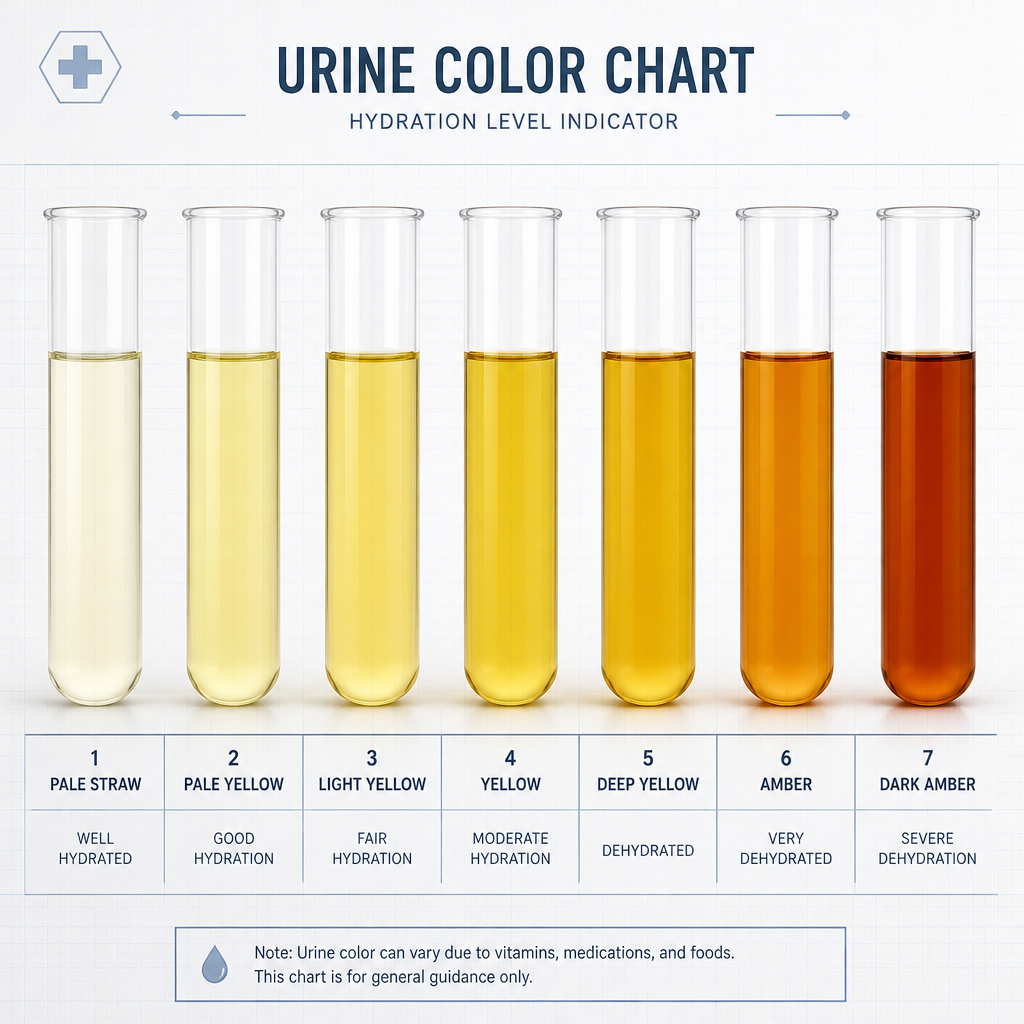
Pale straw yellow means you are well hydrated. Dark amber means you need fluids and electrolytes immediately. |
Muscle cramps signal electrolyte loss, not just dehydration |
Sodium, potassium, and magnesium depletion causes muscular misfiring. Plain water alone will not fix this. |
Fatigue before thirst is a warning sign |
By the time you feel thirsty, blood plasma volume has already dropped by around 2%, impairing performance measurably. |
Headaches are often an early dehydration signal |
Brain tissue is approximately 75% water. Even mild fluid loss causes the brain to temporarily shrink, triggering pain receptors. |
Cognitive decline is measurable at just 1-2% dehydration |
Studies show reaction time, attention, and short-term memory all decline before physical symptoms become obvious. |
Electrolyte supplements outperform plain water for active people |
Formulas containing sodium, potassium, and magnesium restore fluid balance faster than water alone during sustained activity. |
Drinking timing matters as much as volume |
Front-loading hydration before exercise and replacing fluids within 30 minutes post-exercise dramatically improves recovery. |
This is the most reliable and immediate indicator most people ignore. Dark urine means your kidneys are conserving water by producing a more concentrated output, a direct response to insufficient fluid intake. Healthy urine should be pale straw or light yellow. If it consistently looks like apple juice, you are behind on hydration before the day has even begun.
In practice, many active individuals check their urine colour only when something feels wrong. The smarter approach is to make it a morning habit. Your first void of the day is naturally darker due to overnight fasting, but by mid-morning, you should be hitting that pale straw target.
The fix here is straightforward: drink 400 to 500ml of fluid within 30 minutes of waking. If you train before 9am, pair that with an electrolyte serving to prime your sodium and potassium levels before you start sweating. Plain water is better than nothing, but it will not restore electrolyte balance on its own.
Pro tip: Keep a 750ml bottle on your nightstand and drink half before you get up. This single habit shifts your baseline hydration status for the entire day.
Muscle cramps during a run, a gym session, or even at rest in the evening are a textbook example of electrolyte deficiency symptoms. The common misunderstanding is that cramps mean you did not stretch enough. In the majority of cases among active individuals, cramps are caused by sodium, potassium, and magnesium imbalances that impair normal nerve-to-muscle signalling.
Drinking large amounts of plain water during prolonged exercise actually dilutes the remaining electrolytes in your blood, a condition called hyponatremia. This makes cramping more likely, not less. The data consistently shows that athletes who consume sodium-containing electrolyte drinks experience significantly fewer cramps than those relying on water alone during sessions lasting more than 60 minutes.
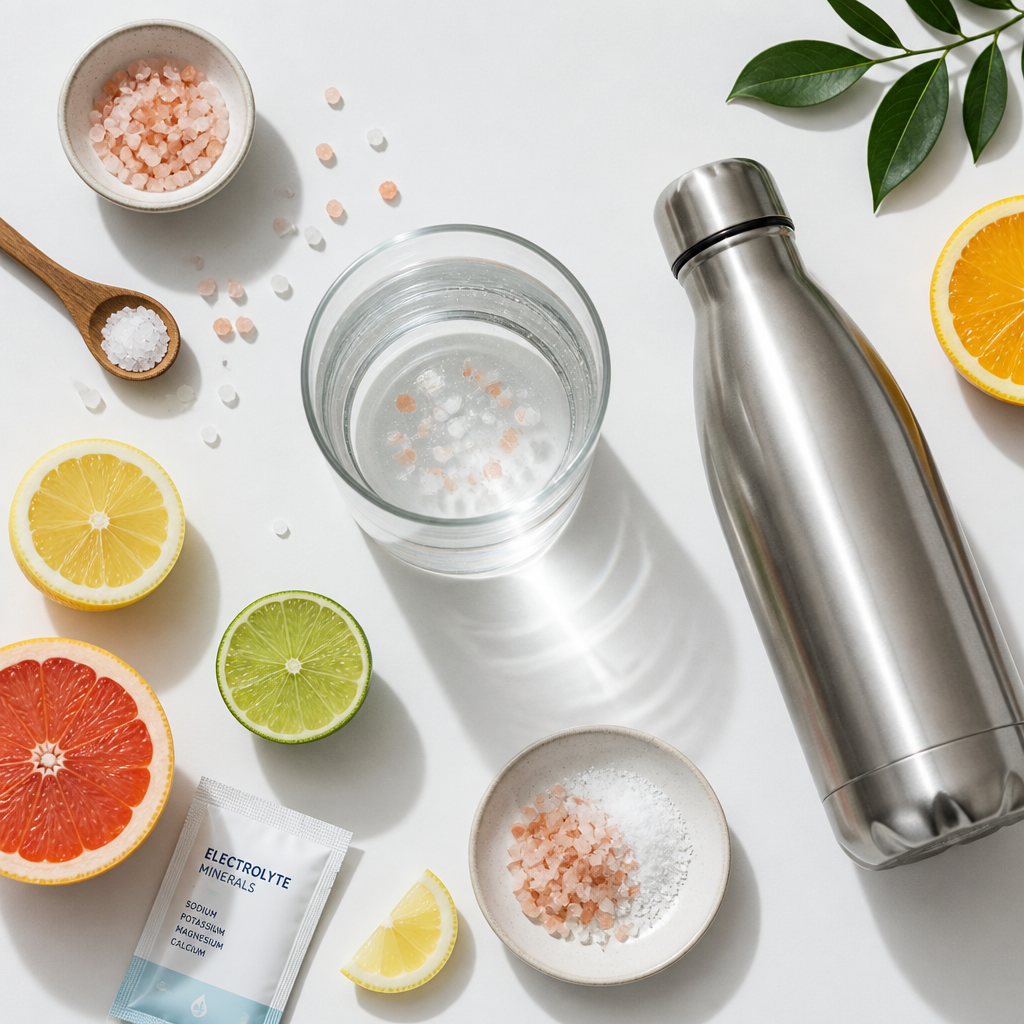
Sweat contains approximately 900mg of sodium per litre, along with meaningful amounts of potassium, magnesium, and chloride. A high-quality electrolyte formula designed for active individuals, like those formulated by Plusssz UK, replaces these specific losses without added sugar that spikes and crashes your energy levels. Look for a product with at least 300-500mg of sodium per serving if you are a heavy sweater or training in heat.
The fix: switch from plain water to an electrolyte drink 20 minutes before training and continue sipping every 15 to 20 minutes during exercise. Post-session, prioritise a recovery electrolyte serving within the first 30 minutes to prevent the delayed cramping that often hits hours after training ends.
If you are sleeping 7 to 8 hours and still dragging yourself through the afternoon, dehydration is a primary suspect that most people never check. Even a 1 to 2% reduction in body water content causes measurable reductions in aerobic capacity and increases the perceived effort of any given physical task. You feel like you are working harder because your body genuinely is working harder.
Blood volume decreases when you are under-hydrated. Your heart has to beat more frequently to deliver the same amount of oxygen to working muscles. This is why a dehydrated athlete will have a higher heart rate at the same pace compared to a well-hydrated one. It is physiologically harder to perform.
A common mistake is reaching for caffeine when afternoon fatigue sets in. Caffeine is a mild diuretic and compounds dehydration if you are not pairing it with adequate fluid intake. Before you pour another coffee, drink 500ml of water with electrolytes and wait 15 minutes. Most people are surprised by how much energy returns.
Pro tip: Track your fluid intake for three days using a simple notepad or app. Most people discover they are consuming less than half of what they believe they are drinking when forced to measure it honestly.
A persistently dry mouth is one of the earliest signs of dehydration your body sends, but most people dismiss it or mask it with gum and coffee. Saliva production drops when fluid availability in the body is low, because the body prioritises water for more critical functions like blood circulation and organ operation. Dry mouth is your body sending a clear signal that it is rationing.
Dehydration headaches are caused by a temporary reduction in brain volume. When fluid is scarce, brain tissue loses water and shrinks slightly, pulling away from the skull and triggering pain receptors. This is why dehydration headaches often feel like a dull, pressing ache rather than a sharp pain.
According to the NHS, headaches are one of the most commonly reported symptoms of mild to moderate dehydration, yet they are routinely treated with paracetamol rather than the more effective (and obvious) remedy of fluid replacement. In most cases, drinking 500ml of water with an electrolyte product resolves a dehydration headache within 20 to 30 minutes, faster than most over-the-counter pain relief.
This is where understanding how to hydrate properly becomes critical. Without adequate sodium, your body cannot retain the fluid you drink. You can drink 2 litres of plain water and still remain functionally dehydrated if your sodium levels are too low. This is particularly relevant for anyone who eats a low-sodium diet and trains regularly. An electrolyte supplement that includes sodium is not optional for this group, it is essential.
The brain is approximately 75% water. Even mild dehydration equivalent to a 1% reduction in body mass impairs cognitive functions including working memory, attention span, and reaction time. Research from the University of East London found that students who drank water before a cognitive exam performed up to 10% better than those who did not. This is not a marginal effect.
For active individuals, this mid-day cognitive slump is often misread as a sign of needing more sleep or a lighter workload. In practice, it typically peaks between 1pm and 3pm, precisely when most people have not had adequate fluids since their morning workout. The gap between training-related sweat loss and replenishment is where cognitive performance suffers most.
Mood is also directly affected. Anxiety and irritability increase measurably with dehydration, because neural communication requires a stable fluid environment. The connection between hydration and mood regulation is under-discussed relative to its real-world impact on daily life.
"Even mild dehydration of 1-2% of body weight loss impairs cognitive performance, mood, and increases perception of task difficulty." - European Journal of Clinical Nutrition
The fix here involves building a mid-day hydration habit deliberately. Set a reminder for noon and 2pm. At each checkpoint, consume at least 400ml of fluid. If you trained that morning, include an electrolyte product in at least one of those servings to ensure you have fully replenished what sweat removed.
Knowing the signs is only half the equation. Knowing how to actually fix the problem separates people who perform consistently from those who rely on guesswork. The answer is not simply "drink more water." It is about the timing, the volume, and critically, the composition of what you drink.
The European Food Safety Authority recommends 2.5 litres per day for men and 2 litres for women as a baseline. For every hour of moderate exercise, add at least 500 to 750ml on top of that baseline. In hot conditions or during high-intensity training, that additional requirement increases significantly.
The 30 to 60 minutes immediately after exercise is the most important window for electrolyte replenishment. Muscle glycogen stores are depleted, sodium levels are reduced, and the body is primed to absorb nutrients more efficiently. An electrolyte drink consumed in this window does more for recovery than the same drink consumed two hours later. Timing is not a minor detail, it is a meaningful variable.
Products formulated without added sugar, like the Plusssz UK electrolyte range, are specifically suited to post-exercise recovery because they do not spike insulin at a time when blood sugar regulation is already stressed. This is a material advantage over traditional sports drinks that load in 20 to 30 grams of sugar per serving.
Pro tip: Weigh yourself before and after a 60-minute training session. Every kilogram lost represents approximately 1 litre of fluid. Replace 150% of that loss over the following two hours, not all at once, to allow proper absorption.
Electrolytes are minerals that carry an electrical charge and are essential for virtually every biological function. Sodium regulates fluid balance. Potassium controls muscle contractions. Magnesium governs nerve function and sleep quality. Calcium supports bone density and muscular contraction. When any of these drop below threshold, the effects are systemic and measurable.
Low sodium presents as nausea, headache, confusion, and in severe cases, seizures. For endurance athletes, it is the most acutely dangerous electrolyte deficiency and the most common one, because sweat losses are dominated by sodium. A regular multivitamin will not address sodium deficiency. A targeted electrolyte supplement will.
Potassium deficiency causes muscle weakness, constipation, and heart palpitations. Magnesium deficiency is closely linked to poor sleep quality, anxiety, and muscle twitching. Both are common in active individuals who sweat regularly and do not supplement. The Plusssz UK formulations address both minerals in measured, bioavailable doses specifically designed for people with elevated daily output.
A common mistake is treating each symptom in isolation: taking a sleep aid for poor sleep, a muscle rub for cramps, and coffee for fatigue, when the root cause across all three is a single electrolyte shortfall. Addressing the deficiency directly is more effective than layering symptom management on top of an unresolved nutritional gap.
Approach |
Best For |
Key Limitation |
|---|---|---|
Plain water only |
Low-intensity activity, short sessions under 45 minutes, general daily hydration |
Does not replace electrolytes lost through sweat. Can dilute remaining electrolytes during prolonged exercise, increasing cramp risk. |
Traditional sugary sports drinks (e.g. standard isotonic gels from mass-market brands) |
High-intensity endurance events lasting over 90 minutes where rapid calorie replacement is the priority |
High sugar content (20-30g per serving) causes insulin spikes, energy crashes, and digestive distress. Not suitable for everyday hydration. |
No-added-sugar electrolyte supplements (e.g. Plusssz UK electrolyte range) |
Active individuals, daily hydration support, pre/post workout recovery, seniors and women with specific nutrient needs |
Requires consistency and correct timing to see full benefit. Not a substitute for adequate total fluid volume throughout the day. |
Symptoms can appear within one to two hours of inadequate fluid intake, especially during physical activity. Cognitive symptoms like reduced concentration and increased fatigue often appear before physical symptoms like thirst or dry mouth. By the time you feel noticeably thirsty, you are already 1 to 2% dehydrated, which is enough to impair physical performance measurably.
Yes. If you are physically active, training in heat, or sweating heavily, 2 litres is often insufficient. Additionally, if you drink water without adequate electrolytes, particularly sodium, your body cannot retain the fluid effectively. This is a common pattern among people who train regularly and wonder why they still feel tired and crampy despite drinking what seems like enough water.
Sodium is the highest priority because it is lost in the greatest quantities through sweat and because it governs fluid retention in the body. Potassium and magnesium are the next most important, particularly for preventing muscle cramps and supporting nerve function and sleep recovery. Calcium and chloride are also relevant but typically less depleted through normal exercise in a balanced diet.
For healthy active adults, yes. Electrolyte supplements formulated without added sugar and within safe mineral dose ranges are appropriate for daily use. They are particularly beneficial if you train regularly, live in a warm climate, follow a low-sodium diet, or are over 50 years old, as thirst perception declines with age, making seniors more vulnerable to chronic dehydration. Always check that the product you choose lists specific mineral amounts per serving rather than hiding them behind proprietary blends.
Caffeine has a mild diuretic effect, meaning it increases urine output slightly. At moderate consumption levels of 200 to 400mg per day, it does not cause net fluid loss in habitual consumers because the body adapts. However, if you are already under-hydrated and use caffeine as an energy substitute rather than addressing fluid intake, it compounds the problem. The practical advice is to pair every coffee or caffeinated drink with an equivalent volume of water or electrolyte fluid.
Dehydration fatigue typically responds quickly to rehydration, within 20 to 45 minutes of consuming fluids and electrolytes. Overtraining fatigue is persistent, does not respond to hydration alone, and is accompanied by declining performance over days or weeks rather than hours. If you rehydrate properly and feel meaningfully better within the hour, the cause was hydration-related. If the fatigue persists for days regardless of fluid intake, rest and reduced training load are the appropriate interventions.
If any of these signs resonate with your own experience, share what changes have made the biggest difference for your hydration routine in the comments below.