You are mid-squat or three kilometres into a run when your calf seizes up and refuses to release. Sound familiar? Research published in the Journal of the American College of Nutrition estimates that up to 60% of adults experience exercise-associated muscle cramps at some point, and low magnesium status is one of the most frequently overlooked triggers. Magnesium for muscle cramps is not a wellness trend. It is a well-documented physiological relationship that gym-goers who train consistently need to understand if they want to stop losing sessions to avoidable pain.
Key Insight |
Explanation |
|---|---|
Magnesium regulates muscle contraction directly |
It acts as a natural calcium antagonist, preventing muscles from staying locked in contraction after a nerve signal ends. |
Sweat is a significant magnesium drain |
Athletes can lose up to 15% of their daily magnesium requirement through sweat during a single intensive session. |
B vitamins improve magnesium absorption |
Vitamin B6 in particular enhances intracellular magnesium uptake, making a magnesium forte B-complex formula more effective than plain magnesium oxide. |
Magnesium oxide is the least bioavailable form |
Forms like magnesium citrate and magnesium bisglycinate absorb significantly better and cause fewer digestive side effects. |
Deficiency is common and frequently undiagnosed |
Standard serum blood tests measure less than 1% of total body magnesium, so normal results do not rule out functional deficiency. |
Timing matters for cramp prevention |
Taking magnesium in the evening or post-workout optimises absorption and addresses overnight cramping, which is very common in endurance athletes. |
Electrolyte balance requires more than magnesium alone |
Sodium, potassium, and calcium all interact with magnesium. An electrolyte hydration product that covers all four is more effective than isolated supplementation. |
Magnesium is involved in over 300 enzymatic reactions in the human body, but for gym-goers, one mechanism matters most. Magnesium acts as a physiological brake on muscle contraction by competing with calcium at the cellular level. When a nerve fires and calcium floods into a muscle cell, the muscle contracts. Magnesium then displaces that calcium and allows the muscle to relax.
Without adequate magnesium, calcium stays elevated inside the muscle cell for longer than intended. The result is a sustained, involuntary contraction, which is exactly what a cramp is. This is not a theory. It is established cell physiology, and it explains why magnesium for muscle cramps is the first nutritional variable worth addressing.
The data consistently shows that athletes who train hard and sweat heavily are the most susceptible demographic. A 2017 review in Nutrients found that physically active individuals have significantly higher magnesium requirements than sedentary adults, yet dietary surveys in the UK repeatedly show that a substantial portion of the adult population does not meet even the baseline recommended intake.


Muscle cramps are the most obvious symptom, but low magnesium presents in several ways that gym-goers routinely misattribute to overtraining or poor sleep. The symptoms overlap heavily, which is one reason deficiency stays hidden for so long.
Muscle twitches, particularly in the eyelid or calf, are a classic early sign of low magnesium status. So are persistent muscle soreness that lingers beyond what your training load justifies, and a noticeable drop in grip strength or explosive power output. If your recovery feels slower than usual without a clear reason, magnesium is worth investigating before you start adjusting your programming.
Disrupted sleep, increased anxiety before training, and difficulty concentrating during complex lifts are all linked to low magnesium. The mineral plays a role in GABA receptor activity in the brain, which is the system responsible for calming nervous system activity. A common mistake is treating these symptoms with sleep aids or stress management techniques without first addressing the nutritional gap underneath them.
Pro tip: If you are experiencing cramps specifically in the second half of training sessions or during the night after heavy leg days, that pattern strongly suggests magnesium depletion through sweat rather than a general dietary deficiency. The timing matters diagnostically.
Exercise depletes magnesium through two primary routes. The first is sweat. Sweat contains measurable concentrations of magnesium, and during prolonged or high-intensity sessions, cumulative losses add up quickly. Studies measuring sweat composition in endurance athletes have found magnesium concentrations ranging from 0.02 to 0.09 mmol per litre, and when you multiply that across two to three litres of sweat in a hard session, the deficit becomes meaningful.
The second route is urinary excretion. Physical stress elevates cortisol and adrenaline, and both hormones increase magnesium excretion through the kidneys. This is why athletes who train daily, particularly those doing two-a-day sessions or competing in block training phases, deplete their stores faster than their diet can replenish them.
In practice, this means that someone training five or more times per week has a meaningfully higher magnesium requirement than the general UK recommended intake of 300mg per day for men and 270mg per day for women. The British Nutrition Foundation acknowledges this discrepancy, but standard dietary advice rarely accounts for it.
"Strenuous physical activity increases the metabolic demand for magnesium by as much as 10 to 20%, yet intake from food sources often remains static regardless of training load." Source: Nutrients, 2017 review on magnesium and physical performance.
Plain magnesium supplements are not all created equal, and the form the magnesium takes is only half the equation. The other half is whether your cells can actually take it up and use it. This is where a magnesium forte B-complex formulation demonstrates clear advantages over standalone magnesium tablets.
Vitamin B6, specifically in its active form pyridoxal-5-phosphate, facilitates the transport of magnesium into cells. Without adequate B6, magnesium can circulate in the bloodstream at acceptable levels while remaining functionally low at the intracellular level where it actually does its work. This explains why some people supplement with magnesium, see normal serum results, and still experience cramps.
A combined magnesium forte B-complex product resolves this by delivering both the mineral and the cofactor required for its cellular uptake simultaneously. The Plusssz formulation approach, which pairs highly bioavailable magnesium with an active B-complex, is specifically designed for this physiological reason rather than as a marketing bundle.
Magnesium oxide has an absorption rate of approximately 4%. Magnesium bisglycinate, a chelated form where magnesium is bound to the amino acid glycine, absorbs at rates between 40% and 60% in most studies. The difference is not trivial. A 400mg dose of magnesium oxide delivers roughly 16mg of usable magnesium. The same dose as bisglycinate delivers up to 240mg. For anyone using magnesium specifically to prevent cramps, form selection is the most important decision you will make.
Pro tip: If your current magnesium supplement lists magnesium oxide as the primary form, switching to a bisglycinate or citrate form, ideally paired with B6, is likely to produce a noticeable reduction in cramp frequency within two to three weeks of consistent use.
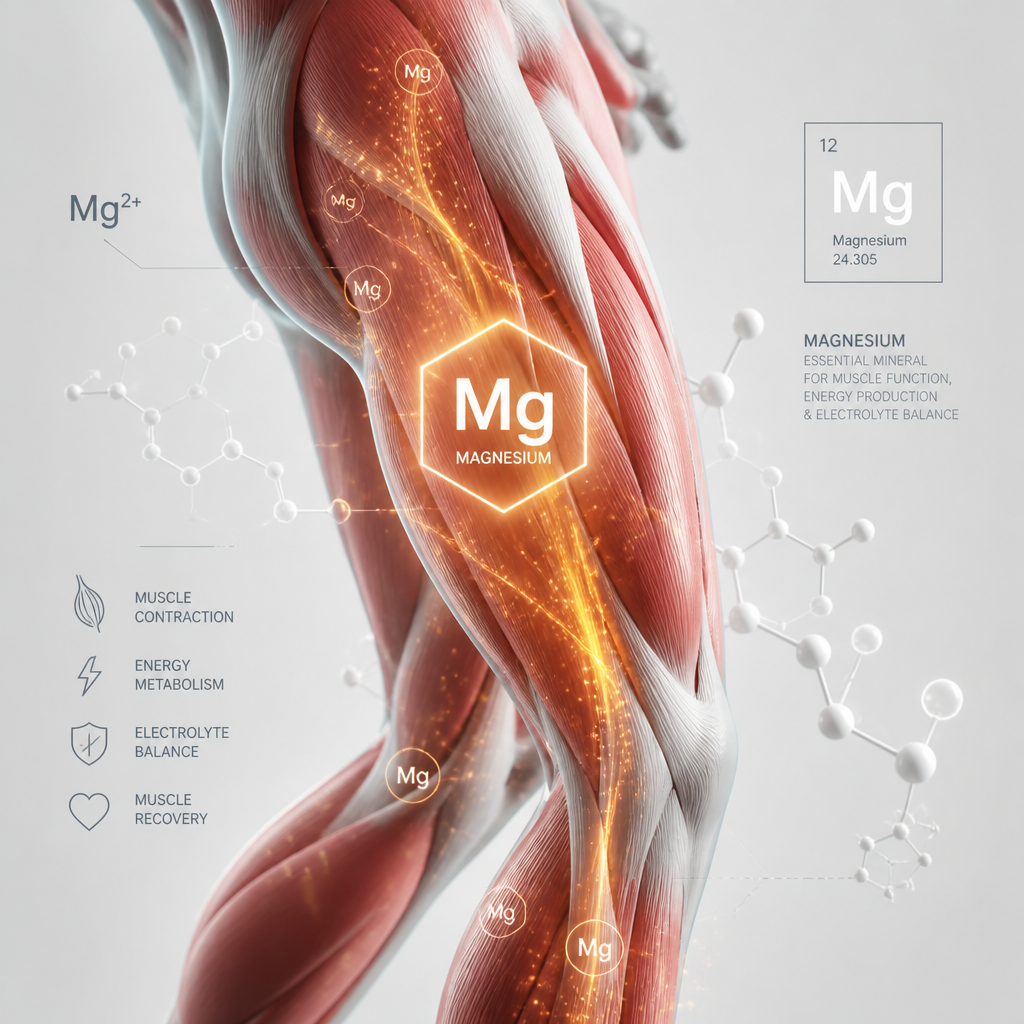
There is no shortage of anti-cramp supplement options in the UK market, and the differences between approaches are not just about ingredients. They reflect different assumptions about why cramps happen and how to address them. Here is how the main strategies compare.
Approach |
What It Does |
Limitations for Active Users |
|---|---|---|
Isolated magnesium oxide tablet (budget supplement brands) |
Provides elemental magnesium at a low price point |
Absorption rate of approximately 4% makes it largely ineffective for cramp prevention in high-sweat athletes; no cofactors for uptake |
Electrolyte drink with sodium and potassium only (many sports nutrition brands) |
Replaces sweat electrolytes to support hydration and nerve signalling |
Often omits magnesium entirely or includes it at sub-therapeutic doses; does not address the muscle-relaxation mechanism |
Magnesium forte B-complex supplement (Plusssz formulation approach) |
Delivers highly bioavailable magnesium alongside B6 for intracellular uptake, targeting both the mineral deficit and absorption efficiency |
Requires consistency over days to weeks to build cellular stores; not an immediate pre-event solution on its own |
The take here is direct. Isolated low-grade magnesium products are largely a waste of money for anyone training seriously. An electrolyte product that ignores magnesium is addressing hydration but not the neuromuscular side of cramps. A properly formulated anti-cramp supplement UK strategy combines both: a bioavailable magnesium B-complex for daily maintenance and a complete electrolyte product for intra-session hydration.
Magnesium does not operate in isolation. It works within a system of electrolytes, and disrupting the balance of one disrupts the others. This is why gym-goers who obsess over magnesium alone while neglecting sodium, potassium, and calcium rarely achieve full cramp resolution.
Sodium governs fluid movement in and out of cells. When sodium is low from heavy sweating without adequate replacement, cells become hyperexcitable, making cramps more likely even if magnesium levels are technically adequate. Potassium works alongside magnesium in establishing the resting membrane potential of muscle cells, and the two minerals need to be in balance to keep that potential stable.
The Plusssz approach to electrolyte hydration products addresses this system-level problem rather than isolating a single mineral. For active individuals training multiple times per week, a no-added-sugar electrolyte formula that covers the full spectrum of sweat losses is more practical and more effective than trying to supplement each electrolyte individually and guess at ratios.
The UK recommended daily intake for magnesium sits at 300mg for men and 270mg for women, but as established earlier, those figures assume a sedentary baseline. For someone training four or more times per week, a functional target of 350 to 420mg per day of elemental magnesium from all sources is more appropriate.
Dark leafy greens, pumpkin seeds, almonds, and dark chocolate are legitimately high in magnesium. Pumpkin seeds provide around 150mg per 30g serving, making them one of the most efficient food sources. However, phytic acid in grains and legumes reduces the absorption of dietary magnesium, so raw food intake figures can be misleading. Cooking and soaking reduce phytate content, but supplementation remains a practical necessity for most athletes trying to meet elevated training-day requirements.
Evening supplementation is the most evidence-backed timing strategy. Magnesium supports GABA activity and reduces sympathetic nervous system activation, both of which improve sleep quality. Taking it post-workout in the evening also means it is available during the overnight recovery window when muscle repair is most active. Splitting the dose, taking half post-workout and half before bed, is a practical approach for those using higher total daily doses of 300mg or above from supplementation.
Most people notice a reduction in cramp frequency within 7 to 14 days of consistent supplementation with a bioavailable form like bisglycinate or citrate. Cellular magnesium stores take several weeks to fully replenish if depletion has been ongoing, so do not judge effectiveness after just two or three days. Consistency over a full four-week cycle is needed for a fair assessment.
In practice, it is difficult. UK dietary surveys consistently show that a large portion of the adult population falls short of even the standard recommended intake from food alone, and training significantly raises requirements. Unless your diet is specifically built around high-magnesium whole foods and you are tracking intake closely, supplementation is the more reliable route for active individuals.
The B-complex component, particularly vitamin B6, is required for magnesium to enter cells effectively. Without it, you can have adequate serum magnesium but insufficient intracellular magnesium where it actually prevents cramps. The combination addresses both the supply and the delivery of the mineral, which is why athletes report better results from a paired formulation than from magnesium alone at the same dose.
No. Cramps can result from dehydration, inadequate warm-up, neuromuscular fatigue, sodium depletion, or impaired blood flow. Magnesium deficiency is one of the most common and most correctable causes, but if cramps persist after four to six weeks of consistent magnesium and electrolyte supplementation, it is worth consulting a sports medicine practitioner to rule out other contributors.
Yes, for most healthy adults. The UK tolerable upper intake level for supplemental magnesium is 400mg per day from supplements alone. Exceeding this threshold primarily causes loose stools rather than serious toxicity, and the risk is substantially lower with bisglycinate and glycinate forms than with oxide or sulfate forms. Anyone with kidney disease should consult a doctor before supplementing.
Both serve different functions and are most effective used together. An electrolyte drink replaces sweat losses in real time during and after training, supporting hydration and sodium-potassium balance. A daily magnesium B-complex supplement builds and maintains cellular magnesium stores over time. Relying on one without the other leaves a gap, either in acute session performance or in long-term muscular function.
Magnesium oxide. It is the most commonly used form in cheap supplements because it is inexpensive and has a high percentage of elemental magnesium by weight. However, its bioavailability is so poor, around 4%, that the actual absorbed dose is negligible for performance purposes. Magnesium citrate and magnesium bisglycinate are both significantly better options for anyone using magnesium specifically to prevent cramps.
Have you found a particular magnesium form or timing approach that genuinely resolved your training cramps? Share what worked for you below.