Most UK athletes underestimate how much summer heat changes their hydration needs. A 2022 study published by the British Journal of Sports Medicine found that even mild dehydration of just 2% body weight loss can reduce athletic performance by up to 10%. If your training or racing schedule runs through June, July, and August, a reactive approach to drinking water is not enough. You need a structured summer hydration plan UK athletes can actually follow, one built around electrolytes, timing, and individual sweat rates rather than vague advice to "drink more water."
Key Insight |
Explanation |
|---|---|
2% dehydration cuts performance by up to 10% |
This happens faster in UK summer heat than most athletes expect, especially during humid days. |
Water alone is not enough for sessions over 60 minutes |
Without sodium and potassium, you dilute blood electrolyte concentration and risk hyponatraemia. |
Sweat rate varies dramatically between individuals |
Some athletes lose over 2 litres per hour. You need to measure yours, not guess. |
Pre-hydration starts the night before |
Arriving to a session already well-hydrated takes 12 to 18 hours of consistent intake, not a bottle gulped pre-warm-up. |
Electrolyte products with no added sugar are better for sustained sessions |
Sugar-heavy sports drinks spike insulin and cause energy crashes mid-effort. Choose no-sugar electrolyte formulas where possible. |
UK humidity complicates evaporative cooling |
On muggy British summer days, sweat does not evaporate efficiently, meaning core temperature rises faster than in dry heat. |
Recovery hydration is as important as in-session intake |
Replacing both fluid and electrolytes within 30 minutes post-exercise accelerates muscle repair and reduces next-day fatigue. |
British athletes often have a false sense of security about summer conditions. The assumption is that because the UK rarely hits 35°C, heat stress is a non-issue. The data consistently shows otherwise. The combination of humidity levels regularly exceeding 70% in southern England during July and August, combined with unacclimatised bodies, creates a genuine performance and safety risk.
Unlike athletes training in Mediterranean climates year-round, UK-based runners, cyclists, and team sport players spend most of their year in cool, dry conditions. When summer arrives, their bodies have not adapted to heat dissipation. Core temperature climbs faster, sweat rate increases earlier in exercise, and sodium losses are proportionally higher than in heat-adapted athletes.
In practice, this means a 10-kilometre run that feels manageable in March becomes a significantly harder physiological challenge in July, even at the same pace. The solution is not to train less. It is to build a summer hydration plan that accounts for the specific demands of the UK climate rather than copying protocols designed for hotter, drier environments.
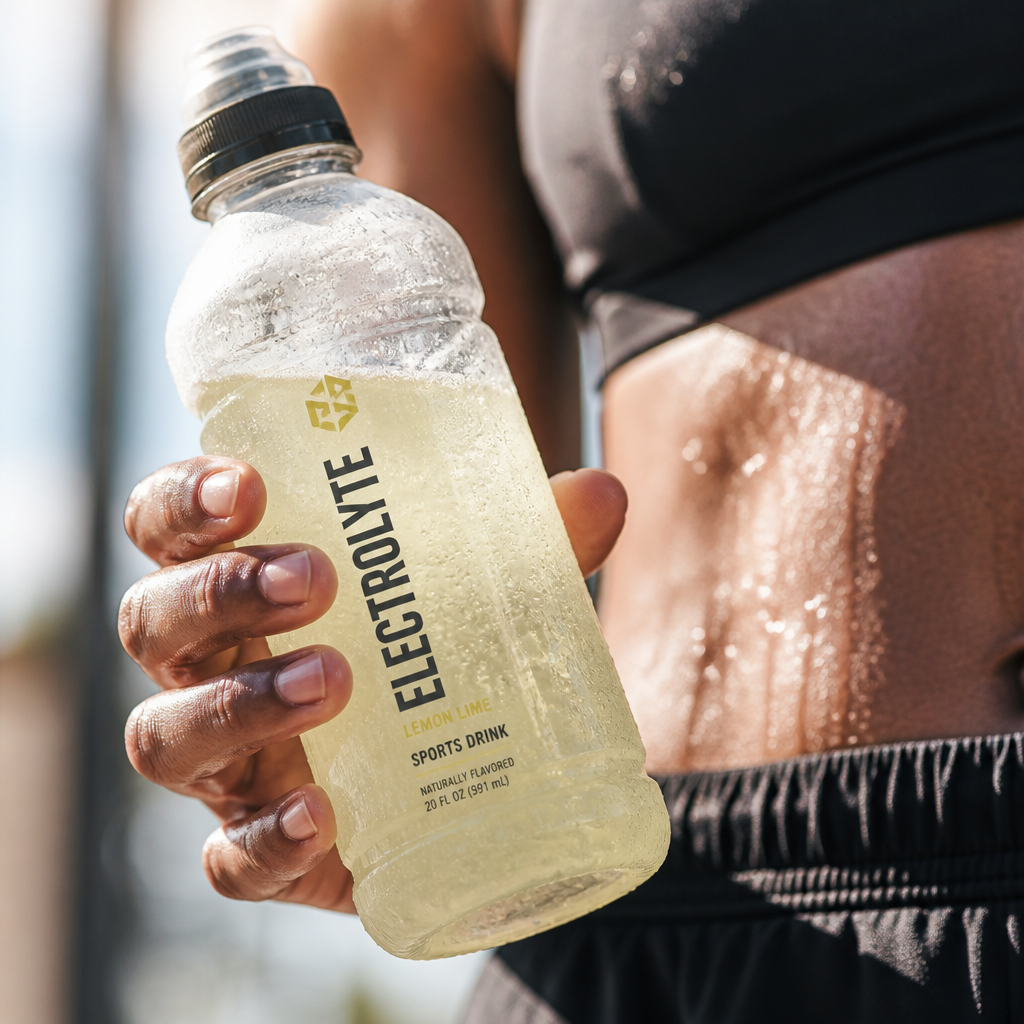
The term electrolyte gets used loosely, but the physiology is precise. Electrolytes are minerals that carry an electrical charge and regulate fluid balance, nerve signalling, and muscle contraction. The four most relevant to electrolytes in hot weather are sodium, potassium, magnesium, and chloride.
Sodium is the primary electrolyte lost in sweat. Research from Sweat Science and sports physiology literature consistently places average sodium loss between 400 and 1800mg per litre of sweat. This is not a rounding error. Some athletes are genuine "salty sweaters" losing nearly 5 times as much sodium as others at the same effort level.
Without replacing sodium, drinking large volumes of plain water during extended summer sessions actively worsens electrolyte balance. The result is hyponatraemia, a condition where blood sodium concentration falls dangerously low. Symptoms include nausea, headache, confusion, and in severe cases, seizures. Reputable electrolyte hydration products include a meaningful sodium dose, not just a token trace amount.
Potassium supports muscle contraction and nerve function, and losses increase significantly during intense summer sessions. Magnesium is involved in over 300 enzymatic processes including energy production and is commonly depleted in athletes training through the summer period. A common mistake is taking a potassium supplement in isolation rather than as part of a complete electrolyte formula that accounts for the interaction between these minerals.
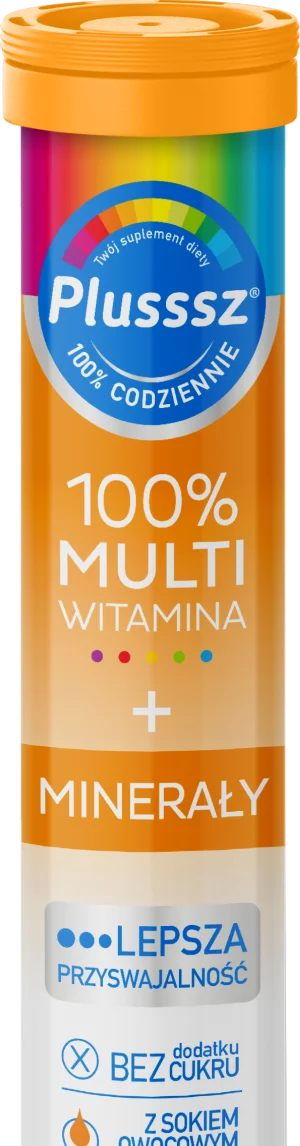
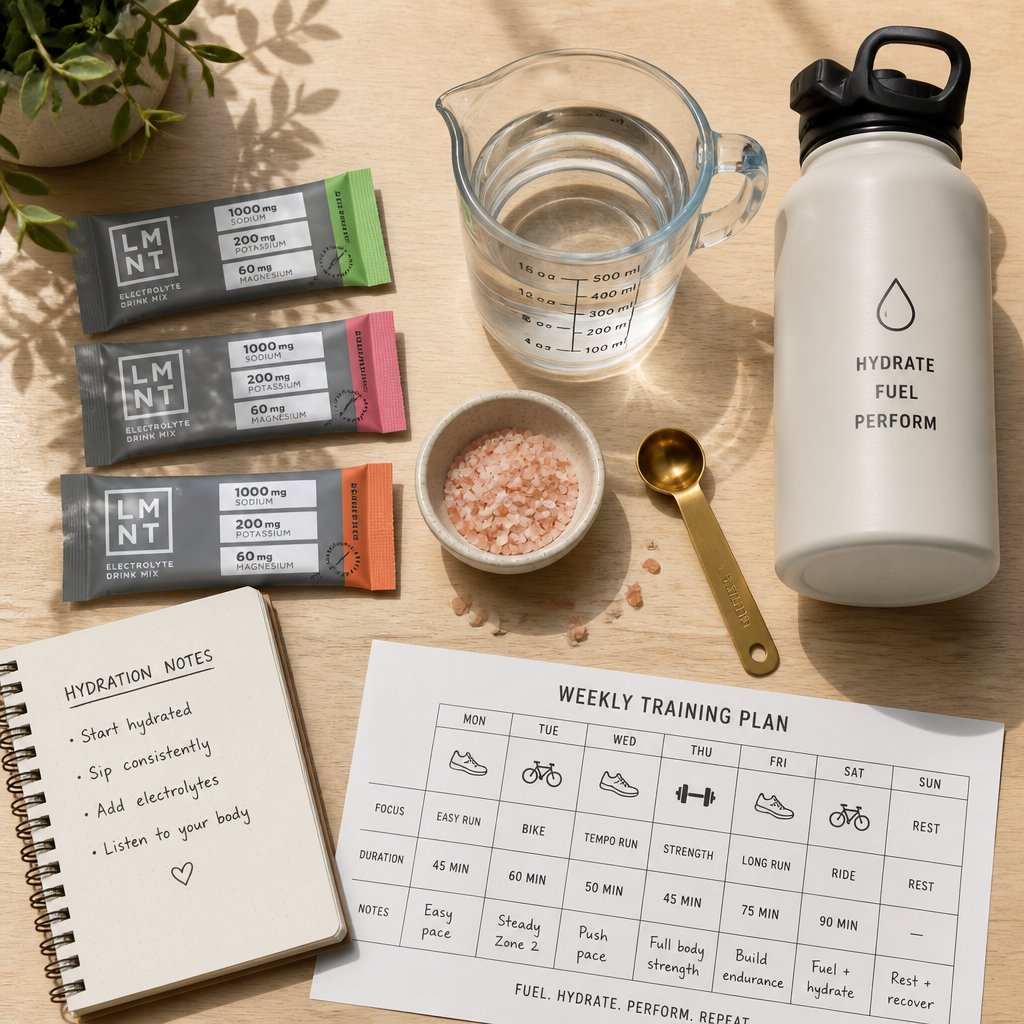
Pro tip: Look for electrolyte products that list the exact milligram content of each mineral on the label, not just a generic "electrolyte blend" with no transparency on dosing. Plusssz electrolyte formulations provide full disclosure on their mineral profiles, which makes it straightforward to assess whether a product actually meets the sodium and potassium demands of a hard summer training block.
A hydration plan is not just what you drink during exercise. The most effective approach treats the entire day as a hydration window. Here is what the evidence and practical experience with athletes supports.
Check urine colour upon waking. Pale straw is optimal. Dark yellow signals you started the day already behind. Drink 400 to 600ml of water within 30 minutes of waking, ideally with a small electrolyte dose if you train in the morning. This is not about volume. It is about restoring the fluid lost overnight through respiration and low-level perspiration.
Drink 500ml of fluid in the 90-minute window before training, with the final 250ml taken 20 to 30 minutes pre-session. Adding an electrolyte product at this stage supports plasma volume expansion, meaning your cardiovascular system is better primed for heat stress before you even start moving.
The standard guideline of 400 to 800ml per hour applies to moderate conditions. In UK summer heat above 25°C with humidity, shift toward the upper end or beyond if your measured sweat rate demands it. For sessions over 60 minutes, use an electrolyte drink rather than plain water. The carbohydrate-free or low-sugar options are preferable for athletes who are fat-adapted or managing caloric intake.
Weigh yourself before and after training. Every kilogram of weight lost equals approximately one litre of fluid deficit. Drink 1.5 litres for every kilogram lost, spread over the 4 hours following the session. Include sodium in your recovery fluid to retain the water you are consuming, as sodium drives the osmotic gradient that keeps fluid in your cells rather than letting it pass through to urine.
Generic hydration guidelines fail athletes because sweat rate is one of the most individually variable physiological metrics in sport. Two runners of identical weight, training at the same pace in the same conditions, can have sweat rates that differ by a factor of three. Building a summer hydration plan without knowing your own sweat rate is like training to a power output without owning a power meter.
The basic sweat rate test requires only a set of scales and 60 minutes of steady-state exercise. Weigh yourself naked before the session, complete exactly 60 minutes of effort at your target intensity in representative summer conditions, then weigh yourself again immediately after, before drinking anything. The difference in kilograms equals your approximate sweat rate per hour. Add back any fluid you consumed during the test to get your gross sweat rate.
Run this test in June, July, and August separately if possible, as sweat rate increases as the season progresses and your body temperature regulation adapts. The data gives you a personalised number to anchor your hydration plan, rather than relying on population averages that may not apply to you at all.
Pro tip: Repeat the sweat rate test in the same conditions across three separate sessions and average the results. Single-test data is noisier than you expect because small variations in effort, pre-session hydration status, and ambient temperature all affect the output.
Not all hydration approaches are equally effective for UK athletes training through summer. Below is a direct comparison of the three most common strategies, evaluated honestly against what the evidence supports.
Strategy |
Best For |
Limitations |
|---|---|---|
Water Only |
Sessions under 45 minutes in mild conditions |
Risks electrolyte dilution in longer or hotter sessions. No sodium replacement. Can worsen hyponatraemia risk when consumed in high volumes without minerals. |
Sugar-Based Sports Drinks |
High-intensity sessions requiring rapid carbohydrate delivery |
High sugar content is counterproductive for sessions focused on fat oxidation. Can cause GI distress in heat. Many products contain low sodium relative to real sweat losses. |
No-Sugar Electrolyte Formulas |
Sessions over 60 minutes, daily hydration maintenance, recovery, heat acclimatisation |
Not sufficient alone for very high-intensity efforts lasting under 30 minutes where rapid carbohydrate is the priority. Requires good product selection to ensure meaningful mineral doses. |
The data consistently shows that no-sugar electrolyte formulas outperform water alone for sustained summer training and provide better electrolyte replacement than most conventional sugar-heavy sports drinks for athletes who are not in continuous high-intensity race conditions. Plusssz electrolyte hydration products are formulated specifically with no added sugar, making them a practical choice for the majority of training sessions where hydration, not rapid carbohydrate, is the primary need.
"Sodium is the most important electrolyte for endurance athletes in the heat. It drives thirst, retains fluid in the body, and is lost in the highest quantities through sweat. Getting sodium right is the single biggest lever in a summer hydration plan." - Dr. Stacy Sims, exercise physiologist and athlete nutrition researcher.
A one-size-fits-all approach misses the specific demands of different sports. Here are targeted athlete hydration tips that reflect the actual sweat rates and session structures of the most common UK summer sports.
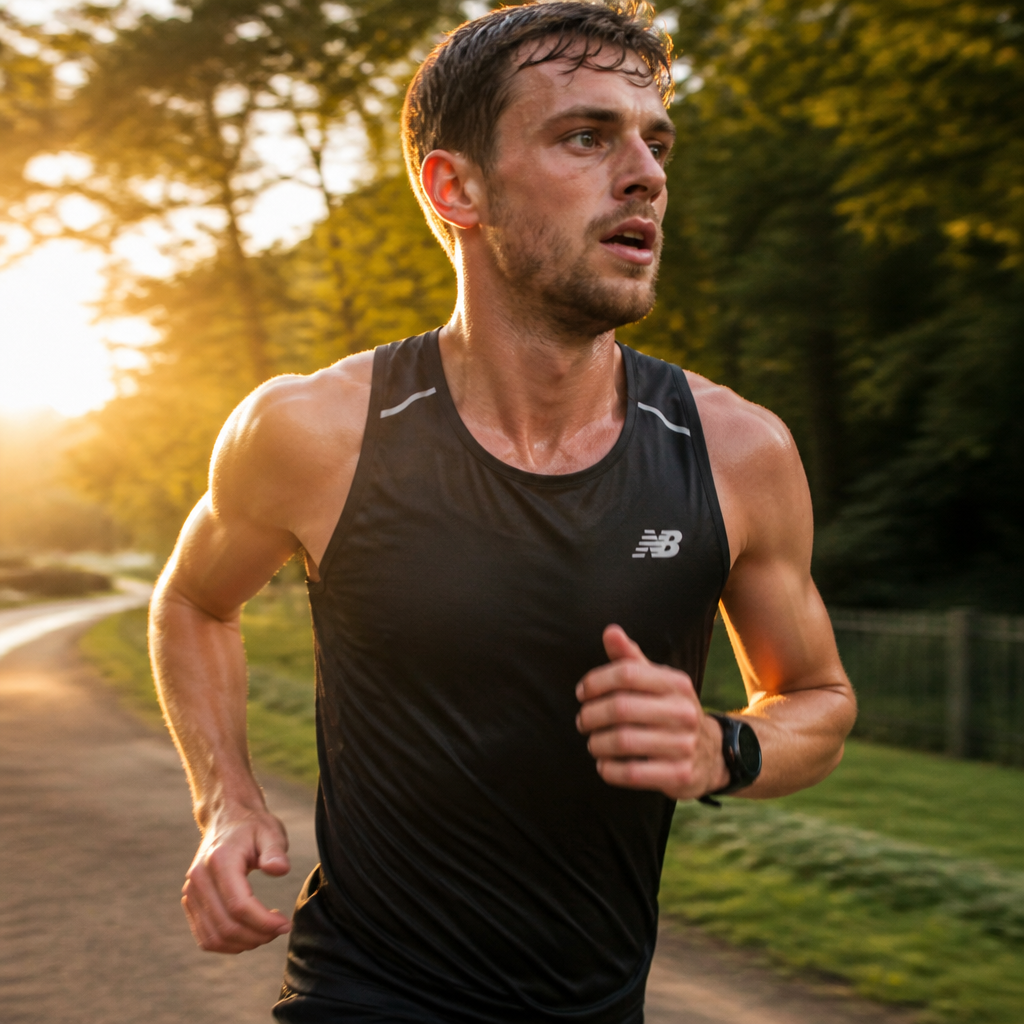
Runners generate more metabolic heat per unit of body weight than almost any other athlete. On summer days above 22°C, add an electrolyte product from the 30-minute mark of any run exceeding 45 minutes. Carry fluid on runs over 60 minutes rather than relying on water stations that may not exist on your route. Plan routes near water refill points or use a running vest with an integrated hydration system.
Cycling creates airflow that masks how much you are sweating. Cyclists frequently underestimate their fluid losses, particularly on climbs or in low-wind conditions. The practical rule is to finish a bidon (500ml) per 45 minutes on summer rides in warm conditions. Use an electrolyte mix in at least one of your bottles on any ride over 90 minutes.
Intermittent sport athletes face a different challenge. They cannot always control when they drink because play is continuous. Pre-loading hydration becomes more important here than for endurance athletes who can drink on the move. Drink 600ml of electrolyte fluid in the 2 hours before a summer match and prioritise sodium-rich recovery drinks immediately after the final whistle.
Older athletes face a physiologically distinct challenge in summer heat. The thirst mechanism becomes less sensitive with age, meaning the normal cue to drink arrives later and is weaker. Seniors training through UK summer months should not rely on thirst as a hydration trigger at all. A scheduled drinking approach, every 20 minutes during activity regardless of thirst sensation, is both safer and more effective. Multivitamin and electrolyte combined formulas designed for older adults, including products in Plusssz's range targeting seniors, address both mineral depletion and the broader micronutrient needs of this group.
After working through what the research says and what experienced athletes report, the same errors appear repeatedly across training groups, amateur events, and social running clubs throughout the UK. These are worth naming directly.
A common mistake is following a single prescribed drinking schedule regardless of the day's conditions. A 500ml-per-hour recommendation made on a 15°C October day is meaningless on a 28°C July afternoon with high humidity. Adjust your intake upward on hot days and downward in cooler conditions, always anchoring to your measured sweat rate data.
Hydration status on race morning is largely determined by the 24 to 48 hours preceding the event. Athletes who focus only on drinking in the final hour before a summer race are trying to correct a deficit that takes far longer to address. The most effective summer race hydration plan starts two days out with increased fluid and electrolyte intake at every meal.
The sports supplement market is crowded with products that prioritise flavour appeal over functional mineral dosing. A pleasant-tasting drink with 50mg of sodium per serving will not meet the needs of an athlete losing 1000mg of sodium per hour in summer training. Always check the electrolyte panel, not just the flavour marketing on the front of the pack.
Magnesium deficiency is underreported among athletes and worsens through summer training as losses through sweat accumulate. Symptoms include muscle cramps, poor sleep quality, and increased fatigue, all of which are frequently attributed to overtraining rather than micronutrient depletion. A multivitamin complex that includes magnesium alongside your electrolyte hydration strategy closes this gap. Plusssz multivitamin formulations include magnesium as part of a broader mineral matrix rather than as an afterthought.
A baseline of 35ml per kilogram of body weight is a reasonable starting point for sedentary adults. Active athletes in UK summer conditions should add their sweat losses on top of this baseline. A 75kg runner losing 1.2 litres per hour over a 90-minute session needs approximately 2.6 litres of base hydration plus 1.8 litres to replace training losses, giving a daily total of around 4 to 4.5 litres on training days. This will vary significantly based on individual sweat rate and session intensity.
Water alone is adequate for easy sessions under 45 minutes in moderate UK summer conditions. Once sessions exceed 60 minutes or take place in temperatures above 22°C, electrolyte replacement becomes necessary to avoid progressive sodium depletion. For daily hydration maintenance, adding a no-sugar electrolyte product to your routine supports plasma volume and reduces the cumulative deficit that builds across a week of summer training.
Early signs include reduced urine output, darker urine colour, elevated heart rate at a given effort level, and reduced mental sharpness. More advanced dehydration presents as headache, dizziness, and cramping. A practical field test is to note if your heart rate is 5 to 10 beats per minute higher than normal for a given pace or power output in similar conditions. This cardiac drift is a reliable early indicator of meaningful fluid deficit.
Yes, and it is more dangerous than mild dehydration. Hyponatraemia, caused by drinking large volumes of plain water without adequate sodium, is a documented risk in endurance events. It is more common in slower participants in marathons and triathlons who have long on-course times and access to plentiful water stations. The solution is always to replace electrolytes alongside fluid, particularly sodium, rather than drinking plain water in isolation.
A meaningful sodium dose for an athlete sweating heavily in UK summer conditions is a minimum of 500mg to 1000mg per litre of prepared drink. Many commercial sports drinks contain as little as 100 to 200mg per litre, which is insufficient for athletes with moderate to high sweat rates. Check the nutritional label and calculate per-litre sodium content. If the product only lists a "proprietary electrolyte blend" without specific milligram values, treat this as a red flag for transparency.
Women generally have lower absolute sweat rates than men, partly due to differences in body mass and partly due to hormonal influences on thermoregulation. However, women are not immune to heat stress or electrolyte depletion. Hormonal fluctuations across the menstrual cycle affect both plasma volume and the thirst response, meaning some women need to actively increase fluid intake during the luteal phase, particularly during summer training blocks. Targeted formulations designed for women, like those in the Plusssz range, account for these additional micronutrient considerations.
The core physiological adaptations from heat acclimatisation, including expanded plasma volume, earlier onset of sweating, and reduced electrolyte concentration in sweat, occur over 10 to 14 days of consistent heat exposure. For UK athletes, this means deliberately training in the warmest part of the day for 2 weeks as summer begins, rather than avoiding the heat. Once acclimatised, you will lose less sodium per litre of sweat, meaning your electrolyte requirements shift slightly downward compared to the early-season period.
If you have a summer hydration strategy that has worked particularly well for your training, share it in the comments below. We read every response and use real athlete experiences to improve the guidance we publish.