Most electrolyte drinks on UK shelves carry a hidden cost: sugar. A standard sports drink can pack 20-30g of sugar per serving, which is counterproductive if you are trying to fuel performance without spiking insulin or adding empty calories to your day. The demand for no added sugar electrolytes is not a niche preference anymore. It is a mainstream shift driven by athletes, weekend runners, and health-conscious consumers who have read the labels and decided they deserve better. Plusssz was built around exactly that demand, and this article explains precisely how the formulation stays clean without sacrificing effectiveness.
Key Insight |
Explanation |
|---|---|
Sugar is not required for electrolyte absorption |
Sodium, potassium, and magnesium are absorbed independently of glucose. Sugar in hydration drinks is often a flavour and palatability decision, not a physiological one. |
Plusssz uses no added sugar across its electrolyte range |
Every Plusssz electrolyte formulation avoids added sugars while maintaining full mineral profiles relevant to sweat-loss replacement. |
Clean hydration supplements support more than just sport |
No-sugar electrolytes are useful for daily hydration, travel, heat exposure, and illness recovery, not just post-workout use. |
Sugar-free vitamins UK shoppers can trust means checking more than the front label |
Regulatory definitions allow products to claim "low sugar" while still containing added sweeteners. The ingredient list is the only reliable check. |
Assimilability matters as much as ingredient presence |
Plusssz prioritizes bioavailable mineral forms, meaning the electrolytes in each dose are actually absorbed, not just listed on the label. |
Different demographics need different mineral ratios |
Plusssz offers targeted formulations for men, women, seniors, and sports enthusiasts because electrolyte needs vary by physiology and activity level. |
Competitor products often rely on sugar as a delivery mechanism |
Several major hydration brands use glucose or maltodextrin as carrier agents. Plusssz achieves the same delivery efficiency without those additives. |
The original logic for adding sugar to sports drinks came from research on glucose-sodium cotransport, specifically the idea that glucose accelerates sodium absorption in the small intestine. That science is real, but it applies to extreme endurance scenarios, not a 45-minute gym session or a morning run. For the majority of active individuals, the sugar in a standard hydration drink adds caloric load without providing a meaningful absorption benefit.
According to NHS guidance on sugar intake, adults should consume no more than 30g of free sugars per day. A single 500ml serving of several leading sports drinks already delivers 20-25g of that allowance in one bottle. For someone using a hydration drink twice a day during heavy training, that is a significant and often overlooked sugar source.
In practice, the sugar problem compounds when you consider that most people using electrolyte drinks are also consuming sugar through food. The drink is supposed to support performance, not add a nutritional liability. That contradiction is exactly why clean hydration supplements have grown from a specialist category into a mainstream expectation among serious users.
Pro tip: Check the carbohydrate line on any hydration product label and look specifically for "of which sugars." A product with more than 5g per 100ml contains meaningful added sugar, regardless of what the front of the pack claims.
UK food labelling law allows brands to use "no added sugar" only when no monosaccharides or disaccharides have been added during manufacturing. However, the regulation does not prohibit naturally occurring sugars from fruit concentrates, nor does it restrict the use of polyols like sorbitol or intense sweeteners like sucralose or acesulfame K. A product can legally carry a "no added sugar" claim while still containing ingredients that affect blood glucose or gut function.
This means the label claim is a starting point, not a guarantee. A common mistake is assuming that "no added sugar" equals "free from all sweetening agents." For consumers managing blood sugar, following a low-carb diet, or simply wanting genuinely clean inputs, reading the full ingredient list is non-negotiable.
Plusssz takes a stricter internal standard. The goal is not to meet the minimum legal threshold for a label claim. The formulation avoids added sugars, added sweeteners, and unnecessary flavour carriers. What you see in the ingredient list is there because it contributes to the mineral or vitamin function of the product, not because it makes the product more pleasant to drink at the cost of your daily nutrition targets.
"The evidence does not support routine sugar addition to electrolyte products for recreational athletes. For most active adults, mineral replacement without added sugar achieves the same hydration outcome with fewer dietary trade-offs." - Position informed by guidance from the British Dietetic Association on sports nutrition and hydration.
Plusssz approaches electrolyte formulation from the perspective of what active bodies actually lose in sweat and what they need to restore function. Sweat contains primarily sodium, chloride, potassium, magnesium, and calcium. A well-designed electrolyte product replaces those in proportions that reflect real sweat composition, not in proportions that taste best or dissolve most conveniently.
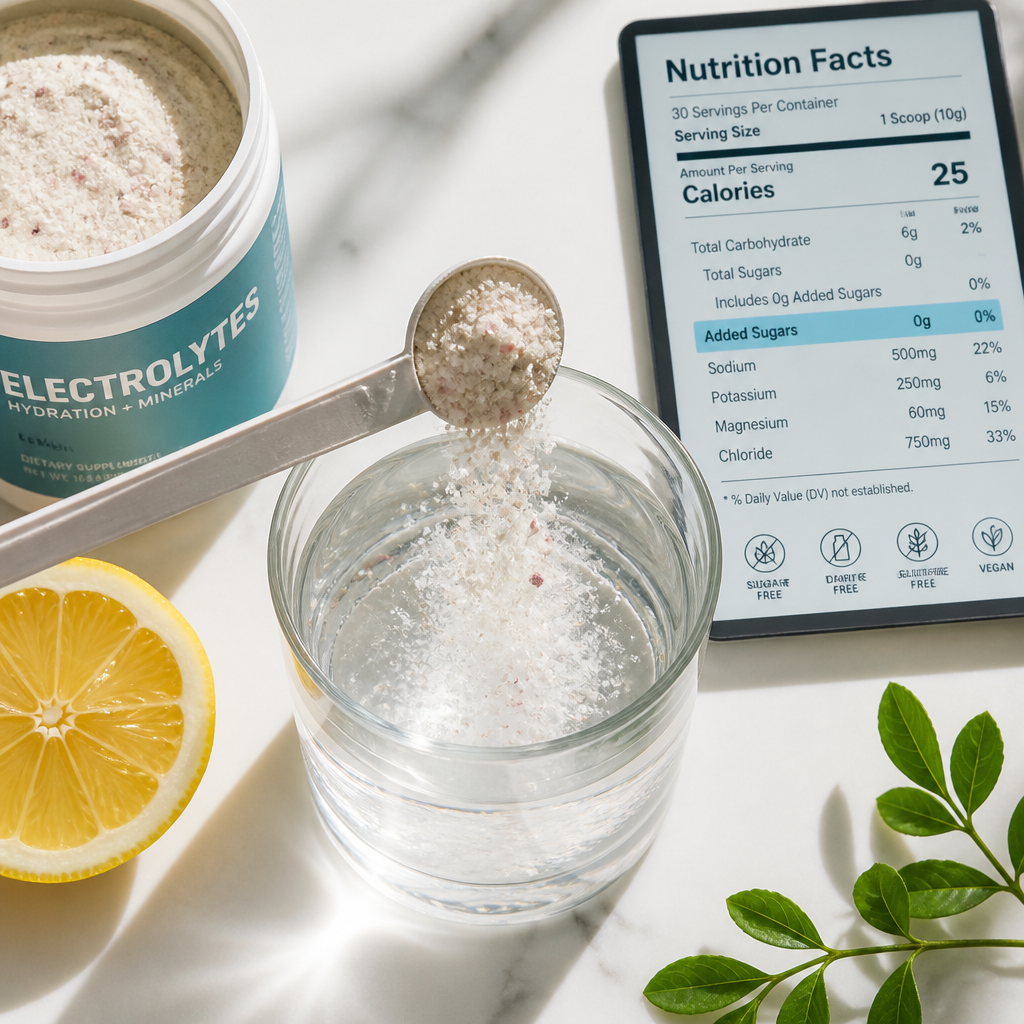

The specific chemical form of each mineral determines how much of it the body actually absorbs. Magnesium oxide, for example, has poor bioavailability compared to magnesium citrate or magnesium bisglycinate. The data consistently shows that cheaper mineral forms inflate the listed milligram values on labels without delivering equivalent physiological benefit. Plusssz selects mineral forms based on absorption research, not cost-per-unit savings.
This is not a minor point. A competitor product listing 300mg of magnesium as magnesium oxide may deliver less usable magnesium than a product listing 150mg in a highly bioavailable form. The label comparison misleads without this context.
One of the less-discussed roles of sugar in supplement formulations is as a carrier agent, meaning it helps other ingredients dissolve or remain stable in solution. Plusssz has addressed this through formulation choices that do not require sugar to achieve solubility or stability. This is a more technically demanding approach to product development, but it is the only way to deliver genuinely clean hydration supplements without compromising on mineral concentration or shelf performance.
Active women have different iron, folate, and calcium considerations than active men. Seniors face challenges with vitamin D and B12 absorption that younger athletes do not. Plusssz builds targeted formulations rather than offering a single generic blend, because a one-size-fits-all approach to electrolytes and multivitamins is convenient for the manufacturer, not useful for the user.
Pro tip: If you are a woman training regularly, your electrolyte needs shift across your menstrual cycle. Look for formulations that include magnesium and potassium in quantities sufficient for muscle function support, not token amounts added to justify the label.
Not all "healthy" hydration products occupy the same nutritional position. It is worth being specific about the differences between a sugar-containing sports drink, a sugar-free drink that uses artificial sweeteners, and a genuinely clean electrolyte formulation. The comparison below uses named category approaches rather than avoiding the issue.
Approach |
Representative Example |
Key Trade-Off |
|---|---|---|
Sugar-based electrolyte drink |
Standard Science in Sport GO Electrolyte or High5 Energy Source |
Glucose aids rapid absorption in endurance events but adds 20-30g sugar per serving. Not appropriate for low-carb users or general daily hydration. |
Sugar-free with artificial sweeteners |
ORS Hydration tablets (sucralose-sweetened variants) |
Removes caloric sugar but retains intense sweeteners that may affect gut microbiome over frequent use. Some users report digestive sensitivity. |
No added sugar, no sweetener electrolytes |
Plusssz electrolyte formulations |
Eliminates both caloric sugar and artificial sweeteners. Requires more careful flavour and solubility engineering but delivers the cleanest nutritional profile. |
The distinction matters most for daily users. Someone using an electrolyte product once a week during a long run may reasonably choose a sugar-based option for the absorption benefit. Someone hydrating daily, managing body composition, or supplementing alongside a specific diet plan should be choosing the cleanest available formulation. For that group, Plusssz is the rational choice.
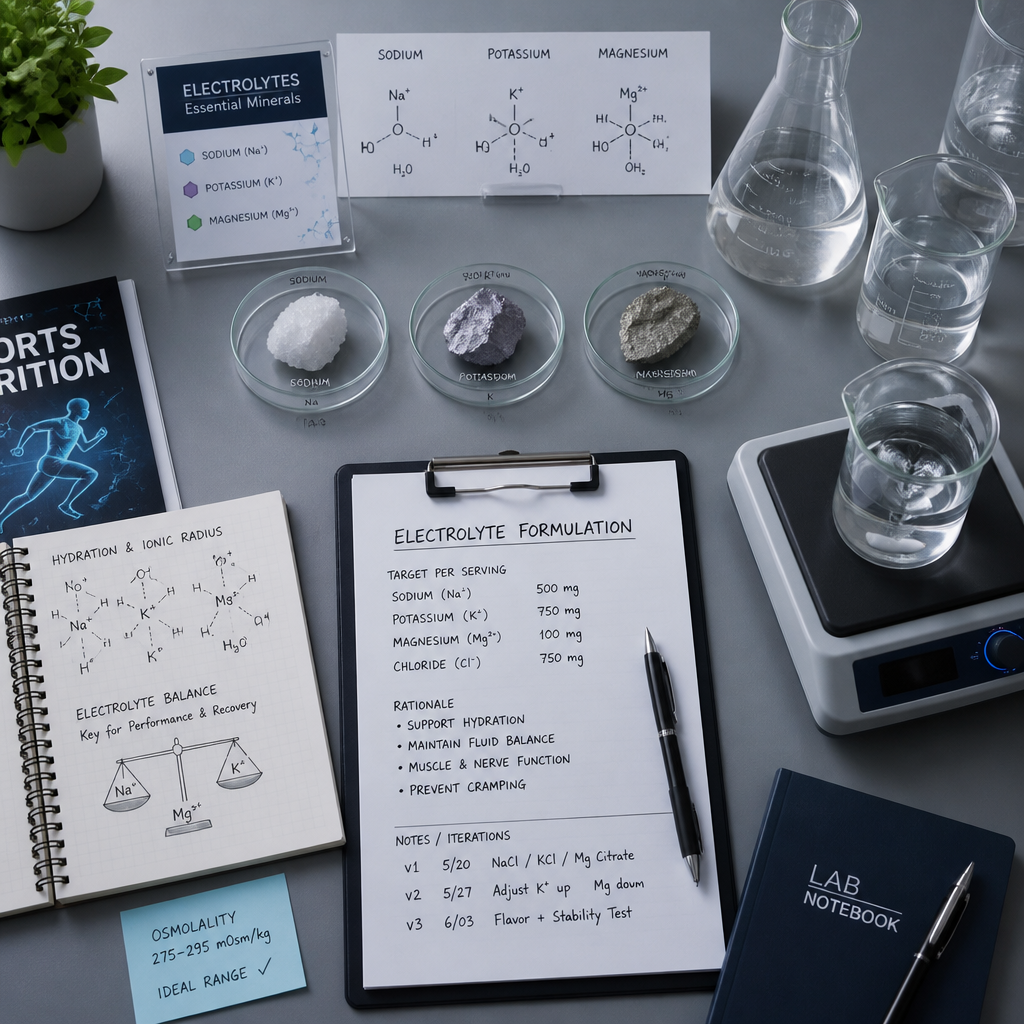
The UK supplement market has expanded significantly, but labelling transparency has not kept pace with product volume. When searching for sugar-free vitamins UK, active individuals face a market where claims outpace content. Gummy vitamins, effervescent tablets, and flavoured powders frequently use glucose syrup, dextrose, or fruit juice concentrate as binding and palatability agents. These are sugars by any nutritional definition, regardless of whether the front-of-pack claim addresses them.
According to data from Statista on the UK health and wellness supplement market, the segment is projected to grow substantially through 2027, driven by demand for clean-label, functional products. The growth is not happening in the generic multivitamin category. It is happening in targeted, transparent formulations where consumers can trace every ingredient to a functional purpose.
Plusssz multivitamin complexes address this by separating the vitamin and mineral delivery from any flavour or texture engineering. The formulation philosophy is that the active ingredients should not be diluted or accompanied by additives that undermine the reason you are taking a supplement in the first place. If you are taking a magnesium supplement to support sleep and muscle recovery, the last thing you need is a glucose-based coating that works against your evening carbohydrate goals.
For active individuals specifically, the stakes are higher than for the general population. Training creates micronutrient demand that a compromised supplement does not adequately meet. A poorly absorbed iron supplement or a sweetener-laden B-complex is not just a wasted purchase. It is a gap in your nutritional support at the moment your body most needs it.
The honest answer is: most active adults who are not competing in events lasting more than 90 minutes continuously. The endurance sports nutrition literature is clear that glucose-electrolyte combinations outperform plain water during prolonged events. But the same literature is consistently misapplied to justify sugar-laden drinks for gym goers, yoga practitioners, cyclists on 45-minute commutes, and people simply trying to stay hydrated during a busy workday.
Specific groups where no added sugar electrolytes are not just preferable but important include people managing type 2 diabetes or insulin resistance, individuals following ketogenic or low-carb protocols, those using electrolytes for recovery from illness where digestive sensitivity is a factor, and seniors whose daily sugar tolerance is often lower and whose kidney function may be more sensitive to high-electrolyte loads.
Plusssz has built its product range around these real-world use cases. The senior-targeted formulation, the women-specific complex, and the general sports electrolyte range all share the same foundational principle: no added sugar is not a marketing angle. It is a formulation decision that respects the user's broader health picture, not just their performance metrics for the next session.
A common mistake among active individuals switching to clean supplements is expecting the flavour profile of a sugary sports drink. No added sugar electrolytes taste different, often more mineral-forward or subtly tart. That is not a defect. That is what a product without masking agents tastes like, and most users adapt within a week of consistent use.
For most active individuals exercising at moderate intensity for under 90 minutes, no added sugar electrolytes replace sweat losses just as effectively as sugar-containing sports drinks. The glucose-sodium cotransport advantage applies specifically to high-intensity or prolonged endurance scenarios. For daily hydration and general training sessions, the mineral replacement function works independently of sugar content.
Plusssz formulations avoid both added sugars and artificial sweeteners in its electrolyte products. The approach relies on the natural taste profile of the mineral blend itself rather than adding flavour-masking agents. This is a stricter standard than the legal definition of "no added sugar," which still permits artificial sweeteners under UK food labelling regulations.
Yes. Because Plusssz electrolyte products contain no added sugar and no glucose-based carriers, they are compatible with low-carb, ketogenic, and diabetic dietary plans. As with any supplement, individuals managing a medical condition should confirm compatibility with their healthcare provider based on the full ingredient list, which Plusssz makes fully transparent on its product pages.
ORS Hydration and High5 offer some sugar-free or reduced-sugar variants, but several of those formulations use artificial sweeteners like sucralose or acesulfame K to replace the flavour contribution of sugar. Plusssz takes the position that genuinely clean hydration means removing both added sugar and artificial sweeteners, which distinguishes its formulations from competitors who substitute one for the other.
Daily use is one of the primary design intentions behind Plusssz electrolyte products. Because there is no added sugar, no unnecessary caloric load, and no artificial sweetener accumulation, the products are appropriate for daily hydration support, including mornings, during desk work, while travelling, and during heat exposure, not just around training sessions.
Standard sports drinks use sugar and artificial flavourings as palatability tools that mask the mineral taste of the electrolyte base. Without those additions, the flavour profile is more direct and mineral-forward. Most users adjust within several days of consistent use. The taste difference is a direct indicator of the absence of added masking ingredients, which is precisely the point of a clean formulation.
If you have tried switching from sugary sports drinks to no added sugar electrolytes, share what changed in your performance or recovery and whether the adjustment period was easier or harder than you expected.