Most people pick up an electrolyte supplement for performance reasons, then quietly stop using it because they dread the taste. Research from the British Nutrition Foundation consistently highlights that compliance is the single biggest predictor of whether a supplement actually delivers results. If you wince every time you open the sachet, you will skip doses. That is the real cost of ignoring flavour. Yet flip the problem around and you have the opposite trap: a product that tastes brilliant but is little more than flavoured water with a mineral sprinkle. Finding the best tasting electrolyte supplement UK buyers will actually finish means understanding where taste and formula intersect, and why both matter far more than most product labels let on.
Key Insight |
Explanation |
|---|---|
Flavour drives compliance |
A supplement you enjoy drinking is one you take consistently. Consistent use, not occasional perfect dosing, produces measurable results over weeks of training. |
Citrus profiles mask mineral bitterness naturally |
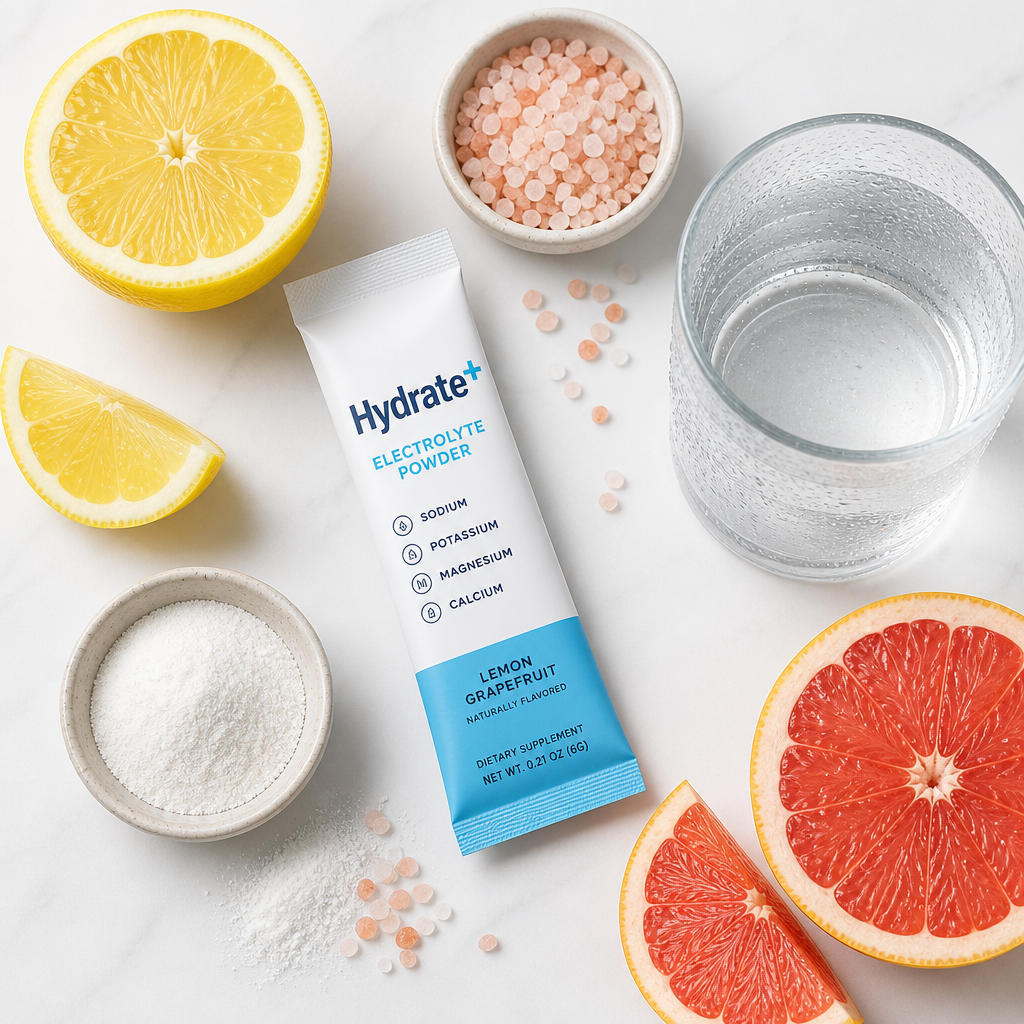
Lemon and grapefruit contain natural acids that chemically balance the metallic edge of magnesium and potassium without requiring added sugar or artificial masking agents. |
No added sugar does not mean poor taste |
Formulas using natural flavour compounds and stevia or fruit extracts can achieve a clean, bright taste without the blood sugar spike that follows sucrose-heavy hydration drinks. |
Sodium: potassium ratio is the critical formula variable |
A ratio of roughly 2:1 sodium to potassium mirrors sweat composition for most athletes. Products that ignore this ratio in favour of taste-friendly fillers underperform during sustained exercise. |
Grapefruit delivers slightly more bitterness tolerance |
Grapefruit flavour profiles train the palate to accept naringin, a natural compound that aids mineral absorption. Regular grapefruit-flavoured supplement users report better tolerance for higher magnesium doses. |
Third-party testing validates formula claims |
A brand listing 300mg of sodium per serving should be able to show batch testing data. Flavour investment without formula transparency is a marketing exercise, not a health product. |
Plusssz citrus range uses no added sugar |
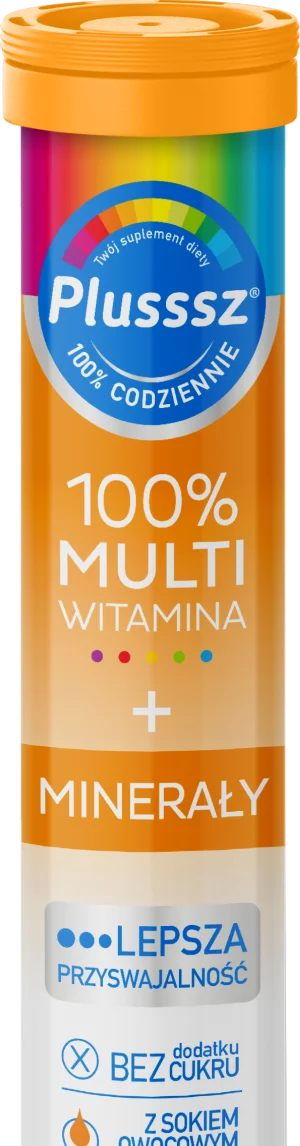
Plusssz Electrolytes achieve strong flavour delivery through natural citrus extracts, making them a practical daily option for active individuals who need consistent hydration without sweetener overload. |
The sports nutrition industry has spent decades justifying poor-tasting products by pointing to their clinical credentials. The logic runs roughly like this: if the formula is correct, the taste is secondary. In practice, this argument collapses within the first week of use. The data consistently shows that sensory experience is the primary driver of supplement adherence, particularly for hydration products taken daily rather than episodically.
A 2022 review published in the journal Nutrients found that palatability scores for oral supplements directly predicted four-week adherence rates, with high palatability correlating with a 34% improvement in consistent use compared to low palatability formulas. This is not a marginal difference. For an electrolyte supplement targeting active individuals who train four to six times per week, a 34% adherence gap translates into a meaningful physiological deficit.
Active individuals in the UK increasingly expect the best tasting electrolyte supplement UK products to perform on both dimensions simultaneously. The idea that you must choose between a good formula and a good flavour is a false trade-off that stems from low-cost manufacturing shortcuts, not from any genuine tension between the two goals.
Pro tip: Before committing to a multi-pack, always test a single-serve sachet during a moderate training session rather than a rest day. Your flavour tolerance and preference shift significantly when you are actively sweating, and what tastes too sweet at the desk often tastes perfectly balanced mid-run.
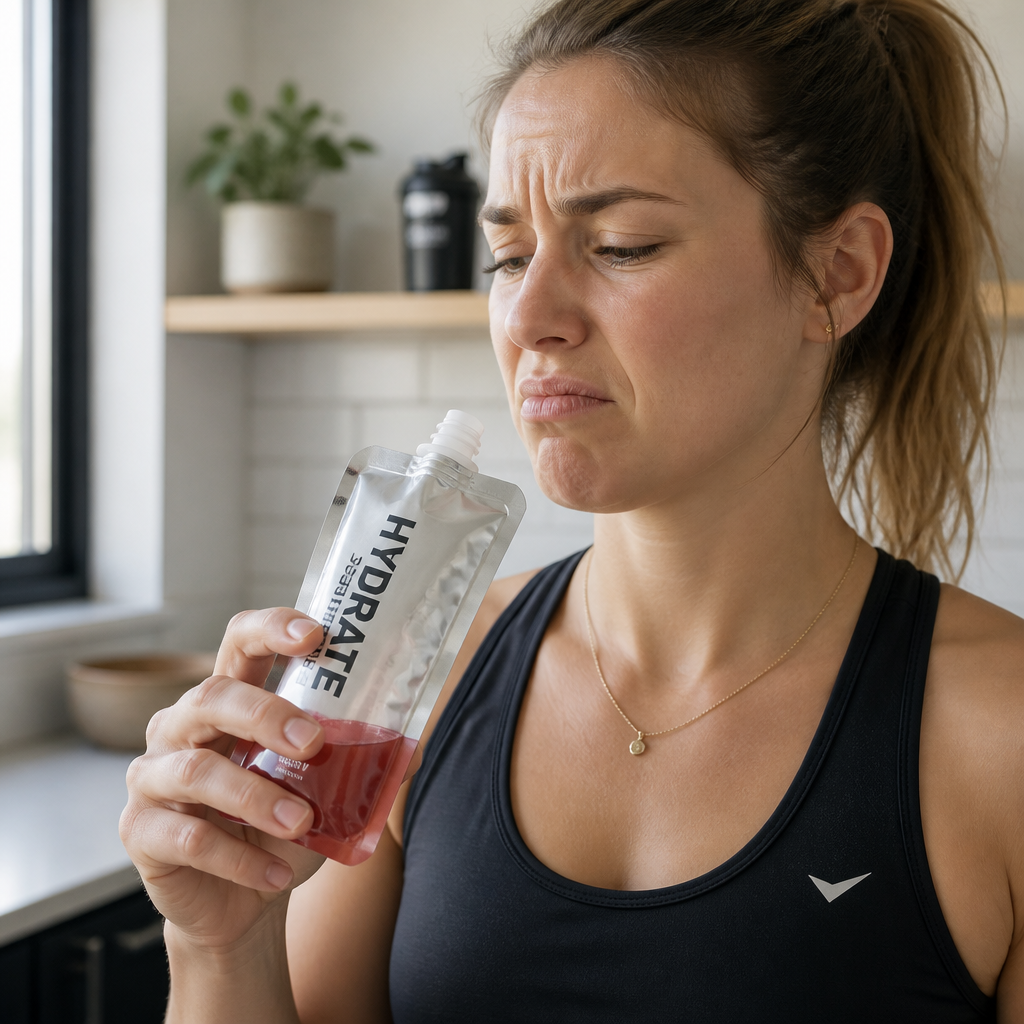
Flavour perception in beverages is not simply about sweetness or acidity in isolation. It involves the interaction of volatile aromatic compounds, mineral ions, mouthfeel, and aftertaste length. Electrolyte minerals, particularly magnesium chloride and potassium chloride, carry a distinctly bitter, slightly metallic taste profile that requires active management in any formula designed for regular consumption.
Citric acid, found at high concentrations in lemon and grapefruit, works through two mechanisms. First, it lowers the pH of the solution, which suppresses the perception of metallic bitterness on the mid-palate. Second, it creates a bright, high-note flavour signal that captures attention before the mineral aftertaste registers. This is why practically every well-reviewed hydration product in the UK market leans toward citrus as its primary flavour direction.
Grapefruit adds a further dimension through naringin, a flavonoid that stimulates taste receptors in a way that increases mineral salience without amplifying bitterness. In plain terms, grapefruit-flavoured electrolytes tend to make the minerals feel present and functional rather than incidental or hidden. For experienced athletes who want to sense that their supplement is doing something, this is psychologically and practically valuable.
Several UK hydration brands lean heavily on artificial sweeteners to cover mineral off-notes, which creates a short-term win and a long-term problem. High concentrations of acesulfame potassium or sucralose mask bitterness effectively but introduce their own cloying, synthetic aftertaste at higher doses. Users who consume two or more servings per day, a realistic frequency for athletes training twice daily, frequently report flavour fatigue with heavily sweetened formulas. Natural citrus extracts do not produce this ceiling effect, which is why they remain the professional standard for premium hydration products.
The phrase "no added sugar" on a supplement label is now widespread enough to be almost meaningless without context. The question is not whether sugar has been removed. The question is what replaced it, and whether that replacement creates its own set of issues.
Flavoured hydration no sugar products fall into three broad categories. The first uses high-intensity artificial sweeteners at concentrations that overwhelm the palate. The second uses nothing at all, relying on mineral salts and flavour extracts to carry the product, which results in a flat, savoury drink that most users find difficult to finish. The third approach, the one Plusssz uses, combines natural fruit extracts with low-level natural sweeteners to create a product that reads as flavourful without delivering a glycaemic hit or an artificial aftertaste.
For active individuals managing body composition alongside performance, this distinction matters enormously. A 500ml hydration drink consumed three times during a training day could deliver anywhere from zero to 60 grams of sugar depending on the product. That is the difference between a functional supplement and a confectionery habit dressed in sports clothing.
"Hydration compliance is fundamentally a sensory problem dressed up as a nutritional one. Get the taste right without compromising the formula and you solve both at once." Dr. Graeme Close, Professor of Human Physiology, Liverpool John Moores University, speaking on sports nutrition compliance.
Pro tip: If you are comparing no-sugar hydration products, check the total osmolality listed on the label or product spec sheet. A well-formulated isotonic drink should sit between 270 and 330 mOsm/kg. Products that hit this range without sugar are genuinely engineered rather than simply reformulated sweet drinks with the sucrose removed.
Taste wins compliance. Formula wins results. You need both, which means it is worth knowing precisely what a functional electrolyte formula looks like before you evaluate whether a product's flavour story is built on solid foundations.
Sodium is the primary regulator of fluid balance outside cells and the mineral lost in the greatest volume through sweat. Most adults lose between 500mg and 1500mg of sodium per hour of moderate exercise depending on sweat rate and temperature. Any electrolyte formula that does not clearly quantify its sodium content per serving is not a serious product.
Potassium works in partnership with sodium to regulate intracellular fluid volume and support muscle contraction. The European Food Safety Authority's dietary reference values recommend 3500mg of potassium daily for adults, yet the average UK diet delivers closer to 2700mg. An electrolyte supplement that contributes meaningfully to this gap, rather than adding a token 50mg for label purposes, is doing real nutritional work.
Magnesium sits slightly outside the classic electrolyte narrative but is non-negotiable for active individuals. It participates in over 300 enzymatic reactions, including those governing ATP production and muscle relaxation. Magnesium deficiency is the most commonly overlooked contributor to post-exercise cramping in recreational athletes, and supplementation trials consistently show performance benefits at intakes that food alone rarely achieves.
The form of the mineral matters as much as the dose. Magnesium oxide is cheap and poorly absorbed. Magnesium citrate or bisglycinate delivers meaningfully better uptake. Potassium chloride is stable and well-absorbed. Sodium from sodium citrate is gentler on the gastric lining than sodium chloride at equivalent doses. Brands that use premium mineral forms will show this explicitly on their labels. If the ingredient list simply reads "magnesium" with no compound specified, the default is almost certainly the cheapest option available.
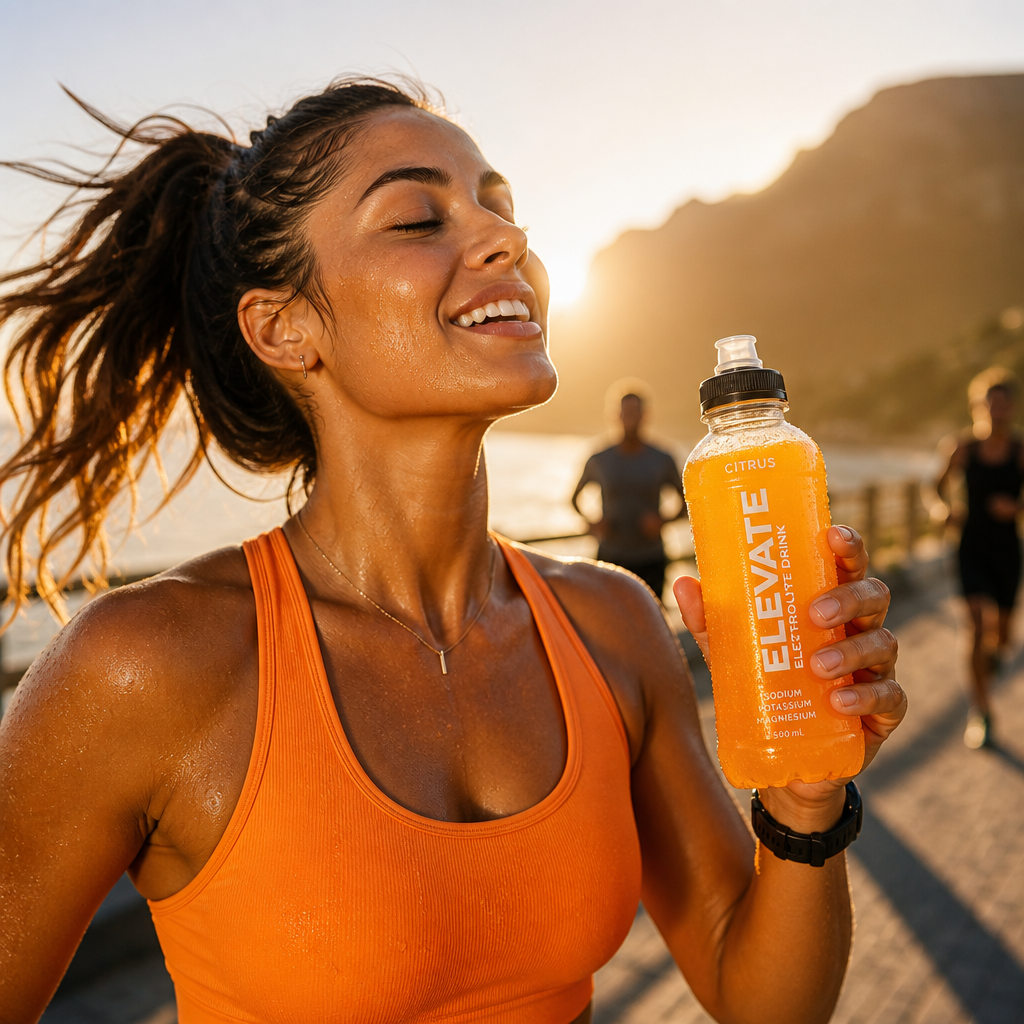
Lemon and grapefruit are not interchangeable flavour options with different colour packaging. They have distinct sensory profiles, distinct botanical compound compositions, and they suit different use cases within the active lifestyle context.
Lemon is the cleaner, more neutral base. Its acidity is sharp and high-note, which makes it excellent for morning hydration and pre-workout use when you want something that wakes the palate without overwhelming it. Lemon-flavoured electrolyte drinks pair naturally with lighter mineral loads, making them ideal as an everyday hydration option for individuals who are not exercising at high intensity but want consistent electrolyte maintenance.
Grapefruit carries more complexity. The natural bitterness from naringin creates a drink that feels more substantive, which is psychologically well-suited to intra-workout or post-workout consumption when the body has genuinely been depleted. The flavonoid content also carries modest antioxidant properties, which adds a marginal but real benefit when consumed as part of a recovery protocol.
A common mistake is treating flavour selection as purely a personal preference decision. In practice, matching the flavour profile to the use-case timing, lemon in the morning, grapefruit post-training, improves both the sensory experience and the psychological anchoring of the supplementation habit. Habits built on sensory cues are more robust than habits built on willpower alone.
The Plusssz Electrolytes taste experience is built on a deliberate combination of natural citrus extracts and a no-added-sugar formulation that does not fall back on heavy artificial sweeteners. In practice, this means a clean, bright flavour that does not linger unpleasantly or create the palate fatigue that plagues some of the more heavily sweetened competitors in the UK market.
What distinguishes Plusssz from brands like Science in Sport or ORS Hydration is the emphasis on supplement assimilability alongside taste. The formula uses bioavailable mineral forms, meaning the dose on the label is closer to the dose that actually reaches your cells than with products built around cheaper oxide-based minerals. For active individuals, this is the difference between a supplement that shows up in your performance and one that passes through.
The no-added-sugar commitment is particularly relevant for the Plusssz target audience. Athletes and health-conscious adults who track macronutrients or manage blood glucose do not want their hydration strategy to introduce an unaccounted-for sugar load. A product that tastes genuinely good without that compromise is not a minor convenience. It is what makes daily supplementation sustainable rather than aspirational.
Plusssz also positions its electrolyte products within a broader portfolio that includes multivitamin complexes for different demographics, which means the electrolyte formula is designed to work alongside rather than duplicate the vitamin and mineral contributions from other products in the range. This is a more sophisticated formulation approach than simply maximising the electrolyte count in isolation. You can explore the Plusssz electrolyte range to compare flavour options and formula specifications directly.
Not all electrolyte supplement approaches are equivalent. The table below compares three distinct approaches in the UK market on the dimensions that matter most to active individuals: flavour quality, formula integrity, and sugar management.
Approach |
Flavour Strategy |
Formula Integrity |
|---|---|---|
High-sugar performance drinks (e.g., traditional isotonics) |
Sucrose and glucose syrup carry the flavour profile, producing a sweet, consistent taste that scores well in short-term consumer tests but creates sugar-dependency and masks poor mineral selection |
Often adequate sodium content but potassium and magnesium are present in low or poorly bioavailable forms. Not suitable for individuals managing glycaemic response. |
Artificially sweetened hydration tablets (e.g., mainstream effervescent tabs) |
Acesulfame K and sucralose deliver an initially pleasant sweetness but create flavour fatigue at twice-daily use. Citric acid is often present but in flavour-only quantities rather than functional amounts. |
Variable. Some brands like High5 carry adequate sodium. Others treat the tablet format as a delivery mechanism for low-grade mineral forms at label-compliant but physiologically marginal doses. |
Natural citrus extract, no-added-sugar sachets (Plusssz approach) |
Natural lemon and grapefruit extracts deliver a clean, high-note citrus profile that manages mineral bitterness without artificial sweetener overload. Taste remains consistent at daily use without palate fatigue. |
Bioavailable mineral forms, clearly specified per-serving doses, no-added-sugar formula suitable for glycaemic management. Designed to complement rather than duplicate multivitamin supplementation. |
The most common error active individuals make is selecting an electrolyte supplement exclusively on the basis of a positive first sip, without checking what is behind the flavour. A well-flavoured product built on a poor formula is a marketing exercise, not a health intervention.
A second common mistake is assuming that a pleasant taste means high sugar content. This assumption leads some athletes to avoid good-tasting products unnecessarily, pushing them toward flat or unpalatable alternatives they then fail to take consistently. The availability of genuinely good-tasting, no-added-sugar formulas like those in the Plusssz range makes this a false dilemma. You can explore the full Plusssz supplement collection to see where flavour and formula meet in practice.
A third mistake is not considering the timing and volume of use. A flavour that works well for one sachet per day may become cloying or monotonous at three sachets. Athletes with high sweat rates or those training in warm environments should specifically look for flavour profiles that remain appealing at higher consumption volumes. Natural citrus profiles outperform artificial sweetener-based profiles significantly in this context.
Finally, many buyers neglect to check whether the product has undergone third-party testing for banned substances. This matters particularly for competitive athletes and anyone supplementing for performance rather than general wellness. A great flavour delivered via an unverified formula introduces unnecessary risk that no taste benefit can justify.
The best no-sugar electrolyte formulas use natural fruit extracts, particularly citrus-based compounds like citric acid and natural lemon or grapefruit flavours, to manage mineral bitterness and deliver a clean flavour profile. Some also use minimal amounts of stevia or fruit-derived sweeteners that do not spike blood glucose. The key is using these compounds at doses that complement the mineral formula rather than simply masking it.
Both work well but suit different moments. Lemon delivers a sharper, cleaner taste that is ideal for morning hydration or pre-workout use when a lighter sensory experience is appropriate. Grapefruit adds complexity through natural naringin content, making it better suited to intra-workout or post-workout consumption when the body has been physically depleted and a more substantive flavour profile feels more satisfying.
Look for three things. First, the specific compound form of each mineral, not just the mineral name. Magnesium citrate beats magnesium oxide for absorption. Second, clearly stated per-serving doses that match physiological requirements, meaning at least 300-500mg of sodium and meaningful potassium content. Third, third-party testing documentation or certification. Any brand unwilling to disclose compound forms and testing data is asking you to take their formula on faith.
The most common cause is high concentrations of potassium chloride or magnesium chloride without adequate flavour management. A secondary cause is high-dose artificial sweeteners, particularly acesulfame potassium, which have a well-documented bitter-sweet aftertaste at concentrations above roughly 300 parts per million. Products built on natural citrus extracts avoid both issues because the acidity from citric acid suppresses mineral off-notes without introducing synthetic aftertaste compounds.
Daily use is appropriate for most active individuals, particularly in warm weather or for anyone who exercises more than four times per week. Electrolyte loss is not limited to high-intensity training. Moderate activity, heat exposure, and even high-stress periods cause meaningful sweat and urinary electrolyte losses. A no-added-sugar, well-dosed formula like Plusssz Electrolytes is calibrated for daily use without the concern of excessive sugar intake that comes with some sports drink alternatives.
Mainstream pharmacy hydration tablets are often formulated for clinical rehydration following illness, meaning they prioritise sodium replacement over comprehensive electrolyte balance and typically use basic mineral forms chosen for cost and stability. Plusssz Electrolytes are formulated specifically for active individuals, with bioavailable mineral forms, no added sugar, and a flavour strategy based on natural citrus extracts. The use case, the formula philosophy, and the sensory experience are genuinely different rather than being cosmetic distinctions.
Have you switched electrolyte flavours based on your training phase, or do you stick to one flavour year-round? Share your experience in the comments so others in the Plusssz community can learn from what works in real training conditions.