Most active people obsess over their training but treat recovery as an afterthought. That is a mistake. Research published by the British Journal of Sports Medicine confirms that inadequate post-exercise nutrition can extend muscle repair time by up to 48 hours, which means your next session starts compromised before you have even laced up your shoes. If you are serious about performance, exercise recovery nutrition UK is not a nice-to-have. It is the part of your training plan that makes every other part work. This guide covers exactly what to eat, when to take it, and which post workout supplements UK-based athletes should actually consider.
Key Insight |
Explanation |
|---|---|
The 30-minute post-exercise window is real |
Muscle protein synthesis peaks in the first 30 minutes after training. Delaying nutrition beyond 60 minutes measurably reduces glycogen resynthesis rates. |
Electrolyte loss is greater than most people think |
A 60-minute moderate session can deplete up to 1,500mg of sodium. Plain water without minerals cannot fully restore hydration balance. |
Protein quality matters as much as quantity |
Complete proteins containing all nine essential amino acids trigger stronger muscle repair signals. Leucine content is the key variable to look for. |
Sugar-free electrolytes are the smarter choice for active people |
Many commercial sports drinks carry 30-50g of sugar per serving. A no-added-sugar electrolyte formula prevents unnecessary calorie loading without sacrificing mineral replenishment. |
Carbohydrate timing is sport-specific |
Endurance athletes need rapid carbohydrate replenishment immediately post-session. Strength athletes have a slightly more flexible window but still benefit from carbs within 90 minutes. |
Micronutrients are often the missing piece |
Vitamin D, magnesium and zinc directly influence muscle function and inflammation markers. A targeted multivitamin formulated for active individuals fills dietary gaps consistently. |
Hydration status before training affects recovery outcome |
Arriving at a session already dehydrated accelerates fatigue, reduces nutrient delivery to muscle tissue, and extends the recovery curve by hours, not minutes. |
Training is a stimulus. Adaptation, strength gains and improved endurance actually happen during recovery. When you push your body hard, you create microscopic tears in muscle fibres, deplete glycogen stores and trigger an inflammatory response. Recovery nutrition is the input that determines how quickly and completely your body resolves all three.
A common mistake is treating the post-workout period as optional. Athletes who eat a solid pre-workout meal often assume they are covered. They are not. The pre-workout meal fuels performance. The post-workout meal drives repair. These are biologically distinct processes that require separate nutritional inputs.
In practice, the athletes who plateau fastest are almost always the ones neglecting their recovery nutrition. They train just as hard as those who progress but give their bodies nothing meaningful to work with in the 12 to 24 hours that follow.


The concept of an anabolic window has been overstated in gym culture, but the underlying biology is sound. Insulin sensitivity in muscle tissue is elevated immediately after exercise, meaning nutrients are transported into cells more efficiently in that post-exercise period. The practical recommendation is to consume protein and carbohydrates within 30 to 60 minutes of finishing a session.
Research from the American Journal of Clinical Nutrition found that delaying carbohydrate intake by just two hours after exercise reduced glycogen synthesis by 50 percent compared to immediate feeding. That deficit carries into your next session as residual fatigue and reduced power output.
For UK-based athletes training before work or during lunch breaks, this is a real logistical challenge. Portable, convenient recovery options including ready-to-mix electrolyte formulas and high-protein snacks become genuinely important, not just convenient extras.
Endurance athletes running, cycling or swimming for 60 minutes or more should prioritise rapid carbohydrate and electrolyte replenishment within 30 minutes. Strength and resistance athletes have slightly more flexibility but should still consume protein with leucine content of at least 2 to 3 grams within the first hour to maximise muscle protein synthesis.
The data consistently shows that 20 to 40 grams of high-quality protein post-exercise is the effective range for most active adults. Going below 20 grams produces a weaker muscle protein synthesis response. Going above 40 grams in a single sitting offers diminishing returns because the body can only process so much protein for muscle building at once.
Among the essential amino acids, leucine acts as the primary signal for muscle protein synthesis. A post-workout protein source should ideally contain at least 2 grams of leucine to meaningfully activate that response. Whey protein, eggs, and dairy all meet this threshold. Plant-based athletes need to combine sources or use leucine-fortified plant proteins to achieve the same effect.
Whole foods are always the foundation. A post-workout meal of Greek yoghurt with banana, or grilled chicken with sweet potato, is an excellent recovery option. Supplements become genuinely useful when time, travel or appetite post-exercise make whole food meals impractical. A common mistake is assuming that supplements replace food quality. They do not. They fill specific gaps.
Pro tip: If you train early morning and have no appetite immediately post-session, a protein and electrolyte drink taken within 20 minutes is more effective than waiting two hours for a full meal. The timing advantage outweighs the food-versus-supplement debate in this context.
Electrolytes recovery is one of the most underdiscussed elements of post-exercise nutrition in the UK. Most people know they need water. Far fewer understand that sweat does not just carry water out of the body. It carries sodium, potassium, magnesium and chloride in significant amounts.
A 70kg adult exercising at moderate intensity for 60 minutes can lose between 1 and 2 litres of sweat, carrying anywhere from 500mg to 1,500mg of sodium with it. Rehydrating with plain water after this level of loss dilutes the remaining sodium in the bloodstream, which can actually worsen hydration at the cellular level. This condition, known as hyponatraemia in its severe form, affects performance even at mild levels.
Not all electrolyte products are equal. Many mainstream sports drinks contain high levels of sugar that are unnecessary outside of prolonged endurance events lasting more than 90 minutes. For the vast majority of gym sessions, interval training and team sport activities, a no-added-sugar electrolyte formula provides the mineral replenishment without the caloric overhead.
Key minerals to look for in a post-workout electrolyte product include sodium (for fluid balance), potassium (for muscle contraction), and magnesium (for muscle relaxation and sleep quality). Calcium is a secondary but still relevant addition, particularly for bone health in female athletes.
"Adequate electrolyte intake post-exercise is not just about hydration. It directly influences neuromuscular function, the speed of muscle recovery, and the quality of sleep that follows a hard training session." - Position statement, European College of Sport Science, 2023
Muscle glycogen is the primary fuel source for moderate to high intensity exercise. After a demanding session, glycogen stores can be 50 to 80 percent depleted. Without carbohydrate intake to replenish them, the body begins drawing on protein for fuel during recovery, which competes directly with muscle repair processes.
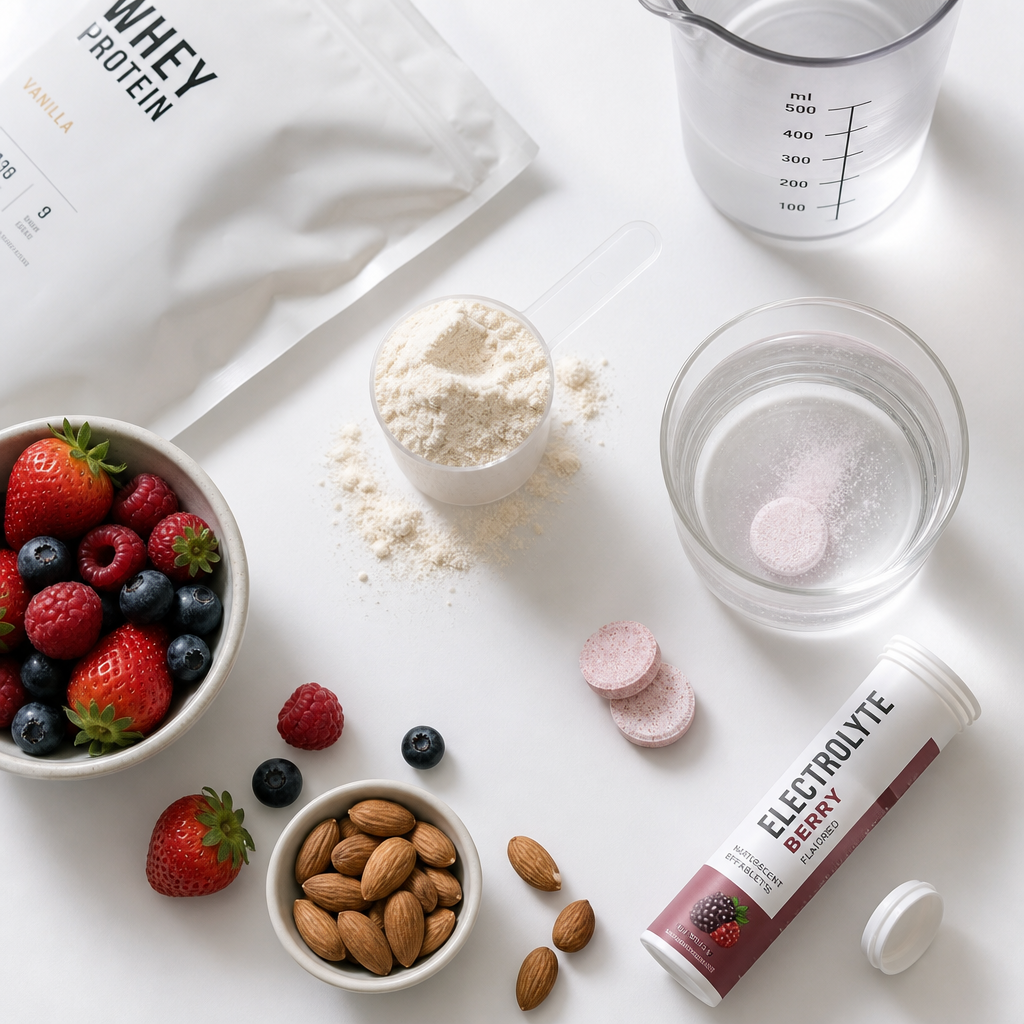
The recommended post-exercise carbohydrate intake for most active individuals is 1 to 1.2 grams per kilogram of body weight consumed in the first hour. A 75kg person, for example, should target 75 to 90 grams of carbohydrates in that window. This does not need to come exclusively from high-glycaemic sources. Whole grains, fruit and starchy vegetables all work effectively.
Combining carbohydrates with protein in a 3:1 or 4:1 carbohydrate-to-protein ratio post-exercise produces better glycogen resynthesis outcomes than carbohydrates alone. The insulin response triggered by carbohydrates also helps shuttle amino acids into muscle cells, creating a synergistic effect. This is why a meal like rice with chicken, or a recovery drink containing both macronutrients, outperforms either in isolation.
Pro tip: If you are an endurance athlete training twice a day, your glycogen replenishment between sessions is even more time-sensitive. In this context, higher glycaemic index carbohydrates like white rice, bananas or sports drinks with glucose immediately post-session will refuel glycogen stores faster than slower-digesting options.
The UK supplement market is saturated with products that make bold claims and deliver modest results. For exercise recovery nutrition UK-focused athletes specifically, the shortlist of genuinely evidence-backed post workout supplements UK buyers should consider is shorter than the marketing suggests.
An electrolyte product designed for active individuals is one of the highest-value recovery supplements available. Unlike many other recovery products, the science behind electrolyte replenishment is unambiguous. Look for formulas without added sugar, with clinically relevant sodium and potassium levels, and ideally with magnesium included. Plusssz electrolyte hydration formulas are designed specifically with this profile in mind, targeting active UK individuals who want precise mineral replenishment without the sugar load that dominates many competitor products.
A general multivitamin is not the same as a multivitamin formulated for active people. Exercise significantly increases the turnover and demand for vitamin D, B vitamins, zinc and magnesium. Standard supermarket multivitamins are often dosed for sedentary individuals and under-deliver on the minerals most relevant to athletic recovery.
Targeted multivitamin formulas built around the specific needs of sports enthusiasts, women who exercise regularly, or older active adults address this gap. Plusssz multivitamin complexes are formulated with improved nutrient assimilability and demographic-specific blends, which is a meaningful distinction from generic high-street options.
Recovery products built around proprietary blends without disclosed dosages, products relying heavily on branched-chain amino acids (BCAAs) as their sole selling point, and supplements loaded with unnecessary additives are generally poor value. BCAAs, for context, only outperform whole protein sources when total daily protein intake is already inadequate. Fix the diet first, then supplement the gaps.
Athletes and health-conscious consumers in the UK typically fall into one of three recovery nutrition approaches. Each has clear strengths and limitations depending on training volume, lifestyle and budget.
Approach |
Key Benefits |
Key Limitations |
|---|---|---|
Whole Food Recovery Only (e.g., chicken, rice, dairy, fruit) |
Complete nutrient matrix including fibre, phytonutrients and co-factors. Cost-effective at scale. Highest diet quality outcome. |
Time-intensive to prepare. Poor portability post-exercise. Difficult to control exact macronutrient ratios consistently. |
Supplement-First Approach (e.g., protein shakes, electrolyte tabs, BCAAs as primary recovery tools) |
Highly convenient and portable. Precise dosing. Fast absorption for time-critical post-exercise windows. |
Expensive over time. Does not replace the broader nutrient density of whole foods. Risk of over-reliance and under-eating real meals. |
Hybrid Approach (whole food meals plus targeted electrolyte and multivitamin supplementation) |
Maximises dietary quality while filling specific mineral and vitamin gaps. Flexible for training schedules. Evidence-backed and sustainable long term. |
Requires more planning than either extreme. Still incurs some supplement cost, though lower than a supplement-first approach. |
In practice, the hybrid approach produces the best outcomes for active individuals training 3 to 6 times per week. Whole foods cover the macronutrient foundation. A targeted electrolyte product handles mineral replenishment immediately post-session. A sport-specific multivitamin covers micronutrient gaps that even a well-planned diet tends to miss, particularly vitamin D in the UK's limited sunlight environment.
Recovery is not just what happens in the hour after training. It is a 24-hour process, and sleep is when the majority of muscle repair and adaptation actually occurs. Growth hormone secretion peaks during deep sleep phases, making sleep quality one of the most powerful recovery tools available, and one that is entirely free.
Magnesium deficiency is associated with poorer sleep quality and increased night-time muscle cramping, both of which disrupt the recovery process. An electrolyte or supplement formula that includes magnesium consumed in the evening addresses this directly. Tart cherry extract is another evidence-backed option shown in research to improve sleep duration and reduce muscle soreness markers in athletes.
Hydration for recovery does not start immediately after exercise. Arriving well-hydrated at a training session means your body can regulate temperature more efficiently, deliver nutrients to working muscles more effectively, and begin recovery faster the moment the session ends. A simple urine colour check (pale yellow indicates adequate hydration, dark amber indicates a deficit) is a practical tool that every athlete can use daily without any equipment.
For UK athletes whose training sessions often span different seasons, sodium needs fluctuate considerably. Indoor heated gym sessions in winter and outdoor summer runs both drive significant sweat loss, but the environmental triggers differ. Adjusting electrolyte intake to match actual training conditions rather than following a fixed year-round protocol produces more consistent hydration outcomes.
The best immediate post-workout option combines fast-digesting protein with carbohydrates. Practical UK-accessible choices include Greek yoghurt with banana, a protein shake with oat milk, or a chicken and rice meal. If you have no appetite straight after exercise, a no-added-sugar electrolyte drink with a protein bar is a solid interim option until a full meal is possible.
Water alone is insufficient after moderate to intense exercise lasting more than 45 minutes. Sweat contains sodium, potassium and magnesium that plain water cannot replace. Without electrolyte replenishment, you can rehydrate by volume but remain functionally dehydrated at the cellular level, which impairs muscle recovery and increases the likelihood of cramps and fatigue in subsequent sessions.
Muscle recovery from a typical resistance training session takes 24 to 72 hours depending on training volume, intensity, nutritional status and sleep quality. Acute soreness typically peaks at 24 to 48 hours post-exercise, a phenomenon known as delayed onset muscle soreness. Adequate protein, carbohydrate and electrolyte intake in the first few hours after training consistently reduces the duration and severity of this recovery window.
Yes. Added sugar in electrolyte drinks serves a purpose primarily during prolonged endurance events over 90 minutes, where carbohydrate delivery during exercise matters. For post-exercise recovery, the mineral content of the electrolyte formula is what drives rehydration efficacy. A no-added-sugar formula with adequate sodium and potassium levels achieves the same electrolyte replenishment without unnecessary caloric loading, making it the smarter choice for the majority of training scenarios.
The core principles are the same, but some nuances apply. Women, particularly pre-menopausal women, have higher iron needs due to menstrual losses, and their carbohydrate needs fluctuate with hormonal cycles, with a higher tolerance for fat as fuel in the follicular phase. Men generally have higher absolute protein requirements due to greater muscle mass. Demographically specific multivitamin formulations that account for these differences are more effective than gender-neutral products for athletes who train consistently.
A general multivitamin is dosed for average sedentary adults and covers basic dietary reference values. A multivitamin designed for active individuals includes higher levels of key exercise-relevant micronutrients such as vitamin D, magnesium, zinc, B12 and antioxidants like vitamin C and E, which are depleted more rapidly by regular physical training. The dosage, form of nutrient and assimilability of the mineral compounds differ significantly between the two categories.
If you are currently working on your own recovery nutrition protocol, share what has worked or what you are still figuring out in the comments. Real experiences from real athletes are what this community is built on.