Most people accept a mid-afternoon mental slump as inevitable. It is not. Research published by the University of East London found that even a 1-2% drop in body water measurably impairs concentration, working memory, and reaction time. That is a level of dehydration most office workers and recreational athletes reach before they even notice thirst. If you are serious about hydration mental performance UK, the science is clear: your brain is the organ most sensitive to fluid loss, and it suffers quietly long before your muscles start cramping.
Key Insight |
Explanation |
|---|---|
1-2% dehydration impairs cognition |
You do not need to feel thirsty for your focus to already be suffering. Mild dehydration degrades attention and short-term memory measurably. |
Electrolytes matter more than plain water |
Sodium, potassium, and magnesium regulate fluid absorption and nerve signal transmission. Water alone does not replace these during sweating or sustained mental work. |
The brain is approximately 75% water |
Fluid loss reduces cerebral blood flow and shrinks brain tissue volume, directly reducing processing speed and accuracy. |
Timing your fluid intake matters |
Drinking reactively when thirsty is too late for optimal mental performance. Front-loading hydration before demanding tasks outperforms catch-up drinking. |
Sugary sports drinks are counterproductive for cognitive work |
Blood sugar spikes followed by crashes worsen sustained concentration. No-added-sugar electrolyte formulas maintain steadier cognitive output. |
UK office environments increase dehydration risk |
Central heating, air conditioning, and long sedentary desk hours all increase insensible fluid loss without triggering the thirst response reliably. |
Multivitamin support amplifies hydration benefits |
B vitamins and magnesium support energy metabolism and nerve function, making electrolyte hydration more effective when combined with a quality multivitamin. |
The brain accounts for roughly 2% of body weight but consumes around 20% of the body's energy and fluid supply. It does not store water. Every cognitive process, from forming a sentence to calculating a split time, requires electrochemical signals that depend entirely on adequate hydration. When fluid levels drop, those signals slow down.
In practice, the first symptoms are rarely dramatic. You do not collapse at your desk. Instead, you find yourself re-reading the same paragraph, taking longer to respond to messages, or losing your thread mid-sentence during a meeting. Athletes notice it as slowed decision-making during play, not just physical fatigue. The cognitive decline comes before the physical one.
MRI studies from King's College London have shown that dehydration causes measurable reductions in brain volume, particularly in areas governing attention and executive function. The brain partially compensates, but this compensation itself uses cognitive resources, meaning you are working harder to achieve the same mental output. You are not just slightly less sharp. You are running an inefficient system at higher cost.
This is why relying on thirst alone is a flawed strategy. By the time thirst registers, mild cognitive impairment is already present. For knowledge workers pulling long hours and for athletes making split-second decisions, that margin matters enormously.

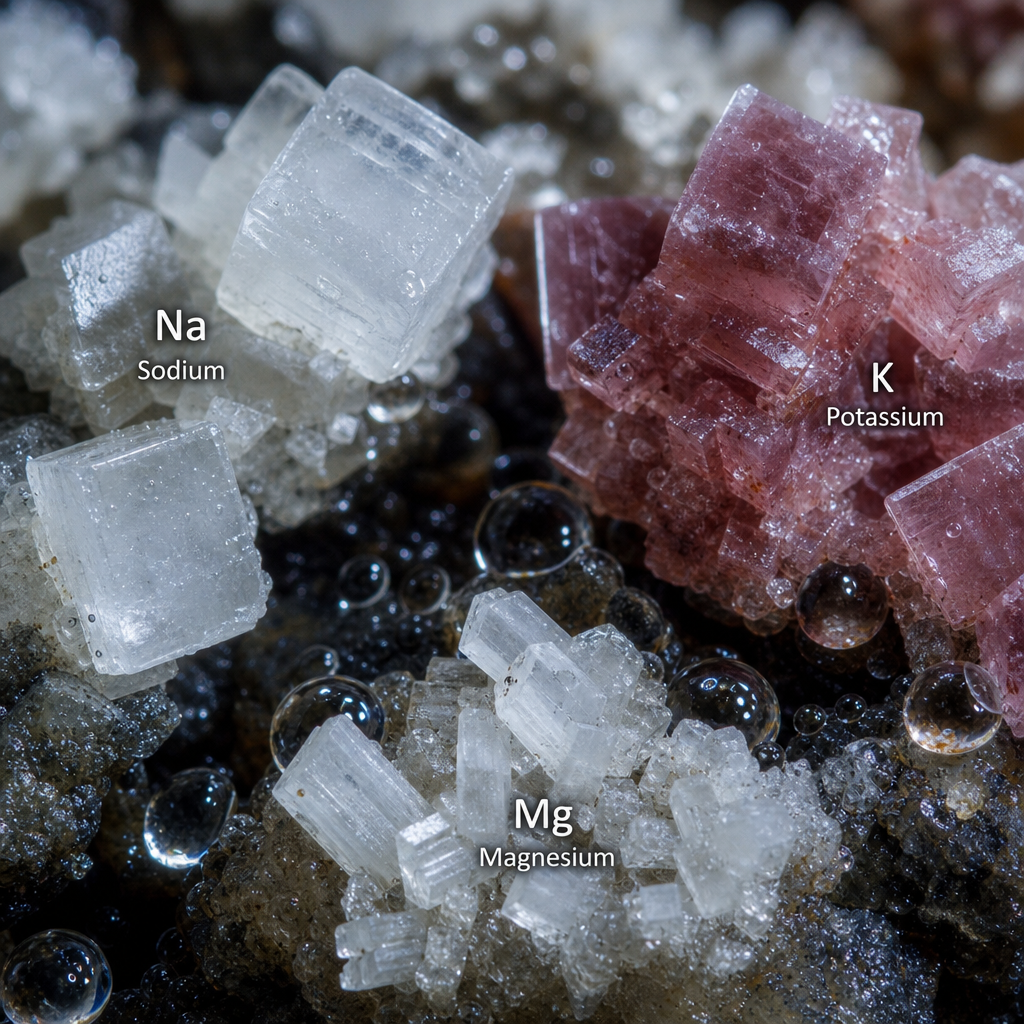
Most hydration advice stops at "drink more water." That is incomplete. Electrolytes focus concentration is not a marketing phrase. It describes a real physiological relationship. Sodium, potassium, magnesium, and chloride control how water moves into cells, how nerve impulses fire, and how neurotransmitters are released. Without them, water cannot be efficiently absorbed or retained where it is needed most.
A common mistake is drinking large quantities of plain water during prolonged mental or physical effort, which dilutes electrolyte concentration in the blood. This can cause a state called hyponatraemia, where low sodium levels contribute to brain swelling, confusion, and impaired coordination. Endurance runners and long-session office workers both face this risk, though the circumstances differ.
Sodium is the primary electrolyte governing fluid balance in and around brain cells. When sodium levels are even slightly below optimal, the electrical gradient across neuron membranes weakens, reducing the speed and reliability of nerve signal transmission. Studies published in the journal Nutrients have found that maintaining adequate sodium intake during exercise preserves cognitive test performance better than water intake alone.
Magnesium plays a distinct role in reducing mental fatigue. It supports ATP energy production in brain cells and regulates NMDA receptors involved in learning and memory. The UK population is broadly deficient in magnesium, with the National Diet and Nutrition Survey showing that a significant proportion of adults consume below the recommended daily amount. For active individuals losing magnesium through sweat, this deficit compounds quickly.
Pro tip: If you are supplementing electrolytes for cognitive performance, look for a formula that includes magnesium alongside sodium and potassium. Many standard sports drinks omit magnesium entirely, prioritising taste over function.
The data consistently shows a dose-response relationship between dehydration and cognitive decline. A systematic review published in the journal Nutrients in 2020 analysed 33 studies and found that dehydration of 2% body mass impaired tasks requiring attention, psychomotor ability, and immediate memory. Performance on tasks requiring sustained attention was most vulnerable, showing impairment even at 1% dehydration in some populations.
"Even mild dehydration, below the threshold of thirst, can impair cognitive performance, particularly on tasks requiring sustained attention." Journal of Nutrition, Harris R. Lieberman, US Army Research Institute of Environmental Medicine
For UK-based knowledge workers, this is particularly relevant in winter when central heating creates dry indoor environments and fluid intake naturally drops because people do not feel hot. The absence of environmental heat cues reduces the thirst response, making strategic hydration more important than intuitive drinking.
Not all mental tasks are equally affected. Sustained attention tasks, the kind required for coding, writing, financial analysis, or reading complex documents, are the most sensitive to hydration status. Short burst tasks, like answering a direct question, are more resilient. This means that for anyone doing deep work over a two to four hour block, hydration management before and during that block directly affects output quality.
Reaction time is the second most affected metric. For athletes, this is obvious. For drivers, safety-critical workers, and anyone on a competitive sports team, even a 5-10% decline in reaction speed is meaningful. The research from the Human Cognitive Neuroscience Unit at the University of Northumbria found that dehydrated participants showed significantly slower reaction times on computerised tests, independent of their subjective perception of effort.

The cognitive demands differ in timing and intensity, but the underlying physiology is the same. An office-based professional losing fluid steadily over eight hours faces a different challenge than a footballer losing it rapidly during a ninety-minute match. Both, however, experience declining mental performance when they fail to compensate.
Fluid loss in an office context is slow and largely invisible. Air conditioning removes humidity from indoor air, and people working at desks rarely notice insensible perspiration. The result is a gradual dehydration that builds across the day. By 3pm, many desk workers are operating at 1-2% below optimal hydration without any clear signal that this is happening.
In practice, the most effective strategy is time-anchored drinking rather than thirst-based drinking. Setting a reminder to consume 300-400ml of fluid every 60-90 minutes maintains steadier hydration levels than drinking a litre all at once. Including an electrolyte formula ensures the fluid is actually absorbed and retained rather than passing through quickly.
Sport creates a more acute version of the same problem. Sweat rates during moderate-intensity exercise in the UK range from 0.5 to 2 litres per hour depending on temperature and individual variation. At these rates, plain water cannot replace electrolytes fast enough, and mental performance during play deteriorates in tandem with physical performance.
Decision-making under pressure is a core athletic skill. Research on team sport players has consistently found that dehydrated athletes make poorer tactical decisions, take longer to select responses, and show reduced vigilance toward opponents. Hydrating with electrolyte formulas rather than plain water or high-sugar drinks preserves this decision-making capacity through the second half of training or competition.
Pro tip: Do not wait until half-time to start addressing dehydration during sport. Pre-loading with 400-600ml of an electrolyte drink 30 minutes before activity sets your baseline higher, giving you more cognitive and physical buffer before impairment begins.
Generic advice to "drink eight glasses of water" ignores individual variation in body mass, sweat rate, environment, and cognitive demand. A more effective approach accounts for these factors explicitly. Here is what the evidence supports for both active individuals and desk-based workers.
After six to eight hours of sleep, the body wakes in a mild state of dehydration. Consuming 400-500ml of fluid within 30 minutes of waking, ideally with a small amount of sodium to aid absorption, restores baseline hydration before any cognitive demands begin. For athletes, this also primes muscle function for morning training sessions.
For sustained mental work or physical training, consuming an electrolyte drink 20-30 minutes before the session begins is consistently more effective than drinking reactively during it. Plusssz electrolyte formulas, with no added sugar and a balanced sodium-potassium-magnesium blend, are designed for exactly this purpose, supporting absorption without the blood sugar spike that undermines sustained concentration.
300-400ml every 60-90 minutes is a workable benchmark for moderate conditions. In hot environments or during high-intensity exercise, this should increase to 500-750ml per hour. The key marker to watch is urine colour, aiming for pale straw rather than dark yellow or clear. Dark yellow indicates meaningful dehydration. Clear can indicate over-dilution if electrolytes are not being replaced.
Hydration does not operate in isolation. B vitamins, particularly B6 and B12, are involved in neurotransmitter synthesis and energy metabolism. Vitamin D, which a significant proportion of the UK population is deficient in during winter months, affects mood and cognitive resilience. Pairing a quality multivitamin with an electrolyte hydration routine creates a more complete support system for mental performance than either alone.
Approach |
Benefits for Cognitive Performance |
Limitations |
|---|---|---|
Plain water only |
Readily available, restores basic fluid volume, no calories |
Does not replace electrolytes lost through sweat or insensible loss. Can dilute blood sodium if consumed in large quantities. No support for nerve signal transmission. |
High-sugar sports drinks (e.g., standard isotonic formulas) |
Fast carbohydrate energy for intense short-duration exercise, palatability encourages drinking |
Blood sugar spikes and subsequent crashes impair sustained concentration. High sugar intake linked to reduced long-term cognitive function. Counterproductive for desk workers. |
No-added-sugar electrolyte formulas (e.g., Plusssz electrolyte range) |
Replaces sodium, potassium, and magnesium without blood sugar disruption. Supports sustained absorption. Compatible with both desk work and active training. Stackable with multivitamin support. |
Requires deliberate purchasing and preparation compared to tap water. Results depend on consistency of use rather than single-dose effects. |
The data consistently favours no-added-sugar electrolyte supplementation for anyone whose mental performance matters across a sustained period. The sugar-free distinction is not a minor formulation preference. It is the difference between supporting steady cognitive output and introducing a glycaemic variable that works against it.
As little as 1% body mass loss from fluid is enough to impair attention and working memory in some individuals, particularly during tasks requiring sustained focus. At 2%, the impairment becomes consistent across most cognitive domains. You do not need to feel visibly thirsty for this effect to be present.
Yes, when used correctly. Electrolytes improve fluid absorption and retention, maintain the sodium-potassium balance that nerve cells need to fire efficiently, and prevent the dilutional effect of drinking large amounts of plain water. For desk workers and knowledge professionals, the impact is most noticeable during sustained concentration tasks over two hours or more.
Moderate caffeine intake does support alertness and reaction time in the short term. However, caffeine has a mild diuretic effect that increases fluid loss, meaning it does not replace water or electrolytes. Relying on coffee as your primary hydration strategy across a working day accelerates dehydration rather than preventing it. Use it as a performance tool alongside proper hydration, not instead of it.
The most effective formulas include sodium (for absorption and fluid balance), potassium (for nerve and muscle function), and magnesium (for energy metabolism and mental fatigue reduction), without added sugar or artificial sweeteners that could cause digestive discomfort. Plusssz electrolyte products are specifically formulated on this basis for active individuals who need cognitive as well as physical support.
Yes. What people describe as "brain fog" during the day is very often mild dehydration presenting as slow processing speed, difficulty concentrating, and poor verbal fluency. Studies using MRI imaging have confirmed that dehydration reduces cerebral blood flow, which directly reduces cognitive processing speed. Rehydrating with an electrolyte solution typically resolves mild brain fog within 20-30 minutes.
In sport, dehydration impairs reaction time, tactical decision-making, and risk assessment under pressure at a pace that is fast and measurable. In desk work, the impairment is slower and cumulative, building across hours of gradual fluid loss. The underlying mechanism is the same in both cases, but sport demands faster acute correction while desk work rewards consistent preventive hydration across the day.
Yes, though the difference is smaller than most people assume. On rest days, sweat-related fluid loss is lower, but insensible losses from breathing, indoor heating, and normal metabolic function continue. A baseline of 1.5-2 litres of fluid, with electrolyte support during periods of sustained mental work, remains appropriate. You do not need a full sports hydration protocol on rest days, but you should not drop to ad-hoc drinking either.
If you have noticed a difference in your focus or energy when you make a conscious effort to hydrate properly during work or training, we would genuinely like to hear what worked for you and what did not.